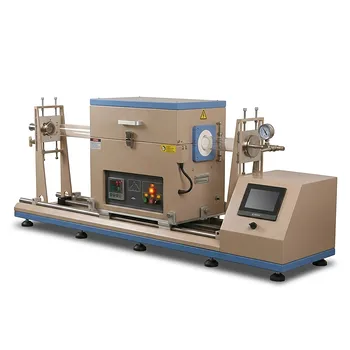
What is the role of a Tube Furnace in NiPt catalyst preparation? Mastering Precise Thermal Activation
Updated 3 months ago
The tube furnace transforms raw precursors into active catalytic sites. In the preparation of NiPt catalysts via impregnation, the tube furnace serves as a high-precision thermal reactor that facilitates two critical phases: high-temperature calcination to decompose metal salts and subsequent chemical reduction to form active metal nanoparticles. By providing a strictly controlled environment for both temperature and atmosphere, it ensures that nickel and platinum are uniformly distributed and securely fixed onto the catalyst support.
Core Takeaway: The tube furnace is the essential tool for controlling the chemical state and physical distribution of NiPt catalysts, enabling the transition from inactive metal salts to highly active, nanostructured metallic particles through precise thermal and atmospheric programming.
Phase I: Calcination and Precursor Fixation
Thermal Decomposition of Metal Salts
During the initial stage of synthesis, the tube furnace is heated to 500 °C under a nitrogen (N₂) atmosphere. This inert environment allows for the thermal decomposition of impregnated metal precursors, breaking down salts without premature oxidation or unwanted side reactions.
Stabilization on the Support
This high-temperature phase is vital for "fixing" the metal species onto the activated carbon support. The controlled heat ensures that the precursors are anchored firmly, preventing them from migrating or leaching during subsequent processing steps.
Removal of Volatiles
The furnace effectively drives off residual moisture and volatile organic compounds. This creates a clean structural foundation, which is necessary for establishing a stable interface between the metal and the support material.
Phase II: Reduction and Catalyst Activation
Transformation to Metallic State
After calcination, the tube furnace facilitates the chemical reduction of metal ions into active elemental Ni and Pt nanoparticles. This occurs at a lower temperature of 250 °C within a hydrogen (H₂) atmosphere, which acts as the reducing agent.
Controlling Nanoparticle Distribution
The programmable nature of the tube furnace allows for a gradual transition in temperature and gas composition. This precision is critical for ensuring that the resulting metallic particles remain small and uniformly distributed, rather than clumping together.
Preventing Phase Impurity
By maintaining a stable, long temperature zone, the furnace ensures that the reduction is consistent throughout the entire sample. This prevents "over-reduction" or incomplete reactions, ensuring the catalyst achieves the specific crystalline phase required for high performance.
Understanding the Trade-offs
Temperature Sensitivity and Sintering
While high temperatures are required for calcination, excessive heat can lead to sintering, where small particles fuse into larger clusters. This reduces the surface area and significantly degrades the catalyst's overall activity.
Atmosphere Integrity
The effectiveness of a tube furnace depends entirely on its ability to maintain a pure atmosphere. Any oxygen leak during the hydrogen reduction phase not only poses safety risks but can also lead to the formation of unwanted oxides instead of pure metallic nanoparticles.
Processing Throughput
Tube furnaces are designed for precision rather than volume. While they offer unparalleled control over the catalyst's properties, they are often limited to small batch sizes, which can be a bottleneck for large-scale industrial production.
Making the Right Choice for Your Goal
To maximize the effectiveness of your NiPt catalyst preparation, align your furnace parameters with your specific research or production objectives:
- If your primary focus is Maximum Catalytic Activity: Prioritize precise atmosphere switching capabilities to ensure a complete transition from the calcined state to a fully reduced metallic state.
- If your primary focus is Particle Size Control: Focus on programmable ramp rates to slowly approach the 250 °C reduction temperature, preventing the rapid growth or agglomeration of Ni and Pt particles.
- If your primary focus is Support Stability: Maintain the 500 °C nitrogen calcination step strictly to ensure precursors are properly fixed before the reduction phase begins.
The tube furnace remains the definitive instrument for achieving the delicate balance of heat and chemistry required to create high-performance NiPt catalysts.
Summary Table:
| Process Phase | Temperature | Atmosphere | Key Function |
|---|---|---|---|
| Phase I: Calcination | 500 °C | Nitrogen (N₂) | Precursor decomposition and surface fixation |
| Phase II: Reduction | 250 °C | Hydrogen (H₂) | Transformation to active Ni and Pt nanoparticles |
| Critical Control | Ramp Rates | Inert/Reducing | Prevents sintering and ensures uniform distribution |
Maximize Your Catalyst Performance with THERMUNITS
Precise thermal control is the difference between a high-activity catalyst and a failed batch. THERMUNITS is a leading manufacturer of high-temperature laboratory equipment for material science and industrial R&D. We specialize in providing the atmosphere integrity and programmable precision required for advanced catalyst synthesis.
Our comprehensive range of thermal processing solutions includes:
- Advanced Tube Furnaces for precise calcination and reduction.
- CVD/PECVD systems for nanostructured material growth.
- Muffle, Vacuum, Atmosphere, Rotary, and Hot Press furnaces for diverse heat treatments.
- Vacuum Induction Melting (VIM) and Electric Rotary Kilns for industrial-scale R&D.
Ready to eliminate sintering and optimize your nanoparticle distribution? Contact our technical experts today to find the perfect furnace solution for your laboratory.
References
- Joachim Pasel, Ralf Peters. Surface Redox Reaction for the Synthesis of NiPt Catalysts for the Upgrading of Renewable Ethanol/Methanol Mixtures. DOI: 10.3390/catal14010077
Mentioned Products
- Vertical 1700C Vacuum and Atmosphere Tube Furnace with 80mm Alumina Tube
- Compact High Temperature 1600C Tube Furnace with 50mm Alumina Tube and Vacuum Flanges for Material Sintering
- 900°C Max Rotary Tube Furnace with 8 Inch 310S Alloy Tube and Optional Multi Zone Heating for Industrial Material Calcination
- Split Vertical Tube Furnace with 1200C Quartz Tube and Stainless Steel Vacuum Flanges for Rapid Thermal Processing
- High Temperature 1700C Tube Furnace with High Vacuum Turbomolecular Pump System and Multi Channel Mass Flow Controller Gas Mixer
People Also Ask
- How is an industrial-grade vertical tube furnace utilized in smelting leaching residues? Enhance Metal Recovery Efficiency
- What is the function of a laboratory-grade vertical tube furnace in fast pyrolysis? Optimize Composite Research.
- How does a vertical tube furnace facilitate thermoelectric alloy melting? Precision synthesis for material homogeneity.
- Why is a thermocouple sensor indispensable for monitoring the vertical tube furnace during gallium oxide nanowire production? Optimize VLS Growth
- What are the advantages of using a vertical tube furnace for crucible experiments simulating steel-slag interactions?

Tech Team · ThermUnits
Last updated on Jun 02, 2026
Related Products

Vertical 1700C Vacuum and Atmosphere Tube Furnace with 80mm Alumina Tube

Compact High Temperature 1600C Tube Furnace with 50mm Alumina Tube and Vacuum Flanges for Material Sintering
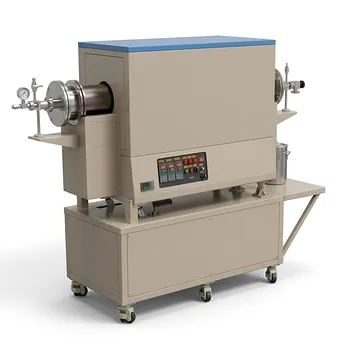
900°C Max Rotary Tube Furnace with 8 Inch 310S Alloy Tube and Optional Multi Zone Heating for Industrial Material Calcination
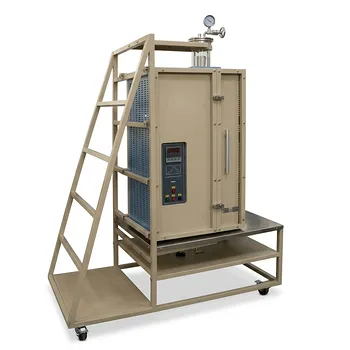
Split Vertical Tube Furnace with 1200C Quartz Tube and Stainless Steel Vacuum Flanges for Rapid Thermal Processing

High Temperature 1700C Tube Furnace with High Vacuum Turbomolecular Pump System and Multi Channel Mass Flow Controller Gas Mixer

1100C Tube Furnace with Vacuum Flange and Programmable Temperature Controller for Material Science and Industrial Heat Treatment
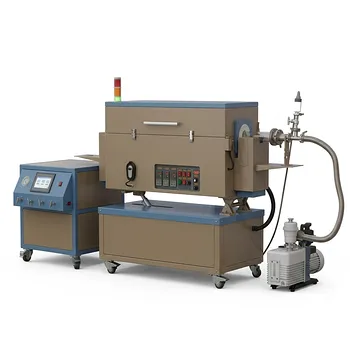
5 Inch Three Zone Rotary Tube Furnace with Integrated Gas Delivery System and 1200C Capability for Advanced Material CVD Processing
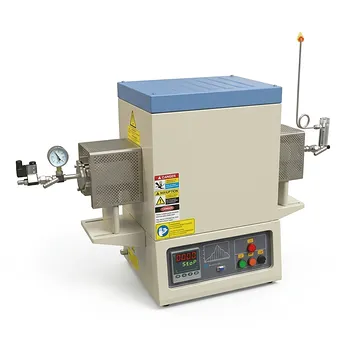
1700C Hydrogen Gas Tube Furnace with 60mm Alumina Process Tube and Integrated Hydrogen Safety Detector
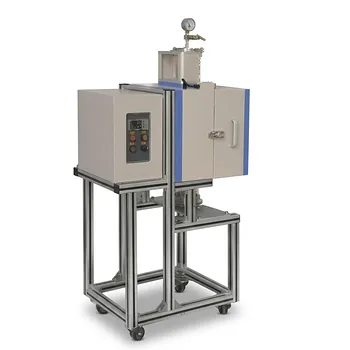
1200°C 5 Inch Vertical Quartz Tube Furnace with Stainless Steel Vacuum Flanges

High Temperature 1700C Six Zone Split Tube Furnace with Alumina Tube and Water Cooled Flanges

Compact Vertical Split Quartz Tube Furnace with Stainless Steel Vacuum Flanges for Rapid Thermal Quenching and Controlled Atmosphere Material Processing

High Temperature 1700C Benchtop Tube Furnace with 5 Inch Heating Zone High Purity Alumina Tube and Vacuum Sealing Flanges
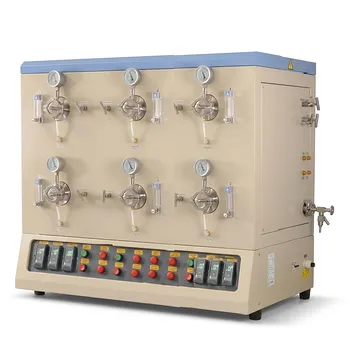
1200C High Throughput Multi Channel Tube Furnace with 50mm Quartz Tubes for Annealing and Material Phase Diagram Research
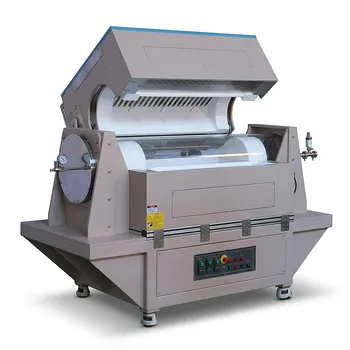
Three Zone Tube Furnace with 11 Inch or 15 Inch Quartz Tube and Hinged Flanges for Vacuum Atmosphere Heat Treatment

1800C High Temperature Compact Vacuum Tube Furnace with 60mm OD Alumina Tube and Kanthal MoSi2 Heating Elements

High Temperature 1700C Vertical Tube Furnace for Powder Spherification and Material Sintering
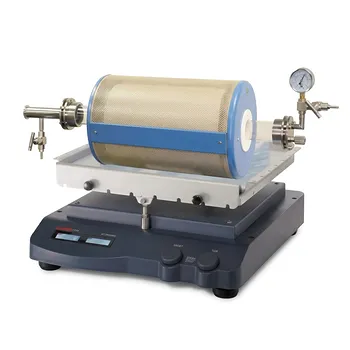
High Temperature Rocking Tube Furnace with Quartz Tube and Vacuum Flange for Materials Synthesis

High Temperature Automated 5 Inch Tube Furnace for Autonomous Material Research and Advanced Laboratory R&D
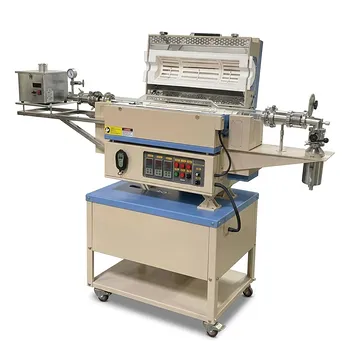
5 Inch Rotary Tube Furnace with Automatic Feeding and Receiving System 1200C Three Zone CVD Powder Processing