How does the programmable heating of a tube furnace facilitate g-C3N4 synthesis? Optimize Your Material Properties.
Updated 3 months ago
The programmable heating function is the engine of structural control in material synthesis. It allows researchers to precisely dictate heating rates (typically 2–5°C/min) and "soak" times at specific temperatures (often 550°C) required for the thermal polycondensation of precursors like urea or melamine. This meticulous thermal management ensures the complete chemical transformation—specifically deamination and deoxygenation—resulting in a highly crystalline, layered graphitic structure with optimized electronic properties.
Core Takeaway: Programmable heating transforms a standard furnace into a precision instrument that dictates the morphology, band gap, and photocatalytic efficiency of g-C3N4. By controlling the kinetics of polymerization, it ensures the resulting material achieves the specific layered architecture required for advanced applications.
The Role of Controlled Ramp Rates
Preventing Structural Collapse
The heating rate, such as 5°C/min, is critical for managing the release of gases during the deamination and deoxygenation of the precursor. If the temperature rises too quickly, the rapid evolution of ammonia and other gases can disrupt the formation of the layered structure, leading to poor crystallinity.
Influencing Nucleation and Growth
A slow, programmable ramp allows the precursor monomers to organize into stable intermediate structures before fully polymerizing. This controlled approach is essential for achieving a high degree of polymerization, which directly impacts the material's stability and performance.
Managing the Polymerization Plateau
Ensuring Complete Chemical Transformation
Maintaining a stable high-temperature environment, usually around 550°C for several hours, is necessary for the deep thermal polycondensation of precursors. This "dwell time" provides the energy required to drive the reaction to completion, ensuring the target characteristic color and chemical purity are achieved.
Fine-Tuning the Electronic Band Gap
The specific temperature held by the programmable controller determines the energy band structure of the g-C3N4. Slight variations in the dwell temperature can shift the band gap, making the material more or less efficient for specific photocatalytic applications.
Enhancing Crystallinity and Surface Area
Uniform heat distribution during the programmable hold phase facilitates the formation of a two-dimensional layered structure. This high crystallinity is often paired with a specific porous structure, which increases the specific surface area available for subsequent metal particle loading or chemical reactions.
Understanding the Trade-offs
Heating Rate vs. Material Quality
While a faster heating rate can decrease processing time, it often results in a lower specific surface area and decreased structural integrity. Conversely, extremely slow rates may lead to unnecessary energy consumption without significantly improving the crystalline yield.
Temperature vs. Yield Recovery
Synthesis typically occurs between 550°C and 600°C. Exceeding these temperatures can lead to the thermal decomposition or sublimation of the g-C3N4 product, significantly reducing the final mass yield despite potentially increasing crystallinity.
How to Apply This to Your Project
When configuring your tube furnace for g-C3N4 synthesis, align your programming with your specific material requirements:
- If your primary focus is High Photocatalytic Activity: Prioritize a stable, long dwell time at 550°C to ensure a complete polycondensation and a narrow, optimized band gap.
- If your primary focus is High Specific Surface Area: Utilize a moderate heating rate (approx. 2-5°C/min) to allow for the gradual development of a porous, layered morphology.
- If your primary focus is Maximum Crystallinity: Consider a multi-stage program that includes a lower-temperature annealing step (e.g., 520°C) before the final high-temperature calcination.
Precise thermal programming is the definitive factor in transforming raw precursors into a high-performance, layered graphitic carbon nitride.
Summary Table:
| Parameter | Role in g-C3N4 Synthesis | Impact on Material Quality |
|---|---|---|
| Ramp Rate | 2–5°C/min; controls gas evolution | Prevents structural collapse; ensures layered morphology |
| Dwell Temp | Holds at ~550°C for polycondensation | Fine-tunes electronic band gap and photocatalytic efficiency |
| Dwell Time | Deep thermal transformation of precursors | Maximizes crystallinity, surface area, and chemical purity |
| Cooling Phase | Controlled thermal stabilization | Preserves structural integrity and prevents thermal shock |
Elevate Your Material Research with THERMUNITS
Precision is the key to mastering the synthesis of graphitic carbon nitride and other advanced materials. As a leading manufacturer of high-temperature laboratory equipment, THERMUNITS provides the specialized thermal processing solutions researchers need for consistent, high-performance results.
Whether you require Tube Furnaces for precise gas-phase reactions, CVD/PECVD systems, or high-performance Muffle, Vacuum, and Atmosphere furnaces, our equipment is designed to meet the rigorous demands of material science and industrial R&D. We also offer specialized solutions like Rotary Furnaces, Hot Press furnaces, and Vacuum Induction Melting (VIM) furnaces to support every stage of your heat treatment workflow.
Ready to optimize your synthesis process? Contact our engineering team today to find the perfect thermal solution for your laboratory!
References
- Abniel Machín, Francisco Márquez. Synergistic Effects of Co3O4-gC3N4-Coated ZnO Nanoparticles: A Novel Approach for Enhanced Photocatalytic Degradation of Ciprofloxacin and Hydrogen Evolution via Water Splitting. DOI: 10.3390/ma17051059
Mentioned Products
- High Temperature Tube Furnace 1500C with Sliding Flanges and 50mm OD for Rapid Thermal Processing Fast Heating and Cooling
- Vertical 1700C Vacuum and Atmosphere Tube Furnace with 80mm Alumina Tube
- 1100C Tube Furnace with Vacuum Flange and Programmable Temperature Controller for Material Science and Industrial Heat Treatment
- Compact High Temperature 1600C Tube Furnace with 50mm Alumina Tube and Vacuum Flanges for Material Sintering
- 900°C Max Rotary Tube Furnace with 8 Inch 310S Alloy Tube and Optional Multi Zone Heating for Industrial Material Calcination
People Also Ask
- How are high-temperature tube furnaces utilized to repair etching damage? Precision Lattice Restoration Solutions
- What role does a high-temperature tube furnace play in CVD synthesis of silicon nanowires? Master VLS Growth Precision.
- What core conditions does a high-temperature tube furnace provide for rGO aerogels? Mastering Precision Synthesis.
- What role does a high-temperature tube furnace play in the sulfidation heat treatment of CoS@C/MXene nanocomposites? Guide
- How does precision tube furnace control influence CoFe nanoparticle formation? Master Your Bimetallic Synthesis.

Tech Team · ThermUnits
Last updated on Jun 02, 2026
Related Products

High Temperature Tube Furnace 1500C with Sliding Flanges and 50mm OD for Rapid Thermal Processing Fast Heating and Cooling

Vertical 1700C Vacuum and Atmosphere Tube Furnace with 80mm Alumina Tube

1100C Tube Furnace with Vacuum Flange and Programmable Temperature Controller for Material Science and Industrial Heat Treatment

Compact High Temperature 1600C Tube Furnace with 50mm Alumina Tube and Vacuum Flanges for Material Sintering
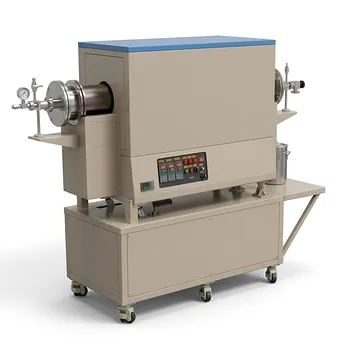
900°C Max Rotary Tube Furnace with 8 Inch 310S Alloy Tube and Optional Multi Zone Heating for Industrial Material Calcination
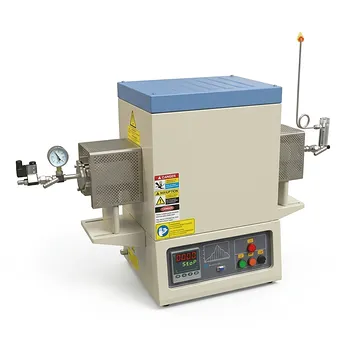
1700C Hydrogen Gas Tube Furnace with 60mm Alumina Process Tube and Integrated Hydrogen Safety Detector

High Temperature 1700C Tube Furnace with High Vacuum Turbomolecular Pump System and Multi Channel Mass Flow Controller Gas Mixer
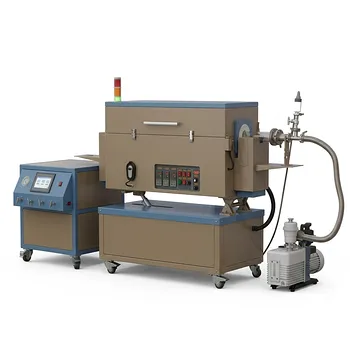
5 Inch Three Zone Rotary Tube Furnace with Integrated Gas Delivery System and 1200C Capability for Advanced Material CVD Processing
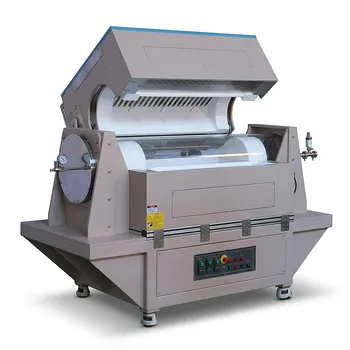
Three Zone Tube Furnace with 11 Inch or 15 Inch Quartz Tube and Hinged Flanges for Vacuum Atmosphere Heat Treatment
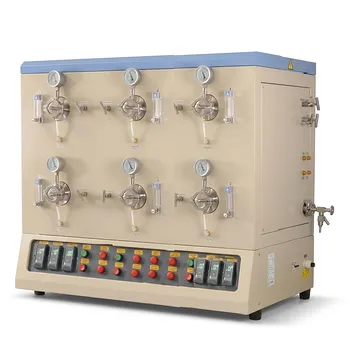
1200C High Throughput Multi Channel Tube Furnace with 50mm Quartz Tubes for Annealing and Material Phase Diagram Research

1200°C 5 Inch Vertical Quartz Tube Furnace with Stainless Steel Vacuum Flanges
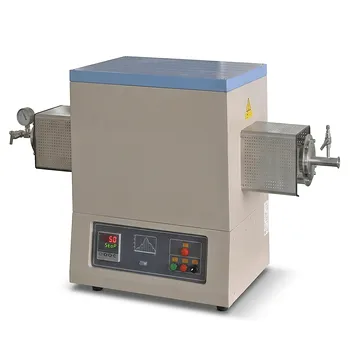
High Temperature 1700C Tube Furnace with 4 Inch OD Alumina Tube and Vacuum Sealing Flanges

1800C High Temperature Compact Vacuum Tube Furnace with 60mm OD Alumina Tube and Kanthal MoSi2 Heating Elements

High Temperature 1700C Benchtop Tube Furnace with 5 Inch Heating Zone High Purity Alumina Tube and Vacuum Sealing Flanges

Compact Vertical Split Quartz Tube Furnace with Stainless Steel Vacuum Flanges for Rapid Thermal Quenching and Controlled Atmosphere Material Processing

High Temperature 1700C Six Zone Split Tube Furnace with Alumina Tube and Water Cooled Flanges

High Vacuum Compact Tube Furnace 1200C with Integrated Turbo Pump System and 8 Inch Heating Zone
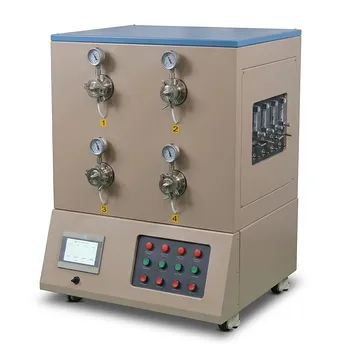
High Throughput 1200C Four Channel Tube Furnace with 3 Inch Quartz Tubes for Multi Zone Annealing and Material Research

High Temperature Automated 5 Inch Tube Furnace for Autonomous Material Research and Advanced Laboratory R&D
