What is the role of high-purity laboratory crucibles in the high-temperature sintering of SiCN(Ni)/BN ceramics?
Updated 3 months ago
High-purity laboratory crucibles are the critical containment vessels used during the high-temperature sintering of SiCN(Ni)/BN ceramics. They provide a chemically stable and refractory environment that prevents external contamination while facilitating the in-situ generation of vital nickel (Ni) and nickel silicide (Ni₃Si) phases at temperatures reaching 1100°C. By acting as both a physical and chemical barrier, these crucibles ensure the resulting ceramic maintains the precise composition and phase purity required for its intended technical performance.
The core role of a high-purity crucible is to provide an inert micro-environment that preserves the chemical integrity of the precursor mixture. This ensures that the transformation from polymer to ceramic occurs without the introduction of performance-degrading impurities.
Ensuring Chemical Stability and Thermal Resilience
Refractoriness at Extreme Temperatures
High-purity crucibles are engineered to withstand sintering temperatures of 1100°C and beyond without deforming or failing. Their high refractoriness allows them to remain structurally sound while supporting the SiCN(Ni)/BN precursor mixtures during the intense heat of the pyrolysis process.
Chemical Inertness
The material composition of these crucibles is selected for its chemical stability, ensuring it does not react with the ceramic samples. This inertness is vital to prevent the crucible itself from becoming a reactant, which would otherwise alter the intended stoichiometry of the SiCN(Ni)/BN ceramic.
Thermal Shock Resistance
As seen in high-precision laboratory settings, these containers often possess excellent thermal shock stability. This allows them to endure rapid temperature fluctuations within a tube furnace without cracking, maintaining a secure environment for the sample throughout the entire thermal cycle.
Protecting Phase Purity and Micro-Environment
Prevention of Impurity Infiltration
A primary function of the high-purity crucible is to block the infiltration of impurity elements from the furnace environment or the container itself. By providing a clean interface, the crucible ensures that the in-situ generated nickel (Ni) and nickel silicide (Ni₃Si) phases remain uncontaminated.
Controlling the Sintering Atmosphere
High-purity systems, particularly those using double-crucible structures, can create a closed micro-environment that regulates local conditions. This setup can help reduce local oxygen partial pressure, which inhibits the unwanted oxidation or thermal decomposition of sensitive nitride components.
Mitigation of Liquid Phase Loss
During high-temperature sintering, certain components may enter a liquid state before final densification. High-purity crucibles act as a physical barrier that prevents the loss of these liquid phases, ensuring the final ceramic achieves the desired density and structural homogeneity.
Understanding the Trade-offs and Pitfalls
The Risk of Lower-Purity Materials
Using crucibles with lower purity levels can lead to the diffusion of metallic impurities into the ceramic matrix. These impurities can disrupt the nucleation and growth of Ni₃Si crystalline phases, ultimately degrading the material's impedance matching characteristics.
Material Compatibility Challenges
Selecting the wrong crucible material (e.g., using a material that reacts with boron or silicon) can lead to unwanted side reactions. These reactions can cause the sample to fuse to the crucible or result in the formation of secondary phases that compromise the ceramic's mechanical and electrical properties.
Environmental Vulnerability
While high-purity crucibles offer protection, they cannot entirely compensate for a poorly controlled furnace atmosphere unless used in a sealed or double-crucible configuration. Relying solely on the crucible without considering the surrounding gas flow can still lead to surface oxidation of the SiCN(Ni)/BN sample.
How to Apply This to Your Project
When selecting or utilizing high-purity crucibles for ceramic sintering, your choice should be dictated by the specific requirements of your material's phase development.
- If your primary focus is Phase Purity: Use high-purity alumina or boron nitride crucibles to ensure that in-situ generated Ni and Ni₃Si phases are not contaminated by trace metals.
- If your primary focus is Oxidation Control: Implement a double-crucible system or powder embedding technique within the crucible to maintain a low-oxygen micro-environment.
- If your primary focus is Thermal Precision: Ensure the crucible is compatible with the multi-stage heating program of your tube furnace to accurately govern the polymer-to-ceramic transformation kinetics.
By viewing the high-purity crucible as an active component of the thermal processing system rather than a simple container, you ensure the consistent synthesis of high-performance SiCN(Ni)/BN ceramics.
Summary Table:
| Feature | Function in Sintering | Impact on SiCN(Ni)/BN Ceramics |
|---|---|---|
| Chemical Inertness | Prevents impurity infiltration | Maintains precise stoichiometry and phase purity. |
| Thermal Resilience | Withstands 1100°C+ heat | Ensures structural integrity during pyrolysis. |
| Atmosphere Control | Reduces oxygen partial pressure | Inhibits oxidation of sensitive nitride components. |
| Physical Barrier | Mitigates liquid phase loss | Ensures high density and structural homogeneity. |
| Thermal Stability | Resists thermal shock | Prevents cracking during rapid temperature cycles. |
Elevate Your Material Research with THERMUNITS Precision Thermal Solutions
Achieving perfect phase purity in advanced ceramics like SiCN(Ni)/BN requires more than just high heat—it requires a controlled, high-precision thermal environment. THERMUNITS is a leading manufacturer of high-temperature laboratory equipment dedicated to supporting material science and industrial R&D with unmatched reliability.
We provide a comprehensive range of thermal processing solutions tailored to your specific research needs, including:
- Advanced Furnaces: Muffle, Vacuum, Atmosphere, Tube, Rotary, Hot Press, and Dental Furnaces.
- Specialized Systems: CVD/PECVD systems, Electric Rotary Kilns, and Vacuum Induction Melting (VIM) furnaces.
- High-Quality Components: Premium Thermal Elements and essential heat treatment accessories.
Ready to optimize your sintering process? Contact THERMUNITS Today to consult with our experts. Discover how our professional-grade equipment can enhance your lab's efficiency and ensure the success of your next technical breakthrough.
References
- Yanchun Tong, Shigang Wu. Enhanced electromagnetic wave absorption properties of SiCN(Ni)/BN ceramics by <i>in situ</i> generated Ni and Ni<sub>3</sub>Si. DOI: 10.1039/d3ra07877a
Mentioned Products
- 1800C Bench Top Muffle Furnace 18 Liters with Kanthal Super 1900 Heating Elements for High Purity Ceramic Sintering and Material Research
- 1750C Compact Muffle Furnace 1.7L Ultra High Temperature Laboratory Sintering System for Advanced Ceramics and Material Science Research
- Vertical Crucible Furnace 1000C High Temperature Laboratory Equipment 4.7 Inch Diameter Chamber SS316 Anti Corrosive Enclosure
- 1100C High Temperature Vacuum Crucible Furnace with Quartz Chamber for Thermal Processing and Sintering
- Compact Crucible Melting Furnace 1100C Programmable Temperature Controller Metal Sintering Equipment
People Also Ask
- Why is a benchtop muffle furnace essential for U3O8 micromaterials? Achieve precision stoichiometry and purity.
- What materials are typically used for heating elements in muffle furnaces? A Guide to Performance & Temperature Limits
- What role does a laboratory high-temperature muffle furnace play in the ash analysis phase of biomass co-firing research? [Guide]
- Why is a sintering furnace or Rapid Thermal Processing (RTP) equipment necessary for the formation of electrodes? Master Solar Ohmic Contacts.
- What function does argon serve in MOF melt-quenching? Prevent oxidation and ensure chemical integrity.

Tech Team · ThermUnits
Last updated on Jun 02, 2026
Related Products
1800C Bench Top Muffle Furnace 18 Liters with Kanthal Super 1900 Heating Elements for High Purity Ceramic Sintering and Material Research
1750C Compact Muffle Furnace 1.7L Ultra High Temperature Laboratory Sintering System for Advanced Ceramics and Material Science Research
Vertical Crucible Furnace 1000C High Temperature Laboratory Equipment 4.7 Inch Diameter Chamber SS316 Anti Corrosive Enclosure
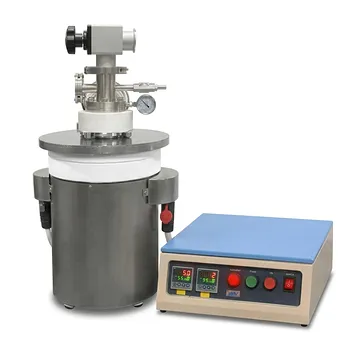
1100C High Temperature Vacuum Crucible Furnace with Quartz Chamber for Thermal Processing and Sintering
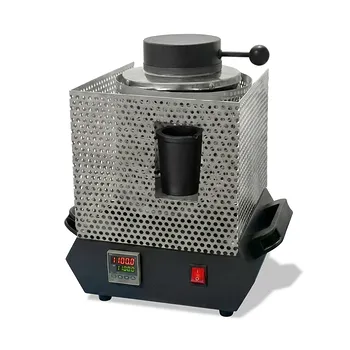
Compact Crucible Melting Furnace 1100C Programmable Temperature Controller Metal Sintering Equipment
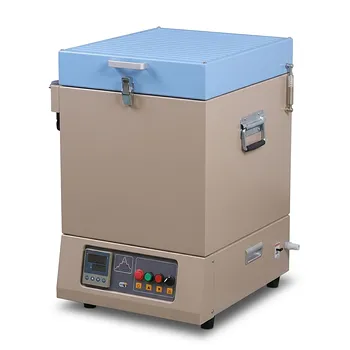
High Temperature Vertical Crucible Furnace with 22L Heating Chamber and 1200C Maximum Temperature
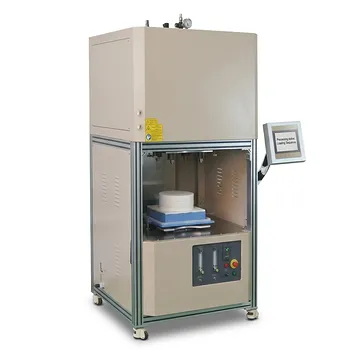
High Temperature Vertical Atmosphere Controlled Furnace with Automatic Bottom Loading and 1700°C Capacity for Advanced Material Research

High Temperature 1700C Vertical Tube Furnace for Powder Spherification and Material Sintering
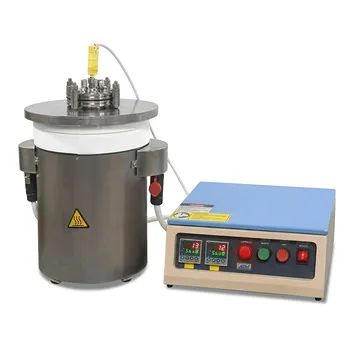
600°C Vertical Crucible Furnace with SS316 Alloy Reactor and 6 Port Vacuum Flange
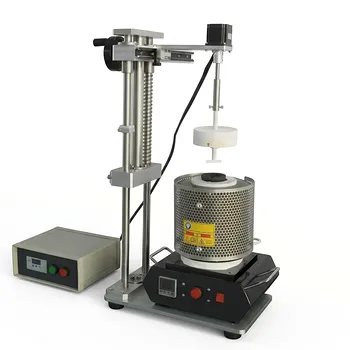
1100C Crucible Melting Furnace with Stirring Function for Glovebox and Air Sensitive Alloy Research
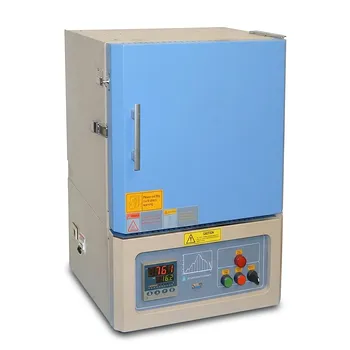
High Temperature 1700C Bench Top Muffle Furnace with Alumina Fiber Insulation and 3.6L Chamber Capacity for Precision Sintering and Heat Treatment
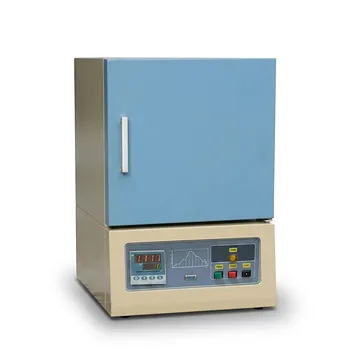
Ultra High Temperature Bench Top Muffle Furnace 1750C Sintering System with Kanthal Super Heating Elements and Precision Digital Control
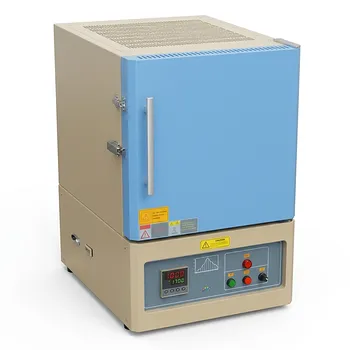
Large Bench Top 1700C High Temperature Muffle Furnace with 19L Chamber for Advanced Material Sintering and Annealing
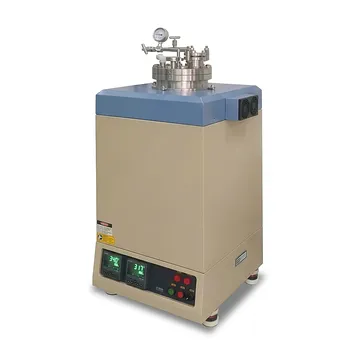
High Temperature 1000C Vacuum Furnace with 8 Inch ID Chamber for Material Sintering and Research Annealing
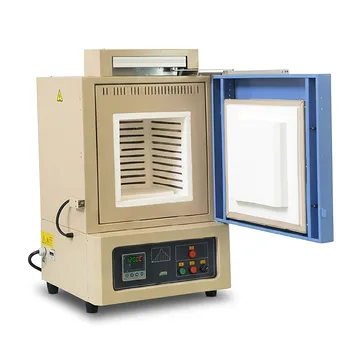
1200C High Temperature Muffle Furnace with Motorized Door and Automated PC Control for Industrial Sintering and Material Processing 27 Liter
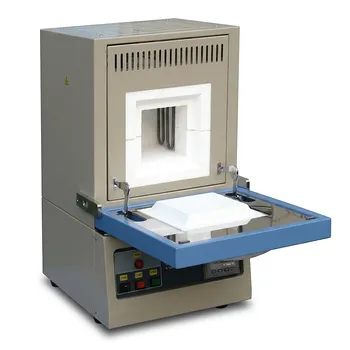
High Temperature 1800C Compact Muffle Furnace with Kanthal Super 1900 Heating Elements and 1.7L Alumina Chamber

Compact High Temperature 1600C Tube Furnace with 50mm Alumina Tube and Vacuum Flanges for Material Sintering
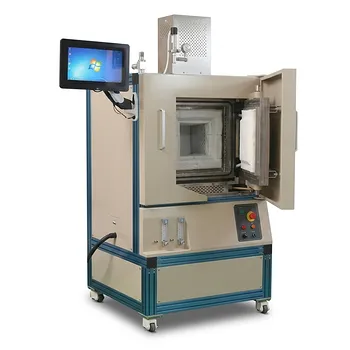
High Temperature Oxygen and Inert Atmosphere Controlled Furnace 8 Liter 1700C Sintering System for Advanced Materials RD
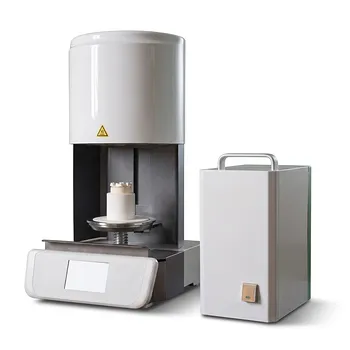
Dental Porcelain Zirconia Sintering Ceramic Furnace Chairside with Transformer