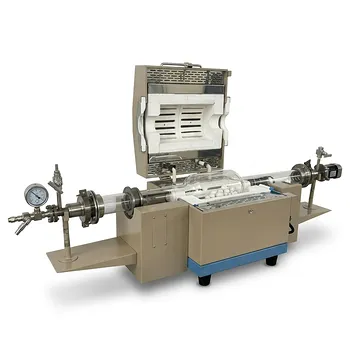
What is the role of industrial tube furnaces in CSP thermal stability? Precision Simulation for Solar R&D
Updated 3 months ago
Industrial tube furnaces serve as high-precision environmental simulators that replicate the extreme conditions of Concentrated Solar Power (CSP) plants. By subjecting ceramic particles to controlled thermal cycling between 500°C and 1000°C, these furnaces allow researchers to observe how materials degrade, oxidize, and lose efficiency over months or years of simulated operation.
The core role of the tube furnace is to provide a stable, long-duration thermal stress environment that accelerates the aging process. This enables the quantification of chemical and physical changes, ensuring that CSP materials can maintain high solar absorptance throughout their operational lifespan.
Simulating Extreme Operating Environments
Thermal Cycling and Stress
Industrial tube furnaces are capable of subjecting ceramic particles to repeated thermal cycles, typically ranging from 500°C to 1000°C. This process mimics the daily heating and cooling cycles inherent in CSP plants, where solar energy is captured during the day and stored or used at night.
Long-Duration Aging Analysis
By maintaining these temperatures for extended periods—often hundreds of hours—researchers can simulate long-term industrial operating conditions in a laboratory setting. This helps in evaluating the "thermal fatigue" of the particulates, which is critical for predicting how long the materials will last in the field.
Precise Temperature Curves
High-precision furnaces allow for specific temperature ramp rates and cooling curves. This precision ensures that the material is not just "hot," but is experiencing the exact thermal profile it would encounter in a commercial solar receiver.
Analyzing Material Transformation and Degradation
Oxidation and Phase Evolution
Exposure to high temperatures in an air atmosphere induces oxidation-driven changes in the material's composition. In CSP particles, this often results in the formation of iron oxides or other phase transformations that can compromise the structural integrity of the ceramic.
Impact on Solar Absorptance
A primary goal of these tests is to quantify the impact of thermal aging on solar absorptance. As the material oxidizes or changes color due to heat treatment, its ability to capture solar energy may decrease, directly impacting the overall efficiency of the CSP system.
Structural Integrity and Sintering
The furnace environment allows researchers to observe if particles begin to sinter (clump together) or crack. Maintaining structural flexibility and preventing the loss of active surface area is essential for the flowability of particulate heat transfer fluids.
Critical Technical Capabilities of Tube Furnaces
Atmosphere Control
Beyond temperature, tube furnaces provide precise atmosphere control, allowing for tests under inert gases like nitrogen or reactive environments like air. This is vital for understanding how atmospheric oxygen or moisture accelerates the degradation of CSP coatings and particles.
Uniform Heating Zones
Industrial-grade tube furnaces provide a stable, long temperature zone. This ensures that all samples in a batch undergo uniform thermal treatment, which is necessary for producing reliable, repeatable data on material performance.
Verification of Piezoelectric and Physical Properties
For advanced CSP components involving thin films or sensors, tube furnaces verify if materials can maintain performance below depolarization thresholds. This ensures that integrated monitoring components do not fail under the intense heat of the solar array.
Understanding the Trade-offs
Laboratory Scale vs. Real-World Complexity
While tube furnaces are excellent for isolating thermal variables, they may not perfectly replicate the mechanical wear particles face in a moving CSP system. Researchers must supplement furnace testing with flow loops to account for abrasion and particle-to-particle friction.
Accelerated Aging Limitations
Using high temperatures to "speed up" time can sometimes trigger degradation mechanisms that wouldn't occur at lower, standard operating temperatures. It is critical to ensure that the 1000°C threshold does not introduce unrealistic failure modes that wouldn't exist in a 700°C real-world environment.
Atmospheric Purity
In a laboratory furnace, the atmosphere is often much "cleaner" than in an industrial plant. Contaminants found in the field, such as dust or industrial pollutants, may interact with the heat to accelerate degradation in ways a standard tube furnace might not capture without specialized gas doping.
How to Apply This to Your Material Research
Making the Right Choice for Your Goal
- If your primary focus is optical efficiency: Use the furnace to conduct long-term oxidation tests in air to measure the decline in full-spectrum absorption over 200+ hours.
- If your primary focus is mechanical durability: Focus on rapid thermal cycling between room temperature and 1000°C to identify the "thermal shock" threshold where particles begin to fracture.
- If your primary focus is material synthesis: Utilize the furnace’s CVD or pyrolysis capabilities to create photothermal biochars or nanocatalysts with specific crystal structures before testing their stability.
Understanding the thermal limits of your materials through controlled furnace testing is the only way to guarantee the 20-year reliability required for modern solar infrastructure.
Summary Table:
| Technical Capability | Role in CSP Material Research |
|---|---|
| Thermal Cycling | Replicates daily solar heating/cooling cycles (500°C-1000°C) |
| Atmosphere Control | Analyzes oxidation-driven degradation and phase evolution |
| Aging Analysis | Simulates long-term industrial operating stress in a lab setting |
| Uniform Heating | Ensures reliable, repeatable data on solar absorptance & sintering |
Accelerate your material science breakthroughs with THERMUNITS, a leading manufacturer of high-temperature laboratory equipment. From analyzing CSP particulates to advanced industrial R&D, we provide precision solutions including Tube, Muffle, Vacuum, Atmosphere, Rotary, and Hot Press furnaces, CVD/PECVD systems, Dental Furnaces, Electric Rotary Kilns, Vacuum Induction Melting Furnaces (VIM), and Thermal Elements. Contact our technical experts today to find the perfect thermal processing system for your specific research goals!
References
- J. Michael Mayer, Rohini Bala Chandran. A Comparative Radiative Property Evaluation of Sintered Bauxite and AMS4003 Ceramic Particles. DOI: 10.52825/solarpaces.v1i.736
Mentioned Products
- 900°C Max Rotary Tube Furnace with 8 Inch 310S Alloy Tube and Optional Multi Zone Heating for Industrial Material Calcination
- Continuous Feeding Rotary Tube Furnace for Industrial Powder Heat Treatment and Material Research
- 1100C Tube Furnace with Vacuum Flange and Programmable Temperature Controller for Material Science and Industrial Heat Treatment
- Laboratory Tilting Rotary Tubular Furnaces for Material Science and Industrial Heat Treatment
- Compact High Temperature 1600C Tube Furnace with 50mm Alumina Tube and Vacuum Flanges for Material Sintering
People Also Ask
- How does a rotary tube furnace improve the processing of granular materials? Enhance Uniformity and Reaction Kinetics
- Why use a rotary tube furnace for FACS carbonization? Ensure uniform morphology and prevent sphere agglomeration.
- Why is the precise optimization of residence time essential in the catalyst calcination process? Maximize Your Yields.
- In what ways do rotary tube furnaces enhance chemical and specialty mineral processing? Drive Precision and Uniformity.
- What parameters must operators control to maintain product quality in a rotary furnace? Master Your Heat Treatment.

Tech Team · ThermUnits
Last updated on Jun 03, 2026
Related Products
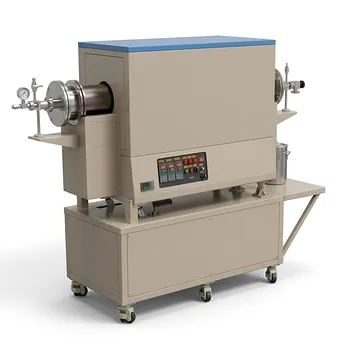
900°C Max Rotary Tube Furnace with 8 Inch 310S Alloy Tube and Optional Multi Zone Heating for Industrial Material Calcination
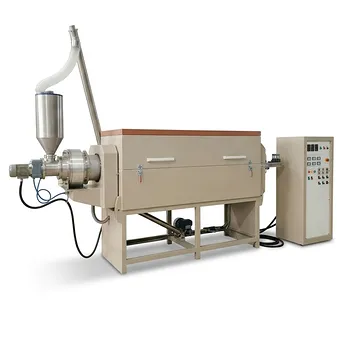
Continuous Feeding Rotary Tube Furnace for Industrial Powder Heat Treatment and Material Research
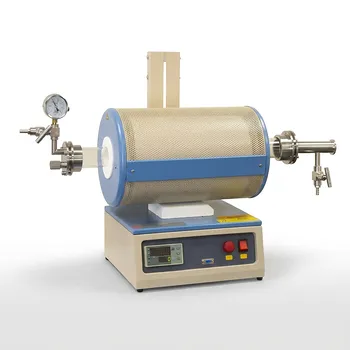
1100C Tube Furnace with Vacuum Flange and Programmable Temperature Controller for Material Science and Industrial Heat Treatment
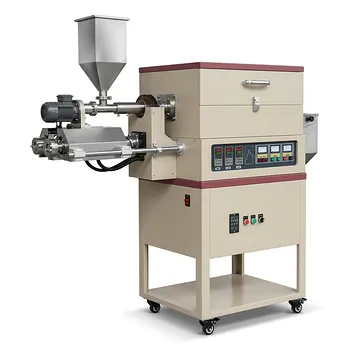
Laboratory Tilting Rotary Tubular Furnaces for Material Science and Industrial Heat Treatment

Compact High Temperature 1600C Tube Furnace with 50mm Alumina Tube and Vacuum Flanges for Material Sintering

High Temperature 1700C Tube Furnace with High Vacuum Turbomolecular Pump System and Multi Channel Mass Flow Controller Gas Mixer

Vertical 1700C Vacuum and Atmosphere Tube Furnace with 80mm Alumina Tube

High Temperature 1700C Vertical Tube Furnace for Powder Spherification and Material Sintering

High Temperature 1700C Six Zone Split Tube Furnace with Alumina Tube and Water Cooled Flanges

Compact Vertical Split Quartz Tube Furnace with Stainless Steel Vacuum Flanges for Rapid Thermal Quenching and Controlled Atmosphere Material Processing

1800C High Temperature Compact Vacuum Tube Furnace with 60mm OD Alumina Tube and Kanthal MoSi2 Heating Elements

1200°C 5 Inch Vertical Quartz Tube Furnace with Stainless Steel Vacuum Flanges
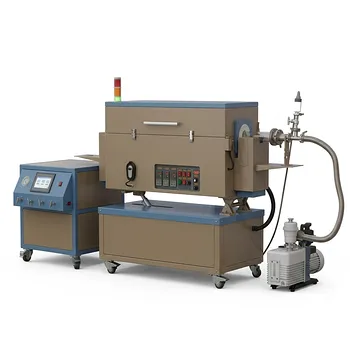
5 Inch Three Zone Rotary Tube Furnace with Integrated Gas Delivery System and 1200C Capability for Advanced Material CVD Processing

High Temperature 1700C Benchtop Tube Furnace with 5 Inch Heating Zone High Purity Alumina Tube and Vacuum Sealing Flanges

High Temperature Automated 5 Inch Tube Furnace for Autonomous Material Research and Advanced Laboratory R&D
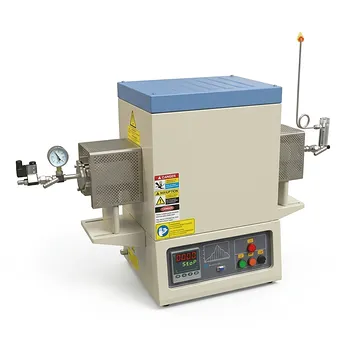
1700C Hydrogen Gas Tube Furnace with 60mm Alumina Process Tube and Integrated Hydrogen Safety Detector
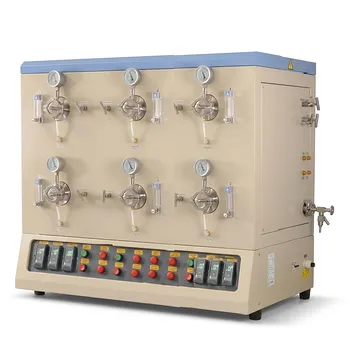
1200C High Throughput Multi Channel Tube Furnace with 50mm Quartz Tubes for Annealing and Material Phase Diagram Research
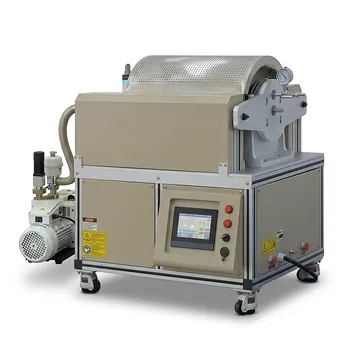
Automated 1200 C Tube Furnace for AI Material Research with 6 Inch OD and Sliding Flange
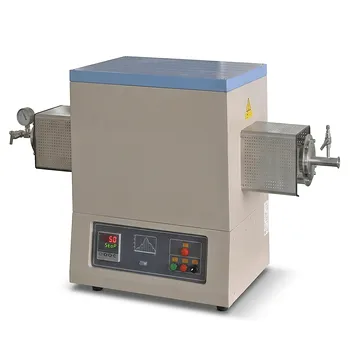
High Temperature 1700C Tube Furnace with 4 Inch OD Alumina Tube and Vacuum Sealing Flanges