What is the role of oxygen in tube furnace sintering for NCM90-6-4? Optimize Your Cathode Material Quality
Updated 3 months ago
The high-purity oxygen environment is the essential chemical stabilizer required to maintain the structural integrity of high-nickel cathode materials. During the sintering of NCM90-6-4, the continuous flow of oxygen prevents the spontaneous reduction of nickel ions from their trivalent state ($Ni^{3+}$) to a divalent state ($Ni^{2+}$). This preservation is critical because it inhibits "cation mixing"—the migration of nickel into lithium sites—which otherwise degrades the battery's capacity and cycling stability.
To successfully synthesize high-nickel cathodes like NCM90-6-4, the tube furnace must act as more than a heat source; it must function as a pressurized chemical reactor. The oxygen flow ensures that the transition metal layers remain distinct from the lithium layers, securing the material's electrochemical potential.
Suppressing the Reduction of Trivalent Nickel
Maintaining the $Ni^{3+}$ Oxidation State
High-nickel materials are inherently unstable at the high temperatures required for sintering. In a standard atmosphere, trivalent nickel ($Ni^{3+}$) tends to lose oxygen and reduce to divalent nickel ($Ni^{2+}$).
A tube furnace providing a continuous flow of high-purity oxygen (often at rates like 10 L/h) creates a strong oxidative atmosphere. This pressure of oxygen effectively "forces" the nickel to remain in its $Ni^{3+}$ state, which is necessary for the material’s high energy density.
Inhibiting Oxygen Vacancy Formation
The presence of oxygen prevents the formation of oxygen vacancies within the crystal lattice. If vacancies form, the lattice becomes unstable, leading to structural collapse during long-term battery cycling.
By repairing these defects during the sintering process, the oxygen environment optimizes the lattice oxygen stability. This is particularly important for advanced compositions that may include dopants like tellurium or aluminum.
Preventing Cation Mixing and Structural Disorder
The Problem of Ionic Radius Similarity
Divalent nickel ($Ni^{2+}$) has an ionic radius almost identical to that of lithium ($Li^+$). If nickel reduces to $Ni^{2+}$, it can easily migrate into the lithium layers of the cathode.
This phenomenon, known as cation mixing, creates "dead zones" in the material where lithium ions can no longer move freely. The high-purity oxygen flow minimizes the concentration of $Ni^{2+}$, thereby keeping the nickel strictly within the transition metal layers.
Facilitating the $R\bar{3}m$ Layered Structure
A well-ordered $R\bar{3}m$ hexagonal layered structure is the hallmark of a high-performance cathode. The oxidative environment provided by the tube furnace ensures the full development of this structure during the solid-state reaction.
Without sufficient oxygen, the material may transition into a rock-salt phase or other disordered structures. These disordered phases significantly reduce the specific capacity and rate capability of the final battery cell.
The Role of the Tube Furnace in Process Control
Precise Thermal Decomposition
The tube furnace provides a controlled environment where organic precursors and lithium salts can undergo thermal decomposition. As these precursors break down, the flowing oxygen carries away byproduct gases, ensuring a clean reaction site.
This flow also promotes the formation of stable chemical bonds between the cathode surface and any protective coatings (such as nanosheets) being applied during the sintering process.
Managing Atomic Diffusion and Gradients
The furnace’s ability to maintain a stable oxygen field alongside multi-stage temperature control (e.g., pre-heating at 450°C and sintering at 710-740°C) is vital.
This precision allows for the fine-tuning of element concentration gradients. It ensures that dopants or stabilizing elements can diffuse to the appropriate depth within the particles without compromising the core chemistry.
Understanding the Trade-offs
The Risk of Lithium Loss
While high temperatures are necessary for crystalline growth, they also increase the volatility of lithium. If the oxygen flow and temperature are not perfectly balanced, lithium loss can occur at the particle surface, leading to an off-stoichiometric final product.
Atmosphere Uniformity Challenges
In large-scale tube furnaces, ensuring that the oxygen concentration is uniform across the entire length of the tube can be difficult. Any "dead spots" with lower oxygen partial pressure will result in localized cation mixing, leading to inconsistent electrochemical performance across a single batch of material.
How to Apply This to Your Project
When configuring your sintering process for high-nickel cathode materials, consider your specific structural goals:
- If your primary focus is maximizing discharge capacity: Maintain the highest possible oxygen purity and flow rate to ensure maximum $Ni^{3+}$ retention and minimal cation mixing.
- If your primary focus is long-term cycling stability: Prioritize a tube furnace with multi-stage temperature ramps to allow for the healing of oxygen vacancies and the formation of stable lattice structures.
- If your primary focus is surface protection: Ensure the oxygen flow is sufficient to completely remove organic byproduct gases during the decomposition of coating precursors.
Mastering the oxidative environment of the tube furnace is the definitive step in transitioning from unstable precursors to high-performance NCM90-6-4 cathode materials.
Summary Table:
| Function | Mechanism in Tube Furnace | Impact on Cathode Performance |
|---|---|---|
| Oxidation State Control | Maintains Nickel in $Ni^{3+}$ state | Prevents capacity degradation |
| Cation Mixing Inhibition | Prevents $Ni^{2+}$ migration to Li sites | Ensures high cycling stability |
| Lattice Stabilization | Repairs oxygen vacancies in the lattice | Enhances structural integrity |
| Structural Ordering | Promotes $R\bar{3}m$ layered structure | Maximizes specific capacity |
| Byproduct Removal | Continuous flow purges decomposition gases | Ensures cleaner chemical bonding |
Elevate Your Battery Material R&D with THERMUNITS
Achieving the perfect $Ni^{3+}$ oxidation state and suppressing cation mixing in NCM90-6-4 requires more than just heat; it requires precision atmosphere control. THERMUNITS is a leading manufacturer of high-temperature laboratory equipment, specializing in advanced thermal processing solutions for material science and industrial R&D.
Our high-performance Tube Furnaces, Atmosphere Furnaces, and CVD/PECVD systems are engineered to provide the uniform high-purity oxygen flow and multi-stage temperature precision necessary for high-nickel cathode synthesis. Beyond tube furnaces, we offer a comprehensive range including:
- Muffle, Vacuum, and Rotary Furnaces
- Hot Press and Vacuum Induction Melting (VIM) Furnaces
- Dental Furnaces and Electric Rotary Kilns
- Specialized Thermal Elements
Ready to optimize your high-energy density materials? Contact us today to discuss your specific laboratory heat treatment requirements and discover how our equipment can drive your innovation forward.
References
- Marcel Heidbüchel, Johannes Kasnatscheew. Ultrahigh Ni‐Rich (90%) Layered Oxide‐Based Cathode Active Materials: The Advantages of Tungsten (W) Incorporation in the Precursor Cathode Active Material. DOI: 10.1002/smsc.202400135
Mentioned Products
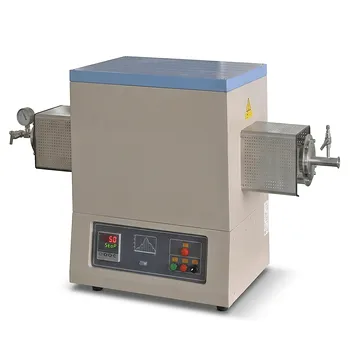
- Compact High Temperature 1600C Tube Furnace with 50mm Alumina Tube and Vacuum Flanges for Material Sintering
- High Temperature 1700C Vertical Tube Furnace for Powder Spherification and Material Sintering
- Compact Hybrid Muffle and Tube Furnace for 1000C Controlled Atmosphere Laboratory Material Sintering
- 1500C 3-Zone Rotary Tube Furnace 60mm with Automatic Powder Feeding and Receiving System for Continuous Material Synthesis
- High Temperature Vertical Atmosphere Controlled Furnace with Automatic Bottom Loading and 1700°C Capacity for Advanced Material Research
People Also Ask
- How does a high-temperature tube furnace contribute to MoS2/CNT photocathode formation? Optimizing Phase & Interface
- What role does a high-temperature tube furnace play in CVD synthesis of silicon nanowires? Master VLS Growth Precision.
- Function of tube furnaces in cellulose aerogel carbonization? Achieve High-Performance Materials
- What is the role of a high-temperature tube furnace in the calcination process of ZnO/In2O3 nanocomposites?
- What role does a high-temperature tube furnace play in the sulfidation heat treatment of CoS@C/MXene nanocomposites? Guide

Tech Team · ThermUnits
Last updated on Jun 02, 2026
Related Products

Compact High Temperature 1600C Tube Furnace with 50mm Alumina Tube and Vacuum Flanges for Material Sintering

High Temperature 1700C Vertical Tube Furnace for Powder Spherification and Material Sintering
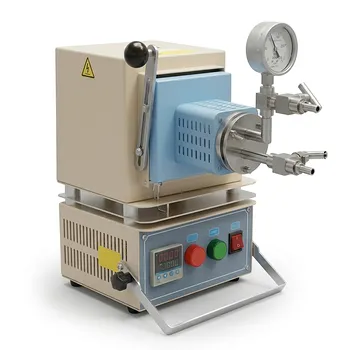
Compact Hybrid Muffle and Tube Furnace for 1000C Controlled Atmosphere Laboratory Material Sintering
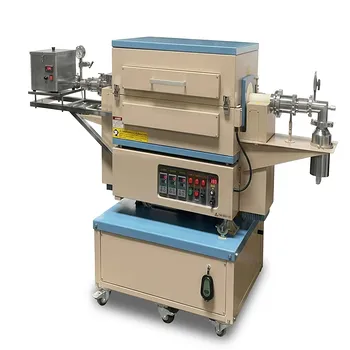
1500C 3-Zone Rotary Tube Furnace 60mm with Automatic Powder Feeding and Receiving System for Continuous Material Synthesis
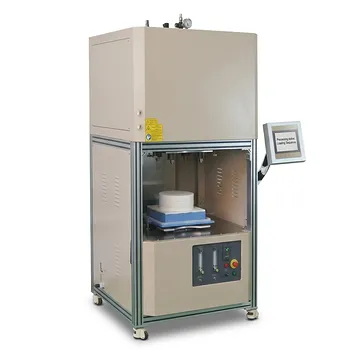
High Temperature Vertical Atmosphere Controlled Furnace with Automatic Bottom Loading and 1700°C Capacity for Advanced Material Research

High Temperature Automated 5 Inch Tube Furnace for Autonomous Material Research and Advanced Laboratory R&D

1200C High Throughput Multi Channel Tube Furnace with 50mm Quartz Tubes for Annealing and Material Phase Diagram Research
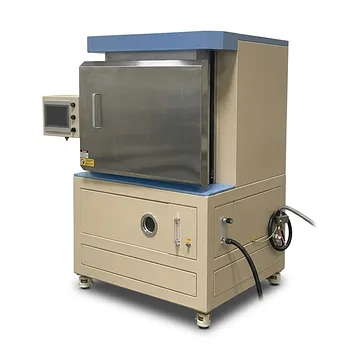
1650C High Temperature Atmosphere Controlled Box Furnace with 65L Chamber for Advanced Material Sintering and Industrial Heat Treatment
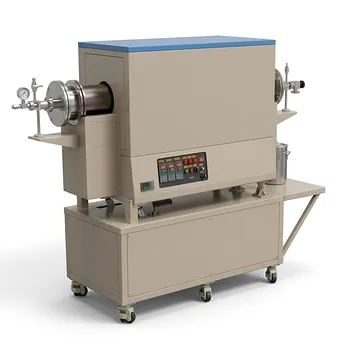
900°C Max Rotary Tube Furnace with 8 Inch 310S Alloy Tube and Optional Multi Zone Heating for Industrial Material Calcination
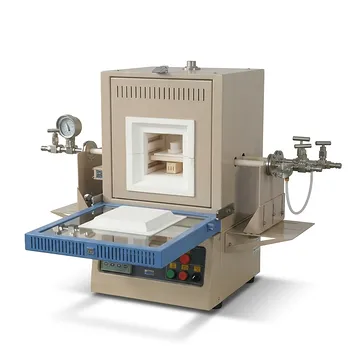
1700C Compact Hybrid Furnace with Dual Layer Box Sintering and Controlled Atmosphere Alumina Tubes
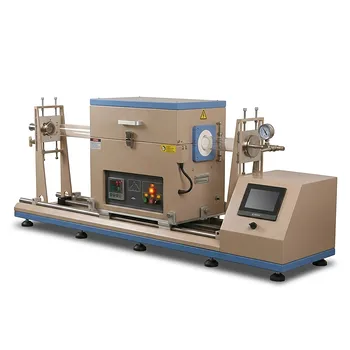
1200C Sliding Tube Furnace for Rapid Thermal Processing and CVD Graphene Growth with 100mm OD Capacity
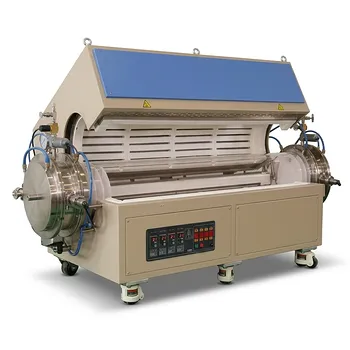
1200C Max Four Zone Split Tube Furnace with Optional Large Diameter Quartz Tubes
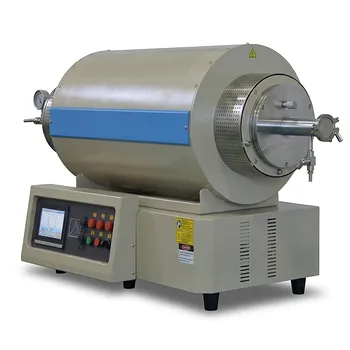
1200C Max Three Zone Tube Furnace 6 Inch OD Max with Tube and Flange

1200°C 5 Inch Vertical Quartz Tube Furnace with Stainless Steel Vacuum Flanges
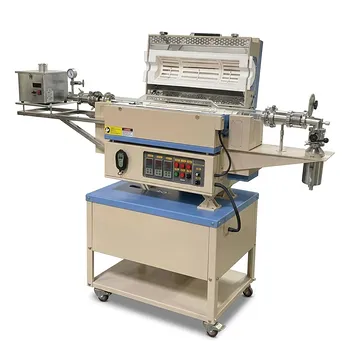
5 Inch Rotary Tube Furnace with Automatic Feeding and Receiving System 1200C Three Zone CVD Powder Processing

Vertical 1700C Vacuum and Atmosphere Tube Furnace with 80mm Alumina Tube
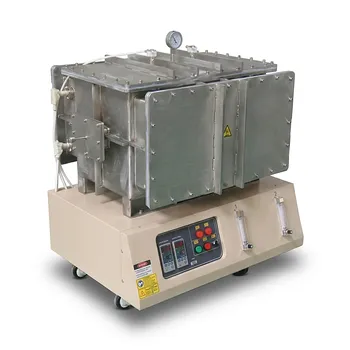
1500°C Atmosphere Controlled Rapid Heating Furnace for Material Science and Battery Powder Sintering
Rapid Thermal Processing Sliding Tube Furnace with 4 Inch OD Quartz Tube and 900C IR Heating

1800C High Temperature Compact Vacuum Tube Furnace with 60mm OD Alumina Tube and Kanthal MoSi2 Heating Elements