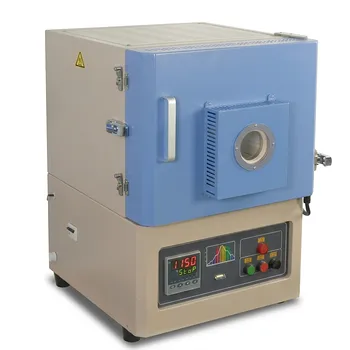
What is the role of the high-temperature atmosphere furnace in the two-step thermal stabilization process of pitch fibers?
Updated 3 months ago
The high-temperature atmosphere furnace is the primary reactor used to transition pitch fibers from a fusible state to an infusible, heat-resistant form. By providing a strictly controlled thermochemical environment, the furnace facilitates specific oxidizing reactions that induce intermolecular cross-linking. This transformation is essential to ensure the fibers maintain their physical structure and do not melt or collapse when subjected to the extreme temperatures of subsequent carbonization.
The core role of the atmosphere furnace in pitch fiber stabilization is to manage a precise oxidative environment that triggers chemical cross-linking. This process creates a robust molecular framework, providing the thermal stability required for the fibers to survive ultra-high temperature processing without losing their structural integrity.
The Strategic Role of the Atmosphere Furnace
Facilitating Intermolecular Cross-linking
The furnace maintains a specific oxidizing atmosphere, such as air, to interact with the pitch precursors. This controlled exposure triggers chemical reactions that link individual polymer chains together.
This cross-linking is the fundamental change that alters the fiber's properties. It converts the pitch from a material that would simply melt into a stable, solid structure capable of withstanding intense heat.
Ensuring Structural Integrity
Without the precise environment of the furnace, pitch fibers would lose their shape during the transition to carbonization. The furnace ensures the fibers retain their predefined geometry throughout the two-step process.
By stabilizing the fibers, the furnace prevents fusion or collapse. This protection is vital for maintaining the high aspect ratio and mechanical properties expected in the final carbon fiber product.
Technical Foundations of the Stabilization Process
Precise Atmosphere Management
The furnace must be capable of maintaining exact gas compositions to regulate the rate of oxidation. If the atmosphere is not perfectly controlled, the fibers may undergo uneven stabilization, leading to internal defects.
Advanced sealing and gas flow systems allow the furnace to switch between or maintain specific oxidative levels. This precision is what enables the two-step process to successfully modify the fiber's chemical backbone.
Temperature Field Uniformity
Uniform heat distribution within the furnace is critical for consistent fiber quality. A homogeneous temperature field ensures that every fiber in a batch undergoes the same degree of cross-linking.
Inconsistencies in temperature can lead to "hot spots" where fibers might over-oxidize or "cold spots" where they remain fusible. High-quality atmosphere furnaces use sophisticated control systems to eliminate these thermal gradients.
Understanding the Trade-offs and Risks
The Risk of Over-Oxidation
While oxidation is necessary for stabilization, excessive exposure can lead to the oxidative destruction of the fiber. This can result in a loss of mass and a significant reduction in the mechanical strength of the resulting carbon fiber.
Finding the balance between sufficient cross-linking and avoiding structural damage is a narrow technical window. If the furnace temperature rises too quickly, the exothermic nature of the stabilization reaction can cause the fibers to catch fire or degrade.
Limitations of Processing Speed
Thermal stabilization is often the most time-consuming step in carbon fiber production. Because the chemical reactions must occur uniformly from the surface to the core of the fiber, heating rates are typically very slow.
Attempting to "force" the process by increasing furnace temperature prematurely usually results in a stabilized skin and a fusible core. This internal inconsistency leads to hollow or weak fibers during the carbonization stage.
How to Apply This to Your Project
Making the Right Choice for Your Goal
- If your primary focus is maximizing fiber tensile strength: Prioritize a furnace with exceptional temperature uniformity to ensure even cross-linking across the entire fiber tow.
- If your primary focus is reducing production cycle times: Implement a furnace with multi-zone temperature control to precisely manage the exothermic ramp-up during the two-step process.
- If your primary focus is experimental precursor development: Select an atmosphere furnace with high-precision gas mixing capabilities to test the effects of varying oxygen concentrations on stabilization.
Through the precise orchestration of heat and chemistry, the high-temperature atmosphere furnace serves as the indispensable bridge between raw pitch and high-performance carbon structures.
Summary Table:
| Key Feature | Functional Role | Impact on Fiber Quality |
|---|---|---|
| Oxidizing Atmosphere | Triggers intermolecular cross-linking | Transitions fibers from fusible to heat-resistant |
| Temperature Uniformity | Ensures homogeneous heat distribution | Prevents internal defects and "cold spots" |
| Atmosphere Management | Regulates gas composition and oxidation rate | Avoids mass loss and oxidative destruction |
| Multi-zone Control | Manages exothermic reaction heat | Optimizes cycle times and prevents fiber fusion |
Elevate Your Material Research with THERMUNITS
Are you looking to optimize your pitch fiber stabilization or carbon fiber R&D? THERMUNITS is a leading manufacturer of high-temperature laboratory equipment specifically designed for material science and industrial R&D.
We provide a comprehensive range of thermal processing solutions, including:
- Atmosphere & Vacuum Furnaces (Ideal for precise stabilization processes)
- Tube & Rotary Furnaces
- CVD/PECVD Systems
- Vacuum Induction Melting (VIM) & Hot Press Furnaces
Our equipment is engineered to deliver the precise atmosphere management and temperature uniformity required for complex heat treatments. Contact us today to discuss your project and discover how THERMUNITS can provide the reliable, high-performance tools your laboratory deserves.
References
- Shahrad Khodaei Booran, Cagri Ayranci. Physicochemical Properties of Carbon Fiber Formulated from Melt-Spun Raw Asphaltene. DOI: 10.1021/acsomega.4c06464
Mentioned Products
- 1650C High Temperature Atmosphere Controlled Box Furnace with 65L Chamber for Advanced Material Sintering and Industrial Heat Treatment
- High Temperature Vertical Atmosphere Controlled Furnace with Automatic Bottom Loading and 1700°C Capacity for Advanced Material Research
- High Temperature 1500C Benchtop Muffle Furnace 3.6L Alumina Fiber Chamber Programmable Controller Sintering Annealing Carbonization Thermal Processing System
- Roller Table Atmosphere Furnace 1500C High Temperature Battery Material Sintering System 112L Capacity
- High Temperature Oxygen and Inert Atmosphere Controlled Furnace 8 Liter 1700C Sintering System for Advanced Materials RD
People Also Ask
- What role does atmosphere control play in technical ceramics and glass? Master Material Purity and Precision
- What role does a high-temperature atmosphere furnace play in the direct electrochemical reduction of CO2? - Key Insights
- What is the role of a high-temperature box furnace in the solid-state synthesis of Europium-doped M3MgSi2O8 phosphors?
- What is the role of a high-temperature box furnace in Na3MnZr(PO4)3 synthesis? Engineering High-Performance NASICON.
- What physical conditions does a high-temperature atmosphere furnace provide for MXene exfoliation? Process Guide

Tech Team · ThermUnits
Last updated on Jun 02, 2026
Related Products
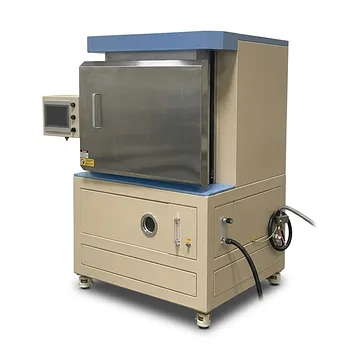
1650C High Temperature Atmosphere Controlled Box Furnace with 65L Chamber for Advanced Material Sintering and Industrial Heat Treatment
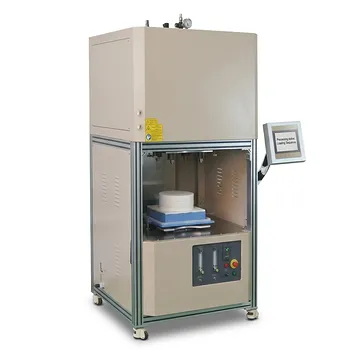
High Temperature Vertical Atmosphere Controlled Furnace with Automatic Bottom Loading and 1700°C Capacity for Advanced Material Research

High Temperature 1500C Benchtop Muffle Furnace 3.6L Alumina Fiber Chamber Programmable Controller Sintering Annealing Carbonization Thermal Processing System
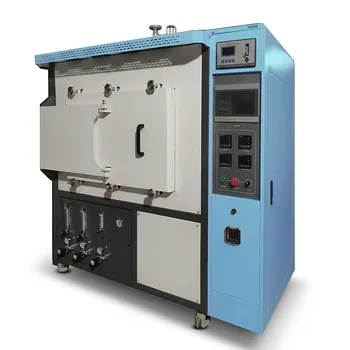
Roller Table Atmosphere Furnace 1500C High Temperature Battery Material Sintering System 112L Capacity
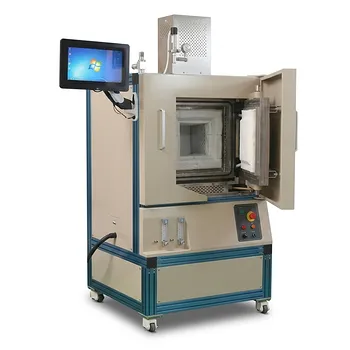
High Temperature Oxygen and Inert Atmosphere Controlled Furnace 8 Liter 1700C Sintering System for Advanced Materials RD
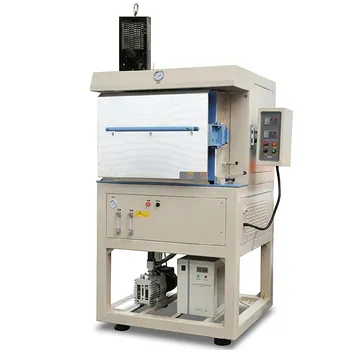
1200C Hydrogen Atmosphere Box Furnace with 5 Heated Sides and 64L Chamber
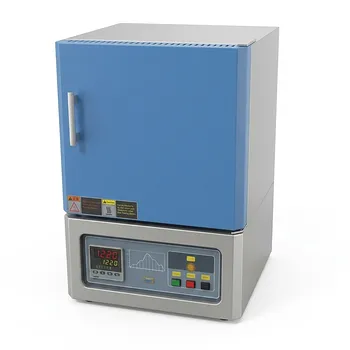
High Temperature Benchtop Muffle Furnace 1700C 10L Chamber Alumina Fiber Insulation MoSi2 Heating Elements
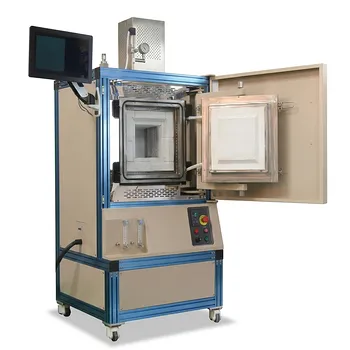
High Temperature Hydrogen Atmosphere Box Furnace 1650C Max Reducing Environment Material Synthesis System 8x8x8 Chamber

1750°C High Temperature Benchtop Vacuum Atmosphere Tube Furnace with Kanthal Super 1800 Heating Elements and 60mm Alumina Processing Tube
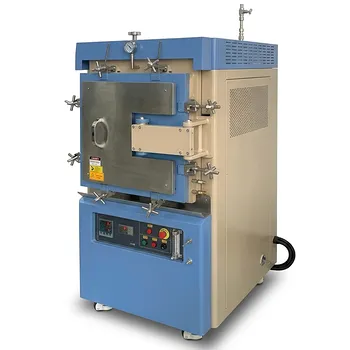
Atmosphere Controlled Muffle Furnace 1700C Maximum Temperature 80L High Capacity Vacuum Inert Gas Box Furnace
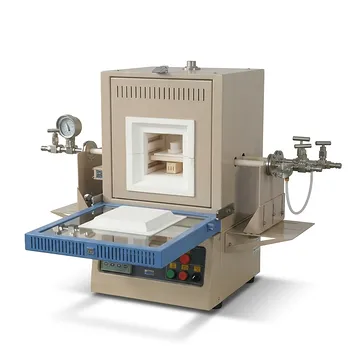
1700C Compact Hybrid Furnace with Dual Layer Box Sintering and Controlled Atmosphere Alumina Tubes

High Temperature 1700C Vertical Tube Furnace for Powder Spherification and Material Sintering
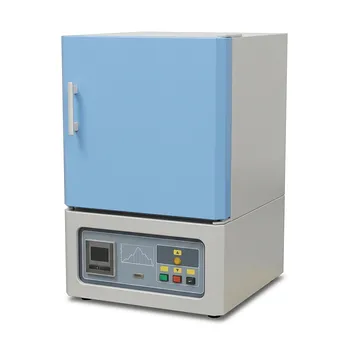
1800C Bench Top Muffle Furnace with Kanthal Super 1900 Heating Elements and 3.6L Alumina Fiber Chamber

Vertical 1700C Vacuum and Atmosphere Tube Furnace with 80mm Alumina Tube
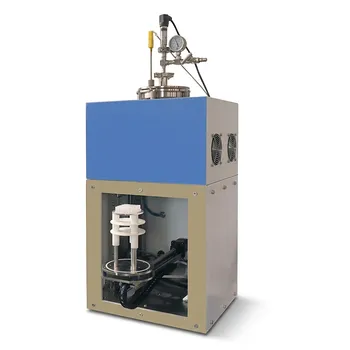
Rapid Thermal Processing RTP Atmosphere Controlled Bottom Loading Furnace 1100C High Throughput 50C per Second Heating Rate
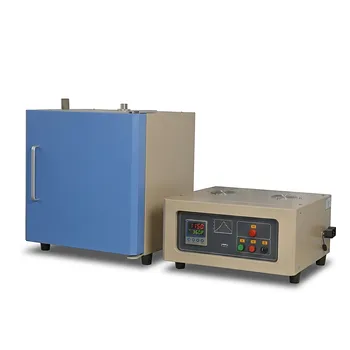
High Temperature Muffle Furnace with Alloy Chamber for Debinding and Sintering Applications
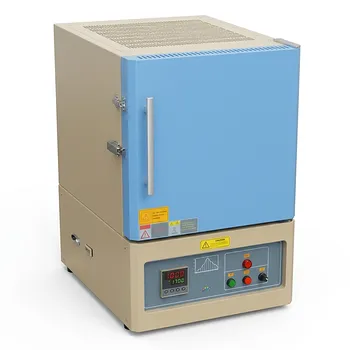
Large Bench Top 1700C High Temperature Muffle Furnace with 19L Chamber for Advanced Material Sintering and Annealing
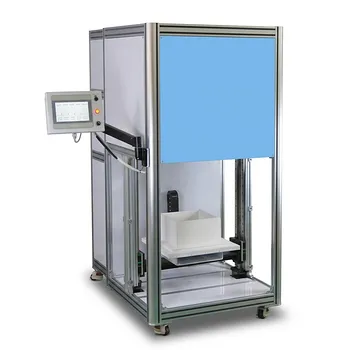
High Temperature 1600°C Three Zone Heated Bottom Loading Box Furnace with Rapid Thermal Processing Chamber 72L Volume
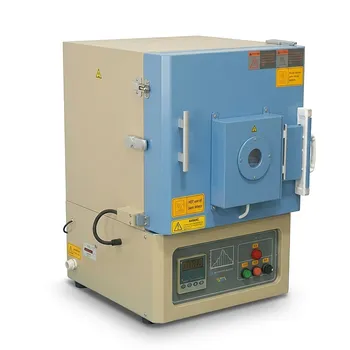
High Temperature Benchtop Muffle Furnace 1500C with 3.6L Chamber and Quartz Observation Window