What is the role of using an argon and hydrogen gas mixture (95% Ar / 5% H2) for CdS nanobelts? Boost Purity & Growth
Updated 3 months ago
The use of a 95% Argon and 5% Hydrogen gas mixture is a strategic choice designed to facilitate controlled material transport while maintaining a high-purity chemical environment. In the synthesis of Cadmium Sulfide (CdS) nanobelts, the Argon serves as an inert carrier to move vaporized precursors, while the Hydrogen provides a reducing atmosphere that actively prevents oxidation. This dual-action approach is critical for achieving the near-perfect lattice structures and chemical purity required for high-performance nanomaterials.
Core Takeaway: The Ar/H2 mixture acts as both a physical transport medium and a chemical protective agent, ensuring that CdS nanobelts grow without oxidative defects or structural impurities.
The Dual Functionality of the Gas Mixture
Argon as the Inert Transport Medium
Argon functions as the primary carrier gas due to its chemically inert nature. Its role is to transport CdS vapor from the source zone to the cooler substrate zone where nucleation and growth occur.
By maintaining a constant flow, Argon ensures a stable internal pressure within the furnace. This stability prevents the disordered diffusion of gas-phase components, which is essential for the uniform growth of nanobelt structures.
Hydrogen as the Reducing Agent
The addition of 5% Hydrogen transforms the environment from merely inert to actively reducing. At the high temperatures required for synthesis, even trace amounts of oxygen can lead to unwanted oxidation reactions.
Hydrogen suppresses these reactions by reacting with any residual oxygen or moisture in the system. This ensures that the resulting CdS nanobelts maintain a near-perfect lattice structure and high chemical purity, free from oxygen contamination.
Impact on Nanostructure Quality
Maintaining Stoichiometric Integrity
For CdS to function effectively in electronic or optical applications, it must maintain a precise ratio of Cadmium to Sulfur. Oxygen interference can disrupt this balance, leading to point defects in the crystal lattice.
The reducing atmosphere provided by the Hydrogen component helps maintain the stoichiometric purity of the material. This results in nanobelts with fewer structural traps and better overall performance.
Ensuring Uniform Nucleation
A stable flow of carrier gas ensures that sulfur and cadmium vapors are delivered to the sample surface at a constant rate. This uniformity is vital for the transition from initial nucleation to the sustained growth of long, high-aspect-ratio nanobelts.
Without the controlled delivery provided by the Argon, the growth process could become erratic. This would lead to non-uniform dimensions and polycrystalline defects rather than the desired single-crystal nanobelt morphology.
Understanding the Trade-offs and Risks
The Safety Balance of Hydrogen Concentration
Using a 5% Hydrogen concentration is a calculated compromise between chemical effectiveness and laboratory safety. While higher concentrations of Hydrogen provide stronger reducing power, they also significantly increase the risk of explosion.
The 5% threshold is often chosen because it is near or below the lower flammability limit of Hydrogen in many environments. This allows researchers to reap the benefits of a reducing atmosphere without the extreme risks associated with pure Hydrogen.
Potential for Over-Reduction
While Hydrogen prevents oxidation, an excess of reducing power can occasionally lead to over-reduction. In some material systems, too much Hydrogen might cause the precursor to reduce all the way to a metallic state rather than forming the intended semiconductor compound.
Precise control of the flow rate and temperature is necessary to ensure the Hydrogen only targets the unwanted oxygen species. If the flow is not calibrated, it could potentially strip sulfur from the growing CdS, creating sulfur vacancies.
How to Optimize Gas Use for Your Synthesis
Achieving the highest quality CdS nanobelts requires balancing the flow dynamics with the chemical environment. Consider these guidelines based on your specific synthesis goals:
- If your primary focus is crystalline perfection: Prioritize the Ar/H2 blend to ensure a strictly reducing environment that eliminates oxygen-induced lattice strain.
- If your primary focus is high-throughput growth: Focus on the flow rate of the Argon carrier to ensure rapid and consistent delivery of precursors to the growth zone.
- If your primary focus is safety and stability: Ensure your furnace seals are vacuum-tight and maintain the Hydrogen concentration at or below 5% to prevent hazardous accumulations.
By precisely controlling this gas-phase environment, you ensure the synthesis of CdS nanobelts that meet the rigorous standards of modern nanotechnology.
Summary Table:
| Gas Component | Primary Function | Impact on Nanostructure |
|---|---|---|
| Argon (95%) | Inert Transport Medium | Ensures stable vapor delivery and uniform nucleation |
| Hydrogen (5%) | Reducing Agent | Prevents oxidation and maintains stoichiometric purity |
| Ar/H2 Blend | Synergistic Environment | Produces defect-free, single-crystal nanobelts safely |
Elevate Your Nanomaterial Synthesis with THERMUNITS
Achieving the perfect lattice structure in CdS nanobelts requires more than just chemistry—it requires absolute thermal and atmospheric precision. THERMUNITS is a leading manufacturer of high-temperature laboratory equipment, providing the advanced tools necessary for cutting-edge material science.
Our comprehensive range of Atmosphere Furnaces, CVD/PECVD systems, and Vacuum Tube Furnaces is engineered to handle specialized gas mixtures like Ar/H2 with unmatched stability. We empower researchers and industrial R&D teams to maintain high-purity environments, ensuring every synthesis meets the highest standards of stoichiometric integrity.
Optimize your heat treatment today:
- Precision Control: Specialized gas delivery systems for reducing atmospheres.
- Versatile Solutions: From Muffle and Rotary furnaces to Vacuum Induction Melting (VIM).
- Expert Support: Tailored equipment for specific material growth requirements.
Contact THERMUNITS Today to explore our full range of thermal processing solutions and drive your research forward!
References
- Yao Liu, Yingkai Liu. High-response formamidine bromide lead hybrid cadmium sulfide photodetector. DOI: 10.3788/col202422.022502
Mentioned Products
- 1500C Three Zone Vertical Pyrolysis Furnace for Nanoparticle Synthesis and Advanced Oxide Coating
- High Temperature Dual Zone Rotating Tube Furnace 1500C Silicon Carbide Heating for Advanced Material Synthesis
- 1200°C Five Side Heating Atmosphere Controlled Muffle Furnace 64 Liter High Uniformity Box Furnace for Material Synthesis
- Two Zone Rotary Tube Furnace for Powder CVD Coating and Core Shell Material Synthesis 1100C
- 1500C 3-Zone Rotary Tube Furnace 60mm with Automatic Powder Feeding and Receiving System for Continuous Material Synthesis
People Also Ask
- Why is high-precision temperature control essential in a pyrolysis furnace? Master Pd NPs/NO-C Catalyst Synthesis
- Why is Nitrogen (N2) required for 3D carbon electrodes? Ensure material purity and structural integrity.
- What is the technical necessity of multiple high-temperature thermocouples in a pyrolysis furnace? Precision Control
- Why is it necessary to maintain a strict nitrogen (N2) atmosphere during the operation of a pyrolysis furnace? (Pro Tips)
- Why are precise nitrogen supply systems and flow meters necessary in the pyrolysis process? Optimize Purity & Yield.

Tech Team · ThermUnits
Last updated on Jun 02, 2026
Related Products
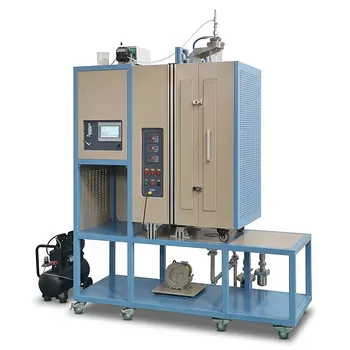
1500C Three Zone Vertical Pyrolysis Furnace for Nanoparticle Synthesis and Advanced Oxide Coating
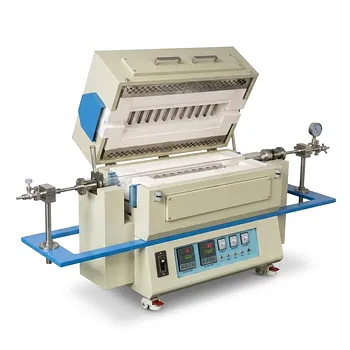
High Temperature Dual Zone Rotating Tube Furnace 1500C Silicon Carbide Heating for Advanced Material Synthesis
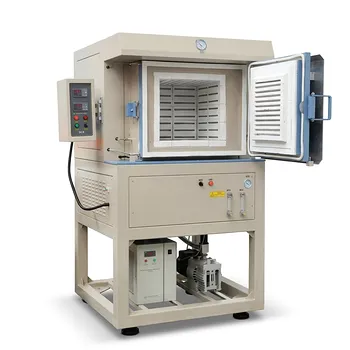
1200°C Five Side Heating Atmosphere Controlled Muffle Furnace 64 Liter High Uniformity Box Furnace for Material Synthesis
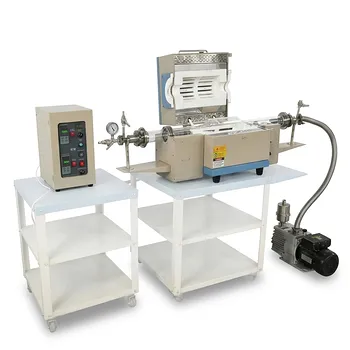
Two Zone Rotary Tube Furnace for Powder CVD Coating and Core Shell Material Synthesis 1100C
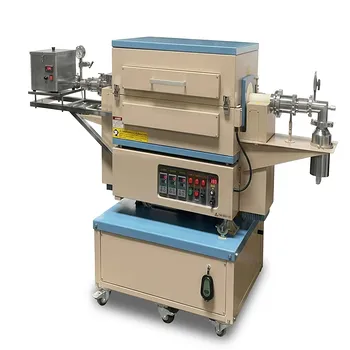
1500C 3-Zone Rotary Tube Furnace 60mm with Automatic Powder Feeding and Receiving System for Continuous Material Synthesis
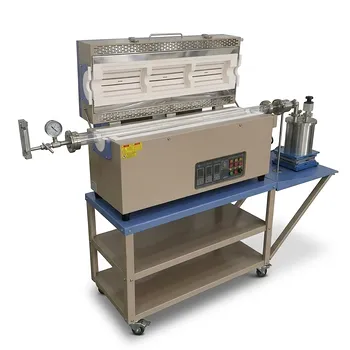
5 Inch Two Zone Rotary Tube Furnace 1100C for Powder CVD and Material Synthesis
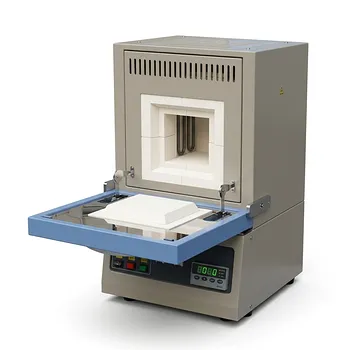
Five Sided Heating Muffle Furnace High Uniformity 1200C Lab Box Furnace 27L Alumina Fiber Chamber
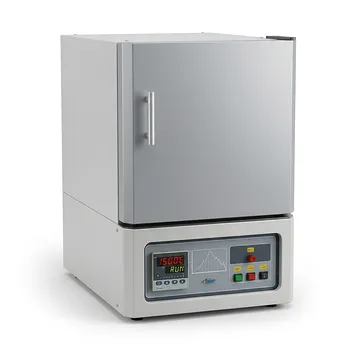
High Temperature 1500C Benchtop Muffle Furnace 3.6L Alumina Fiber Chamber Programmable Controller Sintering Annealing Carbonization Thermal Processing System
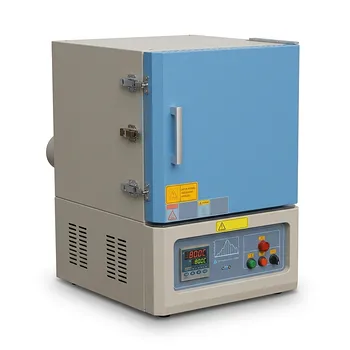
1800C Bench Top Muffle Furnace 18 Liters with Kanthal Super 1900 Heating Elements for High Purity Ceramic Sintering and Material Research
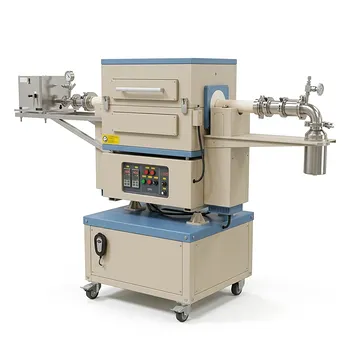
1500C Max Dual Zone Rotary Tube Furnace with 60 mm OD Alumina Tube for High Temperature Material Synthesis
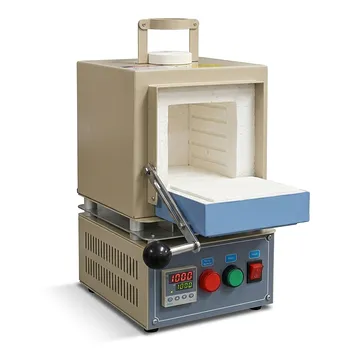
Compact 1000C Muffle Furnace with Programmable Controller and 2 Inch Top Port for Vacuum and Atmosphere Material Research
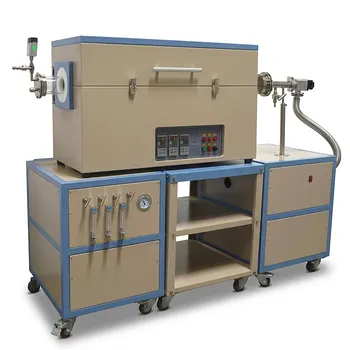
Three Zone Quartz Tube Furnace with 3 Channel Gas Mixer Vacuum Pump and Anti Corrosive Vacuum Gauge
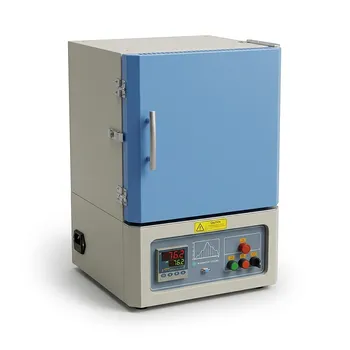
1750C Bench Top Muffle Furnace 3.6L High Grade Molybdenum Disilicide Heating Elements Laboratory Heat Treatment Equipment
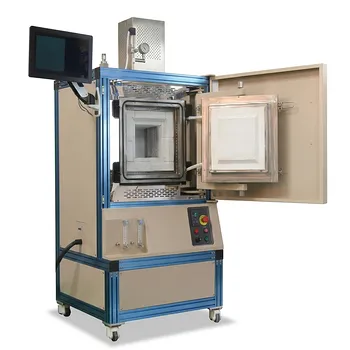
High Temperature Hydrogen Atmosphere Box Furnace 1650C Max Reducing Environment Material Synthesis System 8x8x8 Chamber
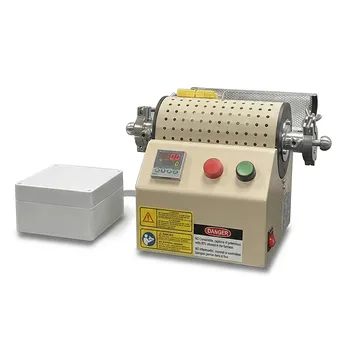
1000C Mini Tube Furnace with 20mm Quartz Tube and Vacuum Flanges for Material Science Research and Controlled Atmosphere Small Sample Processing
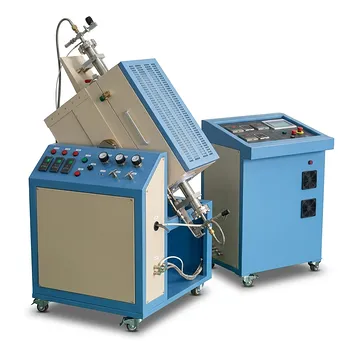
1100C High Pressure Rocking Tube Furnace with 2 Inch Super Alloy Processing Tube for Material Synthesis
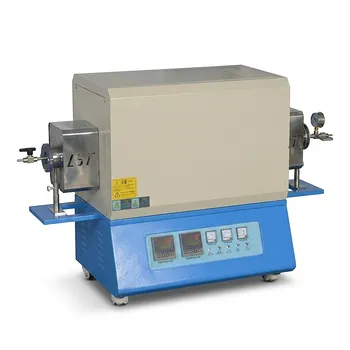
High Temperature Dual Zone Vacuum Tube Furnace for Material Research and CVD Processing

1100°C Vertical Laboratory Furnace for DIY Tubular Reactors with PID Temperature Controller

High Temperature 1700C Vertical Tube Furnace for Powder Spherification and Material Sintering