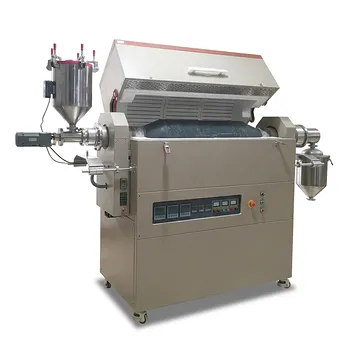
What role does a precision temperature-controlled tube furnace play in agricultural waste pyrolysis? Optimize Bio-energy
Updated 3 months ago
Precision temperature-controlled tube furnaces serve as the primary reactor for the thermochemical conversion of biomass into energy-rich products. By strictly regulating heating rates and dwell times, these furnaces allow researchers to dictate the specific chemical pathways through which agricultural waste decomposes. This precision ensures that the resulting bio-oil, bio-gas, and bio-char meet the specific calorific and structural requirements for energy applications.
The tube furnace is the fundamental tool for managing the thermodynamic environment of pyrolysis, enabling the selective breaking of molecular bonds to optimize the yield and energy density of the final fuel products.
The Mechanics of Targeted Molecular Breakdown
Controlling the Sequence of Chemical Dissociation
Agricultural waste consists primarily of hemicellulose, cellulose, and lignin, each of which decomposes at different temperature intervals. A precision tube furnace allows for specific heating rates, such as 100°C/min, to control exactly when these components break down. This sequence determines whether the biomass transforms into liquid bio-oil, solid bio-char, or combustible bio-gas.
Managing Thermodynamic Stability
A stable thermodynamic environment is essential for maintaining dwell times—the period biomass spends at a specific peak temperature. Consistent dwell times ensure that the thermochemical degradation is complete and uniform throughout the sample. This uniformity prevents the production of under-processed "raw" biomass or over-processed ash, both of which lower energy efficiency.
Induction of Stable Carbon Skeletons
At higher temperatures, typically around 700°C, the furnace induces carbonization to form a stable carbon skeleton. This process is critical for producing high-quality bio-char that can serve as a solid fuel or a precursor for activated carbon. The precision of the furnace ensures that the resulting carbon structures are consistent and possess the desired energy density.
Optimizing Product Yield and Energy Density
Determining Phase Proportions
The ratio of bio-oil, bio-char, and bio-gas is directly sensitive to the furnace's thermal profile. For instance, maintaining a constant temperature of 400°C may maximize solid bio-char yield, while higher temperatures or faster heating rates can favor gasification. By manipulating these variables, operators can "tune" the furnace to produce the specific energy carrier required for their project.
Enhancing Calorific Values
The calorific value, or the energy content of the fuel, is dictated by the degree of volatile removal and carbon concentration. A precision furnace ensures that volatiles are stripped away efficiently without losing the high-energy carbon content to unintended combustion. This leads to a more potent fuel product that performs better in downstream energy applications.
Surface Engineering and Pore Development
For energy storage or filtration applications, the tube furnace facilitates the development of complex pore networks. By using activating agents like steam or CO2 within the sealed environment, the furnace enables the creation of microporous and mesoporous structures. These structures are vital for the adsorption performance and chemical reactivity of modified bio-chars.
Atmospheric Integrity and Gas Control
Maintaining Oxygen-Free Environments
Pyrolysis requires an oxygen-free or oxygen-limited environment to prevent the biomass from simply burning. The sealed tube structure of these furnaces allows for the introduction of inert gases like Argon or Nitrogen. This isolation ensures that the produced samples reflect the original structural characteristics of the feedstock rather than combustion byproducts.
Facilitating Catalytic Pyrolysis
The closed design of the tube furnace makes it ideal for introducing chemical activators or metallic salts, such as manganese and magnesium. Under high heat, the furnace converts these salts into nano-scale oxides or metallic particles embedded within the carbon. These composites can significantly enhance the catalytic properties of the bio-char for specialized energy or environmental tasks.
Understanding the Trade-offs
Scaling and Throughput Limitations
While a tube furnace provides unmatched precision for research and benchmarking, it is often a batch-processing tool with limited volume. This makes it difficult to translate laboratory results directly to industrial-scale energy production without significant engineering adjustments. The focus is on quality and data accuracy rather than high-volume throughput.
Heating Rate Constraints
Although precision furnaces can achieve rapid heating, there is a physical limit to how quickly heat can penetrate the center of a biomass sample. Thermal gradients can occur if the sample is too large or the heating rate is too aggressive. This can lead to non-uniform products where the exterior is over-processed while the interior remains under-pyrolyzed.
Maintenance of Atmospheric Seals
The effectiveness of a tube furnace depends entirely on its atmospheric sealing. At very high temperatures (e.g., 1000°C), seals can degrade, allowing oxygen to leak in and ruin the experiment. Regular maintenance and careful selection of tube materials are required to prevent oxidation and ensure the purity of the thermal environment.
Applying Furnace Precision to Your Energy Goals
How to Apply This to Your Project
To achieve the best results in agricultural waste pyrolysis, align your furnace settings with your desired energy output.
- If your primary focus is Bio-Char Yield: Maintain lower temperatures (approx. 400°C) and longer dwell times to maximize the solid carbon skeleton.
- If your primary focus is High-Energy Bio-Gas: Utilize higher temperatures (above 700°C) and rapid heating rates to encourage the complete devolatilization of the biomass.
- If your primary focus is Catalytic Activity: Use the furnace to impregnate biomass with metallic salts and utilize an inert gas purge to create stable, nano-scale metallic oxides.
By mastering the thermal and atmospheric variables of a precision tube furnace, you can transform low-value agricultural waste into a high-performance, sustainable energy resource.
Summary Table:
| Pyrolysis Parameter | Role of the Tube Furnace | Desired Outcome |
|---|---|---|
| Temperature Control | Sequences decomposition of cellulose and lignin | Selective breakdown of biomass components |
| Atmosphere Integrity | Provides a sealed environment for Inert gases (Ar/N2) | Prevents combustion; ensures pure bio-products |
| Heating Rate | Manages rapid vs. slow thermochemical conversion | Determines proportions of oil, gas, and char |
| Dwell Time | Maintains stable thermodynamic peak conditions | Ensures uniform carbonization and energy density |
| Gas Control | Facilitates introduction of chemical activators | Enables surface engineering and pore development |
Maximize Your Research Efficiency with THERMUNITS
As a leading manufacturer of high-temperature laboratory equipment for material science and industrial R&D, THERMUNITS provides the precision tools necessary for advanced thermochemical research. Our comprehensive range of thermal processing solutions—including Tube, Rotary, Vacuum, Atmosphere, and Muffle furnaces, as well as CVD/PECVD systems and Vacuum Induction Melting (VIM) furnaces—are engineered to deliver the atmospheric integrity and temperature accuracy required for optimizing agricultural waste pyrolysis.
Whether you are focusing on bio-char energy density or catalytic bio-gas production, our expert team is ready to help you select the ideal heat treatment equipment.
Contact our technical team today to enhance your lab's capabilities with industry-leading thermal technology.
References
- Jelena Isailović, Vesna Antić. The energy potential of the products obtained by pyrolysis of agricultural waste. DOI: 10.5937/rgd240033i
Mentioned Products
- 1500C Three Zone Vertical Pyrolysis Furnace for Nanoparticle Synthesis and Advanced Oxide Coating
- 1100C Tube Furnace with Vacuum Flange and Programmable Temperature Controller for Material Science and Industrial Heat Treatment
- High Temperature Tube Furnace 1500C with Sliding Flanges and 50mm OD for Rapid Thermal Processing Fast Heating and Cooling
- High Temperature Hybrid Muffle and Tube Furnace with Vacuum Capability and PID Control
- Compact High Temperature 1600C Tube Furnace with 50mm Alumina Tube and Vacuum Flanges for Material Sintering
People Also Ask
- Why is high-precision temperature control essential in a pyrolysis furnace? Master Pd NPs/NO-C Catalyst Synthesis
- What is the technical necessity of multiple high-temperature thermocouples in a pyrolysis furnace? Precision Control
- Why is it necessary to maintain a strict nitrogen (N2) atmosphere during the operation of a pyrolysis furnace? (Pro Tips)
- Why is Nitrogen (N2) required for 3D carbon electrodes? Ensure material purity and structural integrity.
- Why are precise nitrogen supply systems and flow meters necessary in the pyrolysis process? Optimize Purity & Yield.

Tech Team · ThermUnits
Last updated on Jun 03, 2026
Related Products
1500C Three Zone Vertical Pyrolysis Furnace for Nanoparticle Synthesis and Advanced Oxide Coating

1100C Tube Furnace with Vacuum Flange and Programmable Temperature Controller for Material Science and Industrial Heat Treatment

High Temperature Tube Furnace 1500C with Sliding Flanges and 50mm OD for Rapid Thermal Processing Fast Heating and Cooling
High Temperature Hybrid Muffle and Tube Furnace with Vacuum Capability and PID Control

Compact High Temperature 1600C Tube Furnace with 50mm Alumina Tube and Vacuum Flanges for Material Sintering
Mini Rotary Tubular Furnaces for Precision Powder Heat Treatment and Thermogravimetric Analysis
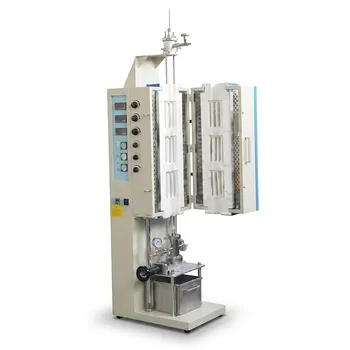
High Temperature Dual Zone Tube Furnace for Material Science Research and Professional Thermal Processing

High Temperature 1700C Vertical Tube Furnace for Powder Spherification and Material Sintering

High Temperature 1700C Benchtop Tube Furnace with 5 Inch Heating Zone High Purity Alumina Tube and Vacuum Sealing Flanges
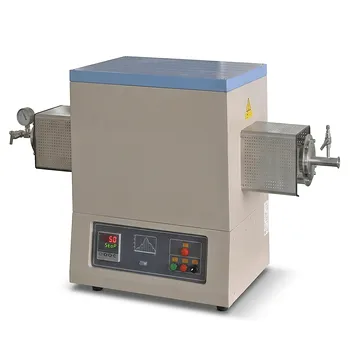
High Temperature 1700C Tube Furnace with 4 Inch OD Alumina Tube and Vacuum Sealing Flanges

1800C High Temperature Compact Vacuum Tube Furnace with 60mm OD Alumina Tube and Kanthal MoSi2 Heating Elements

High Temperature Automated 5 Inch Tube Furnace for Autonomous Material Research and Advanced Laboratory R&D
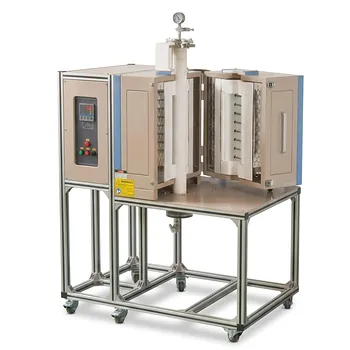
High Temperature 1700C Vertical Split Tube Furnace for Material Quenching and Single Crystal Growth
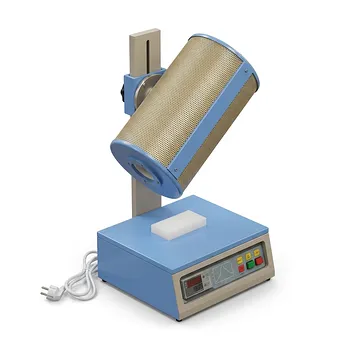
1100°C Vertical Laboratory Furnace for DIY Tubular Reactors with PID Temperature Controller
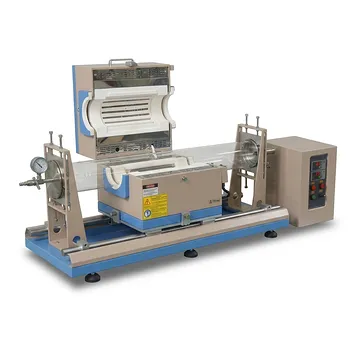
1200C High Temperature 5 Inch Sliding Tube Furnace for Rapid Thermal Processing RTP and Wafer Annealing

Compact Vertical Split Quartz Tube Furnace with Stainless Steel Vacuum Flanges for Rapid Thermal Quenching and Controlled Atmosphere Material Processing
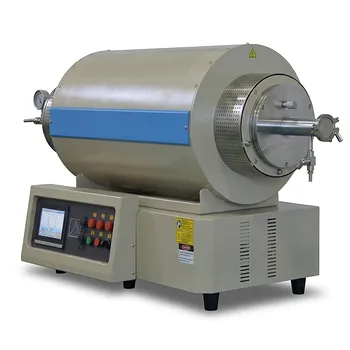
1200C Max Three Zone Tube Furnace 6 Inch OD Max with Tube and Flange
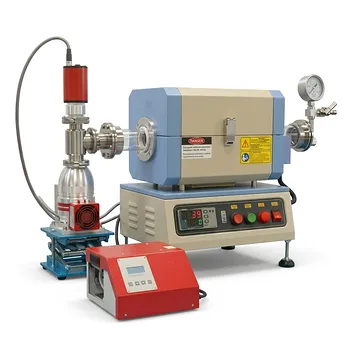
High Vacuum Compact Tube Furnace 1200C with Integrated Turbo Pump System and 8 Inch Heating Zone

1200°C 5 Inch Vertical Quartz Tube Furnace with Stainless Steel Vacuum Flanges