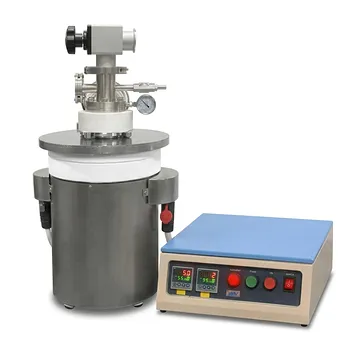
Why Use a Tube Furnace for Sintering Cu-Ag Circuits? Achieve Oxide-Free High Conductivity
Updated 3 months ago
The technical necessity for a reducing atmosphere tube furnace lies in its ability to chemically eliminate surface oxides and prevent further oxidation during the sintering process. Copper particles naturally form a non-conductive oxide layer when exposed to air during storage or printing. A tube furnace facilitates the introduction of a reducing gas mixture (such as H2/N2), which strips away this oxygen to allow for a true metallurgical bond between the copper and silver particles.
Core Takeaway: To achieve high electrical conductivity in copper-silver printed circuits, a tube furnace must provide a strictly sealed, reductive environment that removes existing oxides and prevents new ones from forming. This chemical "cleaning" at high temperatures is the only way to ensure proper material consolidation and metallic bonding.
The Chemical Imperative for Oxide Reduction
Stripping the Surface Oxide Layer
Copper powder is highly susceptible to oxidation, which creates a barrier on the surface of each particle. A reducing atmosphere, typically containing Hydrogen (H2), reacts with these oxides to convert them back into pure metallic copper.
Preventing High-Temperature Re-oxidation
At the elevated temperatures required for sintering (often exceeding 350°C), copper reacts even more aggressively with trace oxygen. The sealed environment of a tube furnace isolates the circuit from ambient air, ensuring the metal remains in a reduced, highly conductive state.
Converting Species for Catalytic Activity
Precise control within the furnace regulates the partial pressure of gases to convert oxidized copper into catalytic metallic copper (Cu0). This process is essential for maintaining the high activity and dispersion of particles within the printed matrix.
Promoting Metallurgical Integrity and Conductivity
Facilitating Thermal Diffusion
For copper and silver to sinter into a cohesive structure, atoms must move across particle boundaries via thermal diffusion. Oxide layers act as physical insulators that block this movement; removing them allows the particles to fuse into a solid, continuous network.
Ensuring Low-Resistance Interfaces
In a mixed-metal circuit, the interface between copper and silver must be metal-to-metal to minimize electrical resistance. The reductive environment ensures these interfaces are free of ceramic-like oxides, resulting in superior electrical conductivity across the printed trace.
Preventing Over-Sintering and Coarsening
A tube furnace provides a stable thermodynamic environment that allows for complete conversion of oxides while inhibiting particle coarsening. This precision prevents excessive sintering, which can degrade the fine resolution and mechanical properties of the printed circuit.
Engineering Precision via Tube Furnace Design
Managing Gas Flow and Partial Pressure
The narrow, linear geometry of a tube furnace allows for laminar gas flow and precise control over the atmosphere's composition. This ensures that the reducing gas reaches all parts of the circuit evenly, maintaining a consistent chemical environment.
Maintaining Oxygen-Free Seals
Tube furnaces are designed with high-quality seals that can maintain either a vacuum or a pressurized inert/reducing gas flow. This level of isolation is critical for materials like copper that are sensitive to even minute amounts of moisture or oxygen at high temperatures.
Temperature Curve Synchronization
Achieving the right crystal structure in the metal matrix requires a precisely controlled thermal field. The tube furnace allows for specific heating and cooling rates that work in tandem with the gas chemistry to optimize the material's final physical properties.
Understanding the Trade-offs
Safety and Operational Complexity
Utilizing hydrogen-based reducing atmospheres introduces significant safety risks, as hydrogen is highly flammable. This requires the use of specialized sensors, burn-off flaring, and rigorous leak testing, which increases the complexity and cost of the sintering process.
Atmosphere vs. Vacuum Limitations
While a vacuum can prevent new oxidation, it cannot "clean" existing oxides from the copper surfaces. Relying solely on an inert gas like Argon (Ar) provides protection but lacks the chemical activity of a reducing gas (H2) needed to restore the metal's purity.
Material Compatibility and Contamination
The high temperatures and reducing gases can sometimes interact with the furnace tube material itself or the circuit substrate. Selecting the wrong tube material (e.g., certain ceramics) can lead to impurities leaching into the circuit, potentially negating the benefits of the clean atmosphere.
How to Apply This to Your Project
Making the Right Choice for Your Goal
- If your primary focus is maximum electrical conductivity: Use a tube furnace with a 5% H2 / 95% N2 or Ar mixture to ensure complete removal of copper oxides.
- If your primary focus is high-resolution trace maintenance: Prioritize a furnace with precise temperature ramping to prevent particle coarsening while maintaining a stable reducing flow.
- If your primary focus is cost-effective oxidation prevention: An inert Argon-only environment may suffice if the copper powders used are freshly prepared and handled in an oxygen-free glovebox prior to sintering.
Ultimately, the tube furnace acts as a chemical reactor that transforms a mixture of oxidized metal particles into a high-performance, integrated electronic circuit.
Summary Table:
| Technical Requirement | Tube Furnace Function | Impact on Sintered Circuit |
|---|---|---|
| Oxide Removal | Introduces H2/N2 reducing gas | Restores metallic purity & bonding |
| Oxidation Prevention | Hermetically sealed environment | Maintains high electrical conductivity |
| Thermal Diffusion | Precise temperature control | Facilitates atom migration & fusing |
| Process Uniformity | Laminar gas flow design | Ensures consistent cross-sectional quality |
| Safety & Control | Integrated gas management | Minimizes risk during H2 processing |
Elevate Your Material Research with THERMUNITS Precision
To achieve superior electrical performance in copper-silver printed circuits, precise atmosphere control is non-negotiable. THERMUNITS is a leading manufacturer of high-temperature laboratory equipment, providing the engineering excellence required for complex thermal processing.
Our comprehensive range of solutions includes:
- Advanced Tube & Atmosphere Furnaces for precise gas chemistry control.
- Vacuum, Muffle, and Rotary Furnaces for versatile material synthesis.
- CVD/PECVD Systems & Hot Press Furnaces for cutting-edge industrial R&D.
Whether you are working on metallurgical bonding or advanced semiconductor research, we provide the thermal stability and atmospheric integrity your project demands.
Contact THERMUNITS Today to discuss your specific requirements and let our experts help you select the ideal furnace for your laboratory.
References
- Bahaa Abbas, Justin Searle. Blended Copper and Nano-Silver Screen-Printed Circuits on FTO-Coated Glass. DOI: 10.1007/s11664-024-10962-9
Mentioned Products
- Compact Hybrid Muffle and Tube Furnace for 1000C Controlled Atmosphere Laboratory Material Sintering
- Compact Vertical Split Quartz Tube Furnace with Stainless Steel Vacuum Flanges for Rapid Thermal Quenching and Controlled Atmosphere Material Processing
- High Temperature Three Temperature Zone Tube Furnace for Advanced Material Science Sintering and Chemical Vapor Deposition Applications
- High Temperature Vertical Atmosphere Controlled Furnace with Automatic Bottom Loading and 1700°C Capacity for Advanced Material Research
- High Temperature 1700C Vertical Tube Furnace for Powder Spherification and Material Sintering
People Also Ask
- Why is an atmosphere-controlled tube furnace required for the pre-sulfidation of NiMo/gamma-Al2O3 catalysts?
- Why is an atmosphere-controlled tube furnace required for 800 °C CNF annealing? Essential for Oxidative Protection.
- Why is an atmosphere-controlled tube furnace required for [email protected]/C preparation? Key for Purity & Structure
- Why is an atmosphere-controlled tube furnace required for single-atom sensor calcination? Ensure Atomic Dispersion.
- What is the function of a controlled atmosphere tube furnace in LiGa alloying? Achieving High-Purity Thermal Synthesis

Tech Team · ThermUnits
Last updated on Jun 03, 2026
Related Products
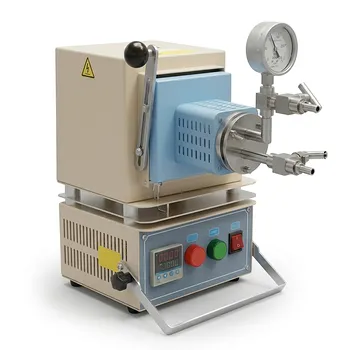
Compact Hybrid Muffle and Tube Furnace for 1000C Controlled Atmosphere Laboratory Material Sintering
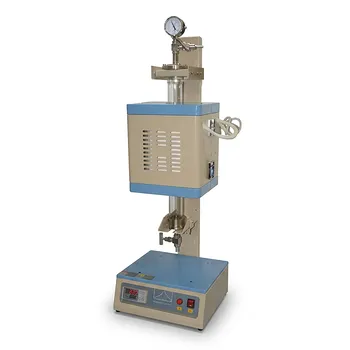
Compact Vertical Split Quartz Tube Furnace with Stainless Steel Vacuum Flanges for Rapid Thermal Quenching and Controlled Atmosphere Material Processing
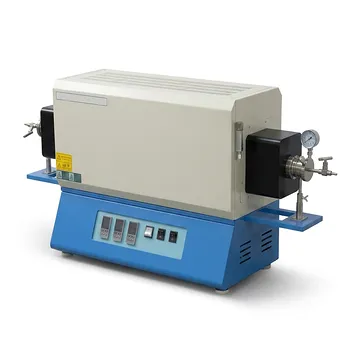
High Temperature Three Temperature Zone Tube Furnace for Advanced Material Science Sintering and Chemical Vapor Deposition Applications
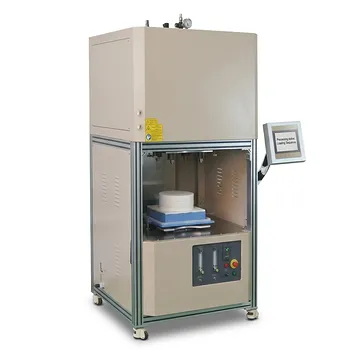
High Temperature Vertical Atmosphere Controlled Furnace with Automatic Bottom Loading and 1700°C Capacity for Advanced Material Research

High Temperature 1700C Vertical Tube Furnace for Powder Spherification and Material Sintering

Compact High Temperature 1600C Tube Furnace with 50mm Alumina Tube and Vacuum Flanges for Material Sintering
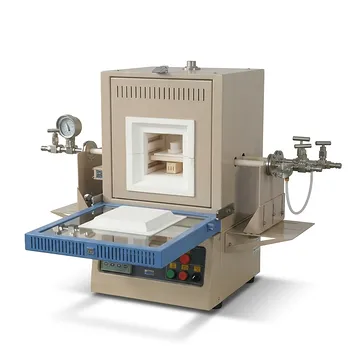
1700C Compact Hybrid Furnace with Dual Layer Box Sintering and Controlled Atmosphere Alumina Tubes
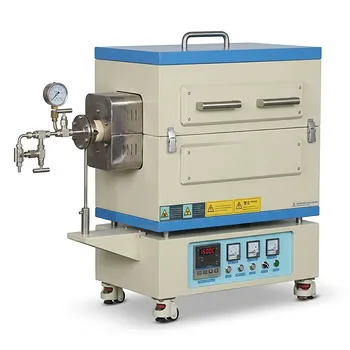
High Temperature Split Tube Furnace 1500C for Material Research Vacuum and Atmosphere Thermal Processing
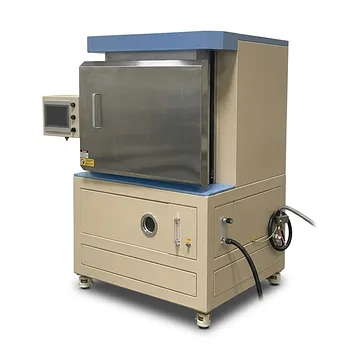
1650C High Temperature Atmosphere Controlled Box Furnace with 65L Chamber for Advanced Material Sintering and Industrial Heat Treatment
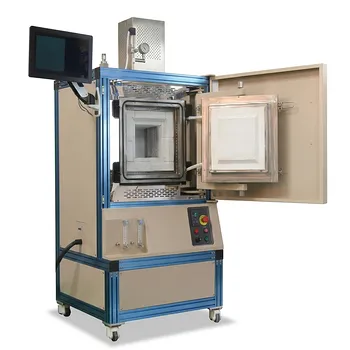
High Temperature Hydrogen Atmosphere Box Furnace 1650C Max Reducing Environment Material Synthesis System 8x8x8 Chamber
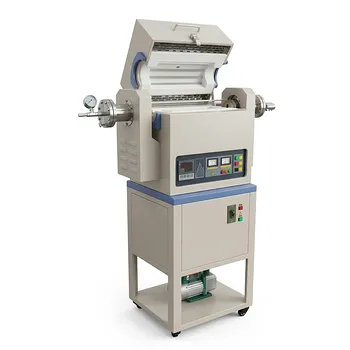
High Temperature Rotary Tilt Tubular Furnaces for Advanced Powder Sintering and Material Processing

Vertical 1700C Vacuum and Atmosphere Tube Furnace with 80mm Alumina Tube
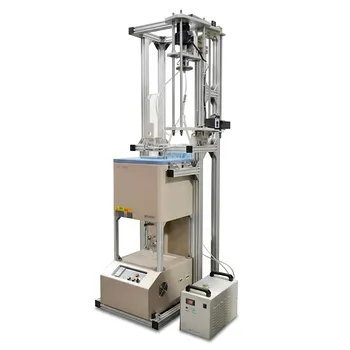
500C Vacuum Vertical Tube Furnace 84mm OD Sample Rotation Lifting System
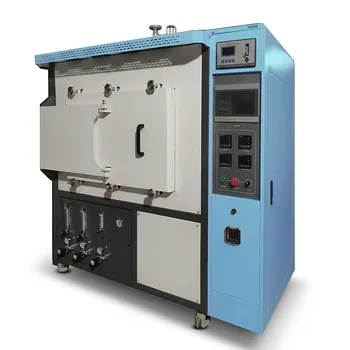
Roller Table Atmosphere Furnace 1500C High Temperature Battery Material Sintering System 112L Capacity
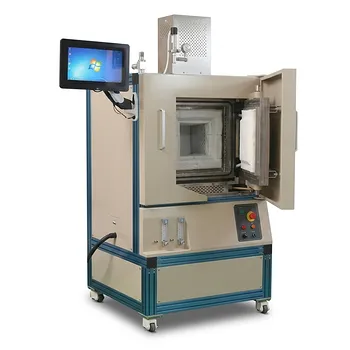
High Temperature Oxygen and Inert Atmosphere Controlled Furnace 8 Liter 1700C Sintering System for Advanced Materials RD
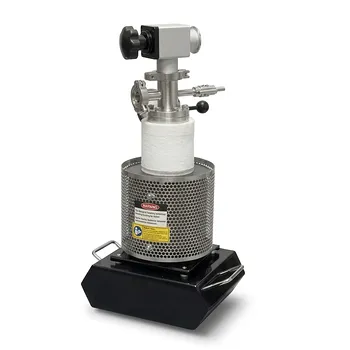
High Temperature 1100C Compact Top Loading Vertical Vacuum Tube Furnace for High Vacuum Noble Metal Melting and Material Research
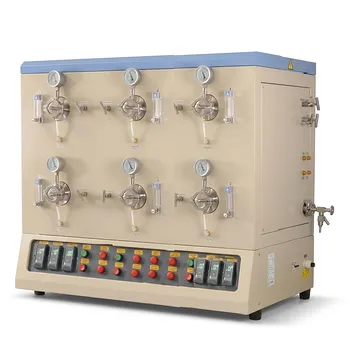
1200C High Throughput Multi Channel Tube Furnace with 50mm Quartz Tubes for Annealing and Material Phase Diagram Research
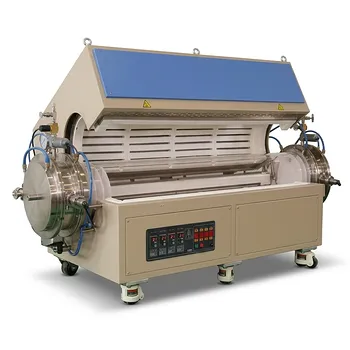
1200C Max Four Zone Split Tube Furnace with Optional Large Diameter Quartz Tubes
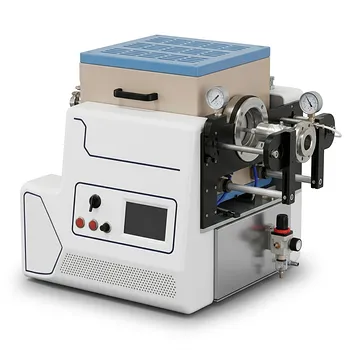
High Temperature Automated 5 Inch Tube Furnace for Autonomous Material Research and Advanced Laboratory R&D