Why is the substrate placed face-down during solid-source selenization? Optimize WSe2 Film Quality & Stoichiometry
Updated 3 months ago
The face-down placement of the substrate is a strategic technique used to create a "micro-local space" that traps vapor and prevents material loss. This configuration ensures a stable reaction environment at extreme temperatures (e.g., 900°C), allowing for the formation of continuous, dense, and smooth Tungsten Diselenide (WSe2) films by maintaining a precise stoichiometric balance.
Core Takeaway: By positioning the substrate face-down, researchers utilize a "confinement effect" that limits gas diffusion and creates a localized supersaturated vapor zone. This physical arrangement prevents film sublimation and ensures the high precursor concentrations necessary for high-quality 2D crystal growth.
The Confinement Effect: Stabilizing the Reaction Interface
Preventing Sublimation and Material Loss
In high-temperature environments reaching 900°C, thin films are highly susceptible to sublimation, where the solid material transforms directly into gas. Placing the Tungsten film face-down against a high-purity crucible creates a micro-local space that physically traps atoms attempting to leave the surface.
This containment prevents the stoichiometric imbalance that typically occurs when components of a film evaporate at different rates. By keeping the atoms near the surface, the film maintains the correct ratio of elements required for stable chemical transformation.
Establishing a Stable Reaction Environment
The face-down orientation acts as a protective shield against the turbulent flow of carrier gases within the furnace. This creates a quiescent reaction zone where chemical interactions can proceed without external fluctuations.
The stability provided by this configuration is essential for the transformation of Tungsten into WSe2. Without this localized environment, the resulting films would likely be discontinuous or exhibit poor crystalline quality.
Vapor Dynamics and Growth Kinetics
Creating Localized Supersaturation
A face-down substrate significantly shortens the diffusion path for precursor molecules, such as Selenium vapor. This proximity results in a localized supersaturated vapor zone directly at the reaction interface.
High supersaturation is the driving force behind the nucleation and growth of two-dimensional materials. This technique ensures that there is always an abundance of reactive species available to form the ultra-thin layers.
Optimizing Concentration Gradients
By varying the spatial positioning of a face-down substrate, researchers can control the precursor concentration gradient. This gradient influences how atoms settle on the surface, allowing for precise tuning of the material's properties.
This spatial control is a primary tool for studying the morphology, size, and distribution of the resulting crystals. It allows for the growth of thickness-controlled nanosheets that would be difficult to achieve in an open-flow configuration.
Impact on Film Quality and Morphology
Achieving Continuous and Dense Films
The confinement effect is directly responsible for the density of the final WSe2 film. By maintaining high local pressure, the atoms are forced to fill gaps, resulting in a continuous and dense structure rather than isolated islands.
Ensuring Surface Smoothness
A face-down orientation minimizes the deposition of large, unwanted particles or clusters from the gas phase. The result is a surface-smooth thin film that is ideal for electronic and optoelectronic applications.
Understanding the Trade-offs
Risk of Non-Uniformity
While confinement improves density, it can lead to non-uniform growth if the substrate is not perfectly level. Small variations in the gap between the substrate and the crucible can create significant differences in local vapor concentration.
Difficulty in Real-Time Monitoring
The face-down configuration makes it nearly impossible to use in-situ monitoring tools during the growth process. Researchers must rely on post-growth analysis to determine the success of the reaction, which can lead to a longer trial-and-error cycle.
Contamination from Contact
Because the active side of the substrate is in close proximity to the crucible, there is an increased risk of cross-contamination. Any impurities on the crucible surface can easily migrate to the film at high temperatures.
Making the Right Choice for Your Goal
How to Apply This to Your Project
- If your primary focus is stoichiometric precision: Use the face-down method to trap volatile components and maintain the chemical integrity of the film at temperatures above 800°C.
- If your primary focus is crystal morphology control: Adjust the height and distance of the face-down substrate to tune the localized supersaturation and nucleation density.
- If your primary focus is large-scale uniformity: Ensure the crucible and substrate surfaces are perfectly planar and parallel to prevent "wedge-shaped" growth gradients.
The strategic use of substrate orientation transforms a simple physical placement into a powerful tool for controlling the complex thermodynamics of 2D material synthesis.
Summary Table:
| Key Feature | Benefit of Face-Down Placement | Resulting Film Quality |
|---|---|---|
| Vapor Control | Creates a micro-local "confinement effect" | Prevents sublimation & material loss |
| Stoichiometry | Traps volatile atoms near the surface | Maintains precise chemical balance |
| Reaction Zone | Shields from turbulent carrier gas flow | Ensures stable, quiescent growth |
| Dynamics | Shortens precursor diffusion path | High nucleation density & smoothness |
| Morphology | Enables localized supersaturation | Continuous, dense, and uniform films |
Elevate Your Research with Precision Thermal Solutions
Achieving high-quality 2D crystals like WSe2 requires more than just technique—it demands the right environment. THERMUNITS is a leading manufacturer of high-temperature laboratory equipment specifically designed for material science and industrial R&D.
Our comprehensive range of thermal processing solutions—including CVD/PECVD systems, Vacuum & Atmosphere furnaces, Tube furnaces, and Hot Press systems—provides the temperature stability and gas flow control essential for advanced confinement methods.
Ready to enhance your lab's efficiency and film quality? Contact our technical experts today to find the perfect furnace for your heat treatment needs.
References
- Kathryn M. Neilson, Eric Pop. Toward Mass Production of Transition Metal Dichalcogenide Solar Cells: Scalable Growth of Photovoltaic-Grade Multilayer WSe<sub>2</sub> by Tungsten Selenization. DOI: 10.1021/acsnano.4c03590
Mentioned Products
- High Temperature 1800C Atmosphere Tube Furnace for CVD Research and Vacuum Sintering Precision Heat Treatment
- 1200°C High Temperature 4 Inch Tube Furnace with Sliding Flange for CVD Systems
- Vertical Openable Tube Furnace 0-1700c High Temperature Laboratory System for CVD and Vacuum Heat Treatment
- High Temperature 1200C Split Tube Furnace for CVD Research and Vacuum Atmosphere Heat Treatment
- 1200C Max Dual Sliding Tube Furnace with 50 mm Tube Flanges for CVD
People Also Ask
- Why is an atmosphere tube furnace considered core equipment for CVD? Essential for Precision Thin-Film & 2D Materials
- Why is a Tube Furnace typically utilized for CVD? Achieve Precision in Graphene and 2D Material Synthesis
- What core function does the high-temperature tube furnace perform in MWCNT synthesis? Essential for CVD Precision
- Why is a high-temperature tube furnace with precise gas flow control required for CVD? Optimize Carbon Nanotube Synthesis
- What role does a high-precision tube furnace play in the CVD process of WS2? Optimize Growth and Film Quality

Tech Team · ThermUnits
Last updated on Jun 02, 2026
Related Products
High Temperature 1800C Atmosphere Tube Furnace for CVD Research and Vacuum Sintering Precision Heat Treatment
1200°C High Temperature 4 Inch Tube Furnace with Sliding Flange for CVD Systems
Vertical Openable Tube Furnace 0-1700c High Temperature Laboratory System for CVD and Vacuum Heat Treatment
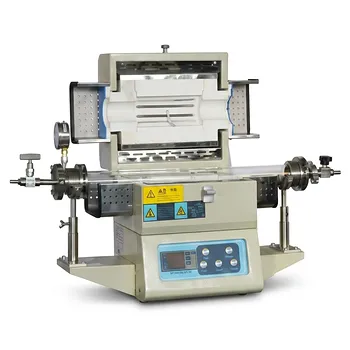
High Temperature 1200C Split Tube Furnace for CVD Research and Vacuum Atmosphere Heat Treatment
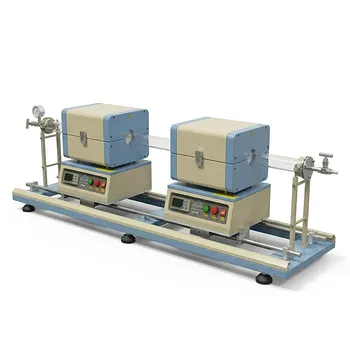
1200C Max Dual Sliding Tube Furnace with 50 mm Tube Flanges for CVD
1200C Sliding Tube Furnace for Rapid Thermal Processing and CVD Graphene Growth with 100mm OD Capacity

High Temperature 1700C Tube Furnace with High Vacuum Turbomolecular Pump System and Multi Channel Mass Flow Controller Gas Mixer

High Temperature 1700C Benchtop Tube Furnace with 5 Inch Heating Zone High Purity Alumina Tube and Vacuum Sealing Flanges
High Temperature Vertical Hybrid Furnace with Alumina Tube and SiC Heating for SOFC Coin Cell Testing and Atmosphere Processing
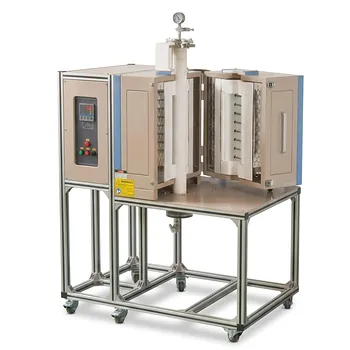
High Temperature 1700C Vertical Split Tube Furnace for Material Quenching and Single Crystal Growth

High Temperature 1700C Vertical Tube Furnace for Powder Spherification and Material Sintering
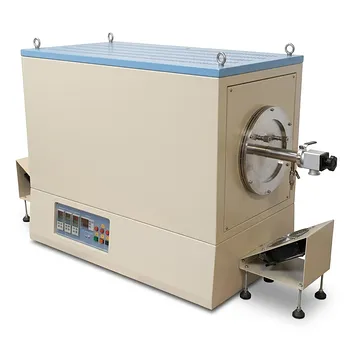
Four Zone Tube Furnace 1100C with 600mm Large Diameter Quartz Tube and Vacuum Flanges
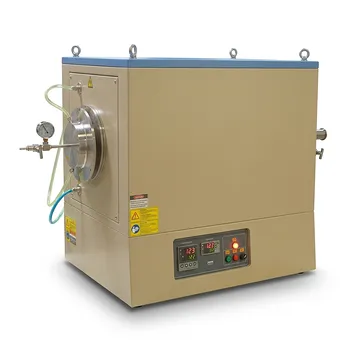
1100°C Large Diameter Quartz Tube Furnace with 24 Inch Heating Zone and Water Cooled Flanges
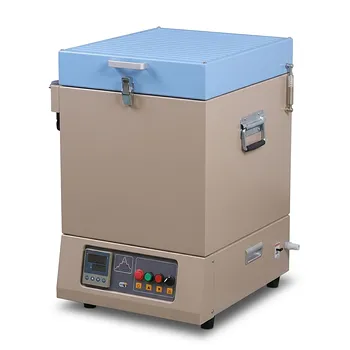
High Temperature Vertical Crucible Furnace with 22L Heating Chamber and 1200C Maximum Temperature
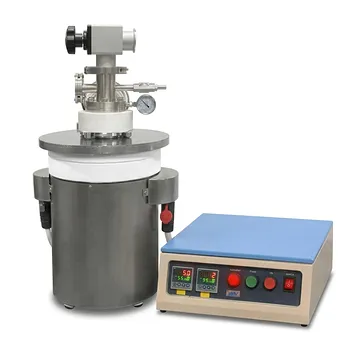
1100C High Temperature Vacuum Crucible Furnace with Quartz Chamber for Thermal Processing and Sintering
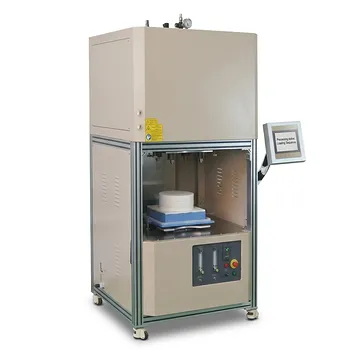
High Temperature Vertical Atmosphere Controlled Furnace with Automatic Bottom Loading and 1700°C Capacity for Advanced Material Research
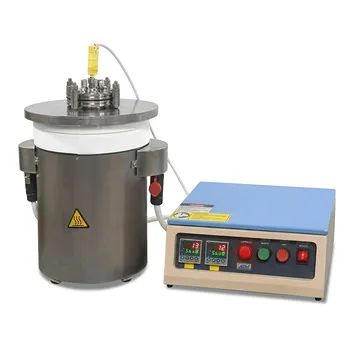
600°C Vertical Crucible Furnace with SS316 Alloy Reactor and 6 Port Vacuum Flange
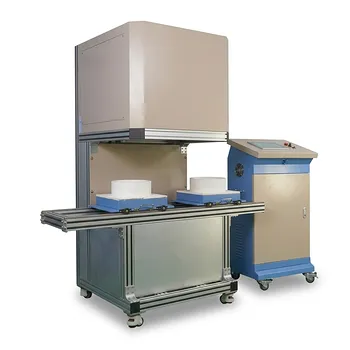
High Temperature Bottom Loading Vertical Furnace 1700C Dual Stage Sample Processing System 18L Large Capacity Thermal Treatment Equipment
Vertical Hybrid High Temperature Furnace 1500C Alumina Tube SOFC Fuel Cell Testing Laboratory Heat Treatment Research Equipment