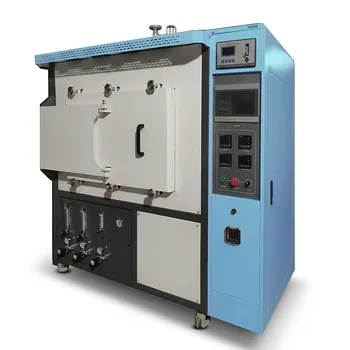
Why is HP sintering preferred for MAX phase powders? Achieve High Density and Fine Grain for Superior MXene Precursors
Updated 3 months ago
The Hot Press (HP) sintering process is the preferred method for MAX phase synthesis because it utilizes thermo-mechanical coupling to achieve near-theoretical density while maintaining a fine-grained microstructure. By applying uniaxial pressure and high temperatures simultaneously, the HP method lowers the sintering activation energy, allowing for rapid densification at lower temperatures than conventional methods. This combination effectively eliminates internal pores and prevents the grain coarsening that typically degrades the performance of high-performance ceramic precursors.
Core Takeaway: Hot Press sintering provides the simultaneous application of heat and pressure to overcome the high energy barriers of ceramic densification. This synergy results in high-density, fine-grained MAX phase blocks that serve as superior precursors for 2D material (MXene) production.
The Mechanics of Thermo-Mechanical Coupling
Lowering the Activation Energy Barrier
The primary advantage of HP equipment is the simultaneous application of a high-temperature thermal field and uniaxial mechanical pressure. This thermo-mechanical coupling significantly reduces the activation energy required for the material to densify.
Because the energy barrier is lower, the sintering process can reach completion at lower temperatures or over much shorter durations. This efficiency is critical for maintaining the chemical integrity of sensitive MAX phase compositions.
Enhanced Atomic Diffusion and Pore Elimination
The applied pressure creates a driving force that significantly enhances atomic diffusion between powder particles. This force physically pushes particles together, closing the gaps that conventional sintering cannot bridge.
As a result, the process effectively eliminates residual internal pores and closed porosity. This leads to the production of bulk materials that approach their theoretical density, a requirement for high-performance applications.
Microstructural Refinement and Performance
Inhibiting Abnormal Grain Growth
Conventional sintering often requires prolonged exposure to high heat, which leads to "abnormal grain growth" where crystals become too large and brittle. The HP process, particularly when using Inductive Hot Pressing, allows for extremely fast heating rates.
These rapid cycles and lower temperature requirements effectively inhibit excessive grain growth. By keeping the microstructure at a micro-nano scale, the material retains a more refined and uniform crystal structure.
Impact on Mechanical Properties
A refined grain structure directly translates to superior mechanical performance in the final MAX phase block. Materials produced this way exhibit significantly improved hardness and fracture toughness.
For example, in the synthesis of Cr2AlC, the use of synchronized pressure and induction heating results in a dense, fine-grained material. These physical properties are essential for the subsequent processing of MAX phases into high-quality 2D materials like MXenes.
Understanding the Trade-offs
Equipment Complexity and Cost
While HP sintering produces superior materials, it requires more complex and expensive equipment than a standard pressureless furnace. The integration of hydraulic systems and precision thermal controls increases the initial capital investment and maintenance requirements.
Geometry and Scalability Limits
The HP process is fundamentally a uniaxial pressure method, meaning pressure is applied in one direction. This limits the synthesis to relatively simple shapes, such as disks or blocks, and makes it harder to produce complex, net-shape components directly.
Cycle Time vs. Throughput
Although the actual sintering time can be shorter due to lower activation energy, the total cycle time—including vacuuming, heating, and cooling the pressurized die—can be significant. This may limit the throughput for very large-scale industrial manufacturing compared to continuous sintering methods.
How to Apply This to Your Project
When deciding whether to utilize Hot Press sintering for your MAX phase synthesis, consider your primary performance metric and the intended use of the precursor.
- If your primary focus is reaching theoretical density: Utilize HP sintering to ensure the elimination of internal pores and the creation of a fully dense bulk material.
- If your primary focus is maximizing mechanical hardness: Leverage the rapid heating capabilities of Inductive Hot Pressing to maintain a fine-grained microstructure and prevent grain coarsening.
- If your primary focus is producing precursors for MXenes: Opt for HP sintering, as the refined crystal structure and high density are essential for high-yield chemical etching and exfoliation.
By prioritizing the synergy of heat and pressure, you can ensure your MAX phase powders possess the structural integrity required for cutting-edge technological applications.
Summary Table:
| Feature | Hot Press (HP) Sintering | Conventional Sintering |
|---|---|---|
| Driving Force | Thermo-mechanical (Heat + Pressure) | Thermal only |
| Sintering Temp | Lower (Reduced activation energy) | Higher |
| Grain Structure | Fine-grained (Inhibits coarsening) | Coarse-grained (Prolonged heat) |
| Density | Near-theoretical density | Higher porosity |
| Application | High-performance MAX phases & MXenes | Standard ceramic components |
Elevate Your Advanced Material Synthesis with THERMUNITS
Achieving the perfect balance of density and microstructural refinement in MAX phase powders requires precision thermal engineering. THERMUNITS is a leading manufacturer of high-temperature laboratory equipment specifically designed for material science and industrial R&D.
Our advanced Hot Press furnaces provide the synchronized pressure and temperature control necessary to produce superior precursors for MXene production and other technical ceramics. Beyond pressure-assisted sintering, we offer a comprehensive suite of thermal solutions, including:
- Muffle, Vacuum, and Atmosphere Furnaces
- Tube, Rotary, and Dental Furnaces
- CVD/PECVD Systems & Spark Plasma Sintering (SPS) solutions
- Vacuum Induction Melting (VIM) & High-Quality Thermal Elements
Maximize your lab's efficiency and material performance with equipment built for precision. Contact THERMUNITS today to discuss your specific heat treatment requirements and see how our expert team can support your research goals.
References
- Hengjun Su, Xiaojun Zeng. Recent progress in the synthesis and electrocatalytic application of MXene‐based metal phosphide composites. DOI: 10.1002/cnl2.169
Mentioned Products
- Industrial High Temperature Vacuum Hot Press Furnace and Heated Vacuum Press Machine for Material Science Sintering
- High Pressure 600T Vacuum Induction Hot Press Furnace for Advanced Material Heat Treatment and Sintering
- Industrial Vacuum Hot Press Furnace Machine and High Temperature Heated Vacuum Press for Advanced Material Sintering
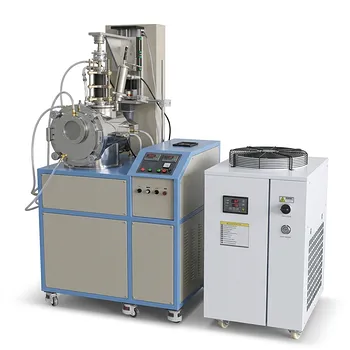
- High Temperature Ultrafast Heating Pressing Furnace 2900C Max 100kgf Rapid Thermal Processing System
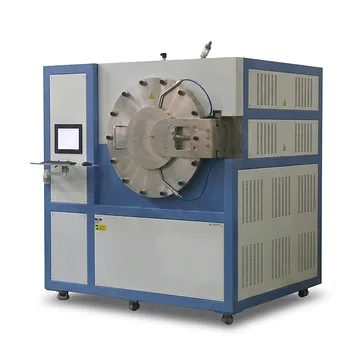
- High Vacuum Pressure Chamber Furnace 800C 3.5 Bar Sintering System for Superconducting Materials
People Also Ask
- How do vacuum, heat, and pressure work together in a Vacuum Hot Press Furnace? Achieving Near-Theoretical Density
- What are the key technical parameters for operating a Vacuum Hot Press Furnace? Master Heat, Pressure, and Vacuum.
- What microstructural mechanisms lead to material densification in a Vacuum Hot Press Furnace? Master Material Sintering
- What is the standard four-step operating sequence for a Vacuum Hot Press Furnace? Master Material Densification
- What is the role of a vacuum hot press furnace in diffusion bonding? Achieve High-Integrity Solid-State Joints

Tech Team · ThermUnits
Last updated on Jun 02, 2026
Related Products
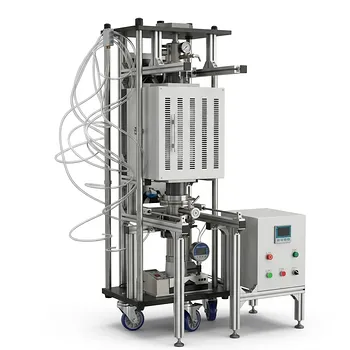
Industrial High Temperature Vacuum Hot Press Furnace and Heated Vacuum Press Machine for Material Science Sintering
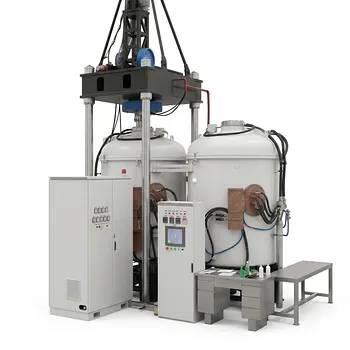
High Pressure 600T Vacuum Induction Hot Press Furnace for Advanced Material Heat Treatment and Sintering
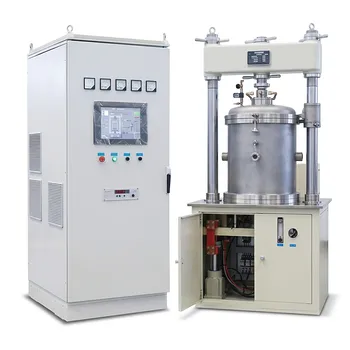
Industrial Vacuum Hot Press Furnace Machine and High Temperature Heated Vacuum Press for Advanced Material Sintering
High Temperature Ultrafast Heating Pressing Furnace 2900C Max 100kgf Rapid Thermal Processing System
High Vacuum Pressure Chamber Furnace 800C 3.5 Bar Sintering System for Superconducting Materials
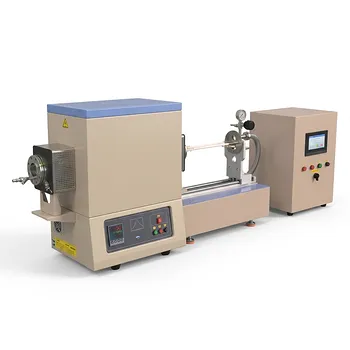
High Temperature Horizontal Electrical Assisted Sintering Furnace with 3KW Programmable Power Source for Advanced Ceramic Materials
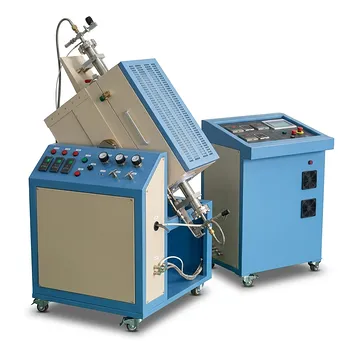
1100C High Pressure Rocking Tube Furnace with 2 Inch Super Alloy Processing Tube for Material Synthesis
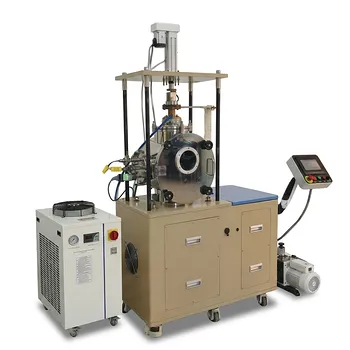
Compact Spark Plasma Sintering SPS Furnace 1200 C Max 100 MPa Pressure High Speed Sintering System for Material Research
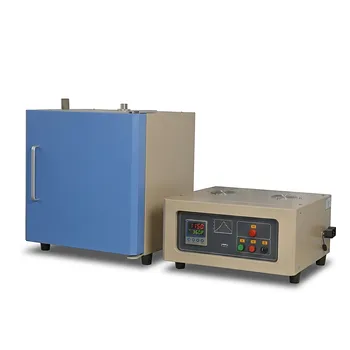
High Temperature Muffle Furnace with Alloy Chamber for Debinding and Sintering Applications
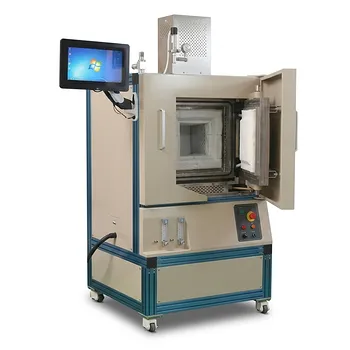
High Temperature Oxygen and Inert Atmosphere Controlled Furnace 8 Liter 1700C Sintering System for Advanced Materials RD

High Temperature 1700C Vertical Tube Furnace for Powder Spherification and Material Sintering
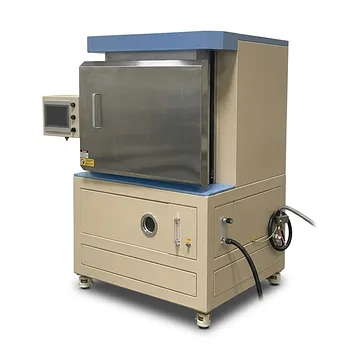
1650C High Temperature Atmosphere Controlled Box Furnace with 65L Chamber for Advanced Material Sintering and Industrial Heat Treatment
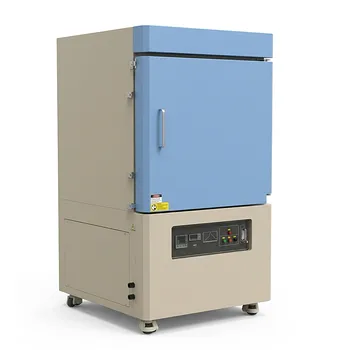
Industrial Large Box Furnace 1700C 216L High Temp Muffle Sintering System
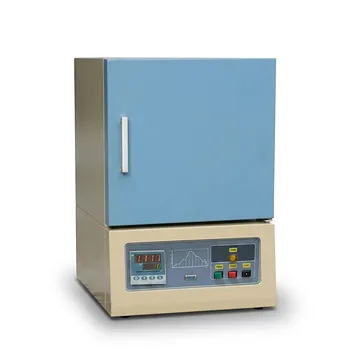
Ultra High Temperature Bench Top Muffle Furnace 1750C Sintering System with Kanthal Super Heating Elements and Precision Digital Control
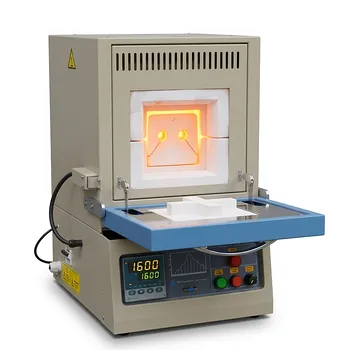
High Temperature Compact Muffle Furnace 1700 C with 30 Segment Programmable Controller and 1.7L Cubic Chamber
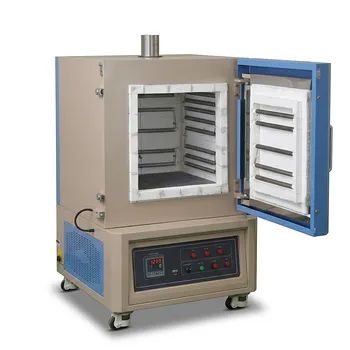
1200C High Temperature 125L Muffle Furnace 5 Side Heating for Large Batch Sintering with Optional Alloy Debinding Chamber
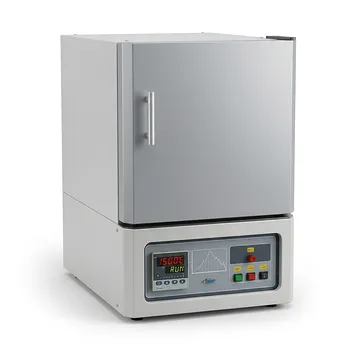
High Temperature 1500C Benchtop Muffle Furnace 3.6L Alumina Fiber Chamber Programmable Controller Sintering Annealing Carbonization Thermal Processing System
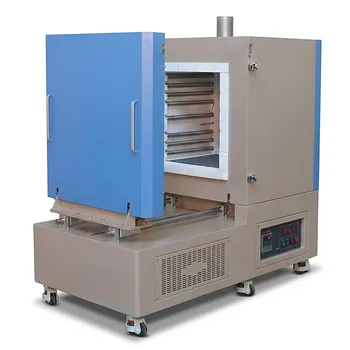
1200C Five Side Heating Muffle Furnace with Sliding Door 125L Volume High Temperature Heat Treatment System for Large Scale Sintering and Annealing
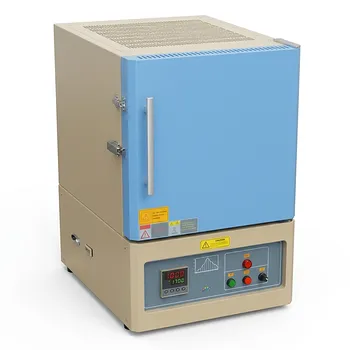
Large Bench Top 1700C High Temperature Muffle Furnace with 19L Chamber for Advanced Material Sintering and Annealing