Why is a tube or box furnace required for LiMnxFe1-xPO4 sintering? Ensure Precise Atmosphere Control & High Performance
Updated 3 months ago
The precision sintering of $LiMn_xFe_{1-x}PO_4$ (LMFP) cathode materials necessitates a controlled atmosphere furnace primarily to maintain the delicate valence states of iron and manganese. Without the ability to strictly regulate oxygen partial pressure, these transition metals will oxidize, leading to structural defects that degrade the battery's energy density and cycle life.
Core Takeaway: A precision atmosphere control system is essential to prevent the oxidation of divalent ferrous ions ($Fe^{2+}$) into trivalent iron ($Fe^{3+}$). This control ensures the formation of a perfect olivine-type crystal structure, which is the foundation for achieving the material's theoretical capacity and long-term electrochemical stability.
The Role of Valence State Stability
Maintaining the Divalent State
The synthesis of LMFP involves variable-valence elements, specifically iron and manganese. In a standard air environment, the ferrous ions ($Fe^{2+}$) naturally tend to oxidize into trivalent iron ($Fe^{3+}$) when exposed to heat.
Precision atmosphere control allows for the continuous introduction of high-purity reducing gases, such as hydrogen-argon mixtures. This environment strictly controls the oxygen partial pressure, effectively "locking" the iron and manganese in their required divalent states.
Chemical Stoichiometry Preservation
Maintaining the correct ratio of ions is critical for the material's final performance. A sealed furnace environment isolates the material from ambient moisture and oxygen that would otherwise cause unintended side reactions.
By using inert or reducing gases, the furnace ensures that the chemical stoichiometry remains unchanged during high-temperature processing. This predictability is what allows manufacturers to reach the specific energy targets required for modern lithium-ion cells.
Structural Integrity and Crystallinity
Promoting the Olivine-Type Lattice
The electrochemical utility of LMFP depends entirely on its olivine-type crystal structure. This structure provide the stable "tunnels" through which lithium ions migrate during charging and discharging.
If oxidation occurs, the resulting $Fe^{3+}$ ions act as impurities that disrupt this lattice. Precision control ensures a perfect crystal phase, preventing the formation of secondary phases that would block lithium-ion diffusion paths.
Optimizing Electrochemical Stability
A well-constructed olivine lattice directly translates to electrochemical stability. By suppressing structural defects through atmosphere control, the material can withstand repeated cycling without significant capacity decay.
Furthermore, these furnaces provide the uniform thermal field necessary for consistent crystal growth. This prevents the "coarsening" of grains, ensuring the particles remain at the optimal size for high-rate performance.
Understanding the Trade-offs
Atmospheric Purity vs. Operating Cost
Maintaining a high-purity reducing atmosphere (such as 5% $H_2/Ar$) significantly increases the cost of production compared to standard air calcination. However, any compromise in gas purity can lead to localized oxidation, rendering the entire batch of cathode material substandard.
Gas Flow vs. Thermal Uniformity
High gas flow rates are often needed to purge oxygen effectively, but they can create thermal gradients within the furnace. If the temperature is not uniform, different parts of the batch may develop different crystalline properties, leading to inconsistent battery performance.
Seal Integrity and Safety
Using hydrogen-based reducing gases requires stringent safety protocols and high-quality mechanical seals. Over time, furnace seals can degrade due to high-temperature cycling, potentially allowing oxygen ingress or gas leaks that compromise both the material and the facility.
Applying This to Your Production Goal
How to Choose Your Setup
When selecting a furnace system for LMFP synthesis, your choice should be dictated by the specific requirements of your material's chemistry and your performance targets.
- If your primary focus is Maximum Specific Capacity: Invest in a system with ultra-high purity gas regulators and oxygen sensors to ensure $Fe^{2+}$ is preserved with near-perfect efficiency.
- If your primary focus is Rate Performance: Prioritize a tube furnace with a multi-zone heating configuration to ensure a highly uniform thermal field for controlled crystal growth.
- If your primary focus is Cost-Effective Scaling: Utilize a box furnace with a high-integrity retort and a recirculating gas system to minimize the consumption of expensive inert gases.
The success of $LiMn_xFe_{1-x}PO_4$ synthesis depends on the invisible chemistry of the furnace atmosphere as much as the temperature of the heating elements.
Summary Table:
| Requirement | Purpose | Benefit |
|---|---|---|
| Valence Control | Prevents $Fe^{2+}$ oxidation to $Fe^{3+}$ | Maintains olivine-type crystal structure |
| Inert/Reducing Atmosphere | Introduces high-purity $H_2/Ar$ gas | Preserves chemical stoichiometry |
| Thermal Uniformity | Consistent multi-zone heating | Prevents grain coarsening and boosts rate performance |
| Gas Flow Precision | Regulates oxygen partial pressure | Ensures high energy density and cycle life |
Advance Your Material Science R&D with THERMUNITS
As a leading manufacturer of high-temperature laboratory equipment, THERMUNITS provides the precision thermal solutions required for advanced battery research and cathode material synthesis. We understand the critical nature of atmosphere control in $LiMn_xFe_{1-x}PO_4$ sintering.
Our Thermal Processing Solutions Include:
- Tube & Atmosphere Furnaces: Precision gas control for maintaining valence states.
- Vacuum & Box Furnaces: High-integrity seals for oxygen-sensitive materials.
- Specialized Systems: CVD/PECVD, Rotary Kilns, Hot Press Furnaces, and Vacuum Induction Melting (VIM).
Whether you are in academic material science or industrial R&D, our equipment is designed to deliver the stability and uniformity your process demands.
Contact THERMUNITS Today to discuss your heat treatment requirements and enhance your lab's performance!
References
- Yucai Zhang, Zhi Su. A Novel Strategy for Preparing Nano‐Sized and High‐Performance LiMn<sub><i>x</i></sub>Fe<sub>1−<i>x</i></sub>PO<sub>4</sub> Cathode Materials from Discarded LiMn<sub>2</sub>O<sub>4</sub> and LiFePO<sub>4</sub> Electrode. DOI: 10.1002/ente.202301277
Mentioned Products
- High Temperature 1700C Vertical Tube Furnace for Powder Spherification and Material Sintering
- Compact Hybrid Muffle and Tube Furnace for 1000C Controlled Atmosphere Laboratory Material Sintering
- 1500°C Atmosphere Controlled Rapid Heating Furnace for Material Science and Battery Powder Sintering
- Compact Spark Plasma Sintering SPS Furnace 1200 C Max 100 MPa Pressure High Speed Sintering System for Material Research
- 1650C High Temperature Atmosphere Controlled Box Furnace with 65L Chamber for Advanced Material Sintering and Industrial Heat Treatment
People Also Ask
- What role does a high-temperature vertical tube furnace play in simulating high-carbon ferromanganese slag formation?
- What functions does a vertical high-temperature tube furnace perform? Master Industrial Sintering & R&D Simulation
- What is the primary function of a high-temperature tube furnace in Cu1-N-C synthesis? Precision Thermal Control.
- High-Temp Tube Furnace Role in Converting Microbial Proteins to Iron Single-Atom Sites: Expert Synthesis Guide
- What impact does the heating rate of a tube furnace have on biochar microstructure? Optimize Your Material R&D.

Tech Team · ThermUnits
Last updated on Jun 03, 2026
Related Products

High Temperature 1700C Vertical Tube Furnace for Powder Spherification and Material Sintering
Compact Hybrid Muffle and Tube Furnace for 1000C Controlled Atmosphere Laboratory Material Sintering
1500°C Atmosphere Controlled Rapid Heating Furnace for Material Science and Battery Powder Sintering
Compact Spark Plasma Sintering SPS Furnace 1200 C Max 100 MPa Pressure High Speed Sintering System for Material Research
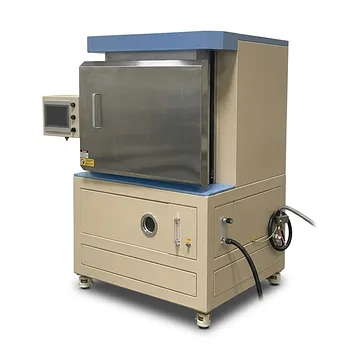
1650C High Temperature Atmosphere Controlled Box Furnace with 65L Chamber for Advanced Material Sintering and Industrial Heat Treatment

Compact High Temperature 1600C Tube Furnace with 50mm Alumina Tube and Vacuum Flanges for Material Sintering
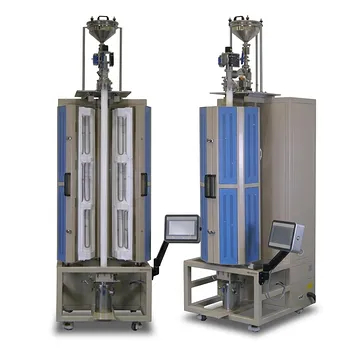
High Temperature Vertical Three Zone Powder Spheroidizing Furnace for Advanced Material Synthesis and Industrial Thermal Processing
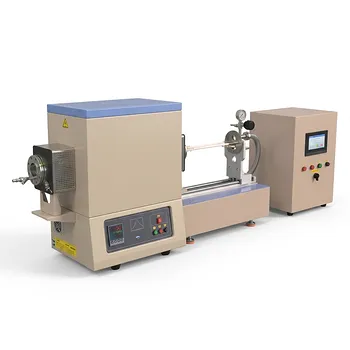
High Temperature Horizontal Electrical Assisted Sintering Furnace with 3KW Programmable Power Source for Advanced Ceramic Materials
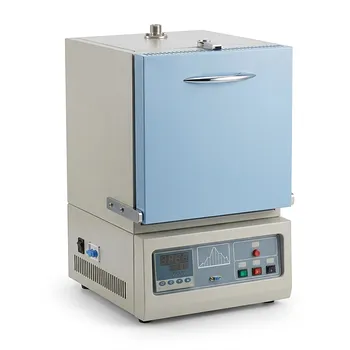
1750C Compact Muffle Furnace 1.7L Ultra High Temperature Laboratory Sintering System for Advanced Ceramics and Material Science Research
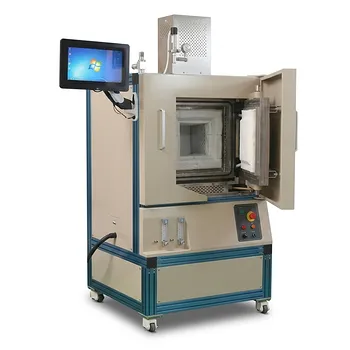
High Temperature Oxygen and Inert Atmosphere Controlled Furnace 8 Liter 1700C Sintering System for Advanced Materials RD
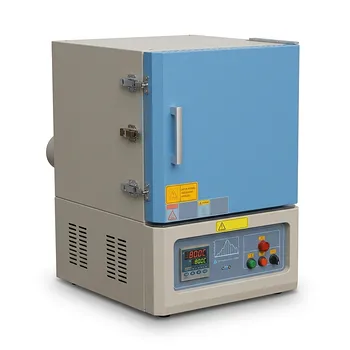
1800C Bench Top Muffle Furnace 18 Liters with Kanthal Super 1900 Heating Elements for High Purity Ceramic Sintering and Material Research
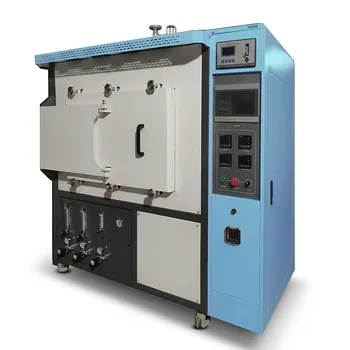
Roller Table Atmosphere Furnace 1500C High Temperature Battery Material Sintering System 112L Capacity
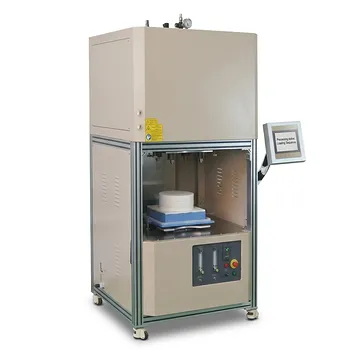
High Temperature Vertical Atmosphere Controlled Furnace with Automatic Bottom Loading and 1700°C Capacity for Advanced Material Research
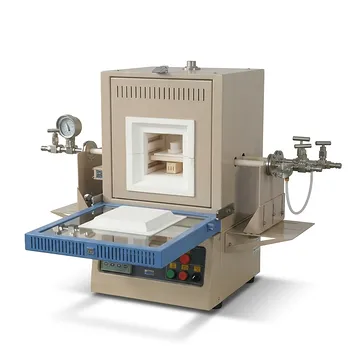
1700C Compact Hybrid Furnace with Dual Layer Box Sintering and Controlled Atmosphere Alumina Tubes
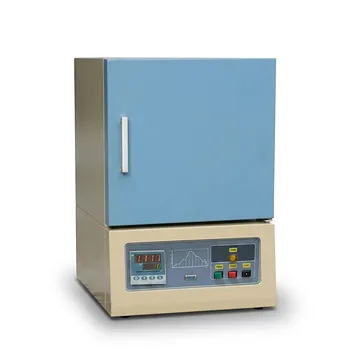
Ultra High Temperature Bench Top Muffle Furnace 1750C Sintering System with Kanthal Super Heating Elements and Precision Digital Control
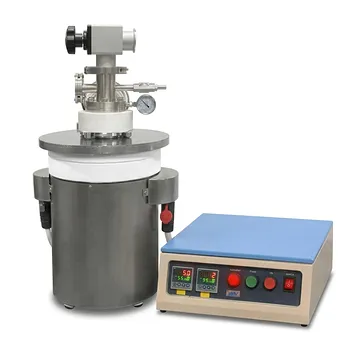
1100C High Temperature Vacuum Crucible Furnace with Quartz Chamber for Thermal Processing and Sintering
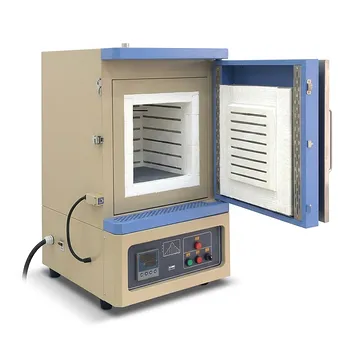
Five Side Heating Muffle Furnace High Purity Alumina Fiber 27L Chamber 1200C High Temperature Thermal Processing System for Sintering Annealing and Materials Research
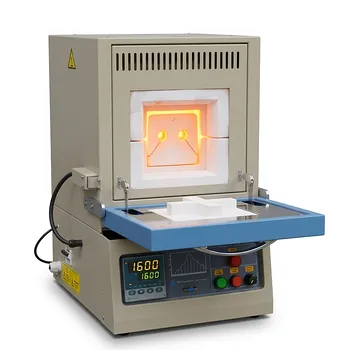
High Temperature Compact Muffle Furnace 1700 C with 30 Segment Programmable Controller and 1.7L Cubic Chamber
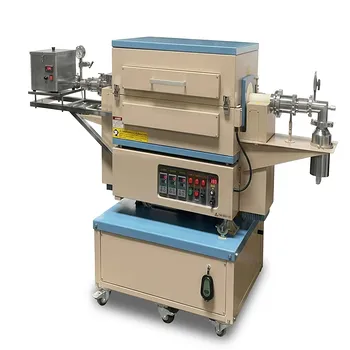
1500C 3-Zone Rotary Tube Furnace 60mm with Automatic Powder Feeding and Receiving System for Continuous Material Synthesis