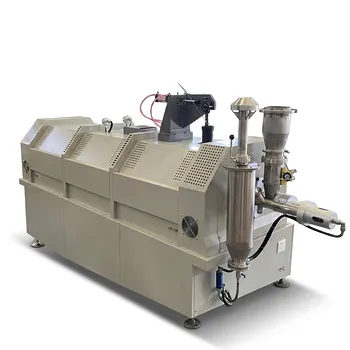
What role does a high-precision tube furnace play in the calcination of PPS/C electrocatalysts? Optimize Your Catalyst.
Updated 3 months ago
The high-precision tube furnace serves as the engine for the controlled thermal transformation of precursors into active PPS/C electrocatalysts. By strictly regulating heating rates and isothermal holding periods, this equipment enables the simultaneous reduction and sulfidation of platinum species while driving the carbonization of organic chains.
The central role of a high-precision tube furnace is to provide a stable, reproducible thermal field that dictates the final crystalline structure and interfacial chemistry of the catalyst. It ensures that the precursor reorganizes into Pt/PtS nanoparticles with the specific heterogeneous interfaces required for high-performance electrocatalysis.
Precise Control of Thermal Dynamics
Managing the Heating Gradient
The furnace allows for a strictly controlled heating rate, typically maintained at 5 °C/min, to ensure the gradual evolution of the material. This precision prevents rapid outgassing or structural collapse of the organic precursors, allowing the PPS (polyphenylene sulfide) to transition into a stable carbon matrix.
Maintaining Isothermal Stability
Once the target temperature—usually between 300 °C and 500 °C—is reached, the furnace maintains a constant thermal field. This stability is critical for the "soaking" phase, where the most significant atomic rearrangements occur to form the active catalytic sites.
Driving Complex Chemical Transformations
Simultaneous Reduction and Sulfidation
The high-precision environment facilitates the dual process of reducing platinum species and sulfidating them into Pt/PtS. This specific chemical pathway is only possible when the temperature is held within a narrow window, preventing the formation of undesired phases or overly large particles.
Carbonization of Organic Chains
As the platinum species evolve, the organic long chains of the PPS precursor undergo carbonization. The tube furnace provides the necessary energy to break molecular bonds and reform them into a conductive carbon support that anchors the metallic nanoparticles.
Atmospheric Integrity and Structural Evolution
Creating a Controlled Reaction Environment
Beyond temperature, the tube furnace acts as a sealed vessel for inert or reducing atmospheres, such as nitrogen or hydrogen. This prevents the oxidation of the carbon support and the platinum species, ensuring the catalyst retains its intended chemical composition and purity.
Development of Heterogeneous Interfaces
The synergy of precise heat and atmospheric control promotes the formation of rich heterogeneous interfaces between Pt and PtS. These interfaces are the primary active zones for electrocatalytic reactions, and their density is directly linked to the furnace's ability to maintain a uniform thermal environment.
Understanding the Trade-offs
Balancing Crystallinity and Surface Area
Higher calcination temperatures generally improve the crystallinity and stability of the catalyst by eliminating structural defects. However, excessive heat can lead to sintering, where nanoparticles aggregate, drastically reducing the active surface area and overall catalytic efficiency.
Precision vs. Throughput
While high-precision tube furnaces offer unparalleled control over the material's microscopic properties, they are often limited in batch capacity. Achieving a perfectly uniform thermal field across a large volume of precursor remains a technical challenge that requires careful calibration of the furnace's heating elements.
Applying This to Your Catalyst Synthesis
Choosing the Right Parameters
- If your primary focus is Maximum Catalytic Activity: Prioritize lower temperatures within the 300-400 °C range and precise heating rates to maintain small, high-surface-area Pt/PtS nanoparticles.
- If your primary focus is Long-term Durability: Utilize the higher end of the temperature spectrum (near 500 °C) to enhance the crystallinity of the carbon support and the strength of the metal-support interaction.
- If your primary focus is Phase Purity: Ensure the furnace's atmospheric seals are verified and use a steady flow of high-purity inert gas to prevent any trace oxidation during the long cooling phase.
By mastering the thermal precision of the tube furnace, researchers can move from trial-and-error synthesis to the intentional design of high-efficiency PPS/C electrocatalysts.
Summary Table:
| Process Phase | Critical Furnace Function | Key Outcome for PPS/C |
|---|---|---|
| Heating Gradient | Precise 5 °C/min regulation | Prevents structural collapse of PPS matrix |
| Isothermal Holding | 300 °C - 500 °C stability | Formation of active Pt/PtS nanoparticles |
| Atmosphere Control | Sealed inert/reducing environment | Prevents oxidation of carbon and platinum |
| Thermal Uniformity | Stable "soaking" phase | High-density heterogeneous interfaces |
Advance Your Electrocatalysis Research with THERMUNITS
Ready to achieve the precise thermal control required for high-performance PPS/C electrocatalyst synthesis? THERMUNITS is a leading manufacturer of high-temperature laboratory equipment, providing the stability and atmospheric integrity essential for material science and industrial R&D.
Our comprehensive range of thermal solutions includes:
- High-Precision Tube & Rotary Furnaces for controlled calcination.
- Vacuum & Atmosphere Furnaces for oxidation-free processing.
- CVD/PECVD Systems for advanced thin-film and interface engineering.
- Muffle, Hot Press, and Dental Furnaces for versatile heat treatments.
- VIM (Vacuum Induction Melting) & Thermal Elements for specialized metallurgy.
Whether you are focusing on maximum catalytic activity or long-term durability, our equipment ensures reproducible results every time.
Contact our experts today to find the perfect furnace for your lab!
References
- Mou Zhang, Qingyi Lu. Platinum/Platinum Sulfide on Sulfur-Doped Carbon Nanosheets with Multiple Interfaces toward High Hydrogen Evolution Activity. DOI: 10.3390/molecules29194570
Mentioned Products
- Dual Zone Rotary Tube Furnace for Uniform Powder Calcination 1000C 2 Inch Quartz Tube
- 900°C Max Rotary Tube Furnace with 8 Inch 310S Alloy Tube and Optional Multi Zone Heating for Industrial Material Calcination
- 5 Inch Rotary Tube Furnace with Automatic Feeding and Receiving System 1200C Three Zone CVD Powder Processing
- 1200C Sliding Tube Furnace for Rapid Thermal Processing and CVD Graphene Growth with 100mm OD Capacity
- 5 Inch Three Zone Rotary Tube Furnace with Integrated Gas Delivery System and 1200C Capability for Advanced Material CVD Processing
People Also Ask
- How does a high-precision dual-zone furnace control the structure of nickel-telluride nanoparticles during VS reactions?
- How do internal alternating plates guide particle movement in a rotary furnace? Optimize Heat Exchange & Flow Control
- How does rotational angular velocity impact rotary furnace performance? Optimize Throughput and Thermal Accuracy
- How does the baffle angle affect particle flow in a rotary calcination furnace? Master Flow & Heat Efficiency
- What is the primary function and operating principle of a rotary furnace? Maximize Thermal Processing Efficiency

Tech Team · ThermUnits
Last updated on Jun 02, 2026
Related Products
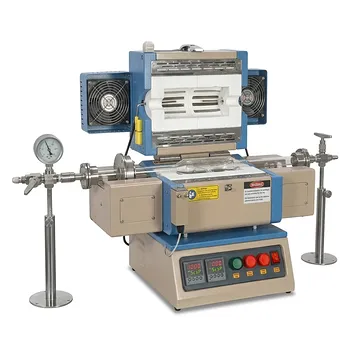
Dual Zone Rotary Tube Furnace for Uniform Powder Calcination 1000C 2 Inch Quartz Tube
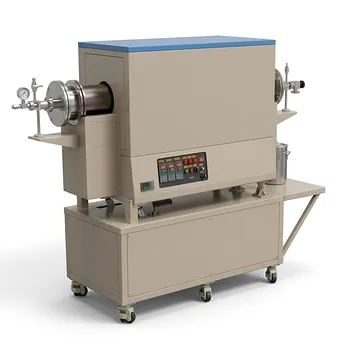
900°C Max Rotary Tube Furnace with 8 Inch 310S Alloy Tube and Optional Multi Zone Heating for Industrial Material Calcination
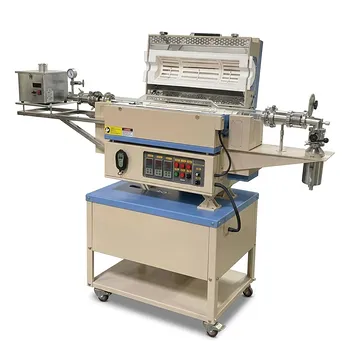
5 Inch Rotary Tube Furnace with Automatic Feeding and Receiving System 1200C Three Zone CVD Powder Processing
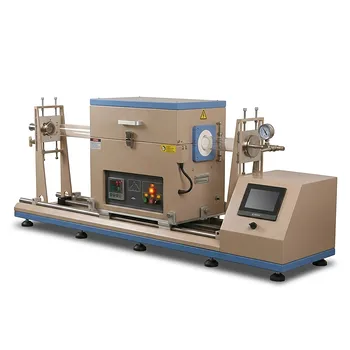
1200C Sliding Tube Furnace for Rapid Thermal Processing and CVD Graphene Growth with 100mm OD Capacity
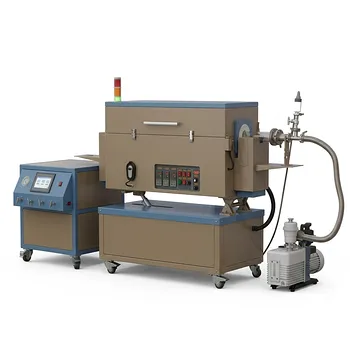
5 Inch Three Zone Rotary Tube Furnace with Integrated Gas Delivery System and 1200C Capability for Advanced Material CVD Processing
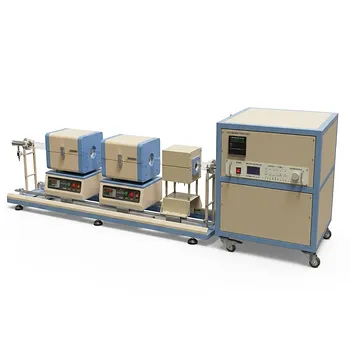
1200C Dual Sliding Tube Furnace with Dual Tubes and Flanges for PECVD Processes

High Temperature 1700C Vertical Tube Furnace for Powder Spherification and Material Sintering
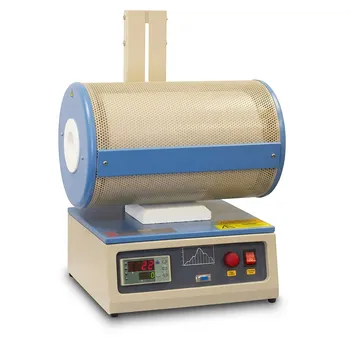
Multi Position Tube Furnace 1100C for Laboratory Material Research and Advanced Industrial Thermal Processing

Compact High Temperature 1600C Tube Furnace with 50mm Alumina Tube and Vacuum Flanges for Material Sintering
Split Vertical Tube Furnace with 1200C Quartz Tube and Stainless Steel Vacuum Flanges for Rapid Thermal Processing

High Temperature Tube Furnace 1500C with Sliding Flanges and 50mm OD for Rapid Thermal Processing Fast Heating and Cooling
Two Zone Rotary CVD Furnace with Automatic Feeding and Receiving System for Powder Processing
1200C Tube Furnace with Internal Magnetic Sample Sliding for Direct Vaporizing Deposition and Rapid Thermal Processing
1200C High Throughput Multi Channel Tube Furnace with 50mm Quartz Tubes for Annealing and Material Phase Diagram Research
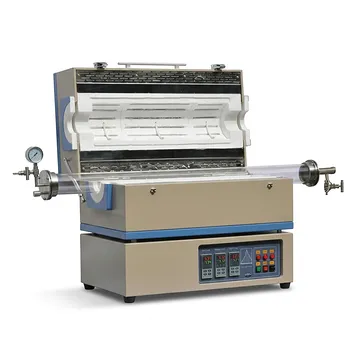
24 Inch Three Zone Split Tube Furnace with Optional Quartz Tube and Vacuum Flange System for High Temperature Material Synthesis
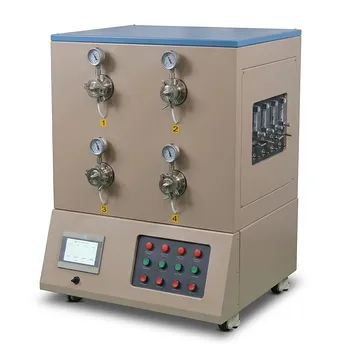
High Throughput 1200C Four Channel Tube Furnace with 3 Inch Quartz Tubes for Multi Zone Annealing and Material Research

High Temperature Automated 5 Inch Tube Furnace for Autonomous Material Research and Advanced Laboratory R&D
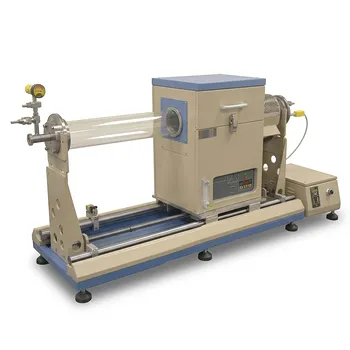
Rapid Thermal Processing Sliding Tube Furnace with 4 Inch OD Quartz Tube and 900C IR Heating
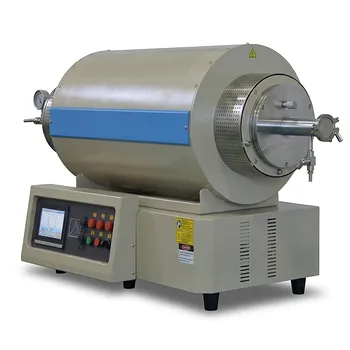
1200C Max Three Zone Tube Furnace 6 Inch OD Max with Tube and Flange