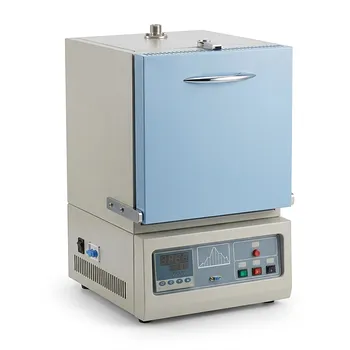
What role does a high-temperature calcination furnace play in the preparation of cordierite-supported catalysts? Tips
Updated 3 months ago
The high-temperature calcination furnace is the critical reactor for transforming inert cordierite into a high-performance catalyst support. It provides the precise thermal environment—typically around 900°C—required to decompose aluminum nitrate into a stable $\gamma$-alumina ($\gamma$-Al2O3) coating. This process fundamentally increases the carrier's surface area and porosity, creating the structural foundation necessary for anchoring active metals and co-catalysts.
The calcination furnace serves as the "architect" of the catalyst's physical and chemical structure. By precisely controlling heat and atmosphere, it converts liquid precursors into solid, high-surface-area oxides while ensuring the mechanical and thermal stability required for industrial applications.
The Primary Role: Formation of the Washcoat
Thermal Decomposition of Precursors
The furnace facilitates the thermal decomposition of precursor solutions, such as aluminum nitrate, which are coated onto the cordierite carrier. At temperatures like 900°C, these liquid or dried precursors undergo a chemical transition into stable solid oxides.
Surface Area Optimization
Cordierite itself has a relatively low specific surface area; the furnace enables the growth of a $\gamma$-alumina coating. This "washcoat" significantly increases the available surface area and porosity, providing the microscopic "real estate" needed for active metal loading.
Structural Foundation
This high-temperature treatment ensures that the alumina coating is firmly attached to the cordierite substrate. This provides the necessary physical structure for the uniform loading of active metals in subsequent preparation steps.
Advanced Structural and Chemical Modifications
Phase Transformation and Stabilization
The furnace is used to induce specific crystal phase transformations, such as converting zirconia into a stable tetragonal structure at 650°C. By maintaining precise temperatures, the furnace ensures the catalyst reaches a state of physicochemical stability that can withstand harsh operating conditions.
Anchoring and Dispersion of Active Components
Calcination at controlled temperatures (e.g., 500°C to 600°C) converts metal nitrates into highly dispersed metal oxide nanoparticles. This "anchoring" process prevents the active components from migrating or leaching during the catalytic reaction.
Removal of Impurities
High-temperature processing effectively eliminates volatile impurities, residual nitrates, and organic components. This purification is essential for ensuring the repeatability of experimental results and preventing the poisoning of active sites.
Understanding the Trade-offs
The Risk of Thermal Sintering
Excessive temperatures or prolonged residence times in the furnace can lead to sintering, where small particles merge into larger ones. This reduces the specific surface area and can "bury" active metal sites, significantly decreasing the catalyst's overall efficiency.
Energy Consumption vs. Stability
Higher calcination temperatures (e.g., 1100°C) strengthen the ceramic structure and improve mechanical strength. However, this comes at the cost of higher energy consumption and a potential loss of the mesoporous structures conducive to molecular diffusion.
Atmospheric Control
The choice of furnace (e.g., tube vs. muffle) affects the calcination atmosphere. An improperly controlled environment can lead to incomplete decomposition or the formation of undesirable oxide phases, such as hematite instead of more active iron phases.
How to Apply This to Your Project
When utilizing a high-temperature furnace for cordierite catalyst preparation, your settings should align with your specific material objectives:
- If your primary focus is increasing surface area: Maintain temperatures around 900°C to ensure the formation of $\gamma$-alumina while avoiding the transition to low-surface-area $\alpha$-alumina.
- If your primary focus is active metal dispersion: Utilize a precisely controlled heating rate (e.g., 7°C/min) and a lower plateau (500°C–600°C) to prevent the agglomeration of nanoparticles.
- If your primary focus is mechanical durability: Subject the cordierite carrier to a preliminary high-temperature sintering (up to 1100°C) to eliminate impurities and strengthen the ceramic lattice before coating.
The furnace is not merely a heater but a precision tool that defines the final morphology and catalytic potential of the cordierite-supported system.
Summary Table:
| Process Step | Typical Temp Range | Core Function |
|---|---|---|
| Washcoat Formation | ~900°C | Decomposes precursors into high-surface-area $\gamma$-Al2O3 |
| Active Component Anchoring | 500°C – 600°C | Converts metal nitrates into dispersed oxide nanoparticles |
| Structural Stabilization | Up to 1100°C | Enhances mechanical strength and ceramic lattice stability |
| Impurity Removal | Variable | Eliminates volatile nitrates, organics, and residues |
Elevate Your Catalyst Research with THERMUNITS
Precision thermal processing is the key to high-performance catalyst supports. As a leading manufacturer of high-temperature laboratory equipment for material science and industrial R&D, THERMUNITS offers a comprehensive range of solutions including Muffle, Vacuum, Atmosphere, Tube, and Rotary furnaces, as well as CVD/PECVD systems.
Our equipment provides the precise temperature control and atmospheric stability required for critical steps like washcoat formation and active metal dispersion. Whether you are working on cordierite supports or advanced dental furnaces and VIM systems, our tools ensure repeatable, high-quality results.
Ready to optimize your heat treatment workflow? Contact THERMUNITS Today for a Custom Solution
References
- İlke Ilıcak Bayraktar, Halit Eren Figen. Investigation of Partial Oxidation of Methane at Different Reaction Parameters by Adding Ni to CeO2 and ZrO2 Supported Cordierite Monolith Catalyst. DOI: 10.3390/pr12071463
Mentioned Products
- 900°C Max Rotary Tube Furnace with 8 Inch 310S Alloy Tube and Optional Multi Zone Heating for Industrial Material Calcination
- High Temperature Vertical Crucible Furnace with 22L Heating Chamber and 1200C Maximum Temperature
- High Temperature 1700C Tube Furnace with High Vacuum Turbomolecular Pump System and Multi Channel Mass Flow Controller Gas Mixer
- 1100C High Temperature Vacuum Crucible Furnace with Quartz Chamber for Thermal Processing and Sintering
- High Temperature Tube Furnace 1500C with Sliding Flanges and 50mm OD for Rapid Thermal Processing Fast Heating and Cooling
People Also Ask
- How does a rotary tube furnace improve the processing of granular materials? Enhance Uniformity and Reaction Kinetics
- Why use a rotary tube furnace for FACS carbonization? Ensure uniform morphology and prevent sphere agglomeration.
- Why is the precise optimization of residence time essential in the catalyst calcination process? Maximize Your Yields.
- In what ways do rotary tube furnaces enhance chemical and specialty mineral processing? Drive Precision and Uniformity.
- What parameters must operators control to maintain product quality in a rotary furnace? Master Your Heat Treatment.

Tech Team · ThermUnits
Last updated on Jun 02, 2026
Related Products
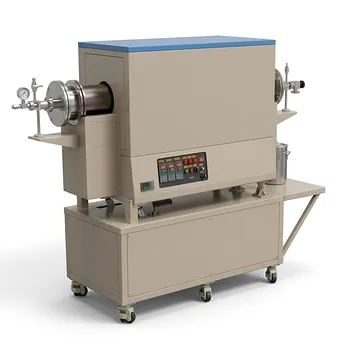
900°C Max Rotary Tube Furnace with 8 Inch 310S Alloy Tube and Optional Multi Zone Heating for Industrial Material Calcination
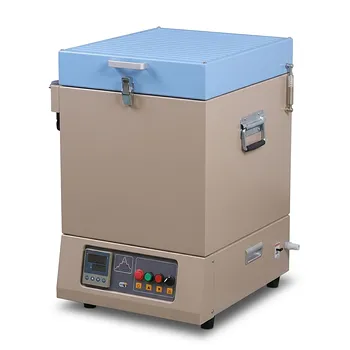
High Temperature Vertical Crucible Furnace with 22L Heating Chamber and 1200C Maximum Temperature

High Temperature 1700C Tube Furnace with High Vacuum Turbomolecular Pump System and Multi Channel Mass Flow Controller Gas Mixer
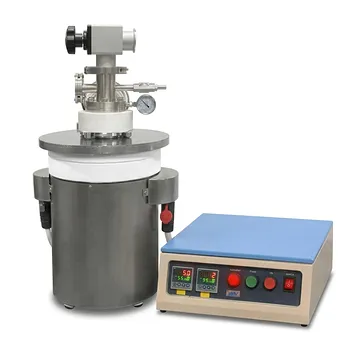
1100C High Temperature Vacuum Crucible Furnace with Quartz Chamber for Thermal Processing and Sintering

High Temperature Tube Furnace 1500C with Sliding Flanges and 50mm OD for Rapid Thermal Processing Fast Heating and Cooling
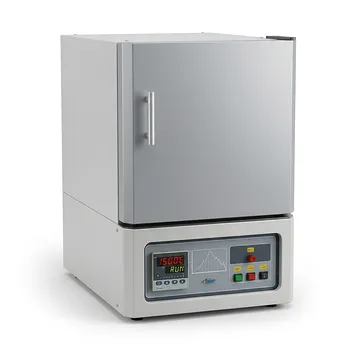
High Temperature 1500C Benchtop Muffle Furnace 3.6L Alumina Fiber Chamber Programmable Controller Sintering Annealing Carbonization Thermal Processing System

Compact High Temperature 1600C Tube Furnace with 50mm Alumina Tube and Vacuum Flanges for Material Sintering
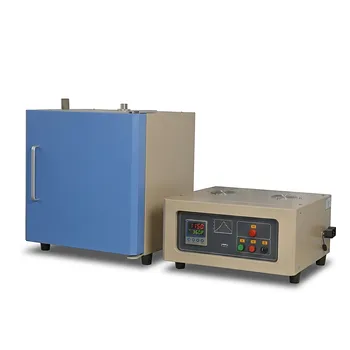
High Temperature Muffle Furnace with Alloy Chamber for Debinding and Sintering Applications
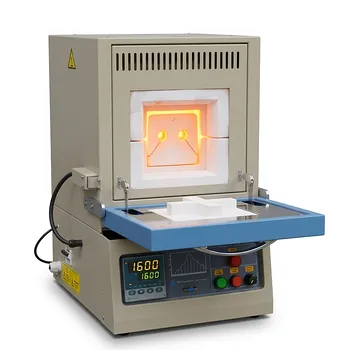
High Temperature Compact Muffle Furnace 1700 C with 30 Segment Programmable Controller and 1.7L Cubic Chamber
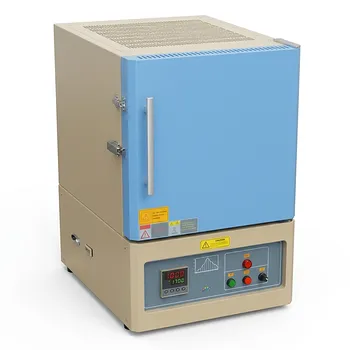
Large Bench Top 1700C High Temperature Muffle Furnace with 19L Chamber for Advanced Material Sintering and Annealing
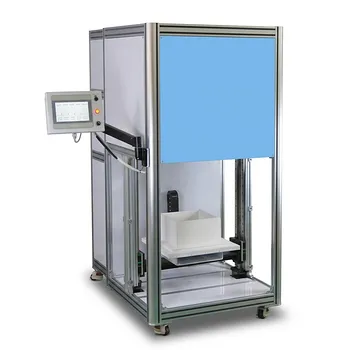
High Temperature 1600°C Three Zone Heated Bottom Loading Box Furnace with Rapid Thermal Processing Chamber 72L Volume
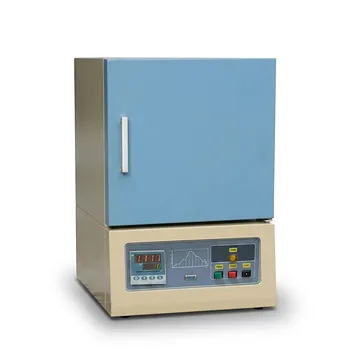
Ultra High Temperature Bench Top Muffle Furnace 1750C Sintering System with Kanthal Super Heating Elements and Precision Digital Control
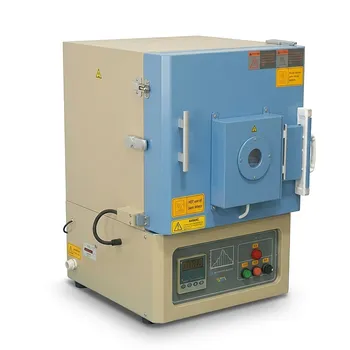
High Temperature Benchtop Muffle Furnace 1500C with 3.6L Chamber and Quartz Observation Window
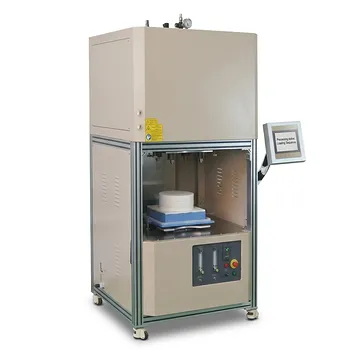
High Temperature Vertical Atmosphere Controlled Furnace with Automatic Bottom Loading and 1700°C Capacity for Advanced Material Research
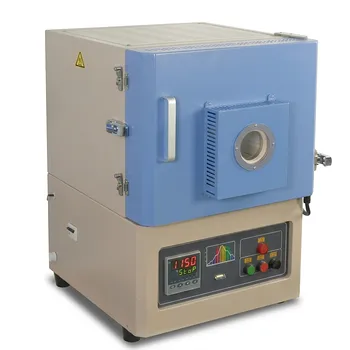
High Temperature Benchtop Muffle Furnace with Quartz Observation Window for Thermal Imaging and Material Analysis
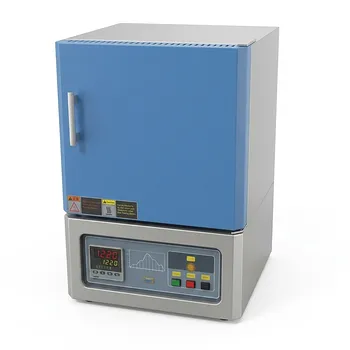
High Temperature Benchtop Muffle Furnace 1700C 10L Chamber Alumina Fiber Insulation MoSi2 Heating Elements
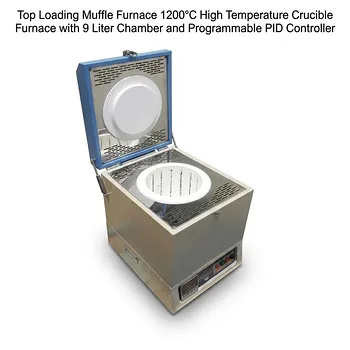
Top Loading Muffle Furnace 1200°C High Temperature Crucible Furnace with 9 Liter Chamber and Programmable PID Controller
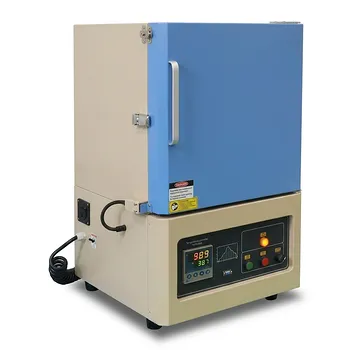
1200°C High Temperature Muffle Furnace 19L Chamber with 50 Segment Programmable Controller
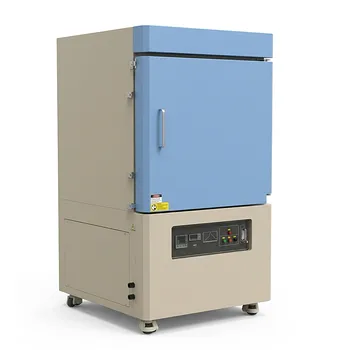
Industrial Large Box Furnace 1700C 216L High Temp Muffle Sintering System