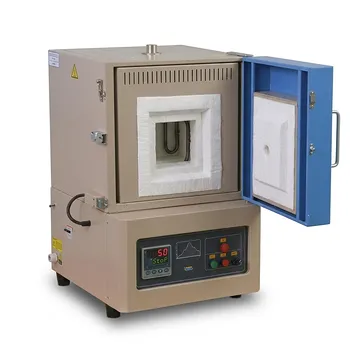
What role does a high-temperature oven play in sulfur cathode melt-diffusion? Achieve Superior Uniformity & Loading
Updated 3 months ago
The high-temperature oven acts as the catalyst for phase transformation and capillary-driven infiltration in sulfur cathode synthesis. It maintains a stable thermal environment—typically around 155°C—to liquefy elemental sulfur and drive it into the nanostructures of a conductive host. This process is essential for overcoming the natural insulating properties of sulfur and ensuring high electrochemical activity.
The oven's primary role is to facilitate the transition of solid sulfur into a molten state, allowing capillary forces to pull the material into a host matrix. This ensures a uniform distribution and intimate contact between the sulfur and the conductive framework, which is necessary for efficient electron and ion transport.
The Mechanism of Thermal Infiltration
Achieving Precise Phase Transition
The oven provides a controlled environment to reach the melting point of sulfur, which occurs at approximately 115°C. By holding the temperature at a slightly higher setpoint (such as 155°C), the oven ensures the sulfur remains in a low-viscosity liquid state optimal for flow.
Leveraging Capillary Forces for Absorption
Once liquefied, the sulfur is drawn into the mesoporous structures of materials like CoMoO4@rGO. The oven sustains the heat required for capillary action to occur, allowing the molten sulfur to permeate the deepest pores of the matrix rather than simply coating the surface.
Impact on Cathode Architecture
Ensuring Uniform Sulfur Distribution
Without the steady heat of the oven, sulfur would remain as discrete, large particles that lead to poor utilization during cycling. The melt-diffusion process creates a homogenous distribution throughout the framework, preventing the formation of inactive "dead zones" within the cathode.
Optimizing the Sulfur-Matrix Interface
The thermal treatment ensures close contact between the sulfur and the conductive or adsorptive sites of the host material. This intimate interface is critical for trapping polysulfides during battery operation, which helps mitigate the "shuttle effect" and improves cycle life.
Understanding the Trade-offs and Distinctions
Temperature Precision vs. Material Loss
If the oven temperature is too low, the sulfur viscosity remains high, leading to incomplete loading. Conversely, if the temperature exceeds sulfur's sublimation point significantly, the material may evaporate out of the matrix, reducing the final capacity of the cathode.
Melt-Diffusion vs. High-Temperature Calcination
It is important to distinguish the 155°C melt-diffusion process from higher-temperature treatments used in battery manufacturing. While muffle furnaces at 700°C–950°C are used for calcination or crystal growth (forming layered structures or decomposing carbonates), the melt-diffusion oven operates at lower temperatures to preserve the chemical integrity of the sulfur.
How to Apply This to Your Project
When utilizing a high-temperature oven for sulfur cathode preparation, the specific goal dictates the temperature profile.
- If your primary focus is maximizing sulfur loading: Maintain the oven strictly at 155°C to achieve the lowest sulfur viscosity for deep pore penetration.
- If your primary focus is structural stability of the host: Ensure the host matrix (like rGO or metal oxides) has been pre-calcined at much higher temperatures (700°C+) before the sulfur melt-diffusion step.
- If your primary focus is preventing sulfur loss: Use a sealed vessel or an inert gas environment within the oven to prevent the sublimation of sulfur during the heating cycle.
By precisely controlling the thermal environment of the melt-diffusion process, you transform raw sulfur into a high-performance, nanostructured cathode material.
Summary Table:
| Key Factor | Melt-Diffusion Process | Impact on Cathode |
|---|---|---|
| Temperature | ~155°C (Optimized Viscosity) | Deep pore penetration |
| Mechanism | Capillary-driven infiltration | Homogeneous distribution |
| Function | Phase transformation (Solid to Liquid) | Intimate contact with host |
| Goal | Mitigate shuttle effect | High electrochemical activity |
Optimize Your Battery Research with THERMUNITS
As a global leader in high-temperature laboratory equipment, THERMUNITS understands the precision required for sulfur-based cathode synthesis. From low-temperature melt-diffusion to high-temperature calcination, our range of Muffle, Vacuum, Tube, and Atmosphere furnaces provides the thermal stability your material science R&D demands.
Unlock the full potential of your nanostructured materials with our advanced thermal processing solutions, including CVD/PECVD systems, Rotary furnaces, and Vacuum Induction Melting (VIM) furnaces. Contact our experts today to discuss how THERMUNITS can enhance your laboratory's heat treatment efficiency and material performance.
References
- Ronggang Zhang, Qi‐Hui Wu. In Situ Synthesis of CoMoO4 Microsphere@rGO as a Matrix for High-Performance Li-S Batteries at Room and Low Temperatures. DOI: 10.3390/molecules29215146
Mentioned Products
- High Temperature 1600C Split Tube Furnace Vacuum Flanges Valves Optional 60mm 80mm Alumina Tube
- High Vacuum Compact Tube Furnace 1200C with Integrated Turbo Pump System and 8 Inch Heating Zone
- Vertical 1700C Vacuum and Atmosphere Tube Furnace with 80mm Alumina Tube
- High Temperature Benchtop Muffle Furnace 1500C with 3.6L Chamber and Quartz Observation Window
- High Temperature Three Zone Tube Furnace 1700C with Alumina Tube and Water Cooled Flanges
People Also Ask
- What is the primary function of a high-temperature split tube furnace in nitrogen metastable particle research? Expert Guide
- How are high-temperature tube furnaces utilized to repair etching damage? Precision Lattice Restoration Solutions
- What impact does the heating rate of a tube furnace have on biochar microstructure? Optimize Your Material R&D.
- What is the role of a high-temperature tube furnace in the calcination process of ZnO/In2O3 nanocomposites?
- Why is a high-temperature tube furnace essential for Ba0.5Ca0.5La2(MoO4)4 phosphors? Enhance Luminous Performance

Tech Team · ThermUnits
Last updated on Jun 02, 2026
Related Products
High Temperature 1600C Split Tube Furnace Vacuum Flanges Valves Optional 60mm 80mm Alumina Tube
High Vacuum Compact Tube Furnace 1200C with Integrated Turbo Pump System and 8 Inch Heating Zone

Vertical 1700C Vacuum and Atmosphere Tube Furnace with 80mm Alumina Tube
High Temperature Benchtop Muffle Furnace 1500C with 3.6L Chamber and Quartz Observation Window
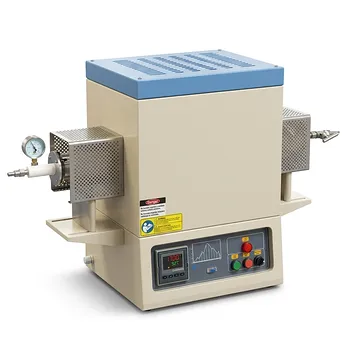
High Temperature Three Zone Tube Furnace 1700C with Alumina Tube and Water Cooled Flanges
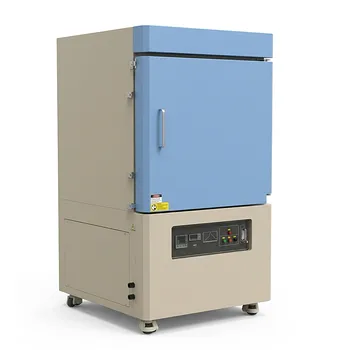
Industrial Large Box Furnace 1700C 216L High Temp Muffle Sintering System

High Temperature Tube Furnace 1500C with Sliding Flanges and 50mm OD for Rapid Thermal Processing Fast Heating and Cooling

High Temperature 1700C Tube Furnace with High Vacuum Turbomolecular Pump System and Multi Channel Mass Flow Controller Gas Mixer

1750°C High Temperature Benchtop Vacuum Atmosphere Tube Furnace with Kanthal Super 1800 Heating Elements and 60mm Alumina Processing Tube
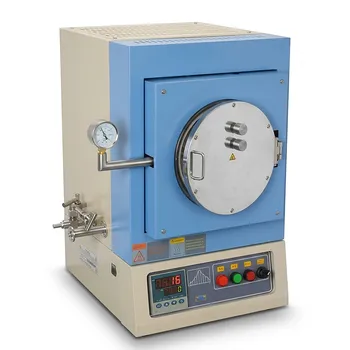
1100°C High Temperature Quartz Chamber Furnace 8 Inch OD with 7.6 Liter Capacity and Vacuum Atmosphere Capability
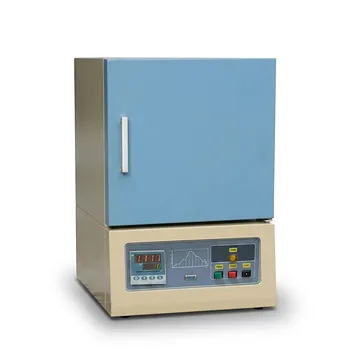
Ultra High Temperature Bench Top Muffle Furnace 1750C Sintering System with Kanthal Super Heating Elements and Precision Digital Control
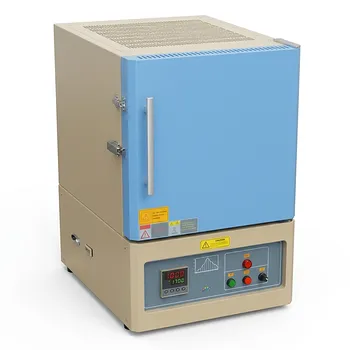
Large Bench Top 1700C High Temperature Muffle Furnace with 19L Chamber for Advanced Material Sintering and Annealing
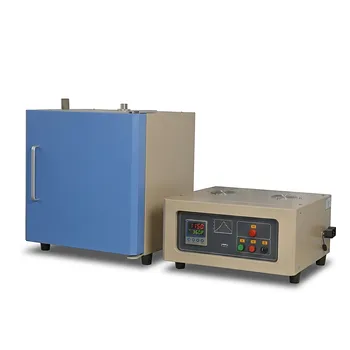
High Temperature Muffle Furnace with Alloy Chamber for Debinding and Sintering Applications
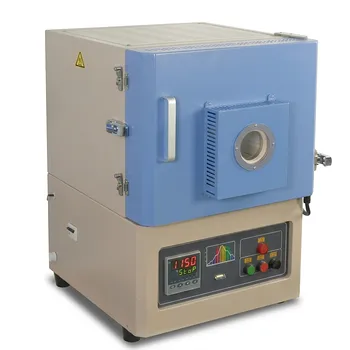
High Temperature Benchtop Muffle Furnace with Quartz Observation Window for Thermal Imaging and Material Analysis
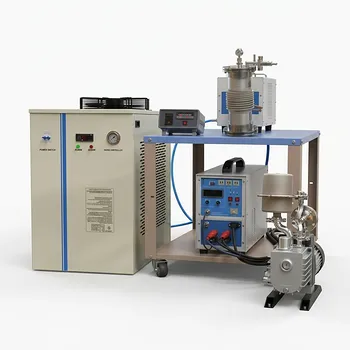
Induction Heating System with Temperature Control for High Temperature Vacuum Sintering and Melting
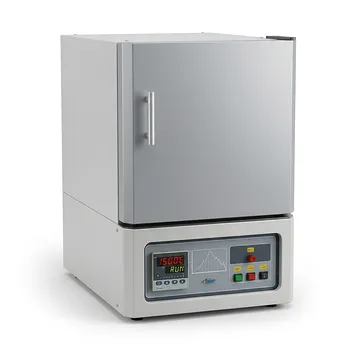
High Temperature 1500C Benchtop Muffle Furnace 3.6L Alumina Fiber Chamber Programmable Controller Sintering Annealing Carbonization Thermal Processing System
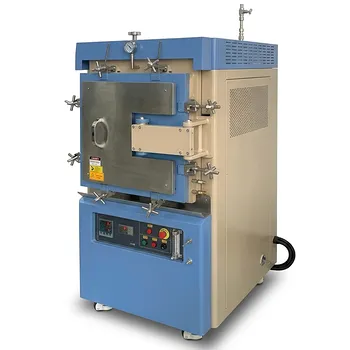
Atmosphere Controlled Muffle Furnace 1700C Maximum Temperature 80L High Capacity Vacuum Inert Gas Box Furnace
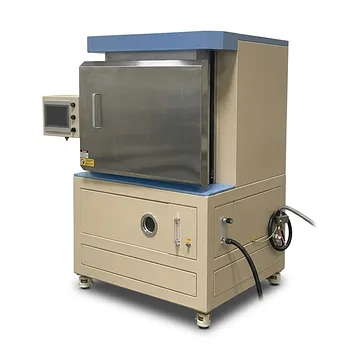
1650C High Temperature Atmosphere Controlled Box Furnace with 65L Chamber for Advanced Material Sintering and Industrial Heat Treatment
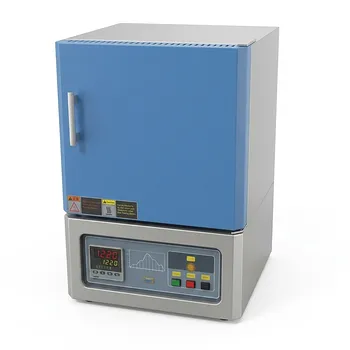
High Temperature Benchtop Muffle Furnace 1700C 10L Chamber Alumina Fiber Insulation MoSi2 Heating Elements