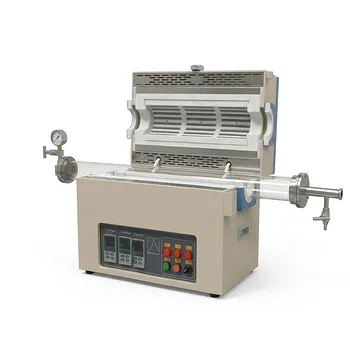
What is the primary function of a high-temperature split tube furnace in nitrogen metastable particle research? Expert Guide
Updated 3 months ago
In nitrogen metastable particle research, the primary function of a high-temperature split tube furnace is to precisely preheat gas mixtures to maintain a stable, isothermal reactor environment. This controlled heating, typically ranging between 800 K and 1000 K, allows researchers to measure absorption spectra under specific thermal conditions, which is critical for calculating pressure broadening coefficients.
The high-temperature split tube furnace acts as a precision thermal regulator that enables the study of gas-phase dynamics. By establishing a uniform temperature field, it allows for the accurate derivation of temperature-dependent physical constants essential to understanding nitrogen metastable states.
Facilitating Precise Spectroscopic Analysis
The furnace is not merely a heat source but a controlled environment for analytical physics.
Preheating Gas Mixtures
The furnace is used to heat nitrogen or nitrogen-nitric oxide gas mixtures before they enter the reaction or observation zone. This ensures that the gases are at a known, uniform temperature when they interact with probe beams or other particles.
Maintaining Isothermal Conditions
The "split" design of the furnace allows for easy access and integration with reactor tubes while providing a long and uniform heating zone. This uniformity is vital for ensuring that the entire volume of gas being measured is at the same kinetic energy level, preventing data blurring caused by temperature gradients.
Measuring Pressure Broadening Coefficients
By varying the temperature within the 800 K to 1000 K range, researchers can observe how spectral lines change. These observations are the foundation for deriving the temperature dependence of pressure broadening, a key metric in molecular spectroscopy and atmospheric modeling.
The Role of Atmosphere and Environment Control
The effectiveness of the furnace depends on its ability to isolate the experiment from the external environment.
Managing Gas Composition
A critical feature of these furnaces is their hermetic design, which maintains a strict environment for the gas mixtures. This prevents oxygen contamination, which would quench metastable states or cause unwanted chemical reactions with the nitric oxide.
Establishing Inert and Reactive Environments
While nitrogen is often the subject of study, the furnace can also manage argon or other inert gases to establish protective atmospheres. This flexibility allows researchers to switch between different gas environments rapidly to measure reaction rate constants across varying temperature gradients.
Understanding the Trade-offs
While high-temperature tube furnaces are highly effective, they possess specific limitations that researchers must manage.
Thermal Lag and Stabilization Time
High-temperature furnaces require significant time to reach a thermal equilibrium. Rapid temperature changes are difficult to achieve, meaning experiments must be planned around long stabilization periods to ensure data accuracy.
Temperature Range Limitations
While some industrial tube furnaces can reach up to 1600 °C, nitrogen metastable research often operates in a narrower window (800 K - 1000 K). Using a furnace outside its optimal calibrated range can lead to non-uniform heating zones, which compromises the precision of the absorption spectra.
Integrity of the Reaction Tube
At sustained high temperatures, the material of the tube itself (often quartz or ceramic) can become a factor. Researchers must ensure that the tube does not outgas or react with the nitrogen-nitric oxide mixtures, as even trace impurities can significantly alter metastable particle behavior.
Applying This Technology to Your Research
Choosing the right furnace configuration depends on the specific goals of your spectroscopic or synthetic study.
- If your primary focus is deriving physical constants: Use a furnace with a long, isothermal zone and high-precision PID controllers to ensure temperature stability within ±1 K.
- If your primary focus is nitrogen-doped material synthesis: Prioritize a furnace with robust gas-handling capabilities to maintain a strict nitrogen or argon atmosphere for the carbonization of precursors.
- If your primary focus is reaction kinetics: Select a split-tube model that allows for rapid cooling or quick access to the reactor assembly between experimental runs.
A high-temperature split tube furnace is the definitive tool for creating the stable thermal conditions necessary to unlock the complex behaviors of nitrogen metastable particles.
Summary Table:
| Feature | Primary Function | Benefit for Research |
|---|---|---|
| Gas Preheating | Heats gas mixtures to 800K - 1000K | Ensures uniform temperature for absorption spectra |
| Isothermal Zone | Maintains a stable, long heating field | Prevents data blurring caused by thermal gradients |
| Split Design | Easy access to reactor tubes | Simplifies integration with spectroscopic probes |
| Hermetic Sealing | Atmosphere & environment control | Prevents oxygen contamination and particle quenching |
| PID Control | High-precision thermal regulation | Vital for deriving pressure broadening coefficients |
Elevate Your Research with Precision Thermal Solutions
At THERMUNITS, we understand that breakthrough research in material science and gas-phase dynamics requires absolute thermal precision. As a leading manufacturer of high-temperature laboratory equipment, we provide industry-grade solutions including Split Tube Furnaces, Muffle, Vacuum, Atmosphere, and Rotary furnaces, as well as advanced CVD/PECVD systems and Vacuum Induction Melting (VIM) units.
Whether you are analyzing nitrogen metastable states or synthesizing next-generation materials, our equipment is designed to deliver the stable isothermal environments and hermetic control your laboratory demands.
Ready to optimize your heat treatment process? Contact THERMUNITS today to discuss your specific R&D requirements with our technical experts!
References
- Sai Raskar, Igor Adamovich. MHz sampling rate measurements of N<sub>2</sub>(A<sup>3</sup>Σ<sub>u</sub> <sup>+</sup>) population in a Ns pulse discharge in a heated plasma flow reactor. DOI: 10.1088/1361-6595/ad8219
Mentioned Products
- High Temperature Split Tube Furnace 1500C for Material Research Vacuum and Atmosphere Thermal Processing
- High Temperature 1200C Split Tube Furnace with Optional Quartz Tube Sizes and Vacuum Sealing Flanges for Material Science Research
- High Temperature 1200C Split Tube Furnace with Hinged Vacuum Flanges and 4 Inch Quartz Tube for Laboratory Research
- High Temperature 1200C Split Tube Furnace for CVD Research and Vacuum Atmosphere Heat Treatment
- High Temperature 1700C Split Tube Furnace with Vacuum Flanges Valves and 60mm Alumina Tube
People Also Ask
- What core conditions does a high-temperature tube furnace provide for rGO aerogels? Mastering Precision Synthesis.
- How does a tube furnace facilitate CrMnFeCoCu alloy conversion? Master High-Entropy Oxide Synthesis with THERMUNITS.
- What are the primary functions of a high-temperature tube furnace for Inconel 718? Master Debinding & Pre-sintering.
- What is the function of a high-temperature tube furnace in NC support preparation? Achieve Precise Pyrolysis & Doping
- How are high-temperature tube furnaces utilized to repair etching damage? Precision Lattice Restoration Solutions

Tech Team · ThermUnits
Last updated on Jun 03, 2026
Related Products
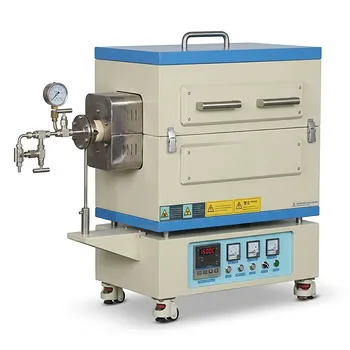
High Temperature Split Tube Furnace 1500C for Material Research Vacuum and Atmosphere Thermal Processing
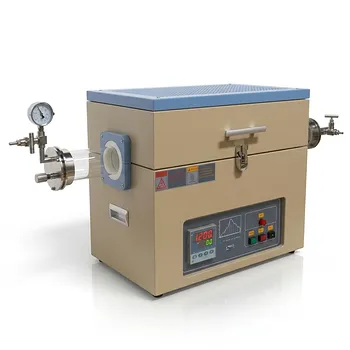
High Temperature 1200C Split Tube Furnace with Optional Quartz Tube Sizes and Vacuum Sealing Flanges for Material Science Research
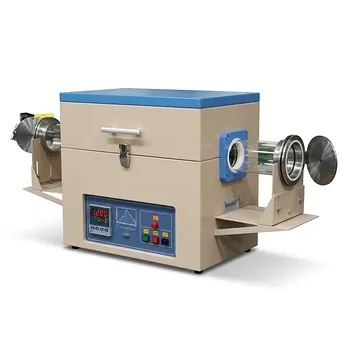
High Temperature 1200C Split Tube Furnace with Hinged Vacuum Flanges and 4 Inch Quartz Tube for Laboratory Research
High Temperature 1200C Split Tube Furnace for CVD Research and Vacuum Atmosphere Heat Treatment
High Temperature 1700C Split Tube Furnace with Vacuum Flanges Valves and 60mm Alumina Tube
High Temperature 1600C Split Tube Furnace Vacuum Flanges Valves Optional 60mm 80mm Alumina Tube
High Temperature 1200C Split Tube Furnace with Internal Travel Mechanism for HPCVD and Crystal Growth Research
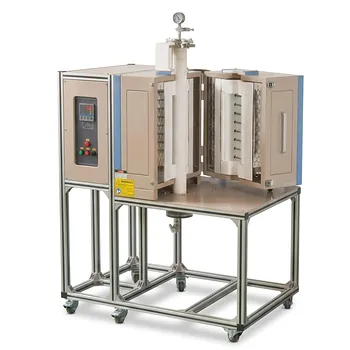
High Temperature 1700C Vertical Split Tube Furnace for Material Quenching and Single Crystal Growth
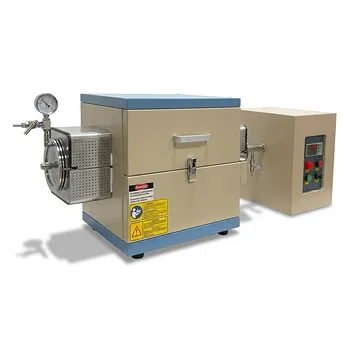
1200C High Temperature 5 Inch Split Vacuum Tube Furnace with 12 Inch Heating Zone and Separated PID Controller

High Temperature 1700C Six Zone Split Tube Furnace with Alumina Tube and Water Cooled Flanges
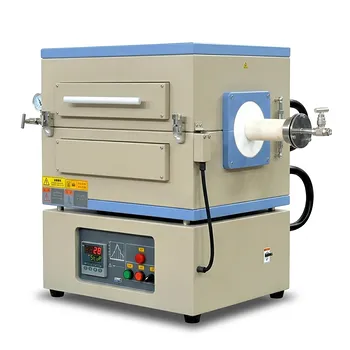
1500°C Split Tube Furnace with Alumina Tube and Vacuum Sealing Flanges for Material Research
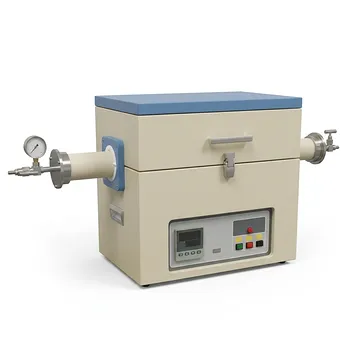
1250C Split Tube Furnace with 3 Inch Mullite Tube and Vacuum Sealing Flanges for Precision Thermal Processing
High Temperature Three Zone Split Tube Furnace 1200C Max 35.4 Inch Heating Length 8 Inch ID Tube
High Temperature Vertical Split Tube Furnace with PID Temperature Controller for 1 and 2 Inch Processing Tubes
Three Zone Heating Split Vertical Tube Furnace 1700 High Temperature Vacuum Atmosphere Thermal Process System
High Temperature Dual Zone Split Tube Furnace for Advanced Atmosphere Sintering and Vacuum CVD Applications
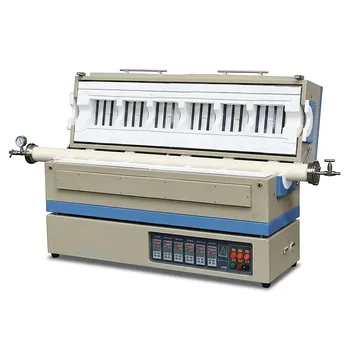
Six Zone Split Tube Furnace with Alumina Tube and Vacuum Flanges for 1500C High Temperature Thermal Processing and CVD
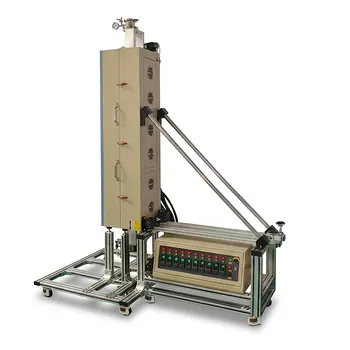
1200°C 10-Zone Split Tube Furnace with Horizontal and Vertical Mounting for Multi-Zone Thermal Gradients and Large Diameter Material Processing
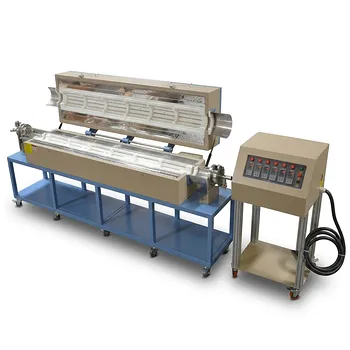
Six Zone Split Tube Furnace 1.8 Meter Quartz Tube 1200C High Temperature Heating System