What role does a high-temperature tube atmosphere furnace play in the synthesis of nitrogen-doped activated carbon?
Updated 5 months ago
The high-temperature tube atmosphere furnace is the critical reactor for nitrogen doping, providing the precise thermal and chemical conditions required to transform raw precursors into functionalized carbon materials. By maintaining an oxygen-free environment and specific temperature profiles, the furnace enables the integration of nitrogen atoms into the carbon lattice while preventing the material from burning away.
Core Takeaway: The furnace serves as a controlled thermochemical chamber that facilitates pyrolysis and nitrogen integration. It simultaneously protects the carbon yield from oxidation and dictates the final material's porosity, conductivity, and chemical functionality.
Atmosphere Control and Material Preservation
Preventing Oxidative Combustion
The primary role of the atmosphere furnace is to displace oxygen with inert gases like nitrogen or argon. Without this protection, carbon precursors (such as biomass or polymers) would simply undergo combustion at high temperatures, resulting in ash rather than activated carbon.
Facilitating Specific Chemical Pathways
By introducing reactive gases like ammonia (NH3) or maintaining a pure nitrogen flow, the furnace creates a "reactive" or "protective" shroud. This environment allows for in-situ nitrogen doping, where nitrogen atoms are chemically bonded into the carbon framework as the precursor decomposes.
Ensuring High Yield and Stability
The continuous gas flow maintains a stable internal pressure and removes volatile byproducts. This process ensures the stability and yield of the final product by preventing secondary reactions that could degrade the carbon skeleton.
Precision Thermal Processing and Carbonization
Driving Pyrolysis and Carbonization
The furnace provides the high-energy environment (typically between 600°C and 1100°C) necessary to break chemical bonds in precursors like MOFs or ZIF-8. This heat drives the pyrolytic carbonization process, which strips away non-carbon elements and leaves behind a structured carbon matrix.
Developing Hierarchical Pore Structures
Temperature control is the main lever for managing specific surface area and porosity. High-temperature treatment facilitates the volatilization of certain components (like zinc in MOF precursors), which leaves behind a hierarchical pore structure essential for adsorption and catalysis.
Enhancing Electrical Conductivity
Higher temperatures, often exceeding 900°C, promote a higher degree of graphitization. This structural change significantly improves the electrical conductivity of the nitrogen-doped carbon, making it suitable for electrochemical applications like supercapacitors or fuel cells.
The Mechanism of Nitrogen Integration
Formation of Functional Groups
Under specific thermal conditions, such as 600°C, the furnace enables the formation of quaternary nitrogen (N-Q) functional groups. These groups are integrated directly into the carbon framework, altering its electronic properties and improving its affinity for specific molecules.
Anchoring Active Sites
The furnace provides the stable physicochemical platform required for metal atom anchoring. By successfully doping nitrogen into the lattice, the furnace creates "pockets" that can securely hold metal nanoclusters, preventing them from aggregating during high-temperature use.
Optimizing Interlayer Spacing
For materials like hard carbon, the furnace's heating rate and constant temperature (e.g., 800°C) are used to optimize interlayer spacing. This precision is vital for tailoring the material's electrochemical activity and its ability to host ions.
Understanding the Trade-offs and Challenges
Yield vs. Porosity
There is a direct trade-off between the temperature and the final mass of the carbon. While higher temperatures increase porosity and conductivity, they also increase the loss of carbon through the volatilization of functional groups, potentially reducing the overall nitrogen content.
Temperature Uniformity Risks
In a tube furnace, the "hot zone" must be carefully monitored. Inconsistent temperature distribution can lead to uneven carbonization, resulting in a batch of material where some particles are well-doped while others remain under-processed or over-calcined.
Gas Flow Dynamics
The rate of gas flow is critical; if the flow is too slow, byproduct gases may linger and cause undesired secondary reactions. Conversely, excessively high flow rates can lead to cooling of the sample or the physical loss of fine-powder precursors.
How to Apply This to Your Synthesis Goals
Strategic Recommendations
- If your primary focus is high nitrogen retention: Operate the furnace at lower carbonization temperatures (approx. 600°C) to preserve nitrogen-rich functional groups like N-Q.
- If your primary focus is maximum electrical conductivity: Utilize high-temperature settings (above 1000°C) to maximize graphitization, accepting that total nitrogen content may decrease.
- If your primary focus is specialized pore structures: Use a furnace capable of handling NH3/Ar mixtures to facilitate aggressive in-situ etching and doping during the carbonization phase.
The high-temperature tube atmosphere furnace is not merely a heater, but a sophisticated chemical reactor that defines the structural and functional identity of nitrogen-doped activated carbon.
Summary Table:
| Process Function | Impact on Carbon Synthesis | Key Control Parameters |
|---|---|---|
| Atmosphere Control | Prevents combustion; enables in-situ N-doping | Gas composition (N2, Ar, NH3) |
| Thermal Pyrolysis | Drives carbonization and volatilization | Temp Range: 600°C - 1100°C |
| Structural Tuning | Enhances graphitization and conductivity | Heating rate & dwell time |
| Pore Engineering | Develops hierarchical surface structures | Precise thermal uniformity |
Optimize Your Carbon Synthesis with THERMUNITS
As a leading manufacturer of high-temperature laboratory equipment, THERMUNITS provides the precision thermal solutions required for advanced material science and industrial R&D. Our specialized Tube and Atmosphere Furnaces offer the superior temperature uniformity and gas flow control essential for achieving high-yield nitrogen-doped carbon with tailored porosity.
From CVD/PECVD systems to high-vacuum and rotary kilns, we empower researchers to push the boundaries of heat treatment. Contact us today to find the perfect furnace for your lab and leverage our expertise in thermal processing to enhance your material performance.
References
- Takashi Osawa, Motoi Machida. Characteristics of Nitrate Ion Adsorption onto N-doped Activated Carbon Derived from Pinecone and Urea. DOI: 10.5985/jec.34.71
Mentioned Products
- 1750°C High Temperature Benchtop Vacuum Atmosphere Tube Furnace with Kanthal Super 1800 Heating Elements and 60mm Alumina Processing Tube
- Vertical 1700C Vacuum and Atmosphere Tube Furnace with 80mm Alumina Tube
- 1200C Hybrid Muffle and Tube Furnace for Material Research with Dual Atmosphere Control Quartz Tubes
- Compact Hybrid Muffle and Tube Furnace for 1000C Controlled Atmosphere Laboratory Material Sintering
- Compact Vertical Split Quartz Tube Furnace with Stainless Steel Vacuum Flanges for Rapid Thermal Quenching and Controlled Atmosphere Material Processing
People Also Ask
- What core functions does a high-temperature vacuum tube furnace provide? Optimize np-CuSn Sintering & Joint Integrity
- What is the role of a high-temperature tube furnace in the calcination process of ZnO/In2O3 nanocomposites?
- What role does a high-temperature tube furnace play in the sulfidation heat treatment of CoS@C/MXene nanocomposites? Guide
- Why is a high-temperature tube furnace required for CuAlO2 heat treatment? Master Phase Transformation Today
- What role does a high-temperature tube furnace play in executing nitrogen absorption kinetic experiments? Expert Insights

Tech Team · ThermUnits
Last updated on Apr 14, 2026
Related Products
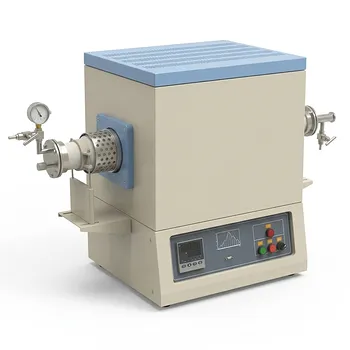
1750°C High Temperature Benchtop Vacuum Atmosphere Tube Furnace with Kanthal Super 1800 Heating Elements and 60mm Alumina Processing Tube

Vertical 1700C Vacuum and Atmosphere Tube Furnace with 80mm Alumina Tube
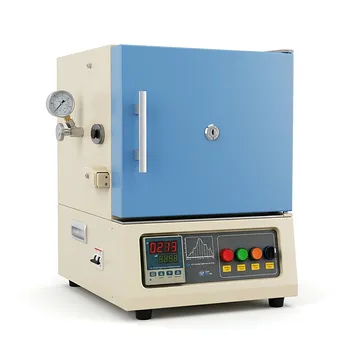
1200C Hybrid Muffle and Tube Furnace for Material Research with Dual Atmosphere Control Quartz Tubes
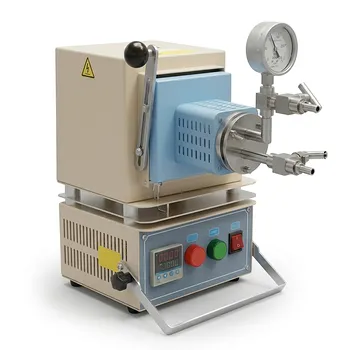
Compact Hybrid Muffle and Tube Furnace for 1000C Controlled Atmosphere Laboratory Material Sintering

Compact Vertical Split Quartz Tube Furnace with Stainless Steel Vacuum Flanges for Rapid Thermal Quenching and Controlled Atmosphere Material Processing
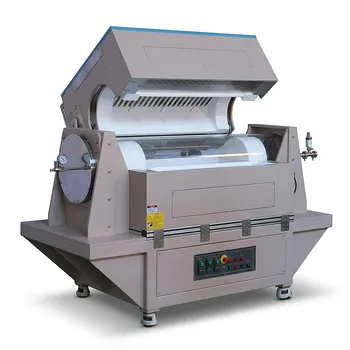
Three Zone Tube Furnace with 11 Inch or 15 Inch Quartz Tube and Hinged Flanges for Vacuum Atmosphere Heat Treatment
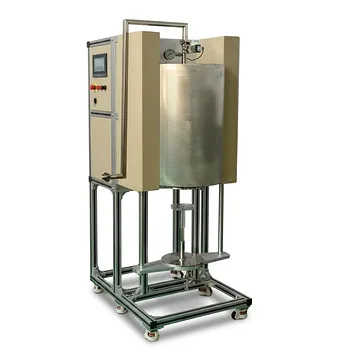
1200°C Atmosphere Controlled Automatic Bottom Loading Furnace with 6 Inch Quartz Tube
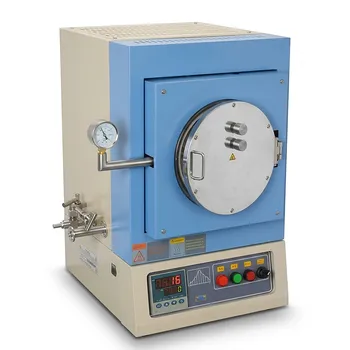
1100°C High Temperature Quartz Chamber Furnace 8 Inch OD with 7.6 Liter Capacity and Vacuum Atmosphere Capability
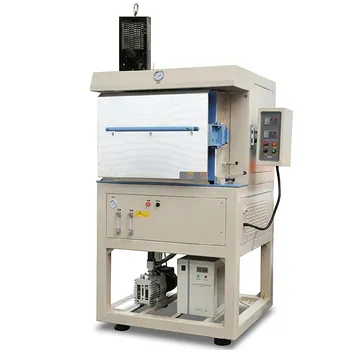
1200C Hydrogen Atmosphere Box Furnace with 5 Heated Sides and 64L Chamber
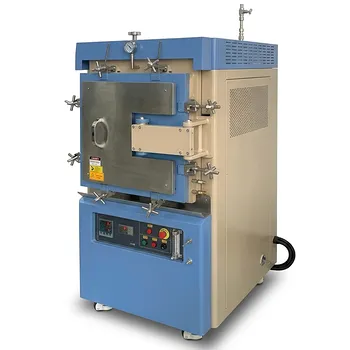
Atmosphere Controlled Muffle Furnace 1700C Maximum Temperature 80L High Capacity Vacuum Inert Gas Box Furnace
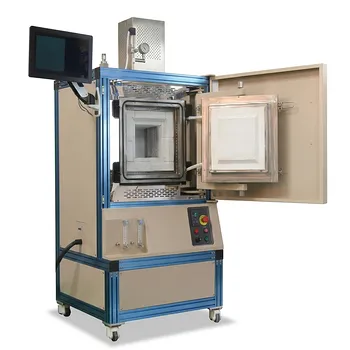
High Temperature Hydrogen Atmosphere Box Furnace 1650C Max Reducing Environment Material Synthesis System 8x8x8 Chamber

High Temperature 1700C Vertical Tube Furnace for Powder Spherification and Material Sintering

High Temperature 1700C Six Zone Split Tube Furnace with Alumina Tube and Water Cooled Flanges
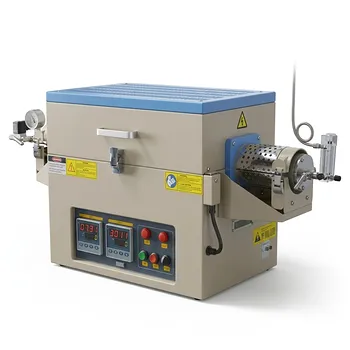
1100C Dual Zone Hydrogen Gas Tube Furnace with Quartz Tube and Integrated H2 Leak Detection System

High Temperature 1700C Tube Furnace with High Vacuum Turbomolecular Pump System and Multi Channel Mass Flow Controller Gas Mixer

1800C High Temperature Compact Vacuum Tube Furnace with 60mm OD Alumina Tube and Kanthal MoSi2 Heating Elements
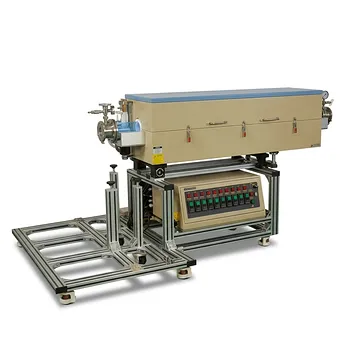
Ten Zone Multi Orientation Laboratory Tube Furnace for 1200C High Temperature Gradient Thermal Processing
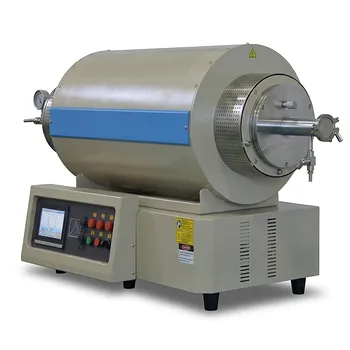
1200C Max Three Zone Tube Furnace 6 Inch OD Max with Tube and Flange

High Temperature 1700C Benchtop Tube Furnace with 5 Inch Heating Zone High Purity Alumina Tube and Vacuum Sealing Flanges
