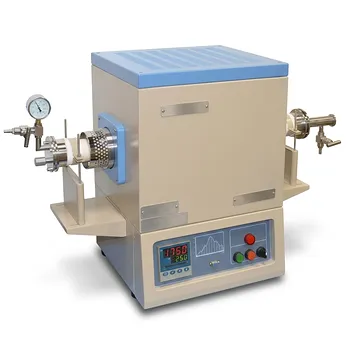
What role does a reducing atmosphere tube furnace play in generating v-CoTe2? Expert Guide to Defect Engineering
Updated 3 months ago
A reducing atmosphere tube furnace serves as the reactive environment where hydrogen gas chemically strips tellurium atoms from the cobalt ditelluride (CoTe2) crystal lattice. By maintaining a precise temperature of 350 °C under an argon-hydrogen (Ar/H2) flow, the furnace facilitates a controlled "secondary annealing" that induces specific chalcogen vacancies (v-CoTe2) to enhance the material's catalytic properties.
The core role of the reducing atmosphere tube furnace is to provide the simultaneous thermal energy and chemical reducing agents required to engineer atomic-level defects. This process transforms the electronic structure of CoTe2, generating spin-polarized electrons that are critical for high-efficiency catalysis.
The Mechanism of Chalcogen Vacancy Generation
Chemical Reduction via Hydrogen
The primary function of the furnace is to introduce hydrogen (H2), which acts as a reducing agent at elevated temperatures.
Hydrogen atoms react with the tellurium on the surface and within the lattice of the CoTe2, removing them and leaving behind chalcogen vacancies.
Thermal Activation at 350 °C
The tube furnace provides the precise thermal energy—specifically 350 °C—required to break the chemical bonds of tellurium without destroying the underlying crystal structure.
This specific temperature is the physical prerequisite for ensuring the reduction is deep enough to create vacancies but controlled enough to maintain phase purity.
Protective Inert Environment
While hydrogen performs the reduction, the furnace uses Argon (Ar) as a carrier gas to maintain an inert environment.
This prevents unwanted oxidation from atmospheric oxygen, ensuring that the resulting v-CoTe2 remains chemically stable and free from impurities.
The Impact on Electronic Structure
Regulating Spin Polarization
By creating tellurium vacancies, the furnace allows researchers to regulate the electronic structure of the cobalt ditelluride.
These vacancies trigger the generation of spin-polarized electrons, which significantly improves the material's ability to facilitate chemical reactions.
Engineering Catalytic Active Centers
The furnace enables the transition from a standard bulk material to an atomically engineered catalyst.
This process is similar to how furnaces are used to create atomically dispersed sites or synergistic active centers in other cobalt-based frameworks.
Understanding the Trade-offs and Pitfalls
Temperature Sensitivity
If the furnace temperature exceeds the 350 °C threshold significantly, the material may undergo excessive reduction or phase transformation.
Conversely, temperatures that are too low will fail to provide the activation energy needed for hydrogen to remove the tellurium atoms, resulting in a lack of vacancies.
Atmospheric Consistency
Inconsistent gas flow within the tube can lead to dendritic segregation or uneven vacancy distribution across the sample.
Maintaining a constant temperature zone is vital to ensure that the tellurium removal is uniform, which is necessary for predictable catalytic performance.
Applying Furnace Parameters to Research Goals
How to Apply This to Your Project
To achieve the desired material properties, the furnace settings must be aligned with the specific requirements of the precursor and the target defect density.
- If your primary focus is maximizing catalytic activity: Use a precise Ar/H2 mixture at 350 °C to maximize spin-polarized electron generation through tellurium vacancies.
- If your primary focus is maintaining phase purity: Ensure the furnace is completely purged with Argon before heating to prevent the formation of unwanted oxides.
- If your primary focus is structural morphology: Monitor the annealing duration closely, as extended exposure at high temperatures can lead to the unwanted stacking or collapsing of nanosheet structures.
The controlled environment of a reducing atmosphere tube furnace is the fundamental tool for transforming inert precursors into high-performance, defect-engineered catalysts.
Summary Table:
| Factor | Function in Annealing | Result for v-CoTe2 |
|---|---|---|
| 350 °C Temp | Thermal activation | Breaks Te bonds; preserves crystal lattice |
| H2 Flow | Reducing agent | Strips Te atoms to create chalcogen vacancies |
| Ar Flow | Carrier/Inert gas | Prevents oxidation; ensures chemical stability |
| Tube Design | Uniform environment | Regulates spin polarization & electronic structure |
Enhance Your Material Research with THERMUNITS Precision
Achieving precise tellurium vacancies (v-CoTe2) requires the exacting temperature and atmospheric control that only high-quality equipment can provide. THERMUNITS is a leading manufacturer of high-temperature laboratory equipment for material science and industrial R&D. Our comprehensive range of thermal processing solutions—including Atmosphere and Tube furnaces, CVD/PECVD systems, Vacuum furnaces, and Rotary kilns—is designed to help researchers achieve perfect defect engineering and high-efficiency catalysis.
Ready to optimize your heat treatment process? Contact our experts today to find the ideal thermal solution for your laboratory or industrial R&D needs.
References
- Qianhong Gong, Andreu Cabot. Cobalt Ditelluride Meets Tellurium Vacancy: An Efficient Catalyst as a Multifunctional Polysulfide Mediator toward Robust Lithium–Sulfur Batteries. DOI: 10.1021/acsnano.4c11068
Mentioned Products
- High Temperature Hydrogen Atmosphere Box Furnace 1650C Max Reducing Environment Material Synthesis System 8x8x8 Chamber
- Compact Vertical Split Quartz Tube Furnace with Stainless Steel Vacuum Flanges for Rapid Thermal Quenching and Controlled Atmosphere Material Processing
- Vertical 1700C Vacuum and Atmosphere Tube Furnace with 80mm Alumina Tube
- Three Zone Tube Furnace with 11 Inch or 15 Inch Quartz Tube and Hinged Flanges for Vacuum Atmosphere Heat Treatment
- Compact Hybrid Muffle and Tube Furnace for 1000C Controlled Atmosphere Laboratory Material Sintering
People Also Ask
- What is the role of a high-temperature box furnace in the solid-state synthesis of Europium-doped M3MgSi2O8 phosphors?
- What is the role of a high-temperature box furnace in Na3MnZr(PO4)3 synthesis? Engineering High-Performance NASICON.
- What role does an industrial-grade high-temperature furnace play in C2F sintering? Achieve Pure Phase and High Strength
- Why is a high-temperature box furnace required for 1250°C ferrite calcination? Ensure Precise Phase Transformation.
- How does a high-temp box furnace aid rare-earth oxysulfide phosphor synthesis? Enhance Purity & Luminescence

Tech Team · ThermUnits
Last updated on Jun 03, 2026
Related Products
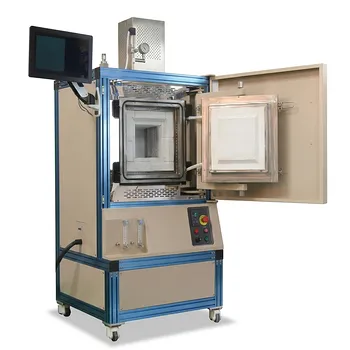
High Temperature Hydrogen Atmosphere Box Furnace 1650C Max Reducing Environment Material Synthesis System 8x8x8 Chamber

Compact Vertical Split Quartz Tube Furnace with Stainless Steel Vacuum Flanges for Rapid Thermal Quenching and Controlled Atmosphere Material Processing

Vertical 1700C Vacuum and Atmosphere Tube Furnace with 80mm Alumina Tube

Three Zone Tube Furnace with 11 Inch or 15 Inch Quartz Tube and Hinged Flanges for Vacuum Atmosphere Heat Treatment
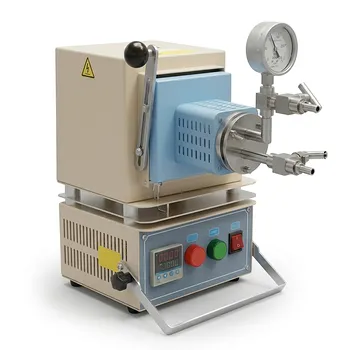
Compact Hybrid Muffle and Tube Furnace for 1000C Controlled Atmosphere Laboratory Material Sintering
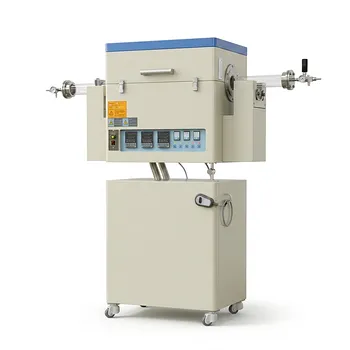
Three Temperature Zone Rotating Tube Furnace for Material Sintering and Controlled Atmospheric Heat Treatment
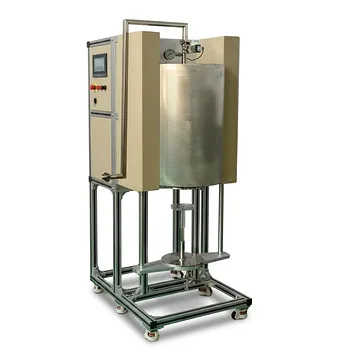
1200°C Atmosphere Controlled Automatic Bottom Loading Furnace with 6 Inch Quartz Tube

1750°C High Temperature Benchtop Vacuum Atmosphere Tube Furnace with Kanthal Super 1800 Heating Elements and 60mm Alumina Processing Tube
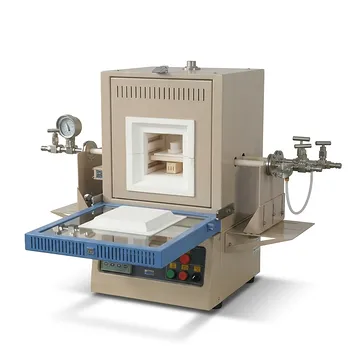
1700C Compact Hybrid Furnace with Dual Layer Box Sintering and Controlled Atmosphere Alumina Tubes
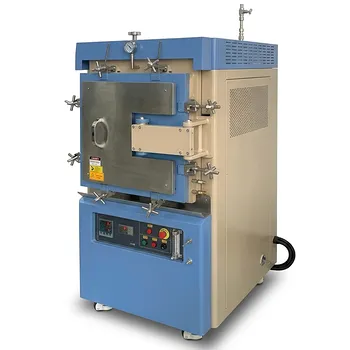
Atmosphere Controlled Muffle Furnace 1700C Maximum Temperature 80L High Capacity Vacuum Inert Gas Box Furnace

1200°C 5 Inch Vertical Quartz Tube Furnace with Stainless Steel Vacuum Flanges
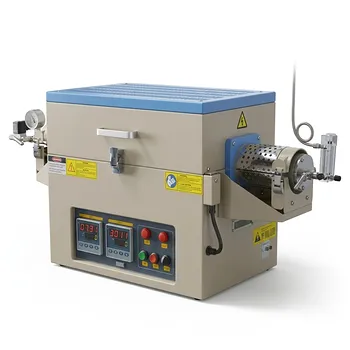
1100C Dual Zone Hydrogen Gas Tube Furnace with Quartz Tube and Integrated H2 Leak Detection System

High Temperature 1700C Vertical Tube Furnace for Powder Spherification and Material Sintering

Compact High Temperature 1600C Tube Furnace with 50mm Alumina Tube and Vacuum Flanges for Material Sintering

High Temperature 1700C Six Zone Split Tube Furnace with Alumina Tube and Water Cooled Flanges

1200C High Throughput Multi Channel Tube Furnace with 50mm Quartz Tubes for Annealing and Material Phase Diagram Research

1700C Hydrogen Gas Tube Furnace with 60mm Alumina Process Tube and Integrated Hydrogen Safety Detector
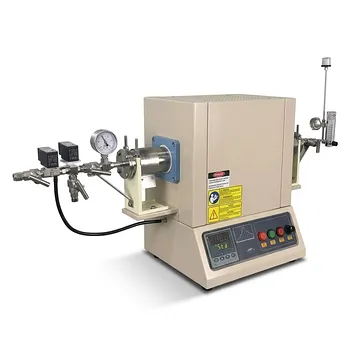
1500C Compact Hydrogen Gas Tube Furnace with 2 Inch Alumina Tube and Hydrogen Detector
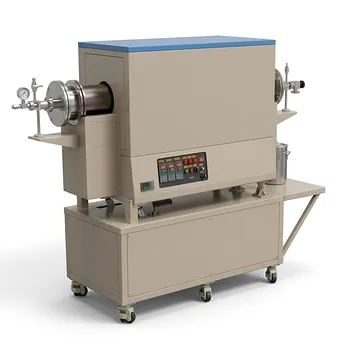
900°C Max Rotary Tube Furnace with 8 Inch 310S Alloy Tube and Optional Multi Zone Heating for Industrial Material Calcination