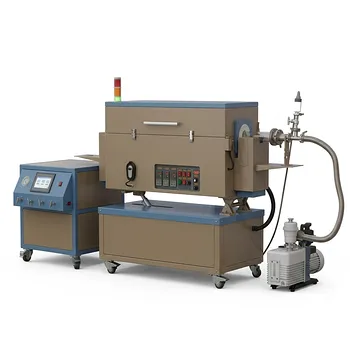
What role does a tube atmosphere furnace play in the carbonization of jute? Expert Guide to High-Performance Carbon
Updated 3 months ago
The tube atmosphere furnace serves as the foundational environment for the carbonization of jute-based materials, primarily by providing a strictly controlled, oxygen-free thermal chamber. This equipment facilitates the conversion of organic jute fibers into structured carbon by preventing oxidative combustion through the continuous flow of inert gases like nitrogen or argon. It ensures the precise removal of non-carbon elements and volatiles while allowing for the development of specific graphitization levels and porous architectures.
The core role of a tube atmosphere furnace is to enable high-temperature pyrolysis while shielding the material from oxygen, which would otherwise destroy the carbon framework. By managing thermal cycles and gas flow, it transforms raw biomass into high-performance carbon materials with tailored electrical and physical properties.
Maintaining a Controlled Inert Environment
Prevention of Oxidative Combustion
At temperatures exceeding 400°C, jute fibers will burn away in the presence of oxygen. The tube furnace uses high-purity nitrogen ($N_2$) or argon to purge oxygen, creating a stable shield that allows the material to reach high temperatures without turning to ash.
Gas Flow and Volatile Removal
Continuous gas flow within the tube serves a dual purpose: it maintains the inert environment and carries away volatile organic compounds (VOCs) released during thermal degradation. This constant purging prevents these impurities from re-depositing on the carbon surface, ensuring a cleaner carbonization process.
Superior Sealing Performance
Unlike standard box furnaces, the tube design allows for airtight sealing. This precision is critical for maintaining an environment where even trace amounts of oxygen are eliminated, which is essential for achieving high electrical conductivity and chemical stability in the final carbon nanofibers.
Precision Thermal Control and Pyrolysis
Precise Heating Rates and PID Control
The furnace utilizes advanced PID (Proportional-Integral-Derivative) controllers to manage heating rates, such as a steady $10^{\circ}C$ per minute. This gradual increase prevents "thermal overshoot," ensuring that the jute fibers decompose uniformly rather than fracturing under sudden thermal stress.
Multi-Stage Heating Programs
Sophisticated carbonization often requires "soaking" periods—holding the material at a lower temperature to stabilize it before jumping to final carbonization temperatures of $800^{\circ}C$ to $1000^{\circ}C$. These stages are vital for the self-assembly of stable three-dimensional carbon structures and the thorough deoxygenation of the fiber.
Achieving Specific Graphitization
By controlling the final temperature and duration (e.g., 4 hours at $800^{\circ}C$), the furnace dictates the degree of graphitization. Higher temperatures generally lead to a more ordered carbon skeleton, which directly influences the electromagnetic absorption and catalytic properties of the resulting material.
Structural Development and Activation
Facilitating Chemical Activation
When jute is impregnated with agents like zinc chloride ($ZnCl_2$) or potassium hydroxide (KOH), the furnace provides the uniform thermal field necessary for redox reactions. These reactions are what expand the carbon matrix, shifting the specific surface area from negligible levels to over $1900\text{ m}^2\text{/g}$.
Pore Engineering and Expansion
As the furnace heats the material, activators like KOH release metallic potassium vapor. The tube furnace’s ability to contain and distribute heat evenly allows this vapor to penetrate the carbon matrix, creating a hierarchical network of micro-pores and meso-pores.
Formation of the Conductive Skeleton
The high-temperature environment facilitates the rearrangement of atoms into a carbon fiber skeleton. This process results in a high aspect ratio and high electrical conductivity, making the jute-based carbon suitable for energy storage and electromagnetic shielding applications.
Common Pitfalls and Technical Trade-offs
Thermal Field Non-Uniformity
While tube furnaces are excellent for small batches, the temperature may vary slightly from the center of the tube to the ends. Failure to place the sample in the "constant temperature zone" can lead to inconsistent carbonization and varying degrees of conductivity within a single batch.
Gas Flow Dynamics
Excessive gas flow can cool the sample prematurely or cause "channeling," where some parts of the material are purged more effectively than others. Conversely, insufficient flow may allow byproduct gases to linger, potentially poisoning the carbon surface or altering the intended chemical reaction during activation.
Material Loading Constraints
The physical dimensions of the tube limit the volume of jute that can be processed at once. Overcrowding the tube can lead to uneven heat distribution and trapped volatiles, which compromises the structural integrity and surface area of the porous carbon.
How to Apply This to Your Project
Recommendations for Process Optimization
- If your primary focus is high surface area: Use the furnace to facilitate KOH or $ZnCl_2$ activation at temperatures between $600^{\circ}C$ and $800^{\circ}C$ with a slow heating rate to maximize pore formation.
- If your primary focus is electrical conductivity: Prioritize higher carbonization temperatures ($900^{\circ}C$ to $1000^{\circ}C$) and longer hold times to increase the degree of graphitization in the carbon skeleton.
- If your primary focus is structural uniformity: Utilize a two-step heating program with a stabilization phase to prevent thermal shock and ensure uniform pyrolysis of the biomass precursors.
By masterfully controlling the interaction between inert atmosphere and thermal energy, the tube furnace transforms simple jute fiber into a sophisticated, high-performance carbon architecture.
Summary Table:
| Key Role | Technical Benefit | Impact on Carbon Material |
|---|---|---|
| Inert Atmosphere | Prevents oxidative combustion | Preserves carbon framework/yield |
| Gas Flow Control | Removes VOCs and impurities | Ensures clean surface and high purity |
| PID Thermal Control | Uniform heating rates | Prevents structural fracturing |
| Multi-Stage Heating | Facilitates chemical activation | Creates high surface area (>1900 m²/g) |
| High-Temp Pyrolysis | Controlled graphitization | Enhances electrical conductivity |
Elevate Your Material Research with THERMUNITS
Are you looking to achieve superior precision in the carbonization of biomass or advanced materials? THERMUNITS is a leading manufacturer of high-performance laboratory heat treatment equipment tailored for material science and industrial R&D.
We offer a comprehensive range of thermal processing solutions designed to meet the most rigorous experimental standards, including:
- Tube and Atmosphere Furnaces for precise inert gas processing.
- Muffle, Vacuum, and Rotary Furnaces for versatile thermal cycles.
- CVD/PECVD Systems and Hot Press Furnaces for advanced thin-film and material synthesis.
- Vacuum Induction Melting (VIM) and Dental Furnaces for specialized applications.
Our equipment ensures the uniform thermal fields and airtight sealing necessary for high-level graphitization and pore engineering. Contact us today to optimize your lab’s efficiency and let our experts provide the perfect thermal solution for your project.
References
- Khom Narayan Chaudhary, Prakash Joshi. Carbon derived from Jute Sacks For Low-Cost and Efficient Counter Electrodes of Dye-Sensitized Solar Cells. DOI: 10.56042/ijpap.v62i10.11987
Mentioned Products
- 1750°C High Temperature Benchtop Vacuum Atmosphere Tube Furnace with Kanthal Super 1800 Heating Elements and 60mm Alumina Processing Tube
- Vertical 1700C Vacuum and Atmosphere Tube Furnace with 80mm Alumina Tube
- 1200C Hybrid Muffle and Tube Furnace for Material Research with Dual Atmosphere Control Quartz Tubes
- Compact Hybrid Muffle and Tube Furnace for 1000C Controlled Atmosphere Laboratory Material Sintering
- Compact Vertical Split Quartz Tube Furnace with Stainless Steel Vacuum Flanges for Rapid Thermal Quenching and Controlled Atmosphere Material Processing
People Also Ask
- What core functions does a high-temperature vacuum tube furnace provide? Optimize np-CuSn Sintering & Joint Integrity
- What is the role of a high-temperature tube furnace in the calcination process of ZnO/In2O3 nanocomposites?
- What role does a high-temperature tube furnace play in the sulfidation heat treatment of CoS@C/MXene nanocomposites? Guide
- Why is a high-temperature tube furnace required for CuAlO2 heat treatment? Master Phase Transformation Today
- What role does a high-temperature tube furnace play in executing nitrogen absorption kinetic experiments? Expert Insights

Tech Team · ThermUnits
Last updated on Jun 02, 2026
Related Products
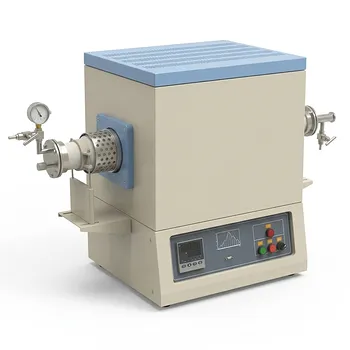
1750°C High Temperature Benchtop Vacuum Atmosphere Tube Furnace with Kanthal Super 1800 Heating Elements and 60mm Alumina Processing Tube

Vertical 1700C Vacuum and Atmosphere Tube Furnace with 80mm Alumina Tube
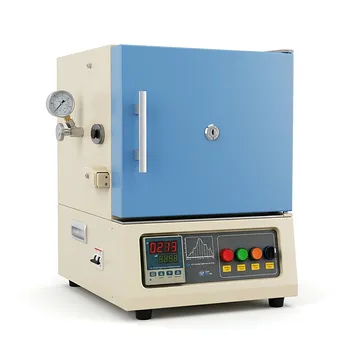
1200C Hybrid Muffle and Tube Furnace for Material Research with Dual Atmosphere Control Quartz Tubes
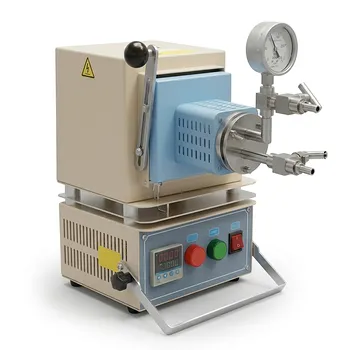
Compact Hybrid Muffle and Tube Furnace for 1000C Controlled Atmosphere Laboratory Material Sintering

Compact Vertical Split Quartz Tube Furnace with Stainless Steel Vacuum Flanges for Rapid Thermal Quenching and Controlled Atmosphere Material Processing
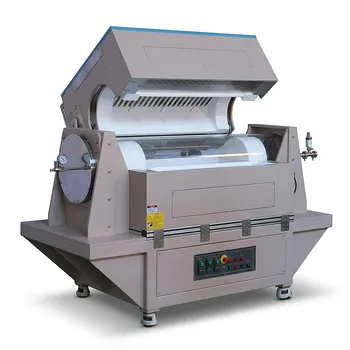
Three Zone Tube Furnace with 11 Inch or 15 Inch Quartz Tube and Hinged Flanges for Vacuum Atmosphere Heat Treatment
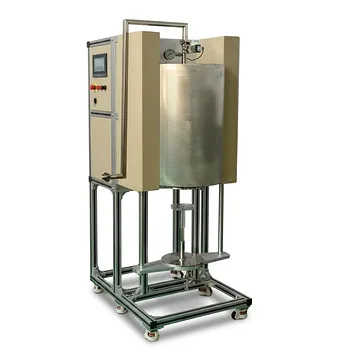
1200°C Atmosphere Controlled Automatic Bottom Loading Furnace with 6 Inch Quartz Tube
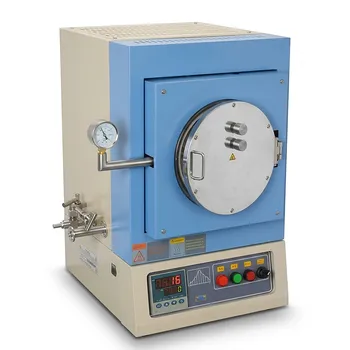
1100°C High Temperature Quartz Chamber Furnace 8 Inch OD with 7.6 Liter Capacity and Vacuum Atmosphere Capability
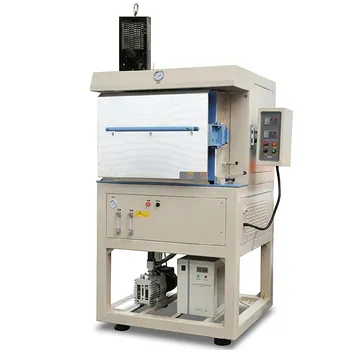
1200C Hydrogen Atmosphere Box Furnace with 5 Heated Sides and 64L Chamber
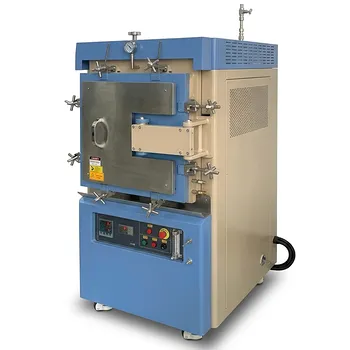
Atmosphere Controlled Muffle Furnace 1700C Maximum Temperature 80L High Capacity Vacuum Inert Gas Box Furnace
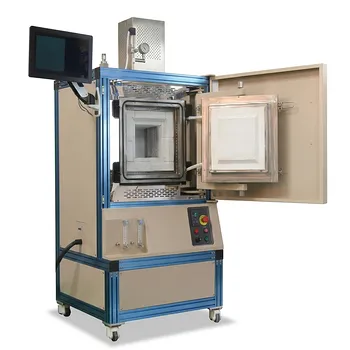
High Temperature Hydrogen Atmosphere Box Furnace 1650C Max Reducing Environment Material Synthesis System 8x8x8 Chamber

High Temperature 1700C Vertical Tube Furnace for Powder Spherification and Material Sintering
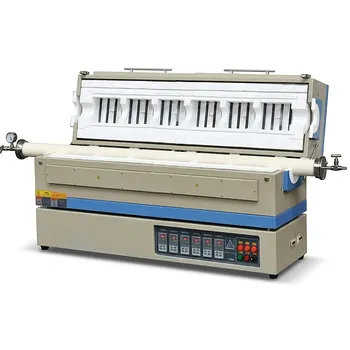
High Temperature 1700C Six Zone Split Tube Furnace with Alumina Tube and Water Cooled Flanges
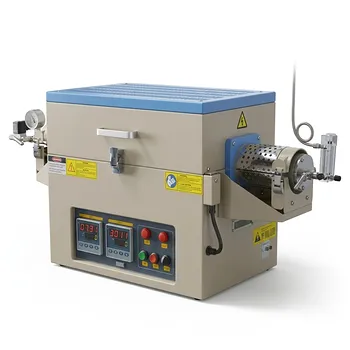
1100C Dual Zone Hydrogen Gas Tube Furnace with Quartz Tube and Integrated H2 Leak Detection System

High Temperature 1700C Tube Furnace with High Vacuum Turbomolecular Pump System and Multi Channel Mass Flow Controller Gas Mixer

1800C High Temperature Compact Vacuum Tube Furnace with 60mm OD Alumina Tube and Kanthal MoSi2 Heating Elements
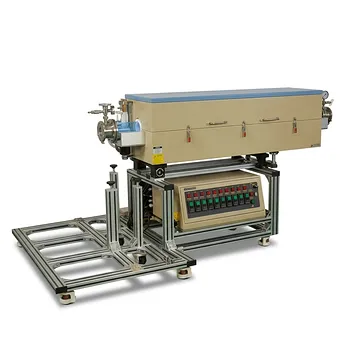
Ten Zone Multi Orientation Laboratory Tube Furnace for 1200C High Temperature Gradient Thermal Processing
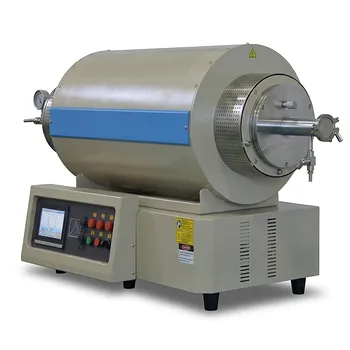
1200C Max Three Zone Tube Furnace 6 Inch OD Max with Tube and Flange

High Temperature 1700C Benchtop Tube Furnace with 5 Inch Heating Zone High Purity Alumina Tube and Vacuum Sealing Flanges