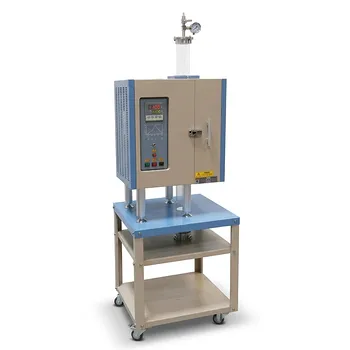
What role does a tube furnace play in the reduction of Ruthenium (Ru) nanoparticles on a carrier using reducing gases?
Updated 3 months ago
A tube furnace serves as the critical controlled-environment reactor required to transform ruthenium precursors into active, metallic nanoparticles. It provides the precise thermal energy and specialized gas atmosphere—typically a mixture of argon and hydrogen—necessary to drive the chemical reduction of ruthenium salts. Beyond simple heating, the furnace regulates the interaction between the ruthenium and its carrier to ensure the resulting catalyst is both stable and highly conductive.
The tube furnace acts as a precision tool that synchronizes high-temperature kinetics with a localized reducing atmosphere to convert ruthenium ions into zero-valent metallic particles. This process not only activates the catalyst but also anchors the nanoparticles to the support through strong metal-support interactions, preventing loss of surface area during use.
Facilitating Complex Reduction Kinetics
Driving the Conversion to Zero-Valent Ruthenium
The primary role of the tube furnace is to provide the high-temperature environment (typically between 300 °C and 500 °C) needed to overcome the activation energy for reduction. Under a flow of hydrogen gas, ruthenium ions or oxides impregnated on a carrier are stripped of oxygen and converted into zero-valent metallic ruthenium (Ru) nanoparticles. This transformation is essential because only the metallic state provides the necessary active sites for nanocatalytic reactions.
Maintaining Precise Thermal Profiles
Effective reduction requires a stable temperature to ensure the reduction degree is uniform across the entire batch of material. The tube furnace maintains a constant thermal environment that allows the reduction reaction to proceed to completion without leaving residual ruthenium salts. This precision ensures that the initial oxidation state of the metal is correctly regulated for the intended application.
Regulating the Chemical Atmosphere
Excluding Atmospheric Contaminants
The sealed nature of a tube furnace creates an oxygen-free environment, which is vital for preventing the premature oxidation of the active metal. By flushing the tube with a 10% H2/Ar or similar reducing mixture, the furnace removes moisture, residual solvents, and oxygen-containing impurities from the carrier surface. This purification step is necessary to optimize the distribution of active sites and improve the electrical conductivity of the catalyst support.
Controlling Gas Dynamics and Surface Enrichment
Advanced tube furnace processes allow for "gas switching," where the atmosphere alternates between reducing and oxidizing states at higher temperatures (up to 800 °C). This specific technique induces the migration of deep-layer ruthenium ions toward the surface of the carrier. This results in surface enrichment, ensuring that the maximum amount of ruthenium is accessible on the exterior of the catalyst for electrochemical testing.
Enhancing Structural Stability and Dispersion
Creating Strong Metal-Support Interactions (MSI)
The thermal energy within the furnace drives a phenomenon known as Strong Metal-Support Interaction (MSI) between the Ru particles and carriers like Titanium Nitride (TiN) or nitrogen-doped carbon. This electronic and physical bond effectively "anchors" the nanoparticles to the support. Without the specific heating profile provided by the furnace, nanoparticles might detach or migrate during high-stress applications.
Preventing Particle Agglomeration and Sintering
A tube furnace allows for the strict regulation of reduction time and temperature, which is critical for maintaining high metal dispersion. By preventing excessive heat, the furnace limits sintering, a process where individual nanoparticles merge into larger, less active clumps. Maintaining a high number of individual active sites through controlled heating is key to preserving superior catalytic activity.
Understanding the Trade-offs
- Temperature vs. Particle Size: While higher temperatures ensure complete reduction and stronger MSI, they also increase the risk of particle agglomeration, which reduces the total active surface area.
- Hydrogen Concentration: Using high concentrations of hydrogen speeds up reduction but can lead to rapid, uncontrolled crystal growth; lower concentrations (like 5% H2/Ar) provide better control over particle dispersion but require longer processing times.
- Throughput vs. Uniformity: Industrial-scale tube furnaces can process larger volumes, but maintaining a perfectly uniform gas flow distribution across a large tube is more difficult than in smaller laboratory units, potentially leading to variations in catalyst quality.
How to Apply This to Your Project
- If your primary focus is Maximum Catalytic Activity: Prioritize a lower reduction temperature (around 200°C–300°C) and a precise hydrogen flow to prevent sintering and maintain the highest possible nanoparticle dispersion.
- If your primary focus is Long-Term Durability: Use a higher temperature (near 500°C) to promote a Strong Metal-Support Interaction (MSI), ensuring the ruthenium particles remain firmly attached to the carrier during electrochemical cycling.
- If your primary focus is Surface Efficiency: Employ an atmosphere-switching protocol at high temperatures to induce ruthenium migration and enrichment at the catalyst surface.
The tube furnace is the indispensable bridge between inert chemical precursors and a high-performance, stable ruthenium-based nanocatalyst.
Summary Table:
| Key Feature | Role in Ru Reduction | Resulting Benefit |
|---|---|---|
| Precise Heating | Provides 300°C–500°C activation energy | Ensures complete conversion to metallic Ru |
| Atmosphere Control | Flow of 10% H2/Ar reducing gases | Prevents oxidation and removes surface impurities |
| Thermal Stability | Maintains uniform thermal profiles | Consistent particle size across batches |
| MSI Induction | Drives Strong Metal-Support Interaction | Anchors nanoparticles to prevent detachment |
| Sintering Control | Regulated heating cycles | Prevents agglomeration of active sites |
Maximize Your Catalytic Research with THERMUNITS
As a leading manufacturer of high-temperature laboratory equipment for material science and industrial R&D, THERMUNITS provides the precision tools needed for critical heat treatment applications. Our comprehensive range of thermal solutions, including Tube, Muffle, Vacuum, Atmosphere, and Hot Press furnaces, as well as CVD/PECVD systems and Rotary Kilns, is designed to deliver exact atmospheric and thermal control.
Whether you are synthesizing Ruthenium nanoparticles or developing next-generation catalysts, our equipment ensures superior stability, dispersion, and performance.
Ready to optimize your thermal processing? → Contact our experts today
References
- Jia Zhao, Jingshan Luo. Rationally designed Ru catalysts supported on TiN for highly efficient and stable hydrogen evolution in alkaline conditions. DOI: 10.1038/s41467-024-50691-5
Mentioned Products
- 900 ºC Max Sliding RTP Tube Furnace with Rapid IR Heating and 4 Inch OD Quartz Tube
- Two Zone IR Heating Rapid Thermal Processing RTP Tube Furnace with 4 Inch ID Quartz Tube and Sliding Sample Holders
- Compact Atmosphere Controlled Rapid Thermal Processing RTP Furnace with 4 Inch ID Quartz Tube 1100C
- Rapid Thermal Processing Sliding Tube Furnace with 4 Inch OD Quartz Tube and 900C IR Heating
- 1500C Three Zone Vertical Pyrolysis Furnace for Nanoparticle Synthesis and Advanced Oxide Coating
People Also Ask
- What role does a SiC-coated graphite susceptor play in H2Se selenization? Boost RTP Thermal Uniformity & Film Purity.
- What materials are used for tube furnace process tubes? Temperature Limits & Selection Guide for Research
- What are the functional advantages of an RTP system for surface deposition? Enhance Heterojunction Interface Integrity
- What technical advantages does an RTA furnace provide for nanoporous gold? Precision Control of Nanostructures.
- What are the advantages of using a Rapid Thermal Annealing (RTA) furnace for Beta-Ga2O3 devices vs. Tube Furnaces?

Tech Team · ThermUnits
Last updated on Jun 02, 2026
Related Products
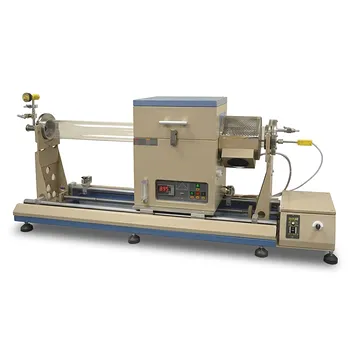
900 ºC Max Sliding RTP Tube Furnace with Rapid IR Heating and 4 Inch OD Quartz Tube
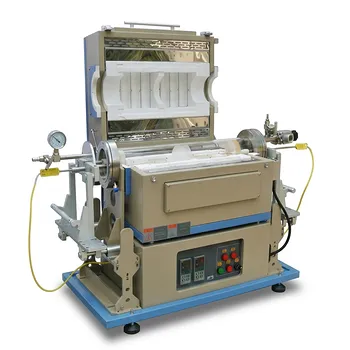
Two Zone IR Heating Rapid Thermal Processing RTP Tube Furnace with 4 Inch ID Quartz Tube and Sliding Sample Holders
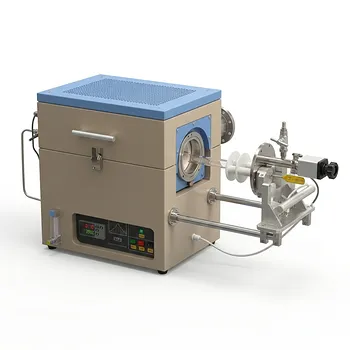
Compact Atmosphere Controlled Rapid Thermal Processing RTP Furnace with 4 Inch ID Quartz Tube 1100C
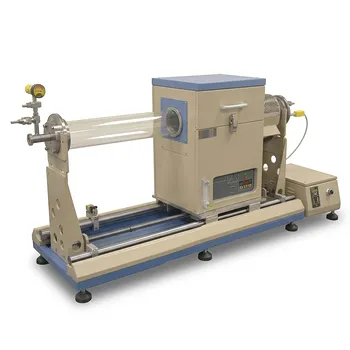
Rapid Thermal Processing Sliding Tube Furnace with 4 Inch OD Quartz Tube and 900C IR Heating
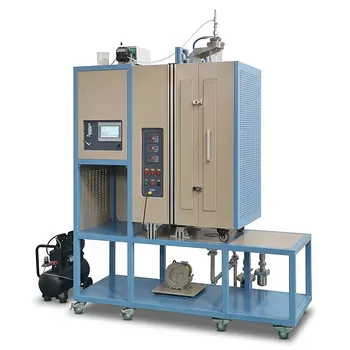
1500C Three Zone Vertical Pyrolysis Furnace for Nanoparticle Synthesis and Advanced Oxide Coating
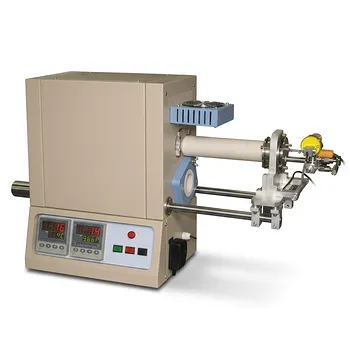
High Temperature Tube Furnace 1500C with Sliding Flanges and 50mm OD for Rapid Thermal Processing Fast Heating and Cooling
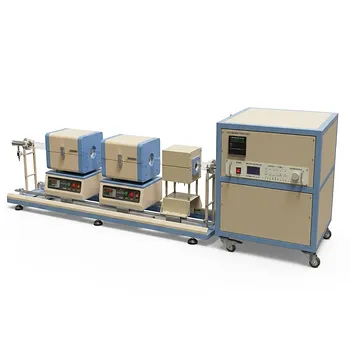
1200C Dual Sliding Tube Furnace with Dual Tubes and Flanges for PECVD Processes
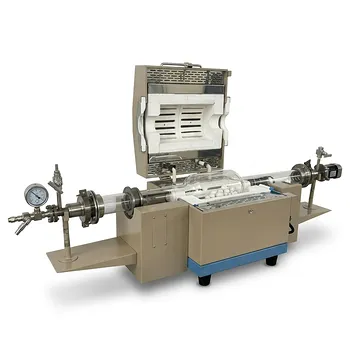
High Temperature Rotary Tube Furnace with Integrated Ball Milling and Gas Flow Function for Powder Nitriding
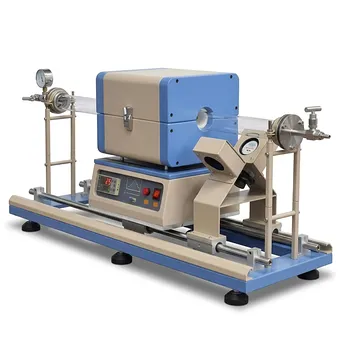
Automated Sliding Tube Furnace for Fast Heating and Cooling 2 Inch OD 1100C Max
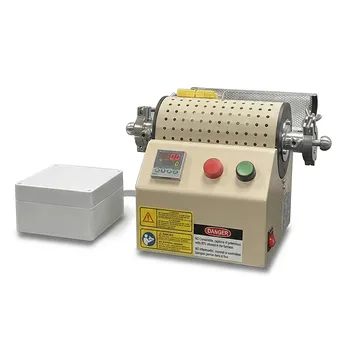
1000C Mini Tube Furnace with 20mm Quartz Tube and Vacuum Flanges for Material Science Research and Controlled Atmosphere Small Sample Processing
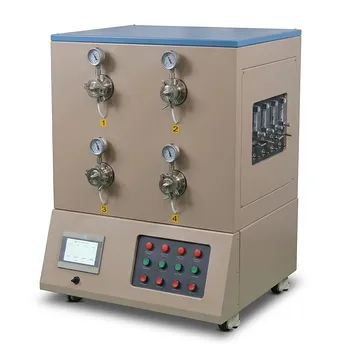
High Throughput 1200C Four Channel Tube Furnace with 3 Inch Quartz Tubes for Multi Zone Annealing and Material Research
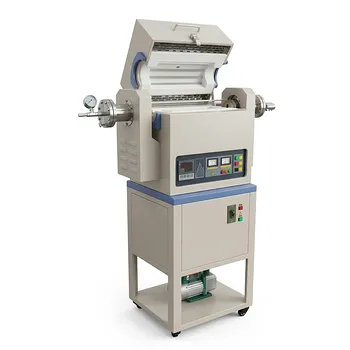
High Temperature Rotary Tilt Tubular Furnaces for Advanced Powder Sintering and Material Processing

High Temperature 1700C Vertical Tube Furnace for Powder Spherification and Material Sintering

1200C High Throughput Multi Channel Tube Furnace with 50mm Quartz Tubes for Annealing and Material Phase Diagram Research

Compact High Temperature 1600C Tube Furnace with 50mm Alumina Tube and Vacuum Flanges for Material Sintering
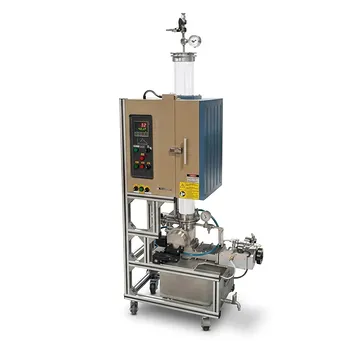
1200C High Temperature Atmosphere Controlled Vertical Quenching Tube Furnace with 4 Inch Quartz Tube

Compact Vertical Split Quartz Tube Furnace with Stainless Steel Vacuum Flanges for Rapid Thermal Quenching and Controlled Atmosphere Material Processing
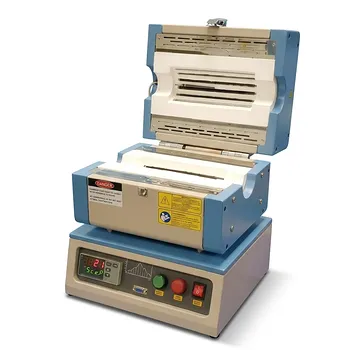
1250C Compact Split Tube Furnace with 8 Inch Heating Zone and Programmable Controller
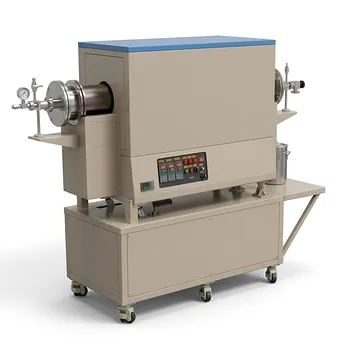
900°C Max Rotary Tube Furnace with 8 Inch 310S Alloy Tube and Optional Multi Zone Heating for Industrial Material Calcination