What role does an airtight tube furnace play in the high-temperature carbonization stage of Acacia catechu activated carbon?
Updated 3 months ago
The airtight tube furnace serves as the critical reaction chamber for transforming Acacia catechu biomass into high-performance activated carbon. By providing a precisely controlled, oxygen-free environment at temperatures between 400°C and 800°C, the furnace prevents the raw material from simply burning away. This specific thermal environment allows for the controlled removal of volatiles and the precise chemical etching of the carbon skeleton, resulting in a 3D nanoporous structure with surface areas reaching as high as 1947 m²/g.
Core Takeaway: The airtight tube furnace is the "enabling environment" that facilitates chemical activation and pyrolysis while preventing sample oxidation. Its primary value lies in its ability to maintain an inert atmosphere, which is essential for creating the complex pore networks required for high-capacity adsorption.
Maintaining an Inert Atmosphere for Carbon Preservation
Prevention of Oxidative Loss
The most fundamental role of the airtight furnace is the exclusion of oxygen through a continuous flow of nitrogen (N₂) or other inert gases. At temperatures above 400°C, biomass will naturally combust if oxygen is present, reducing the sample to useless ash rather than activated carbon.
Creating a Protective Reaction Zone
By maintaining a sealed environment, the furnace ensures that the carbonization process occurs via pyrolysis rather than combustion. This allows the carbon atoms to reorganize into a stable framework without being lost to the atmosphere as carbon dioxide.
Facilitating the Chemical Etching Process
The Role of Activation Agents
In the case of Acacia catechu, chemical activators like zinc chloride (ZnCl₂) or potassium hydroxide (KOH) are used to "eat away" at the carbon matrix. The furnace provides the high-temperature stage—often between 600°C and 800°C—required for these chemical reactions to take place effectively.
Development of 3D Nanoporous Structures
Under the precise thermal conditions of the furnace, the activator etches the carbon skeleton to create a high specific surface area. This process results in a well-developed pore network that is critical for determining the final adsorption capacity of the material.
Thermal Management and Structural Reorganization
Controlled Heating Rates
The furnace allows for specific heating rates, typically ranging from 5°C to 10°C per minute. This gradual increase in temperature is vital for the steady release of volatile organic matter, such as moisture, tars, and gases (dehydration and decarboxylation).
Carbon Enrichment and Stability
As the furnace drives off non-carbon elements, the remaining material becomes increasingly enriched in carbon. The high-temperature treatment also improves the thermal stability and structural integrity of the resulting carbon carrier, ensuring it can withstand various industrial applications.
Understanding the Trade-offs and Pitfalls
Temperature Thresholds
While higher temperatures generally increase the surface area, exceeding the optimal range (e.g., going above 900°C) can lead to pore shrinkage or collapse. This phenomenon, known as sintering, reduces the overall adsorption capacity by closing off the very pores the process intended to create.
Gas Flow and Seal Integrity
If the furnace is not perfectly airtight or if the nitrogen flow rate is insufficient, trace amounts of oxygen can enter. This leads to partial gasification, which might unintentionally increase weight loss and decrease the final yield of the activated carbon.
Heating Rate Sensitivity
Heating the sample too rapidly can cause an explosive release of volatiles. This may result in a fragile carbon structure with large, inefficient macropores rather than the desired high-surface-area microporous and mesoporous network.
How to Optimize Your Carbonization Strategy
Depending on your specific goals for the Acacia catechu activated carbon, the furnace parameters should be adjusted accordingly:
- If your primary focus is Maximum Surface Area: Use a target temperature between 700°C and 800°C with a steady chemical activator ratio to maximize etching efficiency.
- If your primary focus is High Material Yield: Opt for the lower end of the carbonization spectrum (around 400°C to 500°C) to minimize the loss of carbon mass while still removing essential volatiles.
- If your primary focus is Structural Stability: Ensure a slow heating rate (5°C/min) and an extended "soak time" at your peak temperature to allow the carbon framework to fully reorganize and stabilize.
The airtight tube furnace is ultimately the bridge between raw biomass and a high-value industrial adsorbent, dictating the quality, surface area, and performance of the final product.
Summary Table:
| Parameter | Critical Role in Carbonization | Recommended Range |
|---|---|---|
| Atmosphere | Prevents oxidation/combustion; ensures carbon preservation | Oxygen-free (Inert N₂) |
| Temperature | Controls pore development and prevents structural sintering | 400°C – 800°C |
| Heating Rate | Manages volatile release to maintain structural integrity | 5°C – 10°C / min |
| Surface Area | Facilitates chemical etching (ZnCl₂/KOH) for 3D structures | Up to 1947 m²/g |
Elevate Your Material Research with THERMUNITS Precision
Achieving world-class activated carbon requires more than just heat—it requires total environmental control. THERMUNITS is a leading manufacturer of high-temperature laboratory equipment, providing the advanced thermal solutions necessary for material science and industrial R&D.
Our equipment is designed to meet the rigorous demands of pyrolysis and chemical activation. Our comprehensive range includes:
- Tube & Atmosphere Furnaces: Perfect for maintaining the strict inert environments needed for carbonization.
- Vacuum & Rotary Furnaces: Ideal for specialized material processing and uniform heat treatment.
- CVD/PECVD Systems: Advanced solutions for thin-film and nanostructure development.
- Specialized Equipment: Including Hot Press, Vacuum Induction Melting (VIM), Dental Furnaces, and high-performance Thermal Elements.
Ready to optimize your carbonization strategy and maximize your surface area yields?
Contact THERMUNITS today to find your perfect thermal solution!
References
- Pawan Kumar Mishra, Deval Prasad Bhattarai. Enhanced Energy Storage: Electrochemical Performance of ZnCl<sub>2</sub>-Activated Carbon Derived from Acacia catechu Bark. DOI: 10.5564/mjc.v25i52.3501
Mentioned Products
- Vertical 1700C Vacuum and Atmosphere Tube Furnace with 80mm Alumina Tube
- Three Zone Tube Furnace with 11 Inch or 15 Inch Quartz Tube and Hinged Flanges for Vacuum Atmosphere Heat Treatment
- Compact Vertical Split Quartz Tube Furnace with Stainless Steel Vacuum Flanges for Rapid Thermal Quenching and Controlled Atmosphere Material Processing
- 1250 C Compact Vertical Box Furnace for Glovebox Material Research Air Sensitive Samples
- Compact Hybrid Muffle and Tube Furnace for 1000C Controlled Atmosphere Laboratory Material Sintering
People Also Ask
- How is an industrial-grade vertical tube furnace utilized in smelting leaching residues? Enhance Metal Recovery Efficiency
- What is the function of a laboratory-grade vertical tube furnace in fast pyrolysis? Optimize Composite Research.
- How does a vertical tube furnace facilitate thermoelectric alloy melting? Precision synthesis for material homogeneity.
- Why is a thermocouple sensor indispensable for monitoring the vertical tube furnace during gallium oxide nanowire production? Optimize VLS Growth
- What are the advantages of using a vertical tube furnace for crucible experiments simulating steel-slag interactions?

Tech Team · ThermUnits
Last updated on Jun 03, 2026
Related Products

Vertical 1700C Vacuum and Atmosphere Tube Furnace with 80mm Alumina Tube
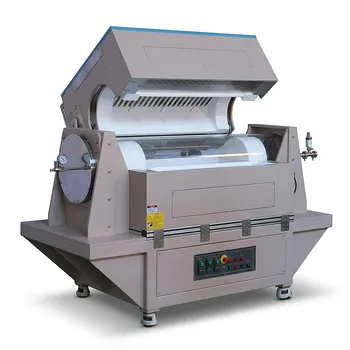
Three Zone Tube Furnace with 11 Inch or 15 Inch Quartz Tube and Hinged Flanges for Vacuum Atmosphere Heat Treatment

Compact Vertical Split Quartz Tube Furnace with Stainless Steel Vacuum Flanges for Rapid Thermal Quenching and Controlled Atmosphere Material Processing
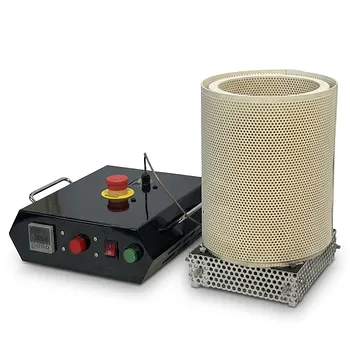
1250 C Compact Vertical Box Furnace for Glovebox Material Research Air Sensitive Samples
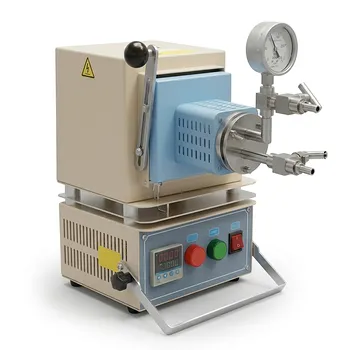
Compact Hybrid Muffle and Tube Furnace for 1000C Controlled Atmosphere Laboratory Material Sintering
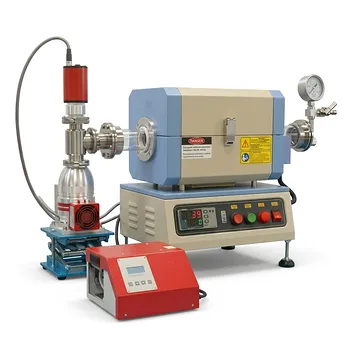
High Vacuum Compact Tube Furnace 1200C with Integrated Turbo Pump System and 8 Inch Heating Zone
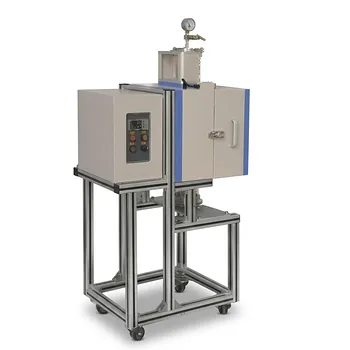
1200°C 5 Inch Vertical Quartz Tube Furnace with Stainless Steel Vacuum Flanges

Compact High Temperature 1600C Tube Furnace with 50mm Alumina Tube and Vacuum Flanges for Material Sintering
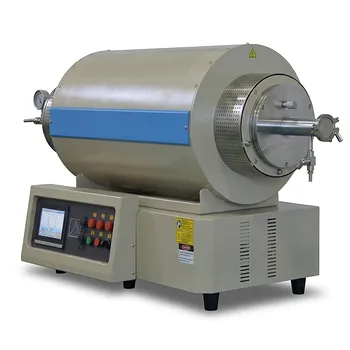
1200C Max Three Zone Tube Furnace 6 Inch OD Max with Tube and Flange
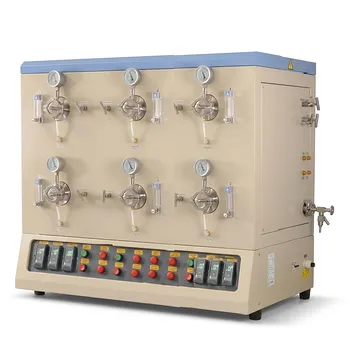
1200C High Throughput Multi Channel Tube Furnace with 50mm Quartz Tubes for Annealing and Material Phase Diagram Research
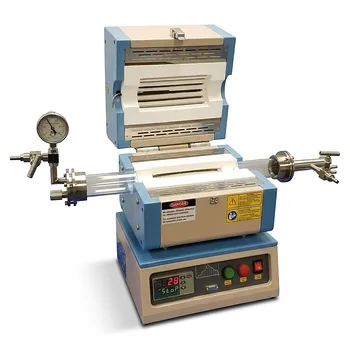
Compact Split Tube Furnace with Integrated Vacuum System and Precision Temperature Calibrator
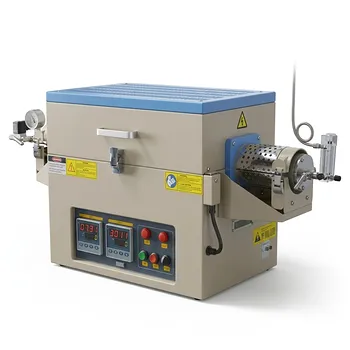
1100C Dual Zone Hydrogen Gas Tube Furnace with Quartz Tube and Integrated H2 Leak Detection System
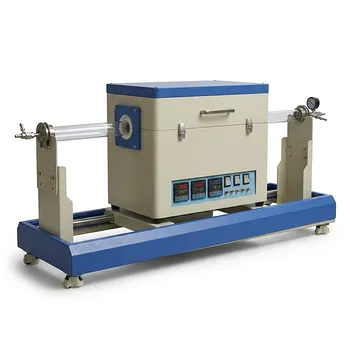
Double Temperature Zone Double Cover Tube Furnace for High Temperature CVD and Vacuum Annealing
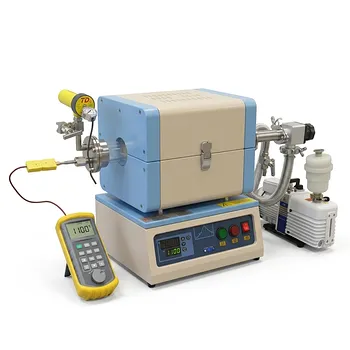
Compact Split Tube Furnace with Insertable Temperature Calibrator and Integrated Vacuum System
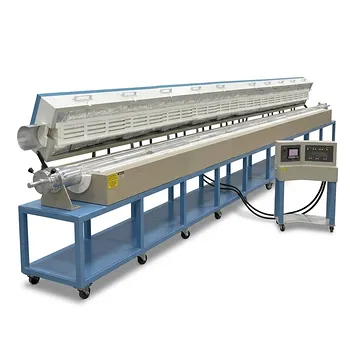
12 Zone Ultra Long Split Tube Furnace with 20 Foot Quartz Tube and 1100C Max Temperature
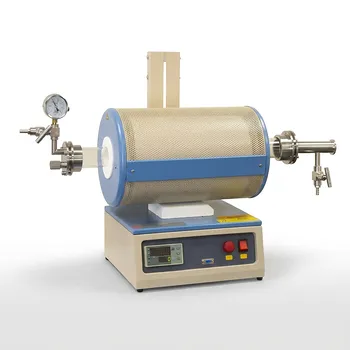
1100C Tube Furnace with Vacuum Flange and Programmable Temperature Controller for Material Science and Industrial Heat Treatment
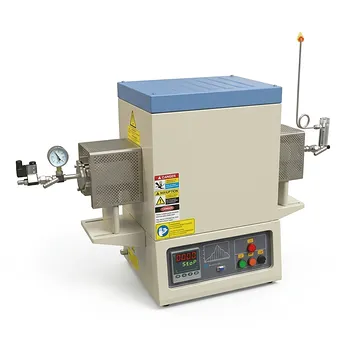
1700C Hydrogen Gas Tube Furnace with 60mm Alumina Process Tube and Integrated Hydrogen Safety Detector
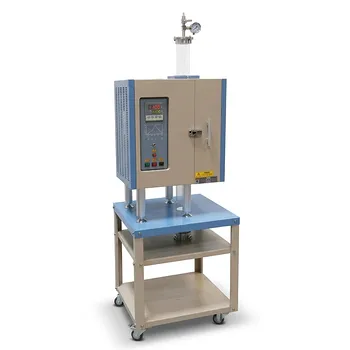
1100°C Split Vertical Tube Furnace with 80mm Quartz Tube and Stainless Steel Vacuum Flanges
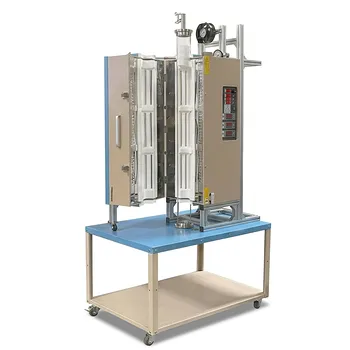
1200C Three Zone Split Vertical Tube Furnace 4 Inch Quartz Tube Stainless Steel Vacuum Flanges
