What role does an atmosphere-controlled tube furnace play in the high-temperature reduction purification of sodium sulfide?
Updated 3 months ago
The atmosphere-controlled tube furnace is the critical vessel for converting impure sodium sulfide into high-purity anhydrous $Na_2S$ by facilitating precise chemical reduction. It achieves this by maintaining a stable, high-temperature environment—typically between 600°C and 800°C—while introducing a reducing gas mixture, such as hydrogen and argon ($H_2/Ar$), to strip away oxygen-containing impurities. This process is essential for removing persistent contaminants like sodium sulfate and sodium thiosulfate that cannot be eliminated through standard thermal treatment alone.
An atmosphere-controlled tube furnace enables the purification of sodium sulfide by creating a hermetically sealed, high-temperature zone where reducing gases chemically transform residual oxysulfides and polysulfides into high-purity anhydrous sodium sulfide. This equipment provides the necessary thermal and atmospheric precision to ensure the final material is suitable for high-stakes applications like chalcogenide synthesis.
Engineering a Controlled Reducing Environment
The Chemical Role of the $H_2/Ar$ Gas Mixture
The furnace introduces a specific gas blend, often 50% $H_2/Ar$, to act as the primary reducing agent. The hydrogen component reacts with oxygen-containing impurities—such as sodium sulfate ($Na_2SO_4$) and sodium thiosulfate ($Na_2S_2O_3$)—chemically reducing them into pure sodium sulfide. The argon acts as an inert carrier, ensuring a stable atmospheric pressure and preventing any re-oxidation from ambient air.
Thermal Precision and Impurity Decomposition
Purification requires significant thermal energy, often reaching 800°C, to break the chemical bonds of stable oxysulfide impurities. At specific thresholds, such as 600°C, the furnace effectively targets polysulfides, converting them into a high-purity phase. Precise temperature control prevents the degradation of the $Na_2S$ itself while ensuring the reaction kinetics are sufficient for a complete conversion.
Strategic Impact on Material Quality
Elimination of Oxygen-Based Contaminants
Residual oxygen is the primary barrier to producing high-purity anhydrous $Na_2S$. By leveraging the furnace’s ability to maintain a continuous gas flow, oxygenated byproducts are swept away from the sample. This constant flushing action prevents re-contamination during the critical cooling phase, ensuring the material remains anhydrous.
Facilitating Advanced Downstream Synthesis
High-purity sodium sulfide produced in this manner is a prerequisite for synthesizing ternary chalcogenides. Without the atmospheric control provided by the tube furnace, impurities can lead to secondary phases. These secondary phases often compromise the electronic or structural integrity of the final synthesized materials.
Understanding the Trade-offs and Risks
Safety Hazards of Hydrogen Atmospheres
Operating with high concentrations of hydrogen at elevated temperatures carries a significant risk of combustion if the system is not perfectly sealed. Operators must implement rigorous leak testing and utilize specialized exhaust systems to manage flammable gases safely.
Equipment Degradation and Maintenance
The corrosive nature of sulfur species at 800°C can accelerate the degradation of standard quartz tubes and furnace heating elements. Additionally, inconsistent gas flow or temperature "dead zones" within the tube can lead to incomplete reduction, resulting in localized pockets of impurities within the batch.
How to Apply This to Your Project
When utilizing an atmosphere-controlled tube furnace for $Na_2S$ purification, your specific goals should dictate your operational parameters:
- If your primary focus is removing stable sulfates: Maintain a constant temperature of 800°C with a steady flow of $H_2/Ar$ to ensure the full reduction of oxygen-containing species.
- If your primary focus is the removal of polysulfides: A lower temperature threshold of 600°C is often sufficient to refine the material phase without excessive thermal stress on the equipment.
- If your primary focus is phase purity for chalcogenide synthesis: Prioritize the precision of the gas switching and flow management system to prevent any atmospheric leaks during the cooling process.
By mastering the balance between thermal energy and gas chemistry, you can transform industrial-grade precursors into research-grade anhydrous sodium sulfide.
Summary Table:
Key Parameters for Na2S Reduction Purification
| Parameter | Specification / Detail |
|---|---|
| Operating Temperature | 600°C to 800°C |
| Atmosphere Composition | Hydrogen/Argon (H₂/Ar) mixture (e.g., 50/50 ratio) |
| Primary Function | Chemical reduction of oxysulfides and polysulfides |
| Contaminants Removed | Sodium sulfate ($Na_2SO_4$), Sodium thiosulfate ($Na_2S_2O_3$) |
| Final Product | High-purity anhydrous Sodium Sulfide ($Na_2S$) |
| Crucial Hardware | Hermetically sealed tube with precise gas flow control |
Optimize Your Material Synthesis with THERMUNITS
Achieving research-grade purity in sodium sulfide and other advanced materials requires uncompromising atmospheric control and thermal precision. THERMUNITS is a premier manufacturer specializing in high-temperature laboratory equipment for material science and industrial R&D.
Our extensive range of thermal solutions includes:
- Tube & Atmosphere Furnaces: Optimized for precise gas flow and chemical reduction processes.
- Specialized Systems: Vacuum, Muffle, Rotary, and Hot Press furnaces, along with CVD/PECVD and Vacuum Induction Melting (VIM) systems.
- High-Performance Components: Durable thermal elements designed to withstand corrosive environments.
Whether you are synthesizing ternary chalcogenides or refining industrial precursors, our engineering team is ready to help you select the perfect system for your specific research needs.
Ready to elevate your lab's capabilities? Contact THERMUNITS Today to receive a customized quote and expert technical consultation.
References
- Suwan Lu, Xiaodong Wu. Design towards recyclable micron-sized Na2S cathode with self-refinement mechanism. DOI: 10.1038/s41467-024-54316-9
Mentioned Products
- Compact Vertical Split Quartz Tube Furnace with Stainless Steel Vacuum Flanges for Rapid Thermal Quenching and Controlled Atmosphere Material Processing
- 1200C High Temperature Atmosphere Controlled Vertical Quenching Tube Furnace with 4 Inch Quartz Tube
- Compact Hybrid Muffle and Tube Furnace for 1000C Controlled Atmosphere Laboratory Material Sintering
- 1200°C Atmosphere Controlled Automatic Bottom Loading Furnace with 6 Inch Quartz Tube
- High Temperature Dual Zone Split Tube Furnace for Advanced Atmosphere Sintering and Vacuum CVD Applications
People Also Ask
- Why integrate a vertical split tube furnace with hydraulic loading for HSECC? Essential for In-Situ Fire Simulation.
- What is the role of a split vertical tube furnace during flash sintering of 8YSZ and 20SDC? Master Ultra-Fast R&D
- What is the primary engineering purpose for using a customized ventilation hood when operating a split tube furnace? RCF Safety
- Why is a quartz tube furnace necessary for phosphorus-doped MoS2/GO preparation? Ensure Purity & Precise Synthesis
- What is the primary function of a Quartz Tube Furnace in ZnO VLS growth? Master High-Precision Nanowire Synthesis

Tech Team · ThermUnits
Last updated on Jun 03, 2026
Related Products

Compact Vertical Split Quartz Tube Furnace with Stainless Steel Vacuum Flanges for Rapid Thermal Quenching and Controlled Atmosphere Material Processing
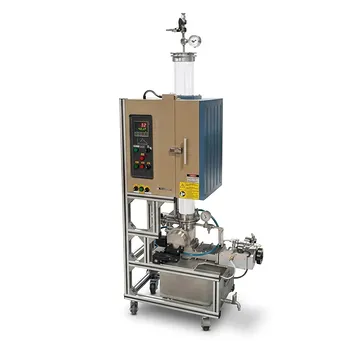
1200C High Temperature Atmosphere Controlled Vertical Quenching Tube Furnace with 4 Inch Quartz Tube
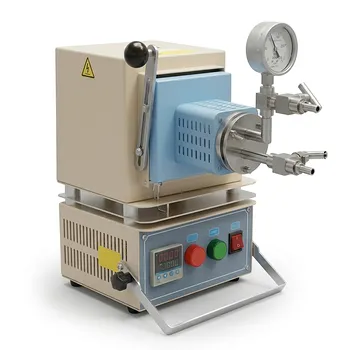
Compact Hybrid Muffle and Tube Furnace for 1000C Controlled Atmosphere Laboratory Material Sintering
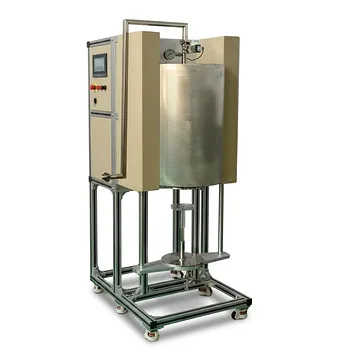
1200°C Atmosphere Controlled Automatic Bottom Loading Furnace with 6 Inch Quartz Tube
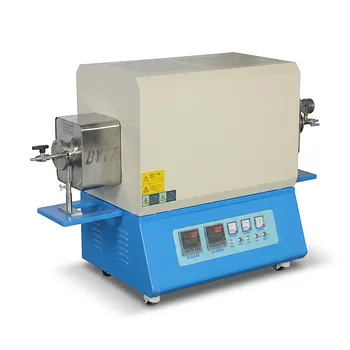
High Temperature Dual Zone Split Tube Furnace for Advanced Atmosphere Sintering and Vacuum CVD Applications

Vertical 1700C Vacuum and Atmosphere Tube Furnace with 80mm Alumina Tube
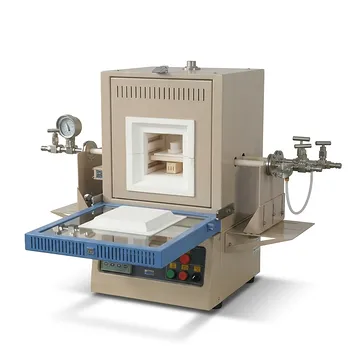
1700C Compact Hybrid Furnace with Dual Layer Box Sintering and Controlled Atmosphere Alumina Tubes
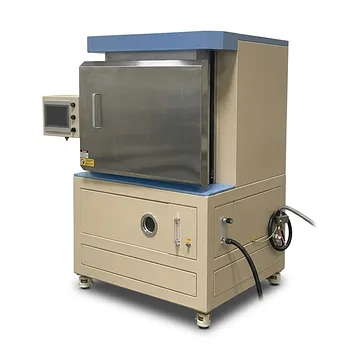
1650C High Temperature Atmosphere Controlled Box Furnace with 65L Chamber for Advanced Material Sintering and Industrial Heat Treatment
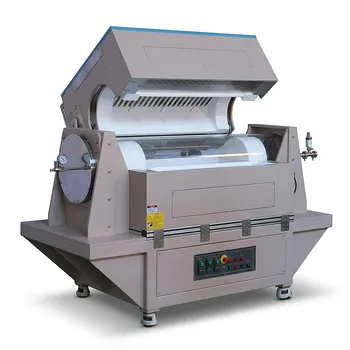
Three Zone Tube Furnace with 11 Inch or 15 Inch Quartz Tube and Hinged Flanges for Vacuum Atmosphere Heat Treatment
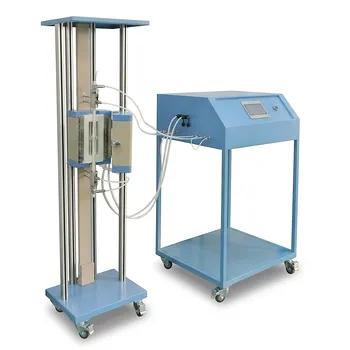
High Temperature Vertical Tube Furnace for Small Solid Oxide Fuel Cell Testing with Four Channel Gas Control
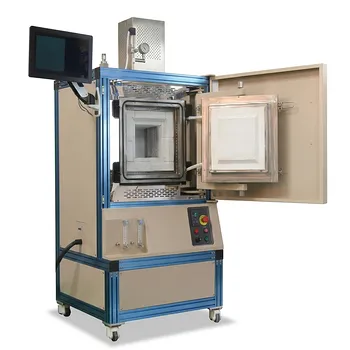
High Temperature Hydrogen Atmosphere Box Furnace 1650C Max Reducing Environment Material Synthesis System 8x8x8 Chamber
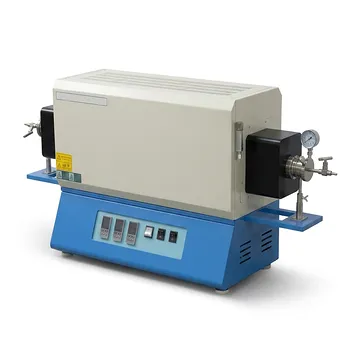
High Temperature Three Temperature Zone Tube Furnace for Advanced Material Science Sintering and Chemical Vapor Deposition Applications

High Temperature 1700C Vertical Tube Furnace for Powder Spherification and Material Sintering
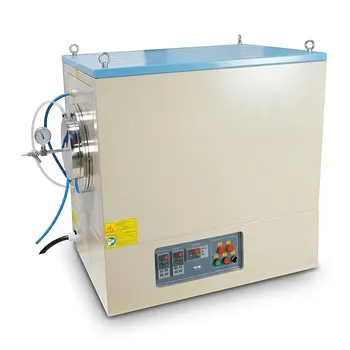
Dual Zone Tube Furnace 1100C with 11 Inch Quartz Tube and Vacuum Flanges for 8 Inch Wafer Processing
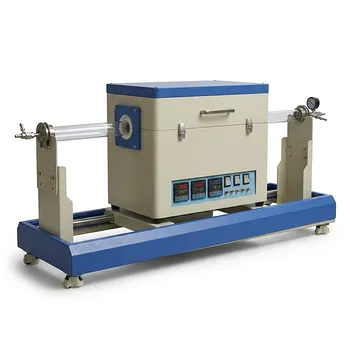
Double Temperature Zone Double Cover Tube Furnace for High Temperature CVD and Vacuum Annealing
1100C Dual Zone Hydrogen Gas Tube Furnace with Quartz Tube and Integrated H2 Leak Detection System
Four Zone Tube Furnace 1100C with 600mm Large Diameter Quartz Tube and Vacuum Flanges
High Temperature Dual Zone Tube Furnace for Material Science Research and Professional Thermal Processing
5 Inch Rotary Tube Furnace with Automatic Feeding and Receiving System 1200C Three Zone CVD Powder Processing
