What role does an industrial-grade tube furnace play in the homogenization heat treatment of Nickel Alloy 718? Optimize Microstructure
Updated 3 months ago
The industrial-grade tube furnace acts as the primary engine for microstructural refinement. In the homogenization of Nickel Alloy 718, these furnaces provide the sustained, high-temperature environment (typically around 1175°C to 1180°C) necessary to drive atomic diffusion. This process dissolves brittle, non-equilibrium Laves phases and eliminates chemical gradients—known as segregation—within the alloy's dendritic structure.
Core Takeaway: An industrial tube furnace transforms the "as-cast" or "as-printed" state of Alloy 718 into a uniform material by using precise thermal control to redistribute solute elements and dissolve damaging secondary phases.
Facilitating Atomic Diffusion and Phase Transformation
Dissolving the Brittle Laves Phase
During the initial solidification of Nickel Alloy 718, elements like Niobium (Nb) tend to segregate, forming brittle intermetallic structures called Laves phases. The tube furnace maintains the alloy at temperatures high enough to force these Laves phases to re-dissolve into the primary nickel matrix.
Eliminating Inter-dendritic Segregation
In its raw state, Alloy 718 often suffers from compositional segregation, where the chemical makeup varies between the microscopic "branches" (dendrites) of the metal. The furnace's ability to hold a constant, elevated temperature promotes atomic diffusion, allowing elements to move and create a chemically homogenous microstructure.
Liberating Solute Elements
By dissolving segregated clusters, the furnace releases critical elements like Niobium back into the matrix. This is essential because these elements are required for the later precipitation of $\gamma'$ (gamma prime) and $\gamma''$ (gamma double-prime) phases, which provide the alloy’s legendary strength.
Precision Control of the Thermal Environment
Isothermal Stability and Long-Term Soaking
Homogenization is not a rapid process; it often requires long-duration isothermal soaking that can last for many hours. Industrial-grade tube furnaces are engineered to maintain exceptional temperature uniformity over these extended periods, ensuring the entire specimen reaches the required energy state for diffusion.
Protective Atmosphere and Vacuum Capabilities
At temperatures exceeding 1000°C, Nickel alloys are highly susceptible to surface oxidation. Many tube furnaces offer vacuum or inert gas atmospheres (such as Argon), which protect the part's surface integrity while the internal chemistry is being reorganized.
Precise Cooling Rate Regulation
The furnace's programmable controllers allow for controlled cooling following the homogenization soak. This is a critical step for managing the morphology of the delta ($\delta$) phase and preventing the premature, uncontrolled precipitation of strengthening phases before the formal aging heat treatments.
Impact on Mechanical Workability
Reduction of Internal Thermal Stress
The homogenization process within the furnace helps to relax internal thermal stresses that accumulate during casting or additive manufacturing. This stress relief is vital for preventing cracking during subsequent industrial processes.
Improving Plastic Deformation
By removing brittle phases and creating a uniform grain structure, the furnace significantly improves the plasticity and ductility of the alloy. This makes the material much easier to handle during high-strain operations like rolling or forging.
Understanding the Trade-offs and Limitations
Risk of Excessive Grain Growth
While high temperatures are necessary for homogenization, excessive time in the furnace can lead to grain coarsening. Larger grains can negatively impact the ultimate fatigue life and tensile strength of the finished component.
Energy Consumption and Cycle Time
Industrial homogenization is energy-intensive and time-consuming, often requiring multi-stage heating curves. Engineers must balance the "completeness" of the homogenization with the economic costs of extended furnace runtimes.
Surface Decarburization or Alteration
Even with protective atmospheres, extremely long soak times at 1180°C+ can lead to minor surface alterations. Depending on the final application, a small amount of "sacrificial" material may need to be machined off after the furnace cycle to ensure perfect surface properties.
How to Apply This to Your Project
Making the Right Choice for Your Goal
- If your primary focus is maximizing tensile strength: Ensure the furnace cycle is followed by a precise double-aging treatment to precipitate the $\gamma'$ and $\gamma''$ phases liberated during homogenization.
- If your primary focus is preventing material failure during forging: Prioritize a longer homogenization soak at 1175°C-1180°C to fully eliminate brittle Laves phases and improve ductility.
- If your primary focus is protecting surface finish on complex parts: Utilize a tube furnace with high-vacuum capabilities ($10^{-4}$ Torr or better) to prevent high-temperature oxidation.
- If your primary focus is processing Additively Manufactured (3D printed) parts: Use the furnace to specifically target the non-equilibrium phases unique to rapid solidification, which are often more dispersed than in cast structures.
By mastering the thermal environment within a tube furnace, manufacturers can move beyond raw material limitations to unlock the full high-performance potential of Nickel Alloy 718.
Summary Table:
| Process Function | Mechanism | Key Benefit |
|---|---|---|
| Phase Dissolution | Sustained heat at 1175°C-1180°C | Dissolves brittle Laves phases into the matrix |
| Diffusion Control | Atomic redistribution | Eliminates chemical gradients and segregation |
| Atmosphere Management | Vacuum or Argon environment | Prevents surface oxidation and decarburization |
| Mechanical Optimization | Microstructural refinement | Enhances ductility, plasticity, and workability |
Elevate Your Material Research with THERMUNITS Precision
At THERMUNITS, we specialize in providing the high-performance thermal environments essential for advanced material science and industrial R&D. Our industrial-grade furnaces are engineered to deliver the isothermal stability and atmospheric control required for the complex homogenization of alloys like Nickel 718.
As a leading manufacturer, we offer a comprehensive suite of thermal processing solutions tailored to your specific needs:
- Specialized Furnaces: Tube, Muffle, Vacuum, Atmosphere, Rotary, and Hot Press Furnaces.
- Advanced Systems: CVD/PECVD systems, Vacuum Induction Melting (VIM) furnaces, and Electric Rotary Kilns.
- Expert Components: Dental Furnaces and high-quality Thermal Elements.
Unlock the full potential of your materials with equipment designed for precision and reliability. Contact our technical experts today to discuss your laboratory or production requirements and discover the THERMUNITS advantage.
References
- Fan Zhang, Ján Ilavský. Phase Composition and Phase Transformation of Additively Manufactured Nickel Alloy 718 AM Bench Artifacts. DOI: 10.1007/s40192-023-00338-y
Mentioned Products
- 900°C Max Rotary Tube Furnace with 8 Inch 310S Alloy Tube and Optional Multi Zone Heating for Industrial Material Calcination
- Compact High Temperature 1600C Tube Furnace with 50mm Alumina Tube and Vacuum Flanges for Material Sintering
- High Temperature 1700C Vertical Tube Furnace for Powder Spherification and Material Sintering
- High Temperature Rotary Tube Furnace with Integrated Ball Milling and Gas Flow Function for Powder Nitriding
- 1100C Tube Furnace with Vacuum Flange and Programmable Temperature Controller for Material Science and Industrial Heat Treatment
People Also Ask
- How does a rotary tube furnace improve the processing of granular materials? Enhance Uniformity and Reaction Kinetics
- Why use a rotary tube furnace for FACS carbonization? Ensure uniform morphology and prevent sphere agglomeration.
- Why is the precise optimization of residence time essential in the catalyst calcination process? Maximize Your Yields.
- In what ways do rotary tube furnaces enhance chemical and specialty mineral processing? Drive Precision and Uniformity.
- What parameters must operators control to maintain product quality in a rotary furnace? Master Your Heat Treatment.

Tech Team · ThermUnits
Last updated on Jun 02, 2026
Related Products
900°C Max Rotary Tube Furnace with 8 Inch 310S Alloy Tube and Optional Multi Zone Heating for Industrial Material Calcination

Compact High Temperature 1600C Tube Furnace with 50mm Alumina Tube and Vacuum Flanges for Material Sintering

High Temperature 1700C Vertical Tube Furnace for Powder Spherification and Material Sintering
High Temperature Rotary Tube Furnace with Integrated Ball Milling and Gas Flow Function for Powder Nitriding
1100C Tube Furnace with Vacuum Flange and Programmable Temperature Controller for Material Science and Industrial Heat Treatment
High Temperature 1700C 4 Channel Tube Furnace 1 Inch Alumina Tube for Hi-Throughput Annealing

Vertical 1700C Vacuum and Atmosphere Tube Furnace with 80mm Alumina Tube

1800C High Temperature Compact Vacuum Tube Furnace with 60mm OD Alumina Tube and Kanthal MoSi2 Heating Elements
1750°C High Temperature Benchtop Vacuum Atmosphere Tube Furnace with Kanthal Super 1800 Heating Elements and 60mm Alumina Processing Tube
High Temperature Muffle Furnace with Alloy Chamber for Debinding and Sintering Applications
High Temperature Compact Vacuum Tube Furnace 1750C Max 60mm OD Alumina Tube

High Temperature 1700C Benchtop Tube Furnace with 5 Inch Heating Zone High Purity Alumina Tube and Vacuum Sealing Flanges
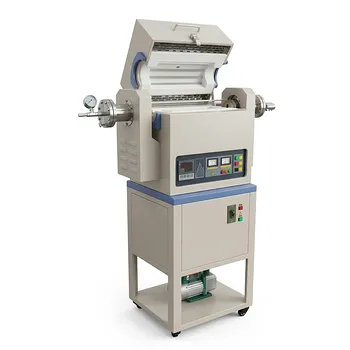
High Temperature Rotary Tilt Tubular Furnaces for Advanced Powder Sintering and Material Processing
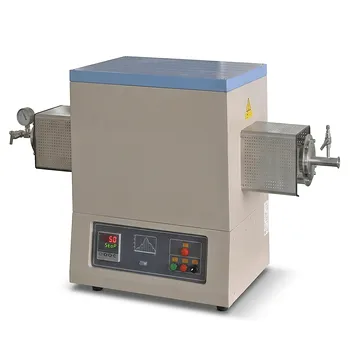
High Temperature 1700C Tube Furnace with 4 Inch OD Alumina Tube and Vacuum Sealing Flanges
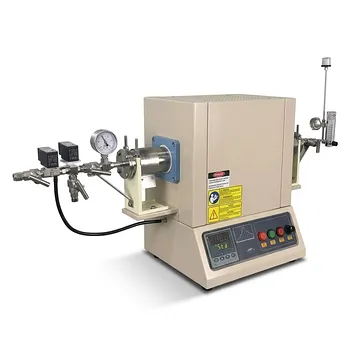
1500C Compact Hydrogen Gas Tube Furnace with 2 Inch Alumina Tube and Hydrogen Detector
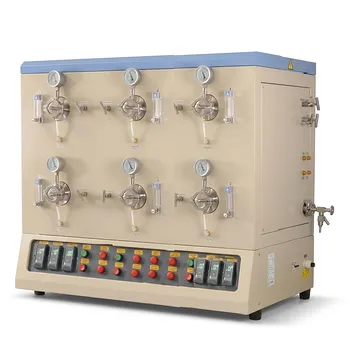
1200C High Throughput Multi Channel Tube Furnace with 50mm Quartz Tubes for Annealing and Material Phase Diagram Research
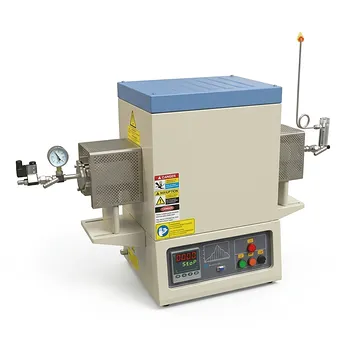
1700C Hydrogen Gas Tube Furnace with 60mm Alumina Process Tube and Integrated Hydrogen Safety Detector
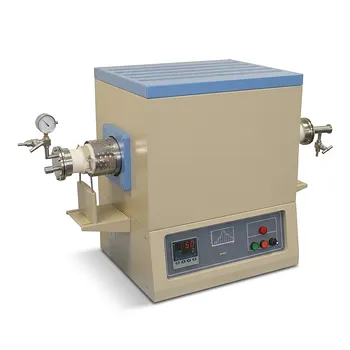
1700C High Temperature Alumina Tube Furnace with 18 Inch Heated Zone and Vacuum Sealing Flanges
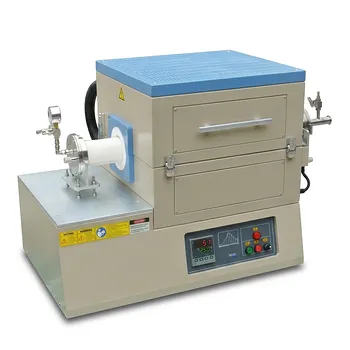
High Temperature 1700C Split Tube Furnace with Vacuum Flanges Valves and 60mm Alumina Tube