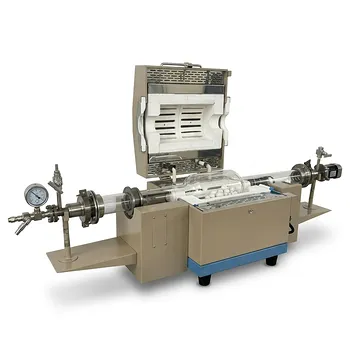
What role does an Industrial Tube Furnace play in the preparation of nitrogen-doped mesoporous active carbon? | Expert Guide
Updated 3 months ago
The industrial tube furnace is the primary reactor for synthesizing nitrogen-doped mesoporous active carbon. It provides the high-temperature environment and controlled atmosphere necessary for chemical activation, carbonization, and the molecular integration of nitrogen into the carbon skeleton. Without the precise thermal control of a tube furnace, achieving a stable mesoporous structure with high electrical conductivity and specific chemical functionality would be impossible.
The industrial tube furnace serves as the foundational equipment that facilitates the deep chemical reactions between carbon frameworks and nitrogen sources. It ensures the structural integrity and high porosity of the material by maintaining a strictly controlled, oxygen-free thermal environment.
The Critical Thermal Environment
Precision Temperature Control and Activation
The furnace provides the extreme thermal energy required to drive high-temperature activation of the carbon. This process often requires maintaining specific temperature zones—ranging from 450°C for initial reactions with urea to upwards of 1000°C for complete carbonization.
The ability to maintain a constant temperature for extended periods (e.g., 3 hours or more) is vital for deep pyrolysis. This stability ensures that organic precursors, such as lignin or polyaniline, are fully converted into a stable carbon skeleton.
Management of the Inert Atmosphere
The tube furnace maintains a controlled nitrogen or argon protection atmosphere, which is essential for oxygen-free processing. This prevents the carbon precursors from undergoing combustion or loss due to oxidation at high temperatures.
By providing a continuous flow of high-purity inert gas, the furnace ensures the stability and yield of the final product. This atmosphere also allows for specific chemical interactions, such as molten salt etching, to occur without atmospheric interference.
Chemical Integration and Structural Development
Facilitating Nitrogen Doping Reactions
A core role of the furnace is enabling the deep reaction between nitrogen-rich molecules, like urea, and the carbon framework. At specific temperatures, nitrogen atoms are successfully integrated into the carbon lattice to form functional groups like quaternary nitrogen (N-Q).
The furnace's ability to control the heating rate (e.g., 3 °C/min to 6 °C/min) is critical for managing complex chemical transitions. Precise heating profiles facilitate the depolymerization and recombination reactions necessary for effective nitrogen doping.
Construction of Mesoporous Architectures
The tube furnace is the critical equipment for determining the graphitization degree and porosity of the resulting carbon. It provides the thermal field necessary for exfoliation and the development of hierarchical pore structures.
The controlled environment allows for the removal of templates or the etching of the carbon carrier to create a high surface area. This results in a material that combines high electrical conductivity with the accessibility of a mesoporous framework.
Understanding the Trade-offs
Temperature Uniformity vs. Throughput
In industrial-scale tube furnaces, maintaining a uniform thermal field across the entire length of the tube can be challenging. Temperature gradients may lead to inconsistent nitrogen doping levels or variations in pore size within the same batch.
Heating Rates and Structural Integrity
While faster heating rates can increase production efficiency, they often lead to structural defects or lower surface areas. Conversely, extremely slow heating rates improve the carbon skeleton's stability but significantly increase energy consumption and processing time.
Gas Flow Dynamics
The flow rate of the protective gas must be carefully balanced. If the flow is too low, by-products of pyrolysis may linger and contaminate the carbon; if it is too high, it may prematurely carry away volatile nitrogen dopants before they can react with the framework.
How to Apply This to Your Project
Recommendations for Material Synthesis
- If your primary focus is high electrical conductivity: Use the furnace to reach temperatures between 900°C and 1000°C to maximize the graphitization of the carbon skeleton.
- If your primary focus is specific nitrogen functional groups: Maintain a precise mid-range temperature (e.g., 450°C to 600°C) during the doping phase to ensure urea or other dopants react deeply without decomposing.
- If your primary focus is high surface area and porosity: Prioritize a slow, controlled heating rate (3-5 °C/min) and utilize the furnace's ability to facilitate chemical etching agents like molten salts.
The industrial tube furnace remains the indispensable tool for transforming raw organic precursors into sophisticated, high-performance nitrogen-doped carbon materials.
Summary Table:
| Key Role | Critical Parameters | Impact on Material |
|---|---|---|
| Thermal Activation | 450°C to 1000°C | Deep pyrolysis and stable carbon skeleton formation |
| Atmosphere Control | Inert Gas (N2/Argon) | Prevents oxidation and ensures high product yield |
| Nitrogen Doping | Precise Heating Rates | Facilitates integration of Quaternary Nitrogen (N-Q) |
| Structural Control | Uniform Thermal Field | Determines graphitization degree and pore architecture |
Elevate Your Material Research with THERMUNITS
Precision thermal processing is the backbone of high-performance material science. THERMUNITS is a leading manufacturer of advanced high-temperature laboratory equipment, providing the accuracy and reliability required for complex processes like nitrogen-doping and chemical vapor deposition.
Our comprehensive range of thermal solutions includes:
- Tube Furnaces & Rotary Kilns for continuous and batch processing.
- CVD/PECVD Systems for sophisticated thin-film and carbon synthesis.
- Vacuum & Atmosphere Furnaces for oxygen-sensitive heat treatments.
- Muffle, Dental, and Hot Press Furnaces for diverse R&D applications.
- Vacuum Induction Melting (VIM) & Thermal Elements for industrial-scale metallurgy.
Whether you are focusing on high electrical conductivity or specific chemical functionalities, our equipment ensures consistent results and structural integrity. Contact us today to discuss your project requirements and discover how THERMUNITS can optimize your laboratory’s efficiency.
References
- Nabilah Dita Anaqah, Yuly Kusumawati. C/N/CeO2/Alpha-Fe2O3 Doped Mesoporous Carbon as A Photocatalyst Material for Hydrogen Gas Production by Water Splitting Method. DOI: 10.18596/jotcsa.1395875
Mentioned Products
- 900°C Max Rotary Tube Furnace with 8 Inch 310S Alloy Tube and Optional Multi Zone Heating for Industrial Material Calcination
- Continuous Feeding Rotary Tube Furnace for Industrial Powder Heat Treatment and Material Research
- 1100C Tube Furnace with Vacuum Flange and Programmable Temperature Controller for Material Science and Industrial Heat Treatment
- Laboratory Tilting Rotary Tubular Furnaces for Material Science and Industrial Heat Treatment
- Compact High Temperature 1600C Tube Furnace with 50mm Alumina Tube and Vacuum Flanges for Material Sintering
People Also Ask
- How does a rotary tube furnace improve the processing of granular materials? Enhance Uniformity and Reaction Kinetics
- Why use a rotary tube furnace for FACS carbonization? Ensure uniform morphology and prevent sphere agglomeration.
- Why is the precise optimization of residence time essential in the catalyst calcination process? Maximize Your Yields.
- In what ways do rotary tube furnaces enhance chemical and specialty mineral processing? Drive Precision and Uniformity.
- What parameters must operators control to maintain product quality in a rotary furnace? Master Your Heat Treatment.

Tech Team · ThermUnits
Last updated on Jun 02, 2026
Related Products
900°C Max Rotary Tube Furnace with 8 Inch 310S Alloy Tube and Optional Multi Zone Heating for Industrial Material Calcination
Continuous Feeding Rotary Tube Furnace for Industrial Powder Heat Treatment and Material Research

1100C Tube Furnace with Vacuum Flange and Programmable Temperature Controller for Material Science and Industrial Heat Treatment
Laboratory Tilting Rotary Tubular Furnaces for Material Science and Industrial Heat Treatment

Compact High Temperature 1600C Tube Furnace with 50mm Alumina Tube and Vacuum Flanges for Material Sintering

High Temperature 1700C Tube Furnace with High Vacuum Turbomolecular Pump System and Multi Channel Mass Flow Controller Gas Mixer
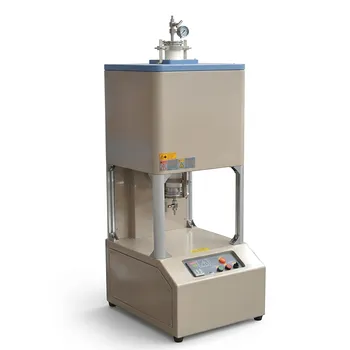
Vertical 1700C Vacuum and Atmosphere Tube Furnace with 80mm Alumina Tube

High Temperature 1700C Vertical Tube Furnace for Powder Spherification and Material Sintering
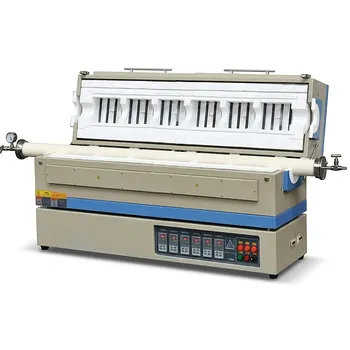
High Temperature 1700C Six Zone Split Tube Furnace with Alumina Tube and Water Cooled Flanges

1800C High Temperature Compact Vacuum Tube Furnace with 60mm OD Alumina Tube and Kanthal MoSi2 Heating Elements
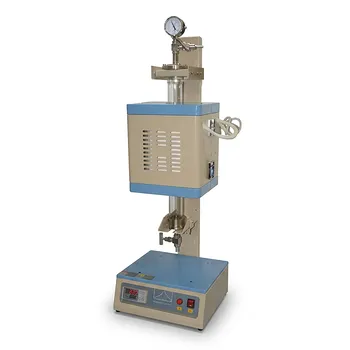
Compact Vertical Split Quartz Tube Furnace with Stainless Steel Vacuum Flanges for Rapid Thermal Quenching and Controlled Atmosphere Material Processing
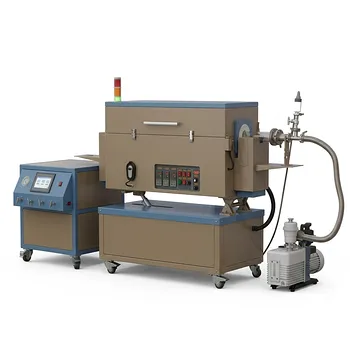
5 Inch Three Zone Rotary Tube Furnace with Integrated Gas Delivery System and 1200C Capability for Advanced Material CVD Processing
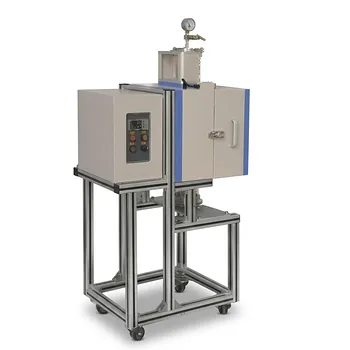
1200°C 5 Inch Vertical Quartz Tube Furnace with Stainless Steel Vacuum Flanges
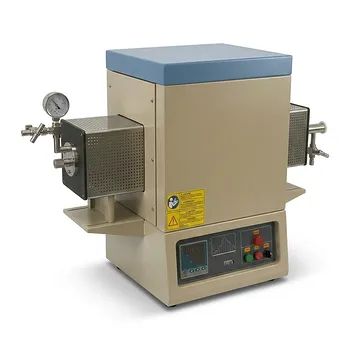
High Temperature 1700C Benchtop Tube Furnace with 5 Inch Heating Zone High Purity Alumina Tube and Vacuum Sealing Flanges

High Temperature Automated 5 Inch Tube Furnace for Autonomous Material Research and Advanced Laboratory R&D
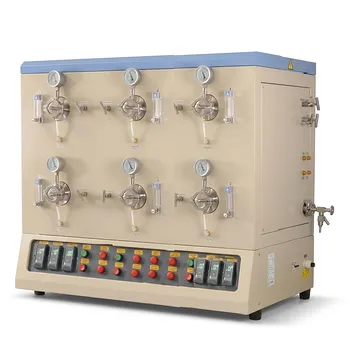
1200C High Throughput Multi Channel Tube Furnace with 50mm Quartz Tubes for Annealing and Material Phase Diagram Research
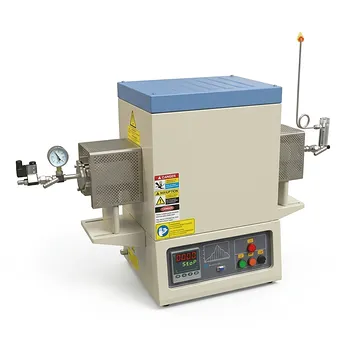
1700C Hydrogen Gas Tube Furnace with 60mm Alumina Process Tube and Integrated Hydrogen Safety Detector
Automated 1200 C Tube Furnace for AI Material Research with 6 Inch OD and Sliding Flange
High Temperature 1700C Tube Furnace with 4 Inch OD Alumina Tube and Vacuum Sealing Flanges