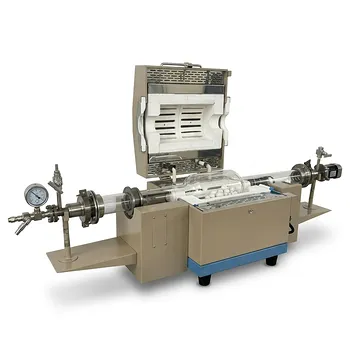
What role does an industrial tube furnace play in the Ni/C reduction process? High-Precision Synthesis Guide
Updated 3 months ago
The industrial tube furnace is the critical reactor for thermo-chemical transformation. It provides the precisely controlled high-temperature, oxygen-free environment necessary to reduce nickel precursors into metallic nanoparticles while maintaining the integrity of the carbon support.
The industrial tube furnace serves as a high-precision atmospheric chamber that facilitates the chemical reduction of nickel ions into metallic nanoparticles. By balancing gas composition and thermal energy, it ensures the formation of active metal sites without compromising the underlying carbon substrate.
Maintaining a Controlled Reducing Atmosphere
Preventing Premature Oxidation
The primary role of the tube furnace is to provide a completely sealed environment that excludes oxygen. This is vital because nickel nanoparticles are highly reactive; any exposure to oxygen at high temperatures would result in the formation of nickel oxide rather than the desired metallic nickel.
Facilitating the Ar/H2 Chemical Reaction
The furnace allows for the introduction of specific gas mixtures, such as Argon-Hydrogen (Ar/H2) or Nitrogen-Hydrogen (N2/H2). These reducing gases react with the nickel precursors at high temperatures, stripping away ions or oxygen to leave behind pure metallic nickel nanoparticles.
Optimizing Reducing Gas Ratios
Industrial-grade furnaces allow for the fine-tuning of gas concentrations, such as a 5% H2 balance. This precise regulation is necessary to ensure the reduction is thorough without using excessive hydrogen, which can be hazardous and costly in industrial settings.
Precise Thermal Management for Nanostructure Control
Triggering Nucleation within the Carbon Skeleton
The furnace generates a stable thermal field that triggers the nucleation of nanoparticles directly within the solid carbon skeleton. By providing constant heat, the furnace encourages the metal species to rearrange at the atomic scale, ensuring the nickel is securely anchored to the carbon support.
Tuning Particle Size and Dispersion
By adjusting the annealing temperature and the duration of the heat treatment, operators can finely tune the particle size of the nickel. Precise temperature control is required because even minor fluctuations can cause particles to clump together, reducing the total electrochemical active area.
Stabilizing the Carbon Support
The furnace manages the heating rate (often as slow as 2 °C per minute) to ensure the carbon support remains structurally sound. This slow ramp-up prevents the support from melting or collapsing, which is essential for maintaining the high-conductivity required for catalytic applications.
Understanding the Trade-offs and Pitfalls
The Risk of Sintering
While high temperatures are required for thorough reduction, excessive heat can lead to sintering. This occurs when nickel nanoparticles migrate and fuse together, significantly decreasing the number of active sites available for catalysis and sensing.
Balancing Reduction vs. Support Degradation
There is a constant trade-off between the temperature needed to reduce the metal and the temperature at which the carbon substrate begins to degrade. If the furnace temperature is not strictly monitored, the carbon support may lose its surface area or specific ladder-like structures, rendering the Ni/C material ineffective.
Atmospheric Purity Challenges
Even minor leaks in the furnace seals can introduce trace impurities, leading to the formation of wide-bandgap metal oxides or volatile residues. These impurities can poison the catalyst or alter the optoelectronic response of the resulting nanoparticles.
Applying Furnace Control to Your Objectives
How to Apply This to Your Project
- If your primary focus is maximimizing catalytic surface area: Use a lower annealing temperature and a slower heating rate to prevent nanoparticle sintering.
- If your primary focus is high-purity metallic nickel: Prioritize the seal integrity of the tube furnace and utilize a higher H2 concentration to ensure complete reduction.
- If your primary focus is structural stability of the support: Implement a strict pre-oxidation ramp-rate to stabilize the carbon base before moving to the high-temperature reduction phase.
The industrial tube furnace is not merely a heat source, but a sophisticated tool for the spatial and chemical regulation of nickel nanoparticles on a carbon matrix.
Summary Table:
| Key Phase | Furnace Control Feature | Objective & Result |
|---|---|---|
| Atmosphere Control | Sealed Ar/H2 environment | Prevents Ni oxidation and strips oxygen ions. |
| Nucleation | Stable thermal field | Anchors metal species to the carbon skeleton. |
| Particle Tuning | Dwell time & annealing temp | Controls nanoparticle size and active surface area. |
| Support Preservation | Slow ramp rate (≤2 °C/min) | Maintains structural integrity of carbon supports. |
Optimize Your Nanomaterial Synthesis with THERMUNITS
Precise atmospheric control and thermal stability are the difference between high-performance catalysts and failed batches. THERMUNITS is a leading manufacturer of high-temperature laboratory equipment specifically designed for material science and industrial R&D.
Our advanced thermal processing solutions—including Tube, Vacuum, Atmosphere, and Rotary furnaces, as well as CVD/PECVD systems—provide the exacting standards required for nickel nanoparticle reduction and carbon support stabilization. Whether you need an electric rotary kiln or a vacuum induction melting furnace (VIM), we provide the tools to scale your research from lab to production.
Ready to enhance your lab's thermal efficiency? Contact our engineering experts today to find the perfect furnace solution for your specific heat treatment requirements.
References
- Daniel Garstenauer, Klaus W. Richter. Active site engineering of intermetallic nanoparticles by the vapour–solid synthesis: carbon black supported nickel tellurides for hydrogen evolution. DOI: 10.1039/d4nr03397c
Mentioned Products
- 900°C Max Rotary Tube Furnace with 8 Inch 310S Alloy Tube and Optional Multi Zone Heating for Industrial Material Calcination
- Continuous Feeding Rotary Tube Furnace for Industrial Powder Heat Treatment and Material Research
- 1100C Tube Furnace with Vacuum Flange and Programmable Temperature Controller for Material Science and Industrial Heat Treatment
- Laboratory Tilting Rotary Tubular Furnaces for Material Science and Industrial Heat Treatment
- Compact High Temperature 1600C Tube Furnace with 50mm Alumina Tube and Vacuum Flanges for Material Sintering
People Also Ask
- How does a rotary tube furnace improve the processing of granular materials? Enhance Uniformity and Reaction Kinetics
- Why use a rotary tube furnace for FACS carbonization? Ensure uniform morphology and prevent sphere agglomeration.
- Why is the precise optimization of residence time essential in the catalyst calcination process? Maximize Your Yields.
- In what ways do rotary tube furnaces enhance chemical and specialty mineral processing? Drive Precision and Uniformity.
- What parameters must operators control to maintain product quality in a rotary furnace? Master Your Heat Treatment.

Tech Team · ThermUnits
Last updated on Jun 02, 2026
Related Products
900°C Max Rotary Tube Furnace with 8 Inch 310S Alloy Tube and Optional Multi Zone Heating for Industrial Material Calcination
Continuous Feeding Rotary Tube Furnace for Industrial Powder Heat Treatment and Material Research

1100C Tube Furnace with Vacuum Flange and Programmable Temperature Controller for Material Science and Industrial Heat Treatment
Laboratory Tilting Rotary Tubular Furnaces for Material Science and Industrial Heat Treatment

Compact High Temperature 1600C Tube Furnace with 50mm Alumina Tube and Vacuum Flanges for Material Sintering

High Temperature 1700C Tube Furnace with High Vacuum Turbomolecular Pump System and Multi Channel Mass Flow Controller Gas Mixer

Vertical 1700C Vacuum and Atmosphere Tube Furnace with 80mm Alumina Tube

High Temperature 1700C Vertical Tube Furnace for Powder Spherification and Material Sintering

High Temperature 1700C Six Zone Split Tube Furnace with Alumina Tube and Water Cooled Flanges

Compact Vertical Split Quartz Tube Furnace with Stainless Steel Vacuum Flanges for Rapid Thermal Quenching and Controlled Atmosphere Material Processing

1800C High Temperature Compact Vacuum Tube Furnace with 60mm OD Alumina Tube and Kanthal MoSi2 Heating Elements

1200°C 5 Inch Vertical Quartz Tube Furnace with Stainless Steel Vacuum Flanges
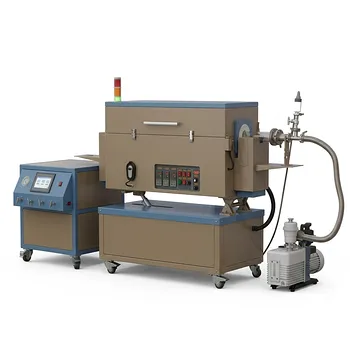
5 Inch Three Zone Rotary Tube Furnace with Integrated Gas Delivery System and 1200C Capability for Advanced Material CVD Processing

High Temperature 1700C Benchtop Tube Furnace with 5 Inch Heating Zone High Purity Alumina Tube and Vacuum Sealing Flanges

High Temperature Automated 5 Inch Tube Furnace for Autonomous Material Research and Advanced Laboratory R&D
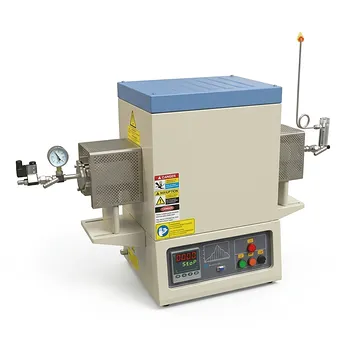
1700C Hydrogen Gas Tube Furnace with 60mm Alumina Process Tube and Integrated Hydrogen Safety Detector
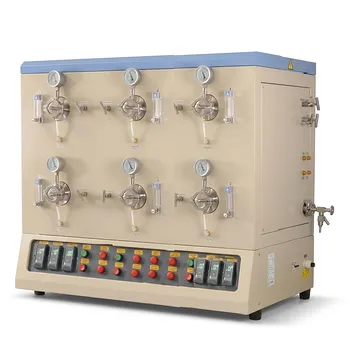
1200C High Throughput Multi Channel Tube Furnace with 50mm Quartz Tubes for Annealing and Material Phase Diagram Research
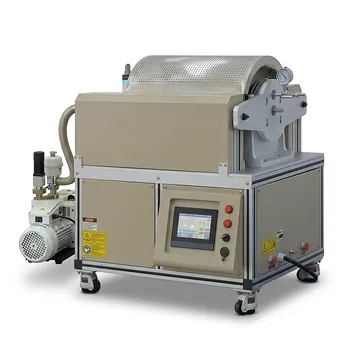
Automated 1200 C Tube Furnace for AI Material Research with 6 Inch OD and Sliding Flange
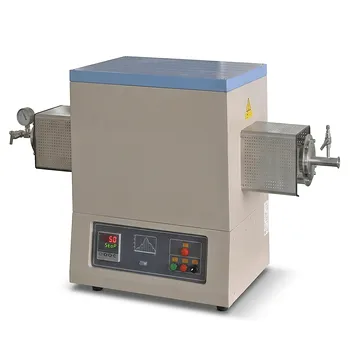
High Temperature 1700C Tube Furnace with 4 Inch OD Alumina Tube and Vacuum Sealing Flanges