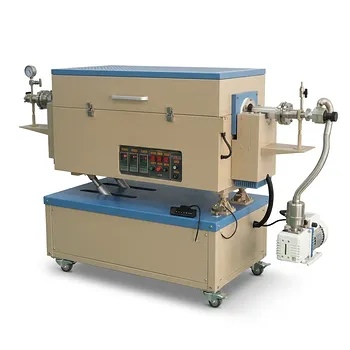
What role does an industrial tube furnace play in nZVI@BC synthesis? Master In-Situ Reduction & Carbonization
Updated 3 months ago
The industrial tube furnace is the critical thermal reactor used to achieve the in-situ reduction of iron precursors into nano zero-valent iron (nZVI) while simultaneously converting biomass into a biochar substrate. This dual-action process occurs in a strictly controlled, oxygen-free environment, typically at temperatures reaching 1000°C, where the furnace facilitates deep pyrolysis and the generation of internal reducing gases.
The tube furnace serves as the foundational environment for synthesizing nZVI@BC by providing the precise thermal energy and atmosphere required to trigger chemical reduction and carbonization. It transforms iron-loaded biomass into a functional composite material by leveraging the gases produced during the biomass's own decomposition.
The Mechanism of In-Situ Reduction
An industrial tube furnace does more than simply apply heat; it creates a specific chemical ecosystem within its quartz or ceramic chamber.
Leveraging Pyrolytic Reducing Gases
During the heating process, the furnace facilitates the deep pyrolysis of biomass, which releases a cocktail of reducing gases including hydrogen (H₂), carbon monoxide (CO), and methane (CH₄). The tube furnace contains these gases in close proximity to the iron salt precursors, allowing them to act as the primary reducing agents. This internal chemistry converts the iron salts directly into nano zero-valent iron (Fe⁰) without the need for external chemical reductants.
Maintaining an Inert Protective Atmosphere
To prevent the immediate oxidation of the newly formed nano-iron, the furnace maintains a nitrogen (N₂) or other inert atmosphere. This oxygen-free environment is essential to ensure that the iron remains in its zero-valent state rather than reverting to iron oxides. The furnace’s ability to seal and purge oxygen allows for the preservation of the material's reactive properties.
Precision Control of Nano-Architecture
The physical properties of the nZVI@BC composite—such as particle size and surface area—are dictated by the furnace's operational parameters.
Regulating Particle Size and Distribution
The heating rate and the stability of the constant temperature zone are critical for managing how iron particles nucleate and grow. A precisely controlled furnace prevents the "clumping" or sintering of particles, ensuring that the iron is distributed uniformly across the biochar matrix. This precision is what allows the material to maintain its "nano" classification, which is vital for its reactivity in environmental applications.
Facilitating Elemental Diffusion
By providing a stable thermal field, the furnace promotes atomic migration and diffusion between the iron precursors and the carbon matrix. This ensures the formation of strong interfacial bonds, effectively "anchoring" the nano-iron to the biochar. This structural integrity prevents the iron from leaching away during practical use in water treatment or soil remediation.
Understanding the Trade-offs
While the industrial tube furnace is essential, its operation involves significant technical trade-offs that can impact the quality of the final composite.
Sintering vs. Reduction Efficiency
Higher temperatures (near 1000°C) are excellent for ensuring the complete reduction of iron, but they increase the risk of sintering. If the temperature is too high or the dwell time too long, individual nanoparticles may fuse together, significantly reducing the active surface area of the composite.
Gas Flow Dynamics and Uniformity
The flow rate of the carrier gas (nitrogen) must be carefully balanced; too slow, and the reducing gases may not interact efficiently with the precursors; too fast, and the furnace may lose thermal uniformity. Inconsistent heating within the tube can lead to a heterogeneous product, where some portions of the biochar are well-loaded with nZVI while others remain under-processed.
How to Optimize Synthesis for Your Goals
When utilizing a tube furnace for nZVI@BC production, your settings should reflect your specific performance requirements.
- If your primary focus is Maximum Reactivity: Use a faster heating rate and a slightly lower peak temperature to minimize nanoparticle growth and maximize surface area.
- If your primary focus is Material Stability: Opt for a longer dwell time at high temperatures (1000°C) to ensure deep pyrolysis and stronger anchoring of the iron to the carbon skeleton.
- If your primary focus is High Iron Loading: Ensure the gas flow rate is optimized to keep the pyrolytic reducing gases (H₂, CO) in contact with the precursors for the duration of the reduction phase.
The industrial tube furnace is the indispensable engine of nZVI@BC synthesis, providing the exact thermal and atmospheric conditions required to transform raw biomass and iron salts into a sophisticated nanostructured material.
Summary Table:
| Process Component | Furnace Function | Impact on nZVI@BC Quality |
|---|---|---|
| Atmosphere Control | Provides inert (N₂) or reducing environment | Prevents iron oxidation; preserves zero-valent state. |
| Thermal Precision | Regulates heating rates & stable zones | Controls nanoparticle size and prevents sintering. |
| Chemical Reactor | Facilitates deep pyrolysis of biomass | Generates H₂ and CO for in-situ chemical reduction. |
| Structural Integration | Promotes atomic migration/diffusion | Anchors nano-iron to the biochar for better stability. |
Optimize Your Nano-Material Synthesis with THERMUNITS
Achieving the perfect balance of particle size and reduction efficiency in nZVI@BC synthesis requires world-class thermal precision. THERMUNITS is a leading manufacturer of high-temperature laboratory equipment specifically designed for material science and industrial R&D.
Our advanced Tube Furnaces, CVD/PECVD systems, and Atmosphere Furnaces provide the exact atmospheric control and temperature uniformity needed for complex in-situ reduction processes. Whether you are working on soil remediation or advanced water treatment catalysts, our comprehensive range—including Muffle, Vacuum, Rotary, and Hot Press furnaces—ensures your research translates into high-performance results.
Ready to elevate your lab's capabilities? Contact our engineering experts today to discuss your specific heat treatment requirements and find the ideal furnace solution for your application.
References
- Zhiyi Liu, Yajun Cai. Mechanisms of Chromium Removal from Water and Soil Using Bioleached Nano Zero-Valent Iron-Mediated Biochar via Co-Pyrolysis. DOI: 10.3390/nano14231895
Mentioned Products
- Continuous Feeding Rotary Tube Furnace for Industrial Powder Heat Treatment and Material Research
- 900°C Max Rotary Tube Furnace with 8 Inch 310S Alloy Tube and Optional Multi Zone Heating for Industrial Material Calcination
- 1100C Tube Furnace with Vacuum Flange and Programmable Temperature Controller for Material Science and Industrial Heat Treatment
- Compact High Temperature 1600C Tube Furnace with 50mm Alumina Tube and Vacuum Flanges for Material Sintering
- Vertical 1700C Vacuum and Atmosphere Tube Furnace with 80mm Alumina Tube
People Also Ask
- How does a rotary tube furnace improve the processing of granular materials? Enhance Uniformity and Reaction Kinetics
- Why use a rotary tube furnace for FACS carbonization? Ensure uniform morphology and prevent sphere agglomeration.
- In what ways do rotary tube furnaces enhance chemical and specialty mineral processing? Drive Precision and Uniformity.
- Why is the precise optimization of residence time essential in the catalyst calcination process? Maximize Your Yields.
- What are the primary types of industrial rotary furnaces and functions? Expert Guide to Rotary Kiln & Hearth Systems

Tech Team · ThermUnits
Last updated on Jun 03, 2026
Related Products
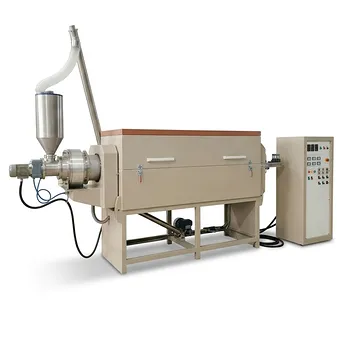
Continuous Feeding Rotary Tube Furnace for Industrial Powder Heat Treatment and Material Research
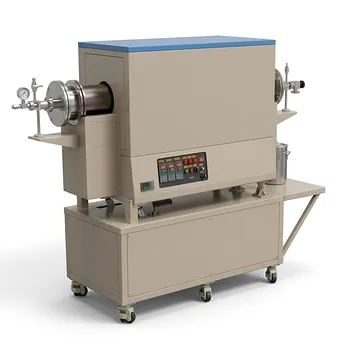
900°C Max Rotary Tube Furnace with 8 Inch 310S Alloy Tube and Optional Multi Zone Heating for Industrial Material Calcination

1100C Tube Furnace with Vacuum Flange and Programmable Temperature Controller for Material Science and Industrial Heat Treatment

Compact High Temperature 1600C Tube Furnace with 50mm Alumina Tube and Vacuum Flanges for Material Sintering

Vertical 1700C Vacuum and Atmosphere Tube Furnace with 80mm Alumina Tube

High Temperature 1700C Tube Furnace with High Vacuum Turbomolecular Pump System and Multi Channel Mass Flow Controller Gas Mixer

High Temperature Tube Furnace 1500C with Sliding Flanges and 50mm OD for Rapid Thermal Processing Fast Heating and Cooling

High Temperature 1700C Vertical Tube Furnace for Powder Spherification and Material Sintering

1800C High Temperature Compact Vacuum Tube Furnace with 60mm OD Alumina Tube and Kanthal MoSi2 Heating Elements
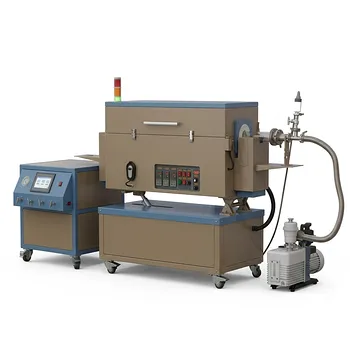
5 Inch Three Zone Rotary Tube Furnace with Integrated Gas Delivery System and 1200C Capability for Advanced Material CVD Processing
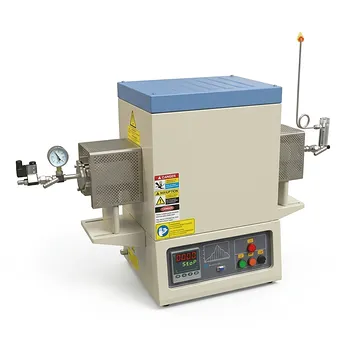
1700C Hydrogen Gas Tube Furnace with 60mm Alumina Process Tube and Integrated Hydrogen Safety Detector
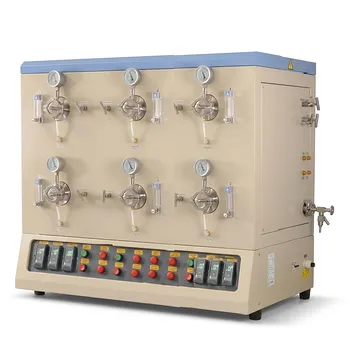
1200C High Throughput Multi Channel Tube Furnace with 50mm Quartz Tubes for Annealing and Material Phase Diagram Research

High Temperature 1700C Six Zone Split Tube Furnace with Alumina Tube and Water Cooled Flanges

High Temperature Automated 5 Inch Tube Furnace for Autonomous Material Research and Advanced Laboratory R&D

High Temperature 1700C Benchtop Tube Furnace with 5 Inch Heating Zone High Purity Alumina Tube and Vacuum Sealing Flanges

1200°C 5 Inch Vertical Quartz Tube Furnace with Stainless Steel Vacuum Flanges
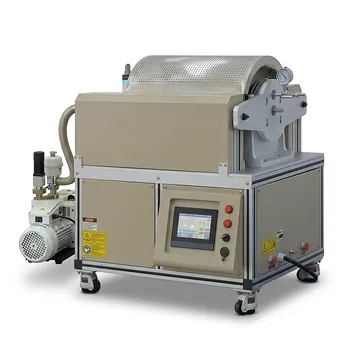
Automated 1200 C Tube Furnace for AI Material Research with 6 Inch OD and Sliding Flange
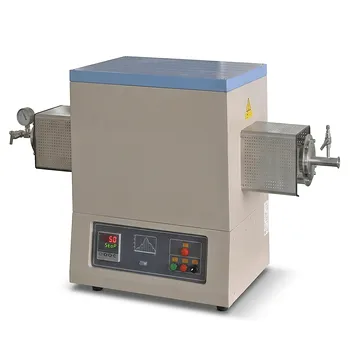
High Temperature 1700C Tube Furnace with 4 Inch OD Alumina Tube and Vacuum Sealing Flanges

Three Zone Tube Furnace with 11 Inch or 15 Inch Quartz Tube and Hinged Flanges for Vacuum Atmosphere Heat Treatment