What functions does a tube furnace perform in ZnCl2 lemon peel activation? Master Your Porous Carbon Research.
Updated 3 months ago
A tube atmosphere furnace serves as a precision-controlled reactor that provides the thermodynamic environment and inert conditions necessary for chemical activation. It specifically facilitates the melting of zinc chloride ($ZnCl_2$), its penetration into the carbonized lemon peel, and the subsequent etching and dehydrogenation required to develop a hierarchical porous structure.
Core Takeaway: The furnace is the critical tool for pore engineering, using precise temperature control (500-800°C) and inert gas management to regulate the chemical interaction between $ZnCl_2$ and the carbon matrix while preventing material loss through oxidation.
Thermal Management and Chemical Interaction
Facilitating Activator Phase Transformation
The furnace provides the high-temperature environment, typically between 500 and 800 degrees Celsius, required to melt the $ZnCl_2$ activation agent. Once melted, the liquid $ZnCl_2$ penetrates the carbon particles derived from the lemon peel, ensuring a uniform distribution of the activator throughout the matrix.
Promoting Dehydrogenation and Etching
The thermal energy supplied by the furnace drives the chemical reactions of dehydrogenation and etching. These processes are essential for removing non-carbon elements and creating the initial skeletal voids that define the material's porosity.
Kinetic Control via Heating Rates
By utilizing program-controlled heating rates, the furnace manages the speed of material transformation. A controlled ramp-up (e.g., 10 °C/min) ensures that volatile components generated during the reaction are released systematically rather than explosively, preserving the structural integrity of the carbon.
Atmospheric Integrity and Material Protection
Prevention of Oxidative Combustion
The furnace maintains a stable flow of inert gas (typically high-purity nitrogen or argon) to create an oxygen-free environment. This is critical because, at activation temperatures, the carbonized lemon peel would undergo oxidative combustion and be destroyed if exposed to even trace amounts of oxygen.
Management of Micro-Positive Pressure
The furnace maintains a micro-positive pressure, which prevents external air from leaking into the reaction zone. This stability is vital for ensuring that the chemical environment remains consistent throughout the dwell time, leading to repeatable results.
Removal of Reaction By-products
The continuous flow of inert gas serves as a carrier to sweep away volatile components and pyrolytic gases. Efficiently removing these by-products prevents secondary reactions that could clog newly formed pores or contaminate the carbon surface.
Structural Engineering of Pores
Regulating Pore Size Distribution
The furnace's accurate temperature control is the primary lever for regulating the ratio of micropores to mesopores. Higher temperatures generally increase the etching intensity, allowing researchers to "tune" the pore size distribution for specific applications like supercapacitors or filtration.
Achieving High Specific Surface Area
By providing a stable thermodynamic environment for the redox reactions between the activator and the carbon matrix, the furnace enables the development of a high specific surface area. This is achieved through the expansion of the carbon lattice and the creation of a hierarchical porous structure.
Understanding the Technical Trade-offs
Temperature vs. Carbon Yield
While higher temperatures within the 500-800°C range typically enhance pore development and increase surface area, they also lead to higher mass loss. Finding the "sweet spot" is a trade-off between achieving maximum porosity and maintaining a viable yield of activated carbon.
Dwell Time and Structural Collapse
Extended dwell times at peak temperature can facilitate deeper etching, but they also increase the risk of pore wall collapse. Over-activation can cause micropores to merge into larger, less useful macropores, effectively reducing the effective surface area.
How to Apply This to Your Project
When utilizing a tube atmosphere furnace for lemon peel activation, your operational parameters should align with your specific material requirements:
- If your primary focus is Maximum Surface Area: Utilize the higher end of the temperature range (approx. 800°C) with a slower heating rate to allow for exhaustive chemical etching by the $ZnCl_2$.
- If your primary focus is High Process Yield: Limit the activation temperature to the lower end (approx. 500-600°C) and minimize dwell time to prevent excessive carbon gasification.
- If your primary focus is Pore Size Control: Focus on maintaining strict micro-positive pressure and precise gas flow rates to ensure a stable environment for uniform pore development.
Mastering the furnace's atmospheric and thermal variables transforms it from a simple heater into a sophisticated instrument for molecular-level carbon engineering.
Summary Table:
| Function | Specific Role in Activation | Key Parameters |
|---|---|---|
| Phase Transformation | Melts $ZnCl_2$ for uniform carbon matrix penetration | 500°C - 800°C |
| Atmosphere Control | Prevents oxidative combustion via inert gas flow | $N_2$ or $Ar$ flow |
| Kinetic Regulation | Manages volatile release to preserve structure | Heating rate (e.g., 10°C/min) |
| Pore Engineering | Drives dehydrogenation and chemical etching | Dwell time & Temperature |
| By-product Removal | Sweeps away pyrolytic gases to keep pores clear | Micro-positive pressure |
Elevate Your Material Research with THERMUNITS
Precision is the key to mastering the hierarchical porous structure of activated carbon. THERMUNITS is a leading manufacturer of high-temperature laboratory equipment, providing the advanced thermal processing solutions required for cutting-edge material science and industrial R&D.
Our specialized Tube and Atmosphere Furnaces offer the exact atmospheric integrity and temperature stability needed for complex chemical activations like $ZnCl_2$ etching. Beyond tube furnaces, our comprehensive range includes:
- Muffle, Vacuum, and Atmosphere Furnaces
- Rotary Kilns and Hot Press Furnaces
- CVD/PECVD Systems and Vacuum Induction Melting (VIM)
- Dental Furnaces and High-Quality Thermal Elements
Don’t let inconsistent thermal environments compromise your carbon yield or pore distribution. Contact THERMUNITS today to discuss your specific research requirements and find the ideal heat treatment solution for your laboratory.
References
- M. S. Michael, K. Surya. Feasibility study on conversion of biowaste of lemon peel into carbon electrode for supercapacitor using ZnCl2 as an activating agent. DOI: 10.1007/s40243-024-00273-8
Mentioned Products
- 1750°C High Temperature Benchtop Vacuum Atmosphere Tube Furnace with Kanthal Super 1800 Heating Elements and 60mm Alumina Processing Tube
- Vertical 1700C Vacuum and Atmosphere Tube Furnace with 80mm Alumina Tube
- 1200C Hybrid Muffle and Tube Furnace for Material Research with Dual Atmosphere Control Quartz Tubes
- Compact Hybrid Muffle and Tube Furnace for 1000C Controlled Atmosphere Laboratory Material Sintering
- Compact Vertical Split Quartz Tube Furnace with Stainless Steel Vacuum Flanges for Rapid Thermal Quenching and Controlled Atmosphere Material Processing
People Also Ask
- What core functions does a high-temperature vacuum tube furnace provide? Optimize np-CuSn Sintering & Joint Integrity
- What is the role of a high-temperature tube furnace in the calcination process of ZnO/In2O3 nanocomposites?
- What role does a high-temperature tube furnace play in the sulfidation heat treatment of CoS@C/MXene nanocomposites? Guide
- Why is a high-temperature tube furnace required for CuAlO2 heat treatment? Master Phase Transformation Today
- What role does a high-temperature tube furnace play in executing nitrogen absorption kinetic experiments? Expert Insights

Tech Team · ThermUnits
Last updated on Jun 03, 2026
Related Products
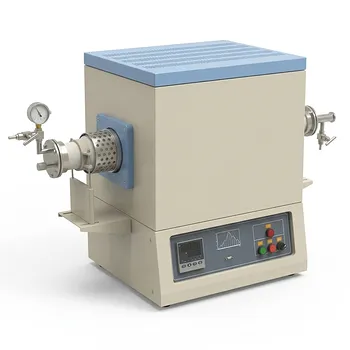
1750°C High Temperature Benchtop Vacuum Atmosphere Tube Furnace with Kanthal Super 1800 Heating Elements and 60mm Alumina Processing Tube

Vertical 1700C Vacuum and Atmosphere Tube Furnace with 80mm Alumina Tube
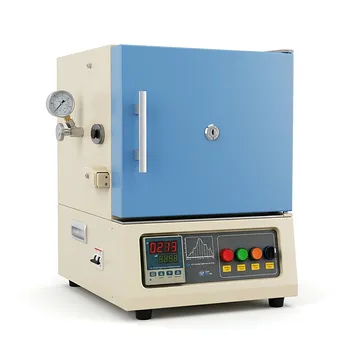
1200C Hybrid Muffle and Tube Furnace for Material Research with Dual Atmosphere Control Quartz Tubes
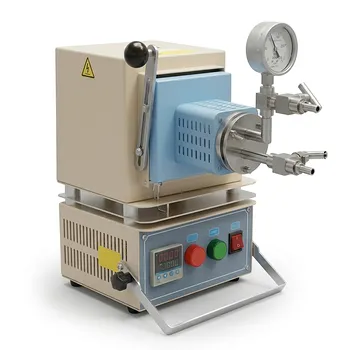
Compact Hybrid Muffle and Tube Furnace for 1000C Controlled Atmosphere Laboratory Material Sintering

Compact Vertical Split Quartz Tube Furnace with Stainless Steel Vacuum Flanges for Rapid Thermal Quenching and Controlled Atmosphere Material Processing
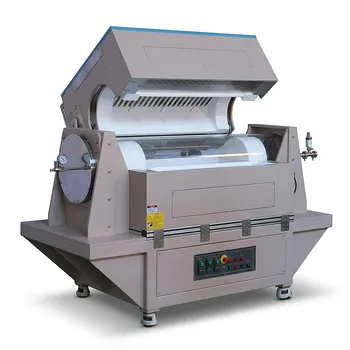
Three Zone Tube Furnace with 11 Inch or 15 Inch Quartz Tube and Hinged Flanges for Vacuum Atmosphere Heat Treatment
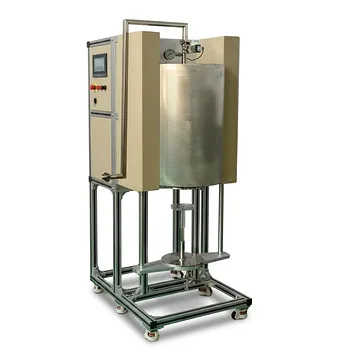
1200°C Atmosphere Controlled Automatic Bottom Loading Furnace with 6 Inch Quartz Tube
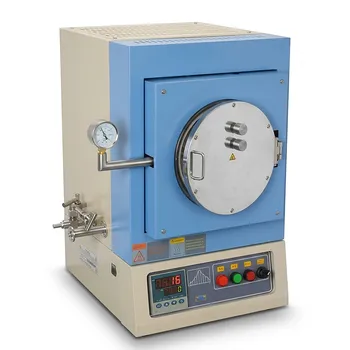
1100°C High Temperature Quartz Chamber Furnace 8 Inch OD with 7.6 Liter Capacity and Vacuum Atmosphere Capability
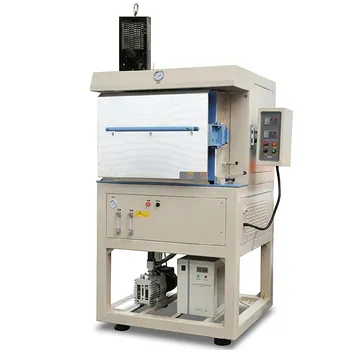
1200C Hydrogen Atmosphere Box Furnace with 5 Heated Sides and 64L Chamber
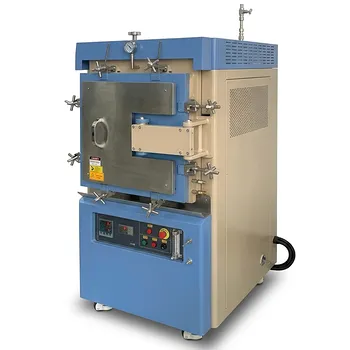
Atmosphere Controlled Muffle Furnace 1700C Maximum Temperature 80L High Capacity Vacuum Inert Gas Box Furnace
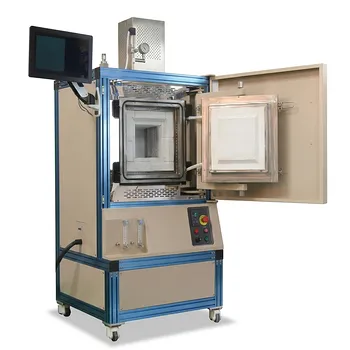
High Temperature Hydrogen Atmosphere Box Furnace 1650C Max Reducing Environment Material Synthesis System 8x8x8 Chamber

High Temperature 1700C Vertical Tube Furnace for Powder Spherification and Material Sintering

High Temperature 1700C Six Zone Split Tube Furnace with Alumina Tube and Water Cooled Flanges
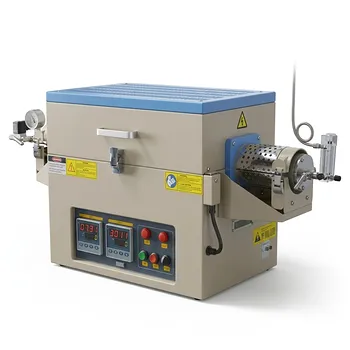
1100C Dual Zone Hydrogen Gas Tube Furnace with Quartz Tube and Integrated H2 Leak Detection System

High Temperature 1700C Tube Furnace with High Vacuum Turbomolecular Pump System and Multi Channel Mass Flow Controller Gas Mixer

1800C High Temperature Compact Vacuum Tube Furnace with 60mm OD Alumina Tube and Kanthal MoSi2 Heating Elements
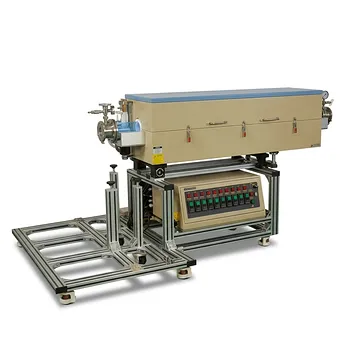
Ten Zone Multi Orientation Laboratory Tube Furnace for 1200C High Temperature Gradient Thermal Processing
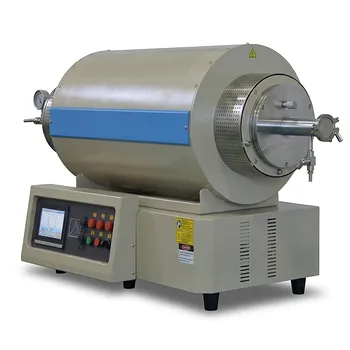
1200C Max Three Zone Tube Furnace 6 Inch OD Max with Tube and Flange

High Temperature 1700C Benchtop Tube Furnace with 5 Inch Heating Zone High Purity Alumina Tube and Vacuum Sealing Flanges
