What specific role does an ultra-high purity hydrogen atmosphere play during the high-temperature synthesis of carbon nanotubes from biomass precursors? Enhance CNT Quality & Growth
Updated 3 months ago
In the synthesis of carbon nanotubes from biomass, ultra-high purity hydrogen acts as a multi-functional chemical agent that prevents carbon loss and dictates the structural integrity of the final product. At temperatures reaching 1050°C, hydrogen functions as a potent reducing gas that removes oxygen from the precursor while simultaneously etching away disordered amorphous carbon to ensure the growth of ordered graphene layers.
Core Takeaway: Ultra-high purity hydrogen is essential for transitioning biomass into carbon nanotubes because it creates a reductive environment that prevents oxidation, refines the carbon structure through selective etching, and activates metallic catalysts necessary for tubular growth.
The Chemical Role of Hydrogen in Precursor Protection
Reducing Oxygen to Preserve Carbon
During the high-temperature annealing of biomass like corn seeds, oxygen naturally present in the precursor can lead to significant carbon loss through the formation of CO or CO2. Ultra-high purity hydrogen mitigates this by acting as a reducing agent, reacting with the oxygen to remove it from the system before it can consume the carbon backbone.
Terminating Dangling Bonds
At 1050°C, carbon atoms are highly reactive and prone to forming disordered structures. Hydrogen interacts with the carbon surface to terminate dangling bonds, providing a chemical "cap" that stabilizes the intermediate states of the material during its transformation.
Structural Refinement and Morphology Control
Selective Etching of Amorphous Carbon
One of the most critical roles of hydrogen is its ability to etch away excess amorphous carbon. This disordered carbon often deposits on the growth sites, potentially smothering the catalyst and halting the formation of nanotubes.
Guiding Ordered Graphene Formation
By removing these disordered layers, hydrogen ensures that only the most stable, ordered graphene layers remain. This selective process is what allows the carbon atoms to organize into the specific tubular morphology required for high-quality carbon nanotubes.
Facilitating Catalyst Activation
While the primary focus is on the carbon precursor, hydrogen also plays a vital role in reducing metal ions (such as iron or cobalt) into their metallic, nano-scale catalytic states. As noted in CVD processes, the presence of hydrogen determines the density of nucleation sites, which directly impacts the coverage and alignment of the resulting nanotubes.
Understanding the Trade-offs and Risks
The Risk of Over-Etching
While hydrogen is necessary for removing amorphous carbon, excessive exposure or overly high flow rates can lead to over-etching. If the hydrogen concentration is too high, it may begin to consume the desired carbon nanotubes themselves, leading to lower yields or structural defects.
Safety and Environmental Control
Operating at 1050°C with ultra-high purity hydrogen requires strictly controlled environments, typically within a high-temperature tube furnace. The volatility of hydrogen at these temperatures necessitates precise gas flow management to prevent combustion and ensure heating uniformity across the biomass precursor.
How to Apply This to Your Synthesis Project
Efficient carbon nanotube synthesis requires balancing the reductive power of hydrogen with the thermal stability of the biomass precursor.
- If your primary focus is maximizing yield: Ensure the hydrogen flow is optimized to remove oxygen early in the annealing stage without over-etching the formed nanotubes.
- If your primary focus is structural purity: Increase the hydrogen exposure during the peak temperature phase to aggressively remove amorphous carbon and promote highly ordered graphene layers.
- If your primary focus is catalyst efficiency: Use a hydrogen pretreatment phase to ensure all metallic precursors are fully reduced to active nano-scale particles before the main carbonization begins.
By precisely controlling the hydrogen atmosphere, you transform raw biomass from a disordered organic material into a sophisticated, high-value carbon nanostructure.
Summary Table:
| Hydrogen Role | Key Function | Impact on CNT Quality |
|---|---|---|
| Reduction | Removes oxygen from biomass | Prevents carbon loss as CO/CO2 |
| Selective Etching | Removes disordered amorphous carbon | Ensures ordered graphene structures |
| Stabilization | Terminates reactive dangling bonds | Guides tubular morphology growth |
| Catalyst Activation | Reduces metal ions to metallic states | Increases nucleation site density |
Elevate Your Material Research with Precision Thermal Solutions
Achieving the perfect balance of hydrogen etching and thermal stability requires expert-grade equipment. THERMUNITS is a leading manufacturer of high-temperature laboratory equipment for material science and industrial R&D. We offer a comprehensive range of thermal processing solutions, including Tube, Vacuum, Atmosphere, and Muffle furnaces, as well as specialized CVD/PECVD systems and Rotary Kilns designed for advanced carbon synthesis.
Whether you are refining biomass precursors or developing next-generation nanomaterials, our equipment ensures the heating uniformity and gas control your project demands. Contact our technical team today to discuss how our custom furnace solutions can optimize your synthesis yields.
References
- El‐Shazly M. Duraia, Gary W. Beall. Efficient eco-friendly synthesis of carbon nanotubes over graphite nanosheets from yellow corn: a one-step green approach. DOI: 10.1038/s41598-024-65893-6
Mentioned Products
- High Temperature Hydrogen Atmosphere Box Furnace 1650C Max Reducing Environment Material Synthesis System 8x8x8 Chamber
- High Temperature Induction Melting System with Integrated Ultra High Purity Glove Box for Metallic Alloy Processing
- High Temperature Vertical Atmosphere Controlled Furnace with Automatic Bottom Loading and 1700°C Capacity for Advanced Material Research
- High Temperature Economic Hydrogen Gas Box Furnace 1600C Atmosphere Controlled Thermal Processing System 65L Capacity
- 1200C Hydrogen Atmosphere Box Furnace with 5 Heated Sides and 64L Chamber
People Also Ask
- What is the role of a high-temperature box furnace in the solid-state synthesis of Europium-doped M3MgSi2O8 phosphors?
- What is the role of a high-temperature box furnace in Na3MnZr(PO4)3 synthesis? Engineering High-Performance NASICON.
- What role does an industrial-grade high-temperature furnace play in C2F sintering? Achieve Pure Phase and High Strength
- Why is a high-temperature box furnace required for 1250°C ferrite calcination? Ensure Precise Phase Transformation.
- How does a high-temp box furnace aid rare-earth oxysulfide phosphor synthesis? Enhance Purity & Luminescence

Tech Team · ThermUnits
Last updated on Jun 02, 2026
Related Products
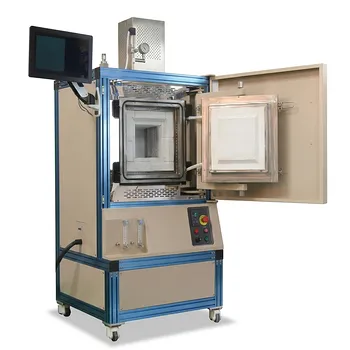
High Temperature Hydrogen Atmosphere Box Furnace 1650C Max Reducing Environment Material Synthesis System 8x8x8 Chamber
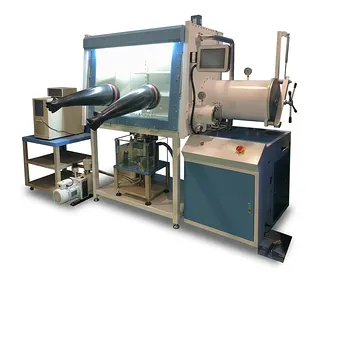
High Temperature Induction Melting System with Integrated Ultra High Purity Glove Box for Metallic Alloy Processing
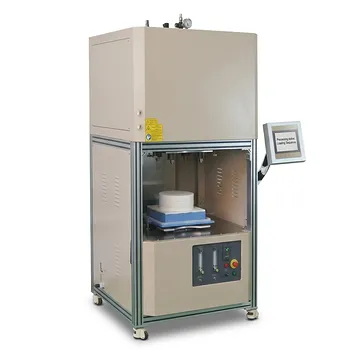
High Temperature Vertical Atmosphere Controlled Furnace with Automatic Bottom Loading and 1700°C Capacity for Advanced Material Research
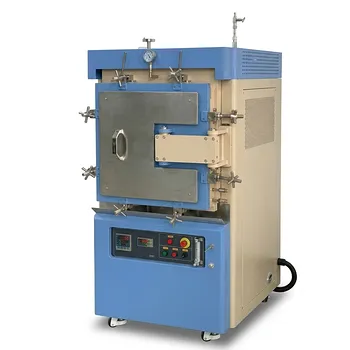
High Temperature Economic Hydrogen Gas Box Furnace 1600C Atmosphere Controlled Thermal Processing System 65L Capacity
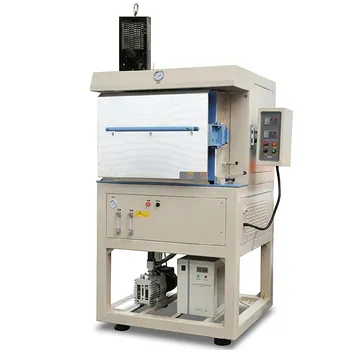
1200C Hydrogen Atmosphere Box Furnace with 5 Heated Sides and 64L Chamber
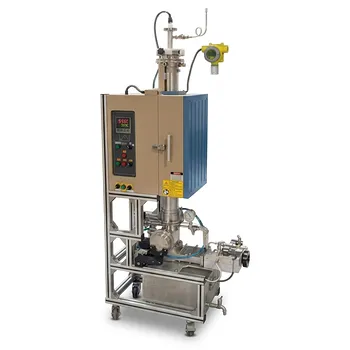
High Temperature 1000C Hydrogen Vertical Quenching Furnace with 4 Inch Stainless Steel Tube
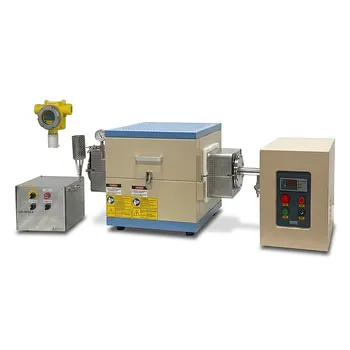
1100C Hydrogen Gas Atmosphere Tube Furnace with 5 Inch Fused Quartz Tube and Integrated Safety Monitoring System
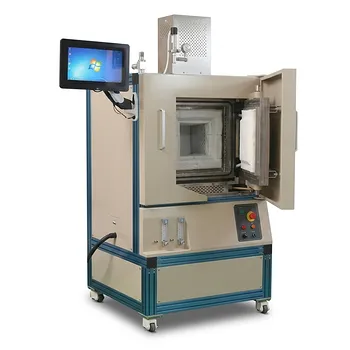
High Temperature Oxygen and Inert Atmosphere Controlled Furnace 8 Liter 1700C Sintering System for Advanced Materials RD
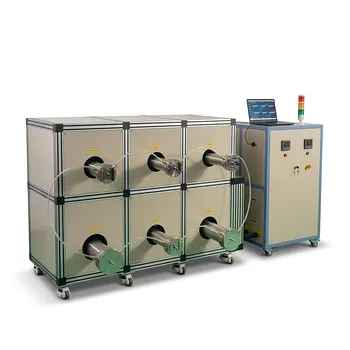
1200C Max 6 Channel High Cleanliness Hydrogen Furnace for High Throughput Annealing
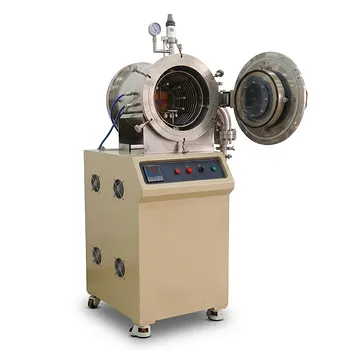
High Temperature Cold Wall High Vacuum Chamber Furnace 1400C for Advanced Material Processing