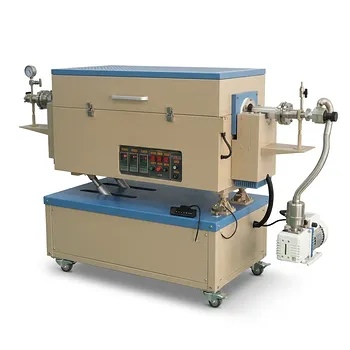
What technical advantages does an atmosphere tube furnace offer for the carbonization of Si@Fe3O4/AC/CNR? Key Benefits.
Updated 3 months ago
The atmosphere tube furnace is the critical enabling technology for synthesizing complex Si@Fe3O4/AC/CNR composites. By providing a strictly controlled inert environment and precise thermal profiles, it allows for the simultaneous carbonization of glucose into amorphous carbon and the catalytic growth of carbon nanobelts (CNR) without oxidizing sensitive silicon or iron components. This ensures the resulting material maintains high conductivity and structural integrity necessary for advanced electrochemical applications.
The primary advantage of an atmosphere tube furnace lies in its ability to isolate materials from oxygen while applying exact heat, preventing the degradation of silicon nanoparticles and enabling the precise structural assembly of carbon-based frameworks.
Protection of Sensitive Nanostructures
Prevention of Silicon Oxidation
Maintaining an oxygen-free environment is vital for silicon-based materials, as silicon nanoparticles readily oxidize into non-conductive silica when exposed to oxygen at high temperatures. The furnace utilizes high-purity inert gases like Argon or Nitrogen to displace oxygen, preserving the metallic or semi-conductive properties of the silicon core.
Preservation of Magnetic and Metallic Phases
In the synthesis of Si@Fe3O4 composites, the furnace prevents the over-oxidation of iron oxide (Fe3O4) or other metal salts. By operating under a strictly controlled inert atmosphere, the furnace ensures that the magnetic and catalytic properties of the iron components remain intact during the 750°C carbonization process.
Structural Integrity of Nanoparticles
The furnace provides constant heating rates and stable temperatures that prevent the sintering or agglomeration of nanoparticles. This stability is essential for maintaining the uniform distribution of silicon nanoparticles within the larger carbon matrix, which is a key requirement for managing volume expansion in battery applications.
Precision Synthesis of the Carbon Framework
Controlled Glucose Carbonization
The furnace facilitates the pyrolytic dehydration and carbonization of glucose molecules into a uniform, amorphous conductive carbon layer. This process requires anaerobic conditions to ensure that the glucose transforms into a carbon skeleton rather than simply burning or oxidizing into carbon dioxide.
Catalytic Growth of Carbon Nanobelts (CNR)
A specialized atmosphere tube furnace provides the specific thermal and chemical environment needed for the catalytic growth of carbon nanobelts. By maintaining a precise temperature (e.g., 750°C), the furnace allows for the synchronized transformation of precursors into distinct 1D and 2D carbon nanostructures.
Hierarchical Pore Formation
During the carbonization and activation phases, the furnace allows activation agents like potassium bicarbonate or KOH to react with the carbon precursor. This high-temperature calcination effectively removes volatiles and facilitates intense pore formation, creating a hierarchical structure that significantly increases the specific surface area.
Advanced Thermal Dynamics and Uniformity
Multi-Stage Heating and PID Control
Modern furnaces utilize integrated PID control systems to execute complex, multi-stage heating programs. This allows for stabilization at lower temperatures (e.g., 500°C) to prevent thermal overshoot before reaching the final carbonization temperature, ensuring uniform pyrolysis of the organic precursors.
Controlled Heating Rates for Uniform Coverage
The ability to set precise heating rates, such as 3°C to 10°C per minute, is vital for balancing the conductivity of the carbon layer with its uniformity. A controlled ramp-up ensures that the amorphous carbon layer coats the silica and iron components evenly without cracking or forming localized clumps.
In-situ Doping and Chemical Bonding
The furnace environment supports simultaneous doping and carbonization by facilitating the thermal cracking of polymers. This allows elements like phosphorus or sulfur to react directly with the carbon skeleton through thermally induced chemical bonding, enhancing the material's gas-sensing or energy-storage capabilities.
Understanding the Trade-offs
Gas Flow and Atmosphere Consistency
Maintaining a truly inert environment requires a continuous flow of high-purity gas, which can be resource-intensive. If the flow rate is inconsistent, localized pockets of oxygen or evolved volatiles may remain, leading to inhomogeneous carbonization or surface oxidation of the silicon.
Thermal Lag in Large Samples
In larger tube furnaces, a discrepancy can exist between the set-point temperature and the actual temperature at the center of the sample boat. This thermal lag can lead to incomplete carbonization or variations in the crystallinity of the carbon nanobelts if not properly calibrated.
Volatile Management
The carbonization of glucose and biomass releases significant amounts of volatile organic compounds and water vapor. If the furnace exhaust system is inadequate, these volatiles can re-deposit on the sample or the furnace tube, potentially contaminating the Si@Fe3O4 interface.
How to Apply This to Your Project
Recommendations for Material Optimization
- If your primary focus is preserving silicon conductivity: Utilize high-purity Argon (99.999%) and a vacuum-tight tube setup to eliminate even trace amounts of oxygen that cause surface oxidation.
- If your primary focus is maximizing surface area: Incorporate a chemical activator like KOH and use a multi-stage heating program with a slow ramp rate (3°C/min) to facilitate extensive micropore development.
- If your primary focus is the growth of carbon nanobelts (CNR): Ensure the furnace maintains a precise temperature of 750°C with high thermal uniformity across the entire length of the sample boat.
- If your primary focus is in-situ doping: Use the furnace to facilitate the thermal cracking of P/S-containing polymers at 700°C-800°C to ensure chemical bonding into the carbon skeleton.
By leveraging the precise atmospheric and thermal controls of a tube furnace, you can engineer Si@Fe3O4/AC/CNR materials with tailored microstructures and superior electrochemical performance.
Summary Table:
| Feature | Benefit for Si@Fe3O4/AC/CNR | Technical Specification |
|---|---|---|
| Inert Environment | Prevents Si/Fe oxidation; preserves magnetic phases | High-purity Ar/N2 atmosphere |
| PID Control | Ensures precise glucose carbonization & CNR growth | Multi-stage heating programs |
| Thermal Stability | Prevents nanoparticle sintering or agglomeration | Precise constant heating rates |
| Ramp Rate Control | Uniform carbon coating (3°C - 10°C/min) | Prevents cracks in carbon layers |
| Chemical Activation | Facilitates hierarchical pore formation | Supports KOH/K2CO3 activation |
Elevate Your Material Research with THERMUNITS Precision
Achieving the perfect hierarchical structure for Si@Fe3O4/AC/CNR composites requires world-class thermal control. THERMUNITS is a leading manufacturer of high-temperature laboratory equipment dedicated to material science and industrial R&D. We provide the specialized atmosphere and vacuum technology necessary to prevent oxidation and ensure superior electrochemical performance.
Our comprehensive thermal solutions include:
- Tube & Atmosphere Furnaces: Ideal for controlled carbonization and CNR growth.
- CVD/PECVD Systems: For advanced thin-film and nanostructure engineering.
- Specialized Equipment: Muffle, Vacuum, Rotary, and Hot Press furnaces, plus Dental Furnaces and Vacuum Induction Melting (VIM).
- Components: High-quality Thermal Elements and custom heat treatment tools.
Ready to optimize your lab’s heat treatment efficiency? Contact our technical team today to find the perfect furnace for your next breakthrough.
References
- Xiang Liu, Dong‐Liang Peng. Si@Fe3O4/AC composite with interconnected carbon nano-ribbons network for high-performance lithium-ion battery anodes. DOI: 10.1016/j.heliyon.2024.e25426
Mentioned Products
- Compact Hybrid Muffle and Tube Furnace for 1000C Controlled Atmosphere Laboratory Material Sintering
- Vertical 1700C Vacuum and Atmosphere Tube Furnace with 80mm Alumina Tube
- High Temperature Vertical Hybrid Furnace with Alumina Tube and SiC Heating for SOFC Coin Cell Testing and Atmosphere Processing
- 1700C Compact Hybrid Furnace with Dual Layer Box Sintering and Controlled Atmosphere Alumina Tubes
- Three Temperature Zone Rotating Tube Furnace for Material Sintering and Controlled Atmospheric Heat Treatment
People Also Ask
- Why is an atmosphere-controlled tube furnace required for the pre-sulfidation of NiMo/gamma-Al2O3 catalysts?
- Why is an atmosphere-controlled tube furnace required for 800 °C CNF annealing? Essential for Oxidative Protection.
- Why is an atmosphere-controlled tube furnace required for [email protected]/C preparation? Key for Purity & Structure
- Why is an atmosphere-controlled tube furnace required for single-atom sensor calcination? Ensure Atomic Dispersion.
- What is the function of a controlled atmosphere tube furnace in LiGa alloying? Achieving High-Purity Thermal Synthesis

Tech Team · ThermUnits
Last updated on Jun 02, 2026
Related Products
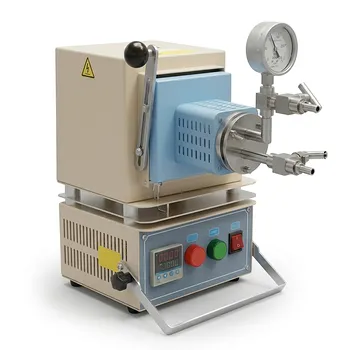
Compact Hybrid Muffle and Tube Furnace for 1000C Controlled Atmosphere Laboratory Material Sintering

Vertical 1700C Vacuum and Atmosphere Tube Furnace with 80mm Alumina Tube
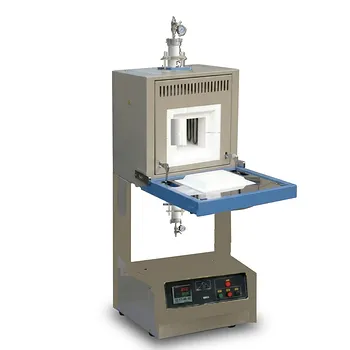
High Temperature Vertical Hybrid Furnace with Alumina Tube and SiC Heating for SOFC Coin Cell Testing and Atmosphere Processing
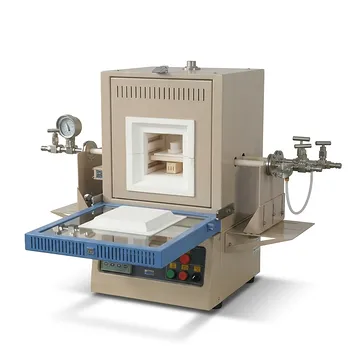
1700C Compact Hybrid Furnace with Dual Layer Box Sintering and Controlled Atmosphere Alumina Tubes
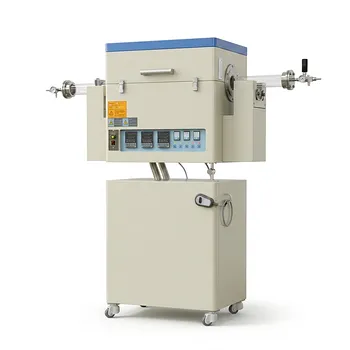
Three Temperature Zone Rotating Tube Furnace for Material Sintering and Controlled Atmospheric Heat Treatment

Three Zone Tube Furnace with 11 Inch or 15 Inch Quartz Tube and Hinged Flanges for Vacuum Atmosphere Heat Treatment
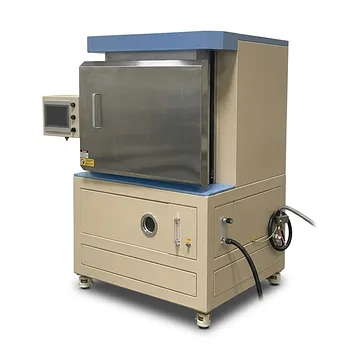
1650C High Temperature Atmosphere Controlled Box Furnace with 65L Chamber for Advanced Material Sintering and Industrial Heat Treatment
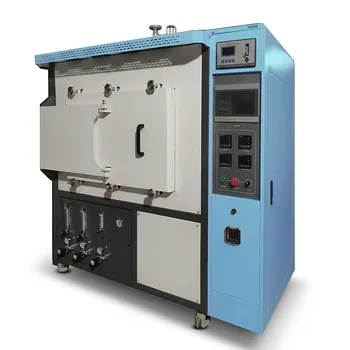
Roller Table Atmosphere Furnace 1500C High Temperature Battery Material Sintering System 112L Capacity
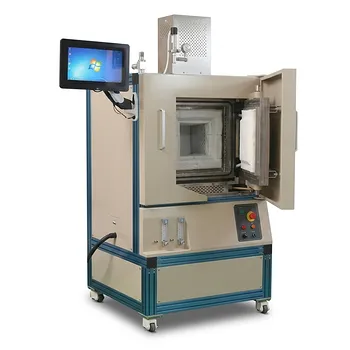
High Temperature Oxygen and Inert Atmosphere Controlled Furnace 8 Liter 1700C Sintering System for Advanced Materials RD
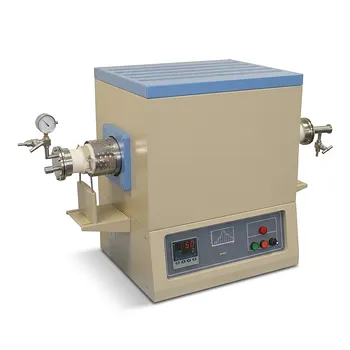
1700C High Temperature Alumina Tube Furnace with 18 Inch Heated Zone and Vacuum Sealing Flanges

High Temperature 1700C Vertical Tube Furnace for Powder Spherification and Material Sintering

Compact High Temperature 1600C Tube Furnace with 50mm Alumina Tube and Vacuum Flanges for Material Sintering
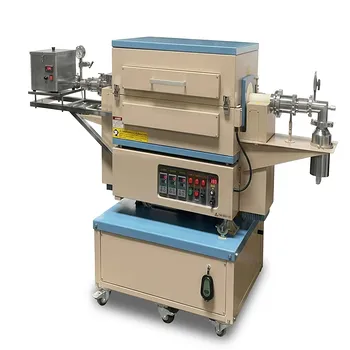
1500C 3-Zone Rotary Tube Furnace 60mm with Automatic Powder Feeding and Receiving System for Continuous Material Synthesis

1200°C 5 Inch Vertical Quartz Tube Furnace with Stainless Steel Vacuum Flanges

High Temperature Automated 5 Inch Tube Furnace for Autonomous Material Research and Advanced Laboratory R&D
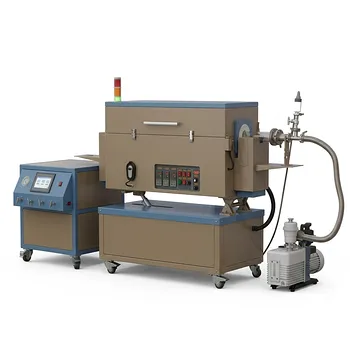
5 Inch Three Zone Rotary Tube Furnace with Integrated Gas Delivery System and 1200C Capability for Advanced Material CVD Processing
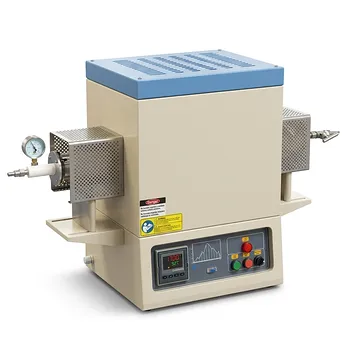
High Temperature Three Zone Tube Furnace 1700C with Alumina Tube and Water Cooled Flanges
1200C Max Three Zone Tube Furnace 6 Inch OD Max with Tube and Flange

1800C High Temperature Compact Vacuum Tube Furnace with 60mm OD Alumina Tube and Kanthal MoSi2 Heating Elements