What technical advantages does an online mass loss measurement system, integrated with a tube furnace, provide? Real-time In-Situ Data
Updated 6 months ago
Integrating an online mass loss measurement system with a tube furnace provides researchers with real-time, in-situ visibility into the thermal decomposition of materials. This setup captures high-resolution, instantaneous data—such as micro-vibrations and sudden mass shifts—that are physically impossible to detect using traditional offline weighing methods.
This technology replaces static "before and after" snapshots with a continuous stream of dynamic data, allowing for the precise calculation of Mass Loss Rates (MLR) as a direct function of temperature.
The Power of In-Situ Dynamic Monitoring
Real-Time Data Acquisition
Unlike traditional methods that require cooling and removing a sample to weigh it, this system uses a balance beam and load sensor to monitor mass changes while the sample remains inside the furnace. This eliminates the risk of sample contamination or atmospheric interaction during the weighing process.
High-Resolution Temporal Sensitivity
The integration of an external load sensor allows for the capture of instantaneous events during material decomposition. This high resolution is critical for identifying the exact temperature thresholds where chemical or physical transitions begin and end.
Continuous Mass Loss Rate (MLR) Calculation
Because data is collected continuously, researchers can calculate the Mass Loss Rate (MLR) as a continuous function of temperature. This provides a granular view of reaction kinetics that discrete, intermittent measurements cannot replicate.
Capturing Transient Physical Phenomena
Detecting Volatile Bubble Ruptures
One of the most significant advantages is the ability to detect micro-vibrations caused by the rupture of volatile bubbles within a sample. These sudden shifts in mass or momentum provide deep insights into the internal pressure and structural integrity of the material during heating.
Analyzing Rapid Decomposition Phases
In materials that undergo "flash" or rapid decomposition, mass can change significantly in fractions of a second. The online measurement mechanism ensures these rapid transitions are recorded accurately, preventing the loss of critical kinetic data.
Direct Thermal Correlation
By measuring mass simultaneously with furnace temperature, the system establishes a direct causal link between thermal input and material response. This eliminates the synchronization errors common when trying to align separate temperature and mass data sets.
Navigating the Technical Trade-offs
Sensitivity to External Vibrations
Because the system is designed to detect micro-vibrations from within the furnace, it is also highly sensitive to external laboratory noise. Researchers must ensure the furnace and balance mechanism are properly isolated to prevent "ghost" data points.
Impact of Gas Flow and Buoyancy
Tube furnaces often utilize carrier gases, which can create buoyancy effects or drag on the sample holder. These aerodynamic forces must be precisely calibrated and subtracted from the data to ensure the recorded mass loss is purely representative of the material's behavior.
Mechanical Limitations of the Balance Beam
The physical link between the sample and the external sensor introduces a potential path for heat escape or mechanical friction. Maintaining a perfectly balanced, low-friction environment within the furnace's sealed atmosphere requires meticulous setup and maintenance.
Applying This Technology to Your Research Goals
How to Apply This to Your Project
To maximize the value of an online mass loss system, your approach should be dictated by your specific analytical objectives.
- If your primary focus is Kinetic Modeling: Prioritize high-frequency data sampling to ensure the Mass Loss Rate (MLR) curves are smooth enough for complex mathematical derivation.
- If your primary focus is Material Stability: Focus on the correlation between temperature plateaus and mass shifts to identify the exact point of structural failure.
- If your primary focus is Volatile Behavior: Use the system's sensitivity to micro-vibrations to map the intensity and frequency of bubble ruptures during the transition phase.
By moving from static measurements to dynamic, in-situ monitoring, you gain a high-fidelity understanding of material behavior that is essential for modern thermal analysis.
Summary Table:
| Feature | Advantage | Research Impact |
|---|---|---|
| In-Situ Monitoring | Real-time data without sample removal | Eliminates contamination & atmospheric interference |
| High Sensitivity | Captures micro-vibrations & bubble ruptures | Deep insights into internal pressure & structural integrity |
| MLR Calculation | Continuous function of temperature | Precise reaction kinetics & decomposition mapping |
| Direct Correlation | Syncs thermal input with mass response | Eliminates errors from separate data sets |
Precision Thermal Solutions for Your Material Research
At THERMUNITS, we specialize in providing the high-fidelity tools necessary for advanced material science. As a leading manufacturer of high-temperature laboratory equipment, we offer a comprehensive range of thermal processing solutions—including Tube, Muffle, Vacuum, and Rotary Furnaces, as well as CVD/PECVD systems, Hot Press furnaces, and Vacuum Induction Melting (VIM) units.
Our systems are designed to meet the rigorous demands of industrial R&D, ensuring you gain the granular insights needed for superior kinetic modeling and material stability analysis.
Ready to upgrade your lab's capabilities? Contact us today to discuss your customized heat treatment solution!
References
- Karen De Lannoye, Lukas Arnold. Effect of flow velocity, atmosphere and sample thickness on the mass loss rate of PMMA in the tube furnace. DOI: 10.1088/1742-6596/2885/1/012024
Mentioned Products
- Compact Split Tube Furnace with Integrated Vacuum System and Precision Temperature Calibrator
- 1100C Dual Zone Hydrogen Gas Tube Furnace with Quartz Tube and Integrated H2 Leak Detection System
- High Temperature Hybrid Muffle and Tube Furnace with Vacuum Capability and PID Control
- Automated 1200 C Tube Furnace for AI Material Research with 6 Inch OD and Sliding Flange
- Compact Vertical Split Quartz Tube Furnace with Stainless Steel Vacuum Flanges for Rapid Thermal Quenching and Controlled Atmosphere Material Processing
People Also Ask
- What is the primary engineering purpose for using a customized ventilation hood when operating a split tube furnace? RCF Safety
- How does a split tube furnace contribute to the thermal stabilization of Clignin@H-TiO2? Achieve Structural Precision
- What are the specific advantages and use cases for a split tube furnace? Optimize Lab Efficiency & Material Research
- What are the advantages of using a split tube furnace for heating a catalytic reactor? Boost Efficiency and Precision
- How does a split tube furnace facilitate debinding of ceramic green bodies? Master Precise Thermal & Atmosphere Control

Tech Team · ThermUnits
Last updated on Apr 14, 2026
Related Products
Compact Split Tube Furnace with Integrated Vacuum System and Precision Temperature Calibrator
1100C Dual Zone Hydrogen Gas Tube Furnace with Quartz Tube and Integrated H2 Leak Detection System
High Temperature Hybrid Muffle and Tube Furnace with Vacuum Capability and PID Control
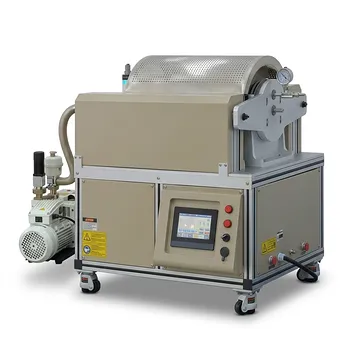
Automated 1200 C Tube Furnace for AI Material Research with 6 Inch OD and Sliding Flange
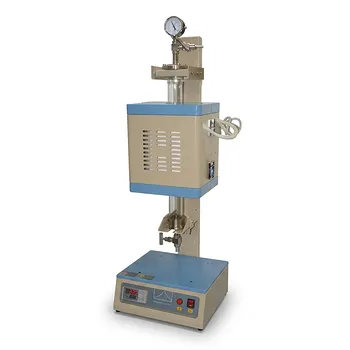
Compact Vertical Split Quartz Tube Furnace with Stainless Steel Vacuum Flanges for Rapid Thermal Quenching and Controlled Atmosphere Material Processing
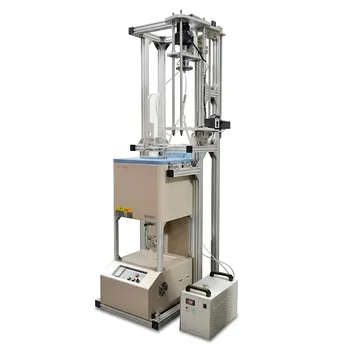
500C Vacuum Vertical Tube Furnace 84mm OD Sample Rotation Lifting System
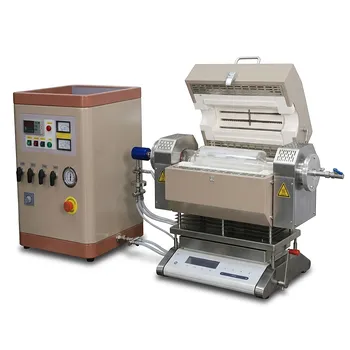
Weighable Mini Rotary Tube Furnace for Dynamic Thermogravimetric Analysis and Powder Processing
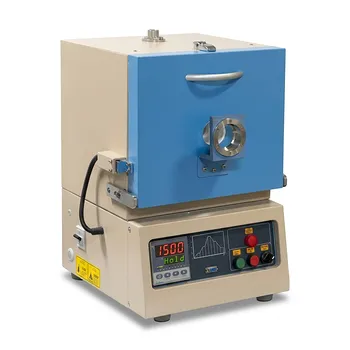
1500C Hybrid Muffle Tube Furnace 1.7L Box with 2 Inch Mullite Tube and Programmable PID Controller
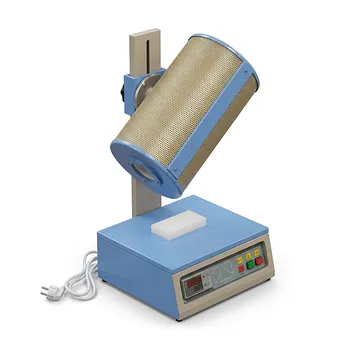
1100°C Vertical Laboratory Furnace for DIY Tubular Reactors with PID Temperature Controller
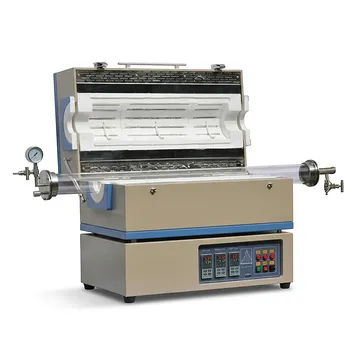
24 Inch Three Zone Split Tube Furnace with Optional Quartz Tube and Vacuum Flange System for High Temperature Material Synthesis
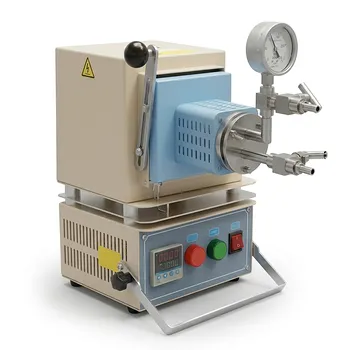
Compact Hybrid Muffle and Tube Furnace for 1000C Controlled Atmosphere Laboratory Material Sintering
1200°C Atmosphere Controlled Automatic Bottom Loading Furnace with 6 Inch Quartz Tube
High Temperature Bottom Loading Vertical Furnace 1700C Dual Stage Sample Processing System 18L Large Capacity Thermal Treatment Equipment
1200°C High Temperature 4 Inch Tube Furnace with Sliding Flange for CVD Systems
High Temperature 1700C Six Zone Split Tube Furnace with Alumina Tube and Water Cooled Flanges
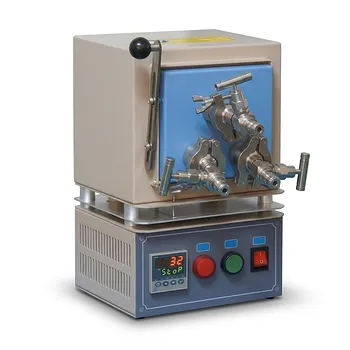
Triple Tube Compact Hybrid Muffle Furnace 1000C High Vacuum Thermal Processing System
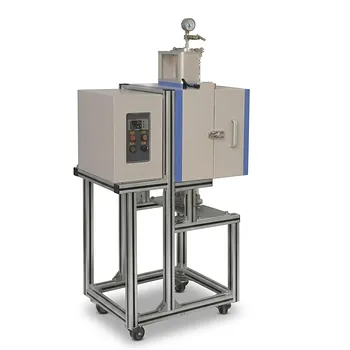
1200°C 5 Inch Vertical Quartz Tube Furnace with Stainless Steel Vacuum Flanges
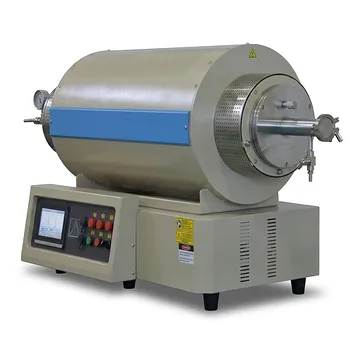
1200C Max Three Zone Tube Furnace 6 Inch OD Max with Tube and Flange
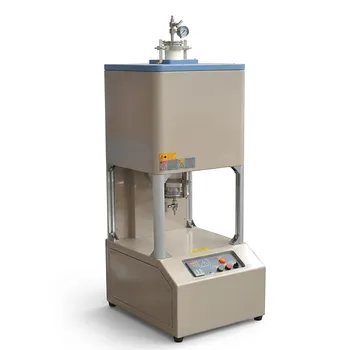
Vertical 1700C Vacuum and Atmosphere Tube Furnace with 80mm Alumina Tube