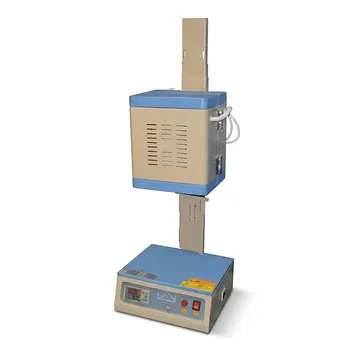
What are the advantages of using a split tube furnace for heating a catalytic reactor? Boost Efficiency and Precision
Updated 3 months ago
Split tube furnaces offer a distinct advantage in catalytic research by combining a high-precision thermal environment with immediate physical accessibility. They provide a constant temperature zone—often extending up to 12 inches—ensuring that the catalyst monolith or bed remains within a perfectly uniform thermal field. The unique split-open design simplifies the installation and debugging of reactor piping and enables significantly faster cooling and inspection compared to traditional integral heating methods.
The primary advantage of a split tube furnace lies in its dual-purpose role: it acts as a high-precision instrument for maintaining catalyst integrity through uniform heating while serving as a flexible laboratory tool that facilitates the rapid installation and cooling of complex reactor assemblies.
Operational Flexibility and Ease of Access
Simplified Reactor Installation
The split-open design allows the furnace chamber to open lengthwise, permitting the easy insertion and removal of the process tube. This is a critical advantage when working with pre-assembled tube components or delicate reactor setups that cannot be easily slid into a fixed cylindrical opening.
Streamlined Debugging and Maintenance
Because the furnace can be opened without disturbing the sample or the reactor's internal positioning, researchers can debug reactor piping and connections in situ. This minimizes the risk of mechanical stress on the reactor tube and ensures the experimental setup remains precisely aligned.
Rapid Thermal Cycling and Inspection
Unlike integral heating methods that retain heat within a solid insulated structure, a split furnace can be opened to allow for rapid cooling. This significantly reduces the downtime between experiments and permits immediate visual inspection of the reactor once the heating cycle is complete.
Precision Control and Catalyst Integrity
Maintaining a Uniform Thermal Field
A split tube furnace provides a constant temperature zone (up to 12 inches), which is vital for maintaining a uniform thermal field across the catalyst. This stability ensures that the entire catalyst monolith reacts under identical conditions, leading to more accurate and reproducible data.
Prevention of Over-Sintering
Precise temperature control is essential for preventing the over-sintering of active metal particles. By maintaining a stable environment and controlled heating rates (such as 3°C to 5°C per minute), the furnace preserves the active sites of the catalyst and ensures high dispersion of metallic components.
Controlled Atmosphere Integration
These furnaces often support highly controlled environments, such as reducing or inert atmospheres using Hydrogen, Nitrogen, or Argon mixtures. This capability allows for the precise reduction of metal precursors into active centers without triggering unintended oxidation or structural collapse.
Understanding the Trade-offs
Thermal Efficiency vs. Accessibility
While the split design offers superior access, it can sometimes lead to minor heat loss at the seams compared to a fully enclosed integral furnace. High-quality insulation and precision-machined joints are necessary to ensure that this trade-off does not compromise the uniformity of the internal thermal field.
Mechanical Wear and Complexity
The hinge and latch mechanisms of a split tube furnace introduce mechanical complexity that integral heaters lack. Over time, repeated thermal expansion and contraction can affect the alignment of the two halves, requiring periodic maintenance to ensure the furnace seals correctly and maintains its rated temperature stability.
How to Apply This to Your Project
When choosing between a split tube furnace and integral heating for your catalytic reactor, consider your specific operational requirements and the sensitivity of your catalyst.
- If your primary focus is rapid experimental turnaround: A split tube furnace is the superior choice because it allows for faster cooling and easier access to the reactor assembly.
- If your primary focus is complex reactor geometry: Use a split tube design to accommodate pre-assembled piping and sensors that would be difficult to slide into a standard cylindrical furnace.
- If your primary focus is catalyst morphology and particle size: Prioritize a furnace with high-precision programmed temperature control to prevent sintering and ensure the high specific surface area of your nanoparticles.
- If your primary focus is high-volume, long-term steady-state reactions: An integral heating method may offer slightly better thermal efficiency and mechanical simplicity for permanent installations.
The split tube furnace remains the gold standard for laboratory-scale catalytic research where flexibility, precise thermal gradients, and rapid inspection are paramount to success.
Summary Table:
| Feature | Split Tube Furnace | Integral Heating Method |
|---|---|---|
| Physical Access | Split-open design for easy loading | Fixed cylindrical opening |
| Cooling Rate | Rapid cooling via open chamber | Slow cooling due to insulation |
| Installation | Simplified for complex/pre-sealed piping | Difficult for delicate assemblies |
| Thermal Precision | Large constant temperature zone | High thermal efficiency, less flexible |
| Best Used For | R&D, rapid cycling, and debugging | Long-term, steady-state production |
Maximize Your Research Precision with THERMUNITS
At THERMUNITS, we understand that high-performance catalytic research requires absolute thermal stability and operational flexibility. As a leading manufacturer of high-temperature laboratory equipment, we provide professional-grade solutions tailored for material science and industrial R&D.
Our extensive product range includes:
- Tube & Split Tube Furnaces: Perfect for catalytic reactors and rapid thermal cycling.
- Specialized Systems: Vacuum, Atmosphere, Rotary, and Hot Press furnaces.
- Advanced R&D Tools: CVD/PECVD systems, Dental Furnaces, and Vacuum Induction Melting (VIM) furnaces.
- Industrial Kilns: Electric rotary kilns and high-durability thermal elements.
Whether you are looking to prevent catalyst sintering or streamline complex reactor setups, THERMUNITS delivers the reliability you need. Contact our technical experts today to find the perfect heat treatment solution for your laboratory!
References
- Robert Hesketh, C. Stewart Slater. Catalytic Oxidation Experiment For Chemical Reaction Engineering. DOI: 10.18260/1-2--8018
Mentioned Products
- 1250C Split Tube Furnace with 3 Inch Mullite Tube and Vacuum Sealing Flanges for Precision Thermal Processing
- Split Vertical Tube Furnace with 1200C Quartz Tube and Stainless Steel Vacuum Flanges for Rapid Thermal Processing
- High Temperature 1200C Split Tube Furnace with Hinged Vacuum Flanges and 4 Inch Quartz Tube for Laboratory Research
- 1250C Compact Split Tube Furnace with 8 Inch Heating Zone and Programmable Controller
- 24 Inch Three Zone Split Tube Furnace with Optional Quartz Tube and Vacuum Flange System for High Temperature Material Synthesis
People Also Ask
- What is the primary engineering purpose for using a customized ventilation hood when operating a split tube furnace? RCF Safety
- What are the specific advantages and use cases for a split tube furnace? Optimize Lab Efficiency & Material Research
- How does a split tube furnace contribute to the thermal stabilization of Clignin@H-TiO2? Achieve Structural Precision
- How does a split tube furnace facilitate debinding of ceramic green bodies? Master Precise Thermal & Atmosphere Control
- What is the core function of a laboratory split-tube furnace in carbon dioxide capture testing? - Key Thermal Precision

Tech Team · ThermUnits
Last updated on Jun 02, 2026
Related Products
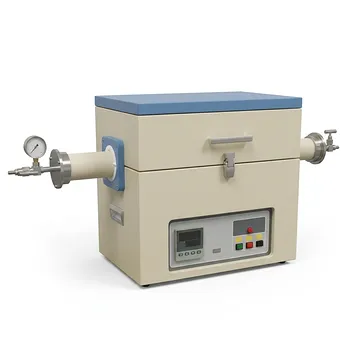
1250C Split Tube Furnace with 3 Inch Mullite Tube and Vacuum Sealing Flanges for Precision Thermal Processing
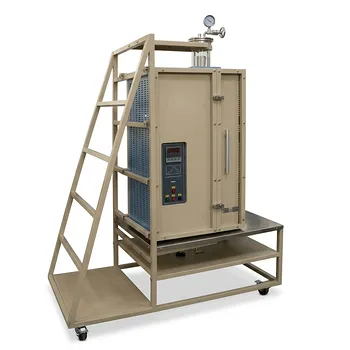
Split Vertical Tube Furnace with 1200C Quartz Tube and Stainless Steel Vacuum Flanges for Rapid Thermal Processing
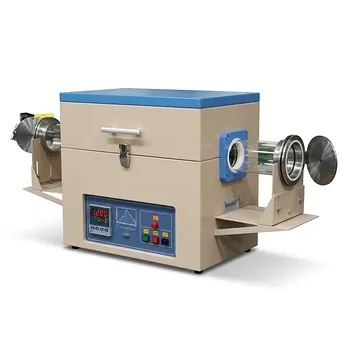
High Temperature 1200C Split Tube Furnace with Hinged Vacuum Flanges and 4 Inch Quartz Tube for Laboratory Research
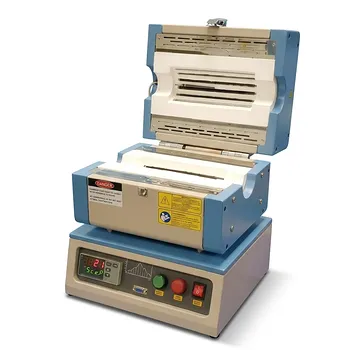
1250C Compact Split Tube Furnace with 8 Inch Heating Zone and Programmable Controller
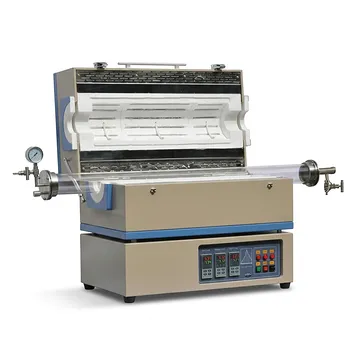
24 Inch Three Zone Split Tube Furnace with Optional Quartz Tube and Vacuum Flange System for High Temperature Material Synthesis
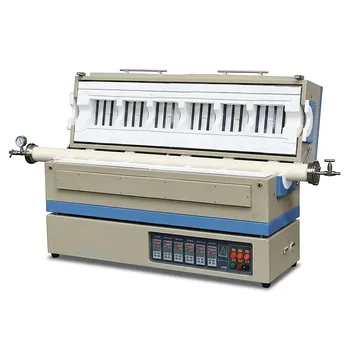
Six Zone Split Tube Furnace with Alumina Tube and Vacuum Flanges for 1500C High Temperature Thermal Processing and CVD
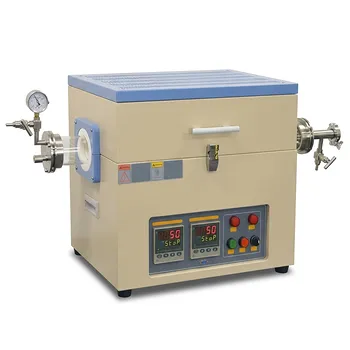
1200C Dual Zone Split Tube Furnace with Fused Quartz Tube and Vacuum Flanges Available in 60mm 80mm and 100mm Diameters
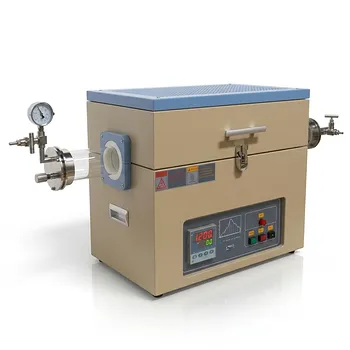
High Temperature 1200C Split Tube Furnace with Optional Quartz Tube Sizes and Vacuum Sealing Flanges for Material Science Research
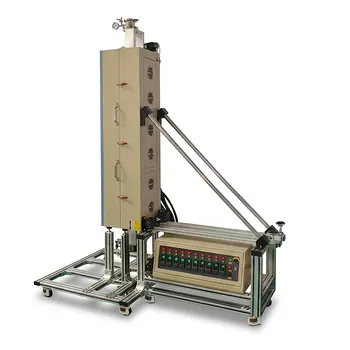
1200°C 10-Zone Split Tube Furnace with Horizontal and Vertical Mounting for Multi-Zone Thermal Gradients and Large Diameter Material Processing

High Temperature 1700C Six Zone Split Tube Furnace with Alumina Tube and Water Cooled Flanges

Compact Vertical Split Quartz Tube Furnace with Stainless Steel Vacuum Flanges for Rapid Thermal Quenching and Controlled Atmosphere Material Processing
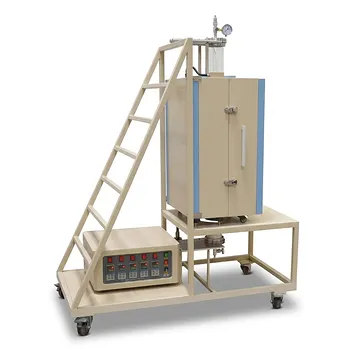
Five Zone Split Vertical Tube Furnace 1200C Max with 4 Inch Quartz Tube and Stainless Steel Vacuum Flanges
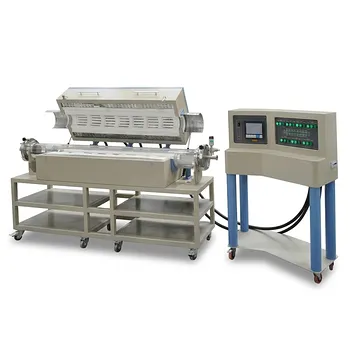
Seven Zone 1200C Split Tube Furnace with Precision Temperature Controller and Quick Flange Vacuum System
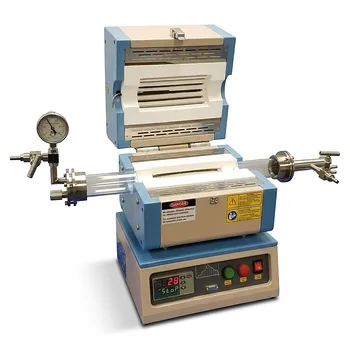
Compact Split Tube Furnace with Integrated Vacuum System and Precision Temperature Calibrator
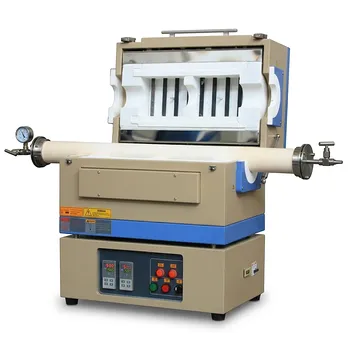
1500C Two Zone Split Tube Furnace with Vacuum Flange and 80mm Alumina Tube
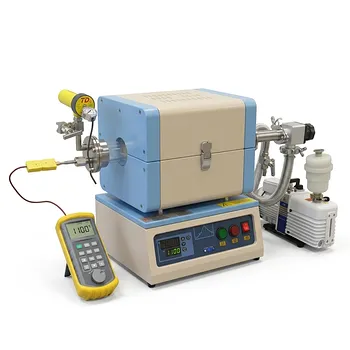
Compact Split Tube Furnace with Insertable Temperature Calibrator and Integrated Vacuum System
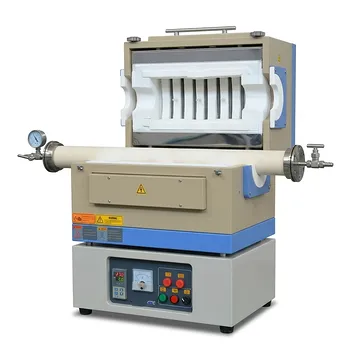
High Temperature 1600C Split Tube Furnace Vacuum Flanges Valves Optional 60mm 80mm Alumina Tube
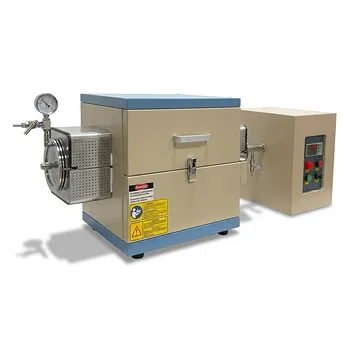
1200C High Temperature 5 Inch Split Vacuum Tube Furnace with 12 Inch Heating Zone and Separated PID Controller
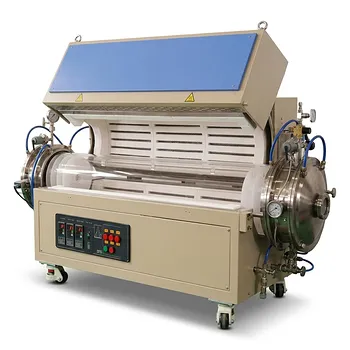
High Temperature Three Zone Split Tube Furnace 1200C Max 35.4 Inch Heating Length 8 Inch ID Tube