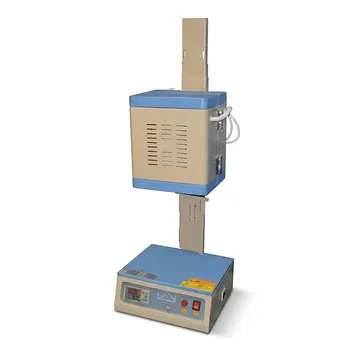
How does a split tube furnace facilitate debinding of ceramic green bodies? Master Precise Thermal & Atmosphere Control
Updated 3 months ago
The split tube furnace facilitates debinding and impurity removal by providing a synchronized environment of precise thermal programming and controlled atmosphere. This combination allows organic binders to decompose and volatilize at temperatures often reaching 950°C without compromising the chemical integrity of the ceramic. By maintaining an oxygen-free state, the furnace ensures that sensitive materials do not oxidize, while surface impurities are cleared to prepare the "brown body" for final sintering.
The core advantage of using a split tube furnace for debinding lies in its ability to manage the delicate transition from a polymer-rich green body to a pure ceramic structure. It achieves this by balancing slow gas evolution with an inert environment to prevent structural failure and unintended chemical reactions.
Controlled Thermal Decomposition
Multi-Stage Temperature Programming
The furnace employs a precise heating curve that allows organic resin binders to decompose slowly and thoroughly. By using extremely low heating rates—sometimes as low as 0.1 to 0.5 °C per minute—the system prevents the rapid buildup of internal gas pressure. This deliberate pace ensures that volatile components are discharged without causing physical defects like cracking, bubbling, or deformation.
Removal of Surface Impurities
As temperatures rise toward the 950°C threshold, the furnace effectively clears residual impurities from the powder surfaces. This stage is critical for ensuring the purity of the powder interfaces, which directly impacts the quality of the subsequent sintering process. Thermal energy breaks down complex organic chains into simpler volatile gases that can be easily evacuated from the tube.
Creation of Necessary Porosity
The removal of binders, which can constitute up to 60 vol% of a green body, creates an essential microporous structure. These pores act as physical channels that facilitate the escape of deeper decomposition gases and prepare the body for the reduction reactions and densification that occur during final sintering.
Atmospheric Integrity and Chemical Protection
Preventing Unintended Oxidation
A primary function of the tube furnace is to maintain a controlled argon or nitrogen atmosphere. This oxygen-free environment is vital when working with materials like ZrB2 (Zirconium Diboride) and SiC (Silicon Carbide), which are prone to oxidation at high temperatures. By displacing oxygen, the furnace preserves the accurate chemical composition of the ceramic matrix.
Facilitating Gas Discharge
The tube furnace configuration is ideal for managing the flow of inert gases or maintaining vacuum conditions. This constant flow or negative pressure helps "sweep" decomposition gases away from the ceramic body as they are released. Timely discharge of these gases is essential to prevent internal pressure from bloating the part or causing structural delamination.
Support for Complex Geometries
For 3D-printed ceramics or complex honeycomb structures, the atmosphere control system ensures that even thin-walled features remain intact. By preventing rapid oxidation of the ceramic matrix after shape evolution, the system preserves the integrity of the 3D structure while efficiently removing volatiles from the hydrogels or elastomers used in the printing process.
Understanding the Trade-offs
Heating Rate vs. Processing Time
The most significant trade-off in the debinding process is between structural integrity and throughput. While extremely slow heating rates (under 0.2 K/min) are necessary to prevent cracking in dense or large parts, they significantly extend the production cycle. Moving too quickly risks "bloating" the part, while moving too slowly increases energy consumption and reduces furnace availability.
Limitations of Tube Geometry
Split tube furnaces offer excellent temperature uniformity, but they are limited by the diameter of the work tube. Unlike large muffle furnaces, the volume of parts that can be processed at once is restricted. This makes them ideal for high-precision laboratory or small-batch industrial work, but less efficient for mass-producing large-scale ceramic components.
How to Apply This to Your Project
When utilizing a split tube furnace for the debinding of ceramic green bodies, your strategy should shift based on your material's sensitivity and the binder volume.
- If your primary focus is oxidation-sensitive materials (e.g., ZrB2, AlN): Prioritize a furnace with an integrated high-purity argon or vacuum system to ensure chemical composition remains unchanged at high temperatures.
- If your primary focus is complex, 3D-printed geometries: Use a multi-stage, micro-increment heating program (0.1–0.2 °C/min) to prevent rapid gas release from causing micro-cracks or structural failure.
- If your primary focus is high-volume binder removal (e.g., wax-paraffin): Ensure your furnace is equipped with a robust exhaust or "trap" system to manage the high volume of volatilized organics without contaminating the heating elements.
By masterfully controlling the rate of organic escape and the chemistry of the surrounding gas, you transform a fragile green body into a high-purity brown body ready for final densification.
Summary Table:
| Feature | Function in Debinding | Impact on Ceramic Quality |
|---|---|---|
| Micro-Increment Heating | Slows decomposition (0.1-0.5 °C/min) | Prevents cracking, bubbling, and deformation |
| Controlled Atmosphere | Uses Argon/Nitrogen or Vacuum | Prevents oxidation of sensitive materials (SiC, ZrB2) |
| Gas Flow Management | Sweeps away volatilized organics | Ensures high-purity brown body and optimal porosity |
| High Temperature Capability | Reaches up to 950°C for debinding | Clears surface impurities for better final sintering |
Elevate Your Material Research with THERMUNITS
Are you looking to optimize your ceramic debinding and sintering processes? THERMUNITS is a leading manufacturer of high-temperature laboratory equipment for material science and industrial R&D. We offer a comprehensive range of thermal processing solutions, including Split Tube, Vacuum, Atmosphere, Muffle, and Hot Press furnaces, as well as CVD/PECVD systems and Vacuum Induction Melting (VIM) units.
Our equipment provides the precise thermal programming and atmospheric integrity required to transform fragile green bodies into high-purity materials. Whether you are working with advanced 3D-printed ceramics or oxidation-sensitive alloys, we have the expertise to support your heat treatment needs.
Contact THERMUNITS Today to discuss your project and discover how our advanced thermal solutions can enhance your laboratory's efficiency!
References
- Mohammad Sarhangian, Mehri Mashhadi. The impact of Si3N4 incorporation on the mechanical characteristics of ZrB2–SiC nanocomposite sintered via pressureless method. DOI: 10.1016/j.heliyon.2024.e33269
Mentioned Products
- 1250C Split Tube Furnace with 3 Inch Mullite Tube and Vacuum Sealing Flanges for Precision Thermal Processing
- Split Vertical Tube Furnace with 1200C Quartz Tube and Stainless Steel Vacuum Flanges for Rapid Thermal Processing
- High Temperature 1200C Split Tube Furnace with Hinged Vacuum Flanges and 4 Inch Quartz Tube for Laboratory Research
- 24 Inch Three Zone Split Tube Furnace with Optional Quartz Tube and Vacuum Flange System for High Temperature Material Synthesis
- 1250C Compact Split Tube Furnace with 8 Inch Heating Zone and Programmable Controller
People Also Ask
- What is the primary engineering purpose for using a customized ventilation hood when operating a split tube furnace? RCF Safety
- What are the specific advantages and use cases for a split tube furnace? Optimize Lab Efficiency & Material Research
- How does a split tube furnace contribute to the thermal stabilization of Clignin@H-TiO2? Achieve Structural Precision
- What are the advantages of using a split tube furnace for heating a catalytic reactor? Boost Efficiency and Precision
- What is the core function of a laboratory split-tube furnace in carbon dioxide capture testing? - Key Thermal Precision

Tech Team · ThermUnits
Last updated on Jun 02, 2026
Related Products
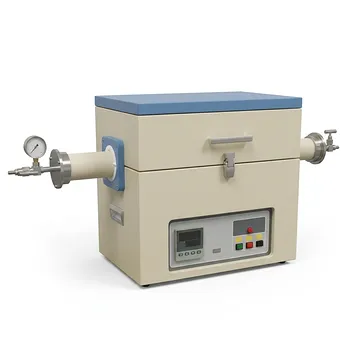
1250C Split Tube Furnace with 3 Inch Mullite Tube and Vacuum Sealing Flanges for Precision Thermal Processing
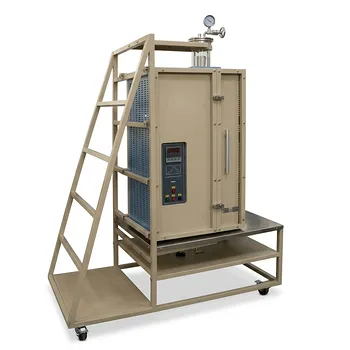
Split Vertical Tube Furnace with 1200C Quartz Tube and Stainless Steel Vacuum Flanges for Rapid Thermal Processing
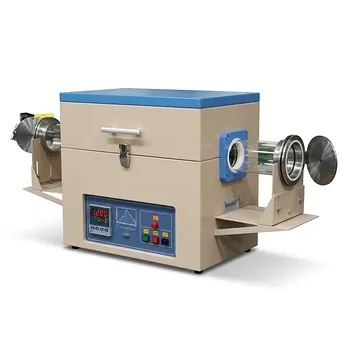
High Temperature 1200C Split Tube Furnace with Hinged Vacuum Flanges and 4 Inch Quartz Tube for Laboratory Research
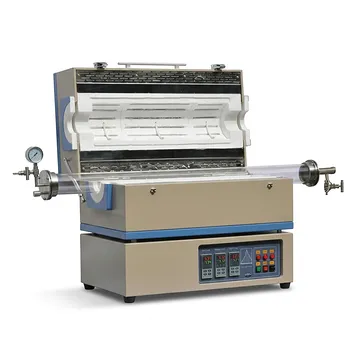
24 Inch Three Zone Split Tube Furnace with Optional Quartz Tube and Vacuum Flange System for High Temperature Material Synthesis
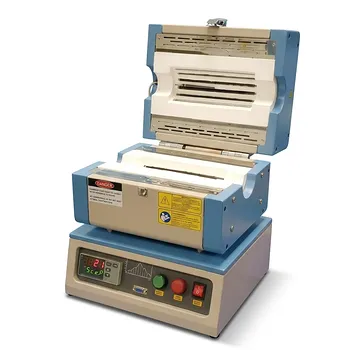
1250C Compact Split Tube Furnace with 8 Inch Heating Zone and Programmable Controller
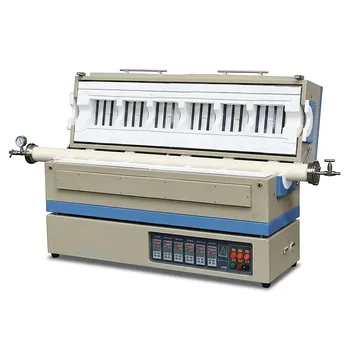
Six Zone Split Tube Furnace with Alumina Tube and Vacuum Flanges for 1500C High Temperature Thermal Processing and CVD
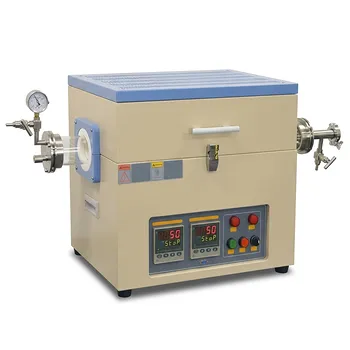
1200C Dual Zone Split Tube Furnace with Fused Quartz Tube and Vacuum Flanges Available in 60mm 80mm and 100mm Diameters
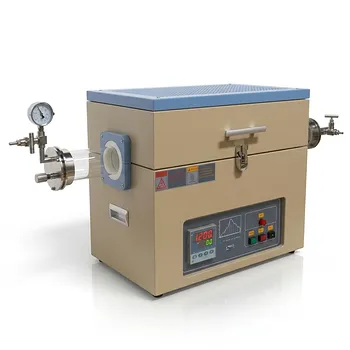
High Temperature 1200C Split Tube Furnace with Optional Quartz Tube Sizes and Vacuum Sealing Flanges for Material Science Research
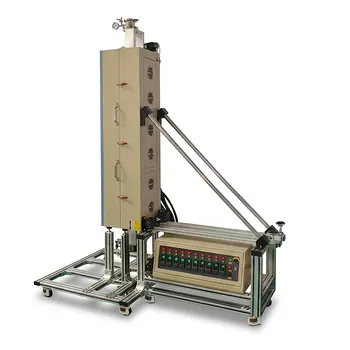
1200°C 10-Zone Split Tube Furnace with Horizontal and Vertical Mounting for Multi-Zone Thermal Gradients and Large Diameter Material Processing

High Temperature 1700C Six Zone Split Tube Furnace with Alumina Tube and Water Cooled Flanges

Compact Vertical Split Quartz Tube Furnace with Stainless Steel Vacuum Flanges for Rapid Thermal Quenching and Controlled Atmosphere Material Processing
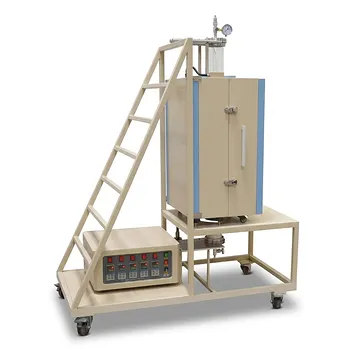
Five Zone Split Vertical Tube Furnace 1200C Max with 4 Inch Quartz Tube and Stainless Steel Vacuum Flanges
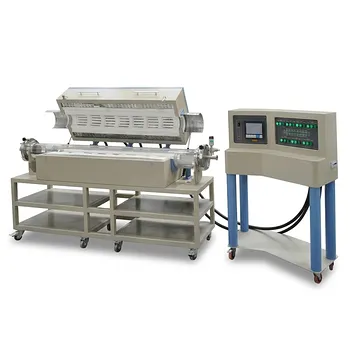
Seven Zone 1200C Split Tube Furnace with Precision Temperature Controller and Quick Flange Vacuum System
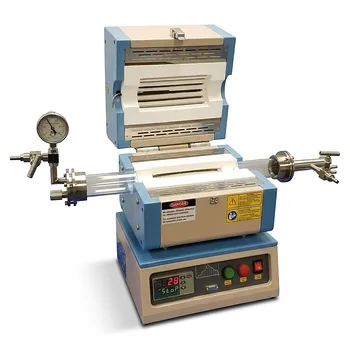
Compact Split Tube Furnace with Integrated Vacuum System and Precision Temperature Calibrator
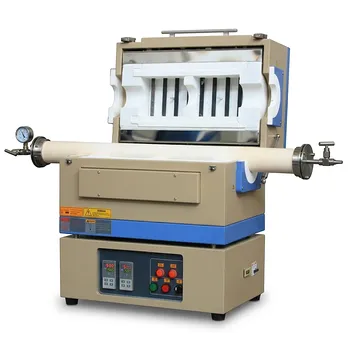
1500C Two Zone Split Tube Furnace with Vacuum Flange and 80mm Alumina Tube
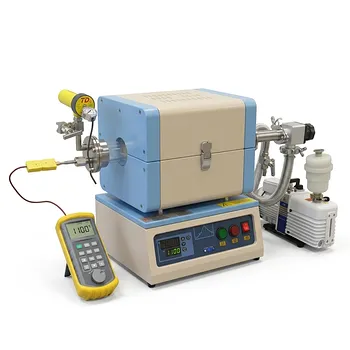
Compact Split Tube Furnace with Insertable Temperature Calibrator and Integrated Vacuum System
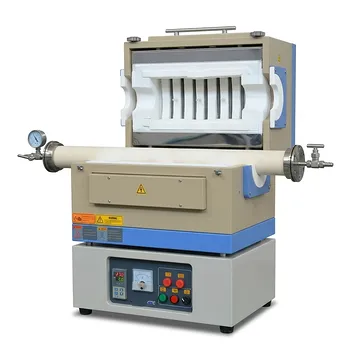
High Temperature 1600C Split Tube Furnace Vacuum Flanges Valves Optional 60mm 80mm Alumina Tube
1200C High Temperature 5 Inch Split Vacuum Tube Furnace with 12 Inch Heating Zone and Separated PID Controller
High Temperature Three Zone Split Tube Furnace 1200C Max 35.4 Inch Heating Length 8 Inch ID Tube