Why are alumina crucibles selected for iron oxide-bearing molten slag? Ensure Purity & High-Temp Stability
Updated 3 months ago
Alumina crucibles are the industry standard for molten slag experiments due to their unique combination of chemical inertness and high-temperature structural integrity. These containers are specifically selected because they resist the aggressive alkaline erosion of molten iron oxide-bearing slag at temperatures exceeding 1500°C. By minimizing the dissolution of alumina into the melt, researchers can maintain the precise ratio of the $CaO-SiO_2-MgO-Al_2O_3-Fe_xO$ system, ensuring that experimental data reflects the behavior of the slag itself rather than a contaminated mixture.
Alumina’s primary value lies in its ability to act as a chemically "silent" container that preserves the purity of complex metallurgical systems under extreme thermal stress. It serves as a critical barrier that prevents the infiltration of container components into the slag, protecting the accuracy of chemical and physical measurements.
Resilience Against Alkaline Chemical Erosion
Protection Against Basic Oxides
Molten metallurgical slags often contain strong basic oxides like Calcium Oxide (CaO) and Magnesium Oxide (MgO). At temperatures reaching 1600°C, these oxides are highly reactive and will aggressively attack most refractory materials.
High-purity alumina ($Al_2O_3$) is chosen because it exhibits exceptional chemical inertness in these environments. It resists the corrosive nature of the slag, preventing the crucible walls from breaking down and leaching into the liquid melt.
Maintaining the Five-Component System Ratio
In smelting experiments, maintaining the precise ratio of the $CaO-SiO_2-MgO-Al_2O_3-Fe_xO$ slag system is vital for valid results. If the crucible material dissolves into the slag, it artificially inflates the $Al_2O_3$ content, shifting the chemical equilibrium of the experiment.
By using high-purity alumina, researchers ensure that the chemical composition remains stable throughout the isothermal reduction process. This stability is crucial when the goal is to observe the specific oxidation behavior or the evolution of slag viscosity.
Structural Integrity at Extreme Temperatures
High-Temperature Creep Resistance
At temperatures exceeding 1500°C, many materials lose their structural shape or begin to "creep" under the weight of the molten sample. Alumina possesses excellent high-temperature creep resistance, allowing the crucible to maintain its geometry during long-duration smelting tests.
This physical stability ensures that the crucible can safely hold large samples, such as 500 grams of electrolytic iron or ductile iron. It prevents leaks or structural failures that could terminate an experiment prematurely or damage the furnace.
Exceptional Refractoriness
High-purity alumina crucibles remain stable at temperatures up to 1700°C (1973 K). This high melting point provides a safe operating margin for experiments involving ferrochrome, steel slag, and other high-melting-point alloys.
The material's thermal stability ensures it does not exhibit significant mass fluctuations when exposed to air or vacuum at these extremes. This allows for precise measurements of mass gain or loss during oxidation and corrosion rate analysis.
Ensuring Data Integrity and Purity
Prevention of Impurity Infiltration
During the pre-melting and smelting phases, even trace amounts of impurities can alter the diffusion interface reaction. High-purity alumina prevents the infiltration of foreign elements into the experimental system.
This is particularly important in deoxidized steel studies involving Ti (Titanium) or Al (Aluminum). The inertness of the crucible ensures that any observed oxidation results solely from the interaction between the gas phase and the metal, rather than a reaction with the container.
Accuracy in Viscosity and Quality Assessment
The physical properties of slag, such as viscosity, are highly sensitive to chemical changes. If the crucible dissolves into the slag, the viscosity readings will be inaccurate, leading to flawed industrial quality assessments.
Using alumina ensures that the recovered metal or slag meets industrial standards by keeping the melt uncontaminated. This is vital for evaluating the efficiency of dust-derived metal recovery and other metallurgical recycling processes.
Understanding the Trade-offs
Thermal Shock Sensitivity
While alumina is chemically stable and heat-resistant, it is a ceramic material with low thermal shock resistance. Rapid heating or cooling cycles can cause the crucible to crack or shatter.
To mitigate this, experimental protocols must include controlled heating and cooling rates. Researchers must balance the need for high-temperature stability with the fragile nature of ceramic materials.
Limitations in "Inertness"
No material is 100% insoluble; at 1600°C, a very small amount of alumina may still dissolve into the slag over extended periods. In experiments sensitive to even parts-per-million shifts in aluminum content, this minor dissolution must be factored into the final analysis.
Furthermore, while alumina resists alkaline slag, it may behave differently under highly acidic slag conditions. Choosing the right refractory requires a precise understanding of the basicity of the slag system being studied.
Making the Right Choice for Your Goal
How to Apply This to Your Project
- If your primary focus is precise chemical composition: Use high-purity (99.9%+) alumina crucibles to minimize the leaching of silica or other impurities into your $CaO-MgO$ based slag.
- If your primary focus is high-temperature oxidation rates: Ensure the alumina crucible is pre-fired to stabilize its mass, preventing container mass fluctuations from interfering with your sample's weight data.
- If your primary focus is viscosity measurements: Prioritize alumina's chemical stability to ensure the $Al_2O_3$ content of your slag remains constant, as even small increases in alumina can significantly alter fluid dynamics.
- If your primary focus is long-duration smelting (>10 hours): Monitor for potential slag penetration into the crucible pores, which can lead to structural degradation even if the material is chemically inert.
Ultimately, the selection of alumina crucibles provides the chemical "silence" and thermal strength necessary to isolate and observe the complex reactions occurring within molten iron oxide slag systems.
Summary Table:
| Feature | Benefit for Smelting Experiments | Industrial Impact |
|---|---|---|
| Chemical Inertness | Resists erosion from basic oxides (CaO, MgO) | Maintains slag system chemical ratio |
| Refractoriness | Stable at temperatures up to 1700°C | Suitable for steel slag & alloy melting |
| Creep Resistance | Maintains geometry under heavy loads | Ensures safety for large-scale samples |
| High Purity | Minimizes infiltration of impurities | Precise viscosity & oxidation measurements |
Elevate Your Material Research with THERMUNITS
Achieving precise, contamination-free results in high-temperature smelting requires equipment designed for excellence. THERMUNITS is a leading manufacturer of high-performance laboratory equipment, specializing in solutions for material science and industrial R&D.
Our comprehensive range includes Muffle, Vacuum, Atmosphere, Tube, Rotary, and Hot Press furnaces, as well as CVD/PECVD systems, Vacuum Induction Melting (VIM) furnaces, and high-quality Thermal Elements. Whether you are analyzing slag viscosity or conducting complex alloy reduction, our thermal processing solutions provide the stability and control your research demands.
Ready to optimize your heat treatment process? Contact us today to discover how THERMUNITS can support your next breakthrough.
References
- Zhenyang Wang, Song Zhang. Kinetics Analysis of Iron Oxide Reduction by Solid Carbon in HIsmelt Ironmaking Slag. DOI: 10.2355/isijinternational.isijint-2023-306
Mentioned Products
- High Temperature 1700C Benchtop Tube Furnace with 5 Inch Heating Zone High Purity Alumina Tube and Vacuum Sealing Flanges
- 600°C Vertical Crucible Furnace with SS316 Alloy Reactor and 6 Port Vacuum Flange
- 1100C High Temperature Vacuum Crucible Furnace with Quartz Chamber for Thermal Processing and Sintering
- High Temperature Vertical Crucible Furnace with 22L Heating Chamber and 1200C Maximum Temperature
- Vertical Crucible Furnace 1000C High Temperature Laboratory Equipment 4.7 Inch Diameter Chamber SS316 Anti Corrosive Enclosure
People Also Ask
- How are high-temperature tube furnaces utilized to repair etching damage? Precision Lattice Restoration Solutions
- What is the function of a high-temperature tube furnace in the synthesis of g-C3N4? Optimize Thermal Polycondensation
- What impact does the heating rate of a tube furnace have on biochar microstructure? Optimize Your Material R&D.
- What is the role of a high-temperature tube furnace in the calcination process of ZnO/In2O3 nanocomposites?
- Conditions for nZVI Synthesis in Tube Furnaces? Learn to Optimize Thermal and Atmospheric Control for High Purity.

Tech Team · ThermUnits
Last updated on Jun 02, 2026
Related Products

High Temperature 1700C Benchtop Tube Furnace with 5 Inch Heating Zone High Purity Alumina Tube and Vacuum Sealing Flanges
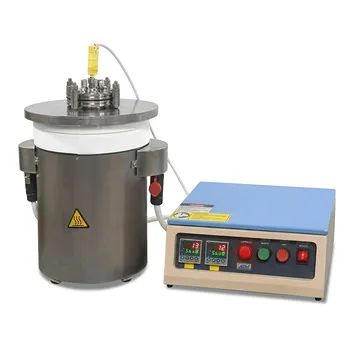
600°C Vertical Crucible Furnace with SS316 Alloy Reactor and 6 Port Vacuum Flange
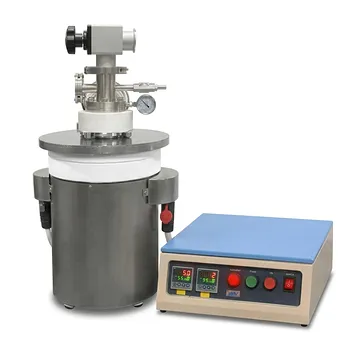
1100C High Temperature Vacuum Crucible Furnace with Quartz Chamber for Thermal Processing and Sintering
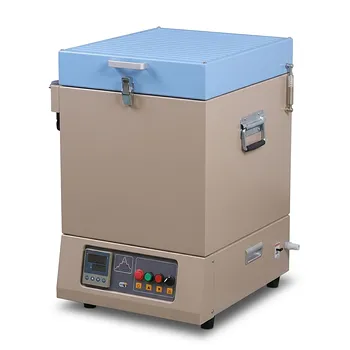
High Temperature Vertical Crucible Furnace with 22L Heating Chamber and 1200C Maximum Temperature
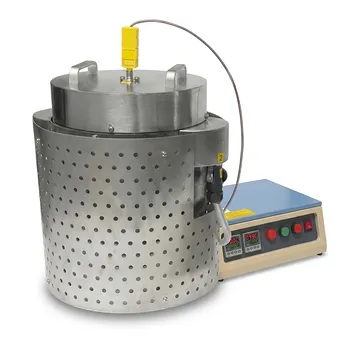
Vertical Crucible Furnace 1000C High Temperature Laboratory Equipment 4.7 Inch Diameter Chamber SS316 Anti Corrosive Enclosure
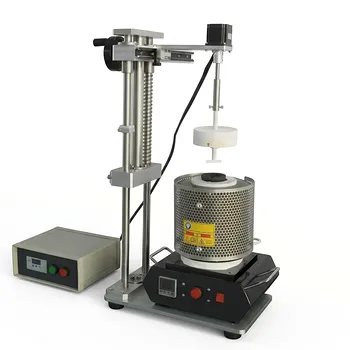
1100C Crucible Melting Furnace with Stirring Function for Glovebox and Air Sensitive Alloy Research
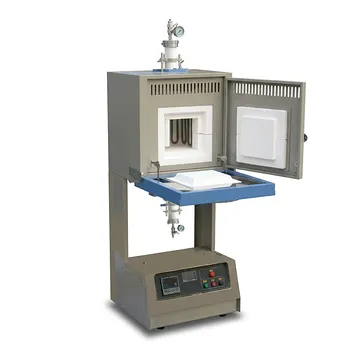
Vertical Hybrid High Temperature Furnace 1500C Alumina Tube SOFC Fuel Cell Testing Laboratory Heat Treatment Research Equipment
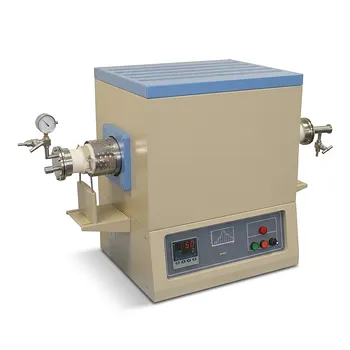
1700C High Temperature Alumina Tube Furnace with 18 Inch Heated Zone and Vacuum Sealing Flanges
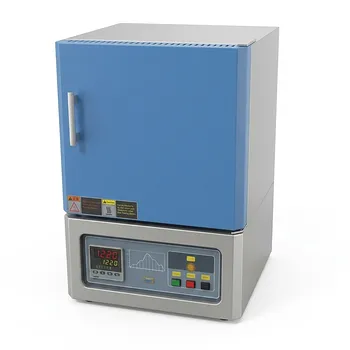
High Temperature Benchtop Muffle Furnace 1700C 10L Chamber Alumina Fiber Insulation MoSi2 Heating Elements
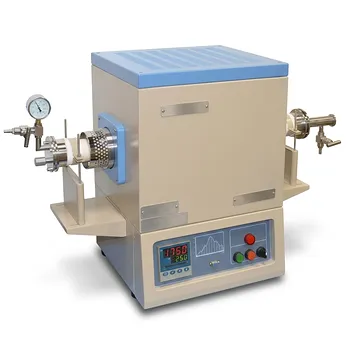
High Temperature Compact Vacuum Tube Furnace 1750C Max 60mm OD Alumina Tube

Top Loading Muffle Furnace 1200°C High Temperature Crucible Furnace with 9 Liter Chamber and Programmable PID Controller
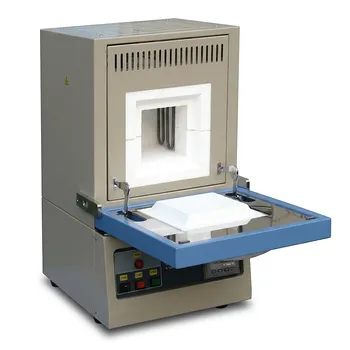
High Temperature 1800C Compact Muffle Furnace with Kanthal Super 1900 Heating Elements and 1.7L Alumina Chamber

Compact High Temperature 1600C Tube Furnace with 50mm Alumina Tube and Vacuum Flanges for Material Sintering

1800C High Temperature Compact Vacuum Tube Furnace with 60mm OD Alumina Tube and Kanthal MoSi2 Heating Elements
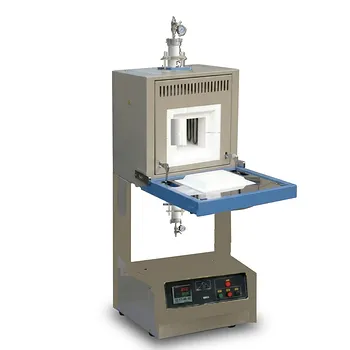
High Temperature Vertical Hybrid Furnace with Alumina Tube and SiC Heating for SOFC Coin Cell Testing and Atmosphere Processing
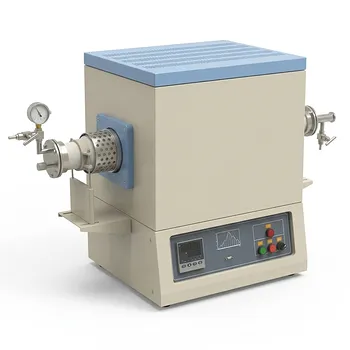
1750°C High Temperature Benchtop Vacuum Atmosphere Tube Furnace with Kanthal Super 1800 Heating Elements and 60mm Alumina Processing Tube
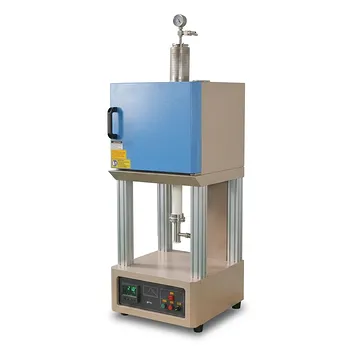
Hybrid High Temperature Tube and Box Furnace 1700C with 2 Inch Alumina Tube for Material Research
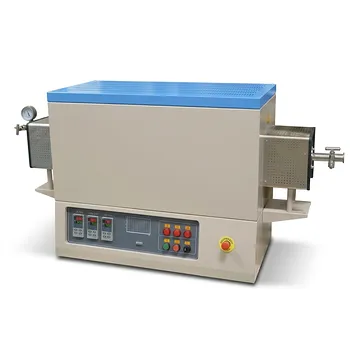
Three Zone Alumina Tube Furnace with Vacuum Flanges High Temperature 1700C Thermal Gradient CVD System
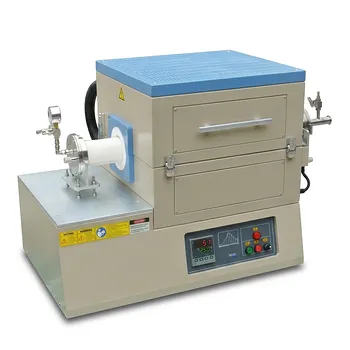
High Temperature 1700C Split Tube Furnace with Vacuum Flanges Valves and 60mm Alumina Tube