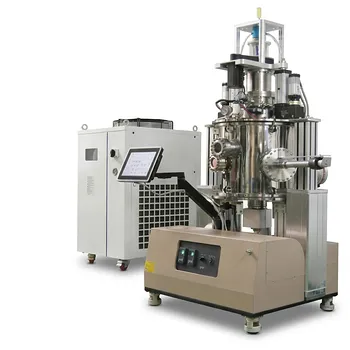
What is the fundamental working principle of a Microwave Plasma Chemical Vapor Deposition (MPCVD) machine? Expert Guide
Updated 5 months ago
The fundamental working principle of Microwave Plasma Chemical Vapor Deposition (MPCVD) is the conversion of gas-phase precursors into high-purity solid materials through microwave-excited plasma. By using high-frequency electromagnetic fields, typically at 2.45 GHz, the machine creates a stable, high-density plasma "ball" that dissociates gases like methane and hydrogen into reactive carbon radicals and atomic hydrogen. These reactive species then migrate to a substrate, where they undergo a controlled chemical reaction to form high-quality diamond films or single crystals.
MPCVD utilizes microwave energy to sustain a chemical reaction in a vacuum environment without the use of internal electrodes, ensuring a contamination-free growth process. This method allows for the synthesis of high-purity materials by precisely controlling the ionization and dissociation of precursor gases.
The Mechanics of Plasma Generation
Electromagnetic Acceleration of Electrons
The process begins when microwave energy establishes a high-intensity electric field within a vacuum chamber. This field accelerates free electrons, causing them to oscillate rapidly and gain significant kinetic energy.
Inelastic Collisions and Ionization
These energized electrons undergo inelastic collisions with neutral gas molecules, such as hydrogen ($H_2$) and methane ($CH_4$). These collisions provide the energy necessary to ionize the gas, creating a self-sustaining plasma that does not require physical electrodes.
Molecular Dissociation
Beyond ionization, the plasma environment facilitates dissociation, where stable molecules are broken into reactive fragments. In diamond synthesis, this results in the production of atomic hydrogen and hydrocarbon radicals, which are the essential building blocks for film growth.
Why MPCVD is Preferred for High-Purity Synthesis
The Electrodeless Advantage
Unlike other plasma methods that use metal electrodes, MPCVD is electrodeless. Because the plasma is generated by electromagnetic waves rather than physical contact with a power source, there is no electrode erosion, which drastically minimizes material contamination.
Superior Material Properties
The high-density reactive environment allows for the production of materials with exceptional mechanical, thermal, and electronic properties. This makes MPCVD the gold standard for creating industrial-grade polycrystalline diamonds and high-transparency single crystals.
Precise Process Control
Operators can maintain strict control over the thickness, uniformity, and composition of the resulting film. By adjusting the microwave power and gas ratios, the system can be tuned to produce specific crystal structures or epitaxial layers.
The Operational Sequence of Deposition
Chamber Preparation and Ignition
The sequence starts with chamber evacuation to remove impurities, followed by the introduction of process gases to a target pressure, usually between 1 and 27 kPa. Microwave power is then applied to ignite the plasma, and impedance matching is performed to maximize energy absorption.
Stabilization and Film Growth
Once the plasma ball is stabilized above the substrate, the deposition phase begins. Reactive species deposit onto the heated substrate layer by layer, forming a solid film through a series of surface chemical reactions.
Termination and Cool-Down
After the growth period, the system undergoes a controlled termination phase. This includes a gradual cool-down process designed to prevent thermal shock, which could otherwise cause the synthesized diamond or film to crack or delaminate.
Understanding Technical Constraints and Trade-offs
Pressure and Power Sensitivity
MPCVD operations are highly sensitive to fluctuations in pressure and microwave power. Operating outside the optimal 1 to 27 kPa range can destabilize the plasma ball, leading to non-uniform growth or the formation of unwanted non-diamond carbon phases.
Thermal Management Challenges
Generating a high-density plasma produces significant heat, necessitating robust cooling systems for the chamber and substrate holder. Failure to manage these temperatures can result in substrate damage or inconsistent crystal quality across the surface.
System Complexity and Cost
The requirement for microwave generators, waveguides, and impedance matching tuners makes MPCVD systems more complex and expensive than thermal CVD or PVD alternatives. This complexity requires highly skilled operators to ensure the plasma remains centered and stable throughout long growth cycles.
Applying MPCVD to Your Objectives
How to Apply This to Your Project
- If your primary focus is extreme material purity: Utilize MPCVD to avoid the metallic impurities common in electrode-based plasma systems.
- If your primary focus is single-crystal diamond growth: Prioritize stable microwave matching and precise pressure control within the 1-27 kPa range to maintain a consistent plasma-to-substrate interface.
- If your primary focus is high-speed polycrystalline coating: Increase the microwave power density and precursor concentration while ensuring the cooling system can handle the resulting thermal load.
By leveraging the unique electrodeless nature of microwave-induced plasma, you can achieve material purities and structural integrities that are unattainable through traditional deposition methods.
Summary Table:
| Feature | Principle/Detail | Key Advantage |
|---|---|---|
| Energy Source | 2.45 GHz Microwaves | Electrodeless ignition prevents metallic contamination |
| Plasma Type | High-density plasma "ball" | Superior dissociation of $H_2$ and $CH_4$ precursors |
| Pressure Range | 1 to 27 kPa | Optimized for stable, uniform film growth rates |
| Mechanism | Radical migration | Allows synthesis of high-purity single-crystal diamonds |
| Control | Impedance matching | Precise adjustment of thickness and crystal structure |
Elevate Your Material Science Research with THERMUNITS
At THERMUNITS, we specialize in providing cutting-edge high-temperature laboratory equipment for demanding industrial R&D. Our CVD/PECVD systems and comprehensive thermal solutions—including Muffle, Vacuum, Tube, and Hot Press furnaces—are engineered to deliver the precision and purity required for advanced material synthesis. Whether you are focused on single-crystal diamond growth, carbon coatings, or complex heat treatments, our technical experts are here to provide the optimal equipment configuration for your specific needs.
Ready to upgrade your laboratory capabilities? Contact THERMUNITS today to discuss your project requirements and receive a personalized solution tailored to your research goals.
Mentioned Products
- 915MHz MPCVD Diamond Machine Microwave Plasma Chemical Vapor Deposition System Reactor
- Cylindrical Resonator MPCVD Machine System for Microwave Plasma Chemical Vapor Deposition and Lab Diamond Growth
- Chemical Vapor Deposition CVD System Slide PECVD Tube Furnace with Liquid Gasifier PECVD Machine
- HFCVD Machine System for Nano Diamond Coating on Drawing Dies and Industrial Tools
- Radio Frequency Plasma Enhanced Chemical Vapor Deposition RF PECVD System for Laboratory and Industrial Thin Film Growth
People Also Ask
- What are the typical operating pressure ranges and vacuum requirements for MPCVD systems? Optimize Your Material Growth
- What are the technical advantages of the electrodeless plasma design in MPCVD systems? Purity & Precision in Synthesis
- What technical parameters are critical for optimizing the growth of single-crystal diamonds in MPCVD systems? Expert Guide
- How does the versatility of gas compatibility in MPCVD systems compare to filament-based CVD methods? Purity & Doping.
- What is the significance of substrate capacity and scalability in modern MPCVD reactor designs? Scale Your Production

Tech Team · ThermUnits
Last updated on Apr 14, 2026
Related Products
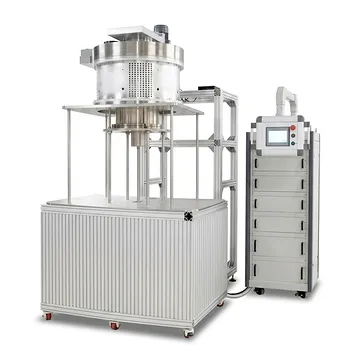
915MHz MPCVD Diamond Machine Microwave Plasma Chemical Vapor Deposition System Reactor
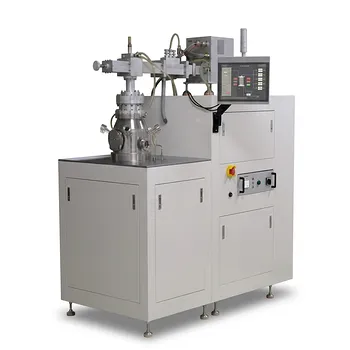
Cylindrical Resonator MPCVD Machine System for Microwave Plasma Chemical Vapor Deposition and Lab Diamond Growth
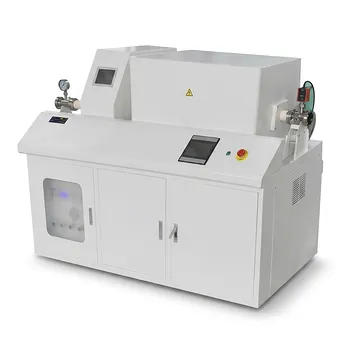
Chemical Vapor Deposition CVD System Slide PECVD Tube Furnace with Liquid Gasifier PECVD Machine
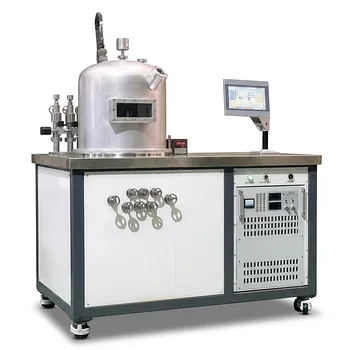
HFCVD Machine System for Nano Diamond Coating on Drawing Dies and Industrial Tools
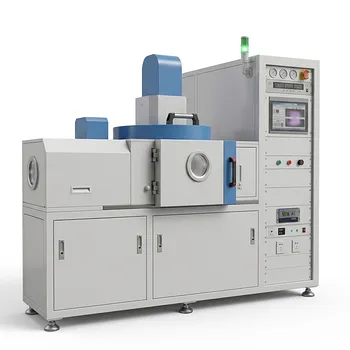
Radio Frequency Plasma Enhanced Chemical Vapor Deposition RF PECVD System for Laboratory and Industrial Thin Film Growth
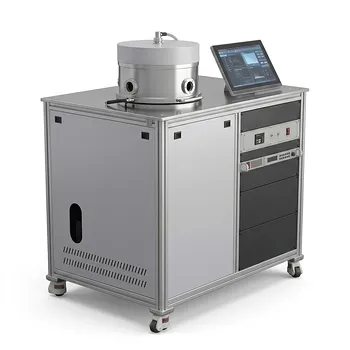
Inclined Rotary Plasma Enhanced Chemical Vapor Deposition PECVD System for Thin Film Deposition and Nanomaterial Synthesis
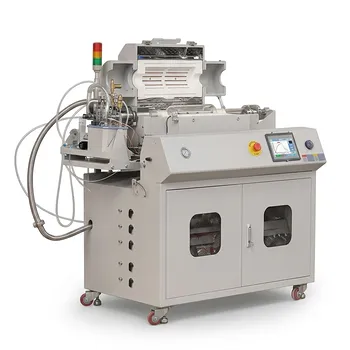
Versatile Chemical Vapor Deposition Tube Furnace System for Advanced Material Research and Industrial Coating Processes
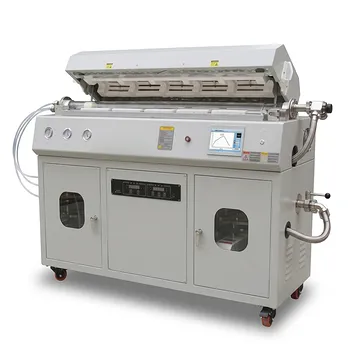
Multi Heating Zones CVD Tube Furnace System for Precision Chemical Vapor Deposition and Advanced Material Synthesis
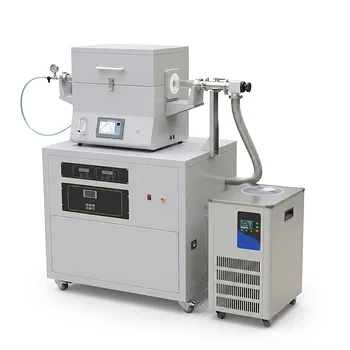
Split Chamber CVD Tube Furnace with Vacuum Station Chemical Vapor Deposition System Machine
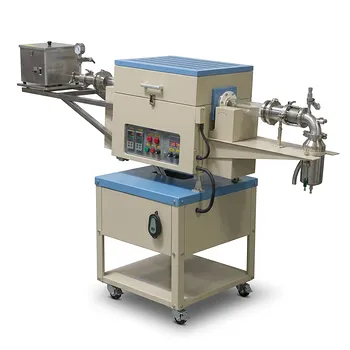
Two Zone Rotary CVD Furnace with Automatic Feeding and Receiving System for Powder Processing
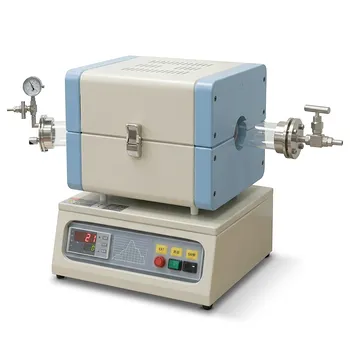
1200C Tube Furnace with Internal Magnetic Sample Sliding for Direct Vaporizing Deposition and Rapid Thermal Processing