Why does the crystallization of quasi-2D perovskite films require two-step annealing? Master Precision Heat Treatment
Updated 3 months ago
The two-step annealing process is essential for quasi-2D perovskites because it decouples the volatile removal of solvents from the structural growth of crystals. By using a precision annealing furnace to first initiate nucleation at 100°C and then drive phase transformation at 150–170°C, researchers can dictate the final orientation of the crystal lattice, ensuring high charge transport efficiency.
Core Takeaway: A staged thermal treatment prevents the uncontrolled crystallization that occurs during rapid heating, allowing for the precise alignment of octahedral layers and the minimization of grain boundary defects that otherwise limit solar cell performance.
The Role of the Primary Anneal: Solvent and Nucleation
Managing Solvent Evaporation
The initial stage of annealing, typically held at 100°C, serves as a controlled "drying" phase. This temperature is sufficient to remove residual solvents from the deposition process without triggering premature, chaotic crystal growth.
Initiating Uniform Nucleation
By maintaining a stable thermal field in a precision furnace, this step ensures that nucleation sites form uniformly across the substrate. A precise 100°C environment, often sustained for up to 60 minutes, stabilizes the precursor film and sets the stage for high-quality crystallinity.
The Role of the Secondary Anneal: Growth and Transformation
Promoting Grain Growth
The second stage ramps the temperature to a higher range of 150°C to 170°C. At this energy level, the small nuclei formed in the first step begin to coalesce into larger, more robust perovskite grains.
Facilitating Phase Transformation
This higher thermal energy is critical for the Dion-Jacobson (DJ) phase transformation. It provides the necessary kinetic energy for the atoms to rearrange into their most stable and high-performing crystalline structure, which is often unattainable at lower temperatures.
Optimizing Charge Transport Through Orientation
Aligning Octahedral Layers
The primary goal of this two-step precision process is to induce a specific crystal orientation. The staged heating encourages the octahedral layers to align parallel to the substrate, a configuration that is vital for vertical heterojunctions.
Reducing Grain Boundary Defects
The precise thermal field of a tube furnace reduces the density of grain boundary defects. By extending the carrier lifetime and improving the short-circuit current, this controlled growth results in a higher fill factor for the resulting solar cells.
Understanding the Trade-offs and Pitfalls
Thermal Degradation Risks
Exceeding the recommended temperature range during the secondary anneal can lead to thermal decomposition of the organic components in the quasi-2D structure. This degradation destroys the very film quality the process is intended to create.
Consequences of One-Step Heating
Attempting a single-step high-temperature anneal often leads to solvent trapping. When solvents are forced out too quickly during rapid crystal growth, they can leave behind pinholes and morphological defects that act as recombination centers for charge carriers.
How to Apply This to Your Project
Tailoring the Thermal Profile
To achieve the best results with Dion-Jacobson or similar quasi-2D perovskites, the annealing profile must be matched to the specific chemistry of your precursor.
- If your primary focus is maximizing carrier lifetime: Prioritize the duration of the 100°C primary anneal to ensure a low-defect, highly uniform nucleation layer.
- If your primary focus is vertical charge transport: Ensure the secondary anneal reaches the full 150–170°C range to force the alignment of octahedral layers parallel to the substrate.
- If your primary focus is film morphology: Utilize a precision tube furnace to maintain a stable thermal field, preventing local temperature fluctuations that cause uneven grain growth.
Precision in thermal staging is the definitive factor in transforming a disordered precursor into a high-performance, oriented quasi-2D perovskite film.
Summary Table:
| Annealing Stage | Temperature | Primary Function | Impact on Film Quality |
|---|---|---|---|
| Primary Anneal | 100°C | Solvent removal & uniform nucleation | Prevents pinholes; stabilizes precursor film. |
| Secondary Anneal | 150–170°C | Grain growth & phase transformation | Aligns octahedral layers; maximizes charge transport. |
| Precision Control | Constant | Stable thermal field management | Reduces grain boundary defects & carrier recombination. |
Elevate Your Material Research with THERMUNITS Precision Furnaces
Achieving high-performance quasi-2D perovskite films requires more than just heat—it requires absolute thermal precision. THERMUNITS is a leading manufacturer of high-temperature laboratory equipment specifically designed for the rigorous demands of material science and industrial R&D.
We provide a comprehensive range of thermal processing solutions, including Tube, Vacuum, Atmosphere, and Muffle furnaces, as well as advanced CVD/PECVD systems and Vacuum Induction Melting (VIM) furnaces. Our equipment ensures the stable thermal fields and exact staging needed to prevent solvent trapping and optimize crystal orientation in your solar cell projects. From Rotary and Hot Press furnaces to specialized Dental Furnaces and Thermal Elements, we deliver the reliability your research deserves.
Ready to optimize your annealing process? Contact our experts today to discover how our heat treatment solutions can enhance your lab's efficiency and film performance!
References
- Sapthami Hegde, Surojit Chattopadhyay. Gradient Dion‐Jacobson Phase Stable Quasi‐2D Perovskite@Graphene Hybrid for High Responsivity Photodetectors. DOI: 10.1002/adom.202400232
Mentioned Products
- High Temperature 1000C Vacuum Furnace with 8 Inch ID Chamber for Material Sintering and Research Annealing
- High Temperature Cold Wall Vacuum Furnace for Advanced Material Sintering and Annealing 1600C Heating Area 200x200x300mm
- 1200C High Throughput Multi Channel Tube Furnace with 50mm Quartz Tubes for Annealing and Material Phase Diagram Research
- Rapid Thermal Processing Atmosphere Controlled Bottom Loading Furnace 1100C with 50C Per Second Heating Rate for Wafer Annealing
- Large Bench Top 1700C High Temperature Muffle Furnace with 19L Chamber for Advanced Material Sintering and Annealing
People Also Ask
- How does the temperature control precision of a high-temperature sintering furnace affect Na1+xLa1-xZr2O6-δ ceramics?
- How does a high-temperature sintering furnace environment enhance NdFeB magnets? Achieve 98%+ density with precision.
- What role does a high-temperature annealing furnace play in forming ordered Pt3(CoNi) intermetallic catalysts?
- What is the function of high-vacuum furnaces in (Mo2/3V1/3)n+1AlCn MAX phase synthesis? Ensure Purity & Diffusion.
- How does a vacuum or atmosphere sintering furnace contribute to the congener-welding process of carbon nitride membranes?

Tech Team · ThermUnits
Last updated on Jun 03, 2026
Related Products
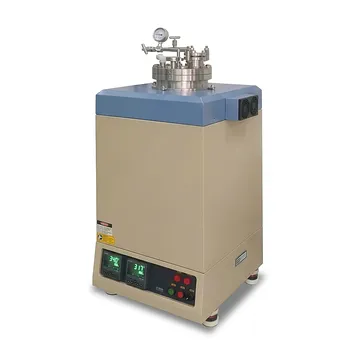
High Temperature 1000C Vacuum Furnace with 8 Inch ID Chamber for Material Sintering and Research Annealing
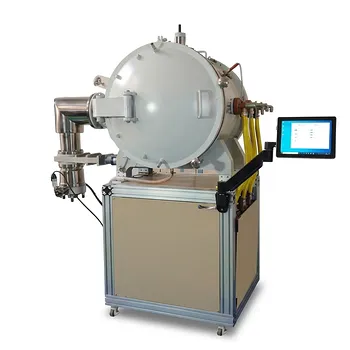
High Temperature Cold Wall Vacuum Furnace for Advanced Material Sintering and Annealing 1600C Heating Area 200x200x300mm
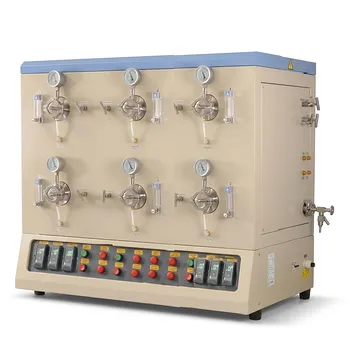
1200C High Throughput Multi Channel Tube Furnace with 50mm Quartz Tubes for Annealing and Material Phase Diagram Research
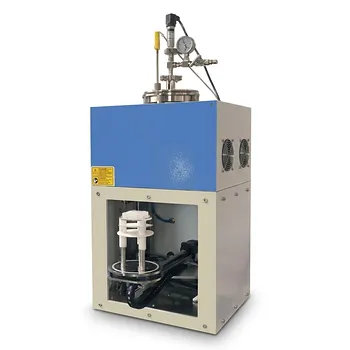
Rapid Thermal Processing Atmosphere Controlled Bottom Loading Furnace 1100C with 50C Per Second Heating Rate for Wafer Annealing
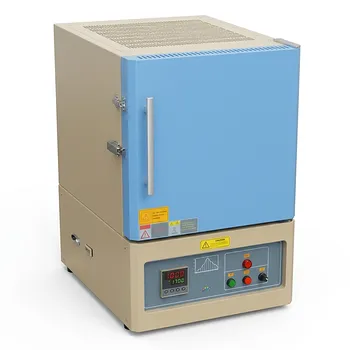
Large Bench Top 1700C High Temperature Muffle Furnace with 19L Chamber for Advanced Material Sintering and Annealing
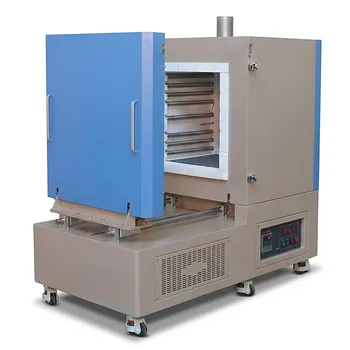
1200C Five Side Heating Muffle Furnace with Sliding Door 125L Volume High Temperature Heat Treatment System for Large Scale Sintering and Annealing
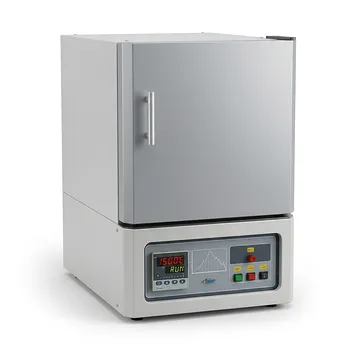
High Temperature 1500C Benchtop Muffle Furnace 3.6L Alumina Fiber Chamber Programmable Controller Sintering Annealing Carbonization Thermal Processing System
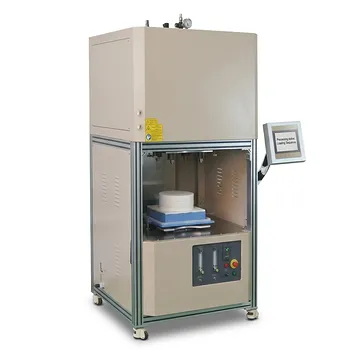
High Temperature Vertical Atmosphere Controlled Furnace with Automatic Bottom Loading and 1700°C Capacity for Advanced Material Research
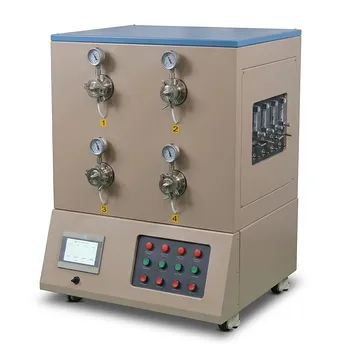
High Throughput 1200C Four Channel Tube Furnace with 3 Inch Quartz Tubes for Multi Zone Annealing and Material Research
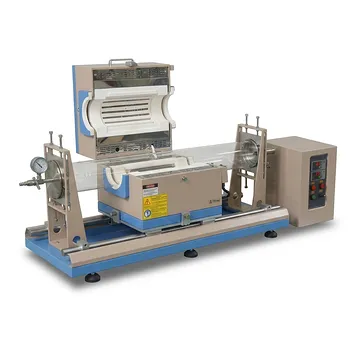
1200C High Temperature 5 Inch Sliding Tube Furnace for Rapid Thermal Processing RTP and Wafer Annealing
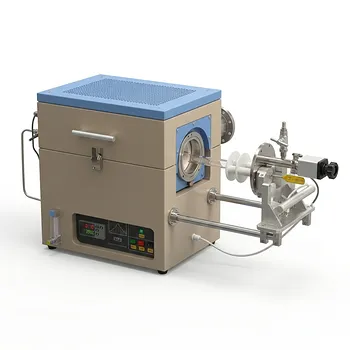
Compact Atmosphere Controlled Rapid Thermal Processing RTP Furnace with 4 Inch ID Quartz Tube 1100C
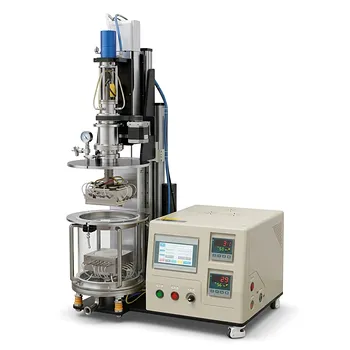
High Temperature 800C Rapid Thermal Processing Furnace with Rotating Sample Holder for Close Spaced Sublimation and Thin Film Solar Cell Research
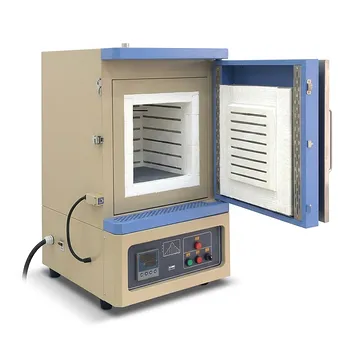
Five Side Heating Muffle Furnace High Purity Alumina Fiber 27L Chamber 1200C High Temperature Thermal Processing System for Sintering Annealing and Materials Research
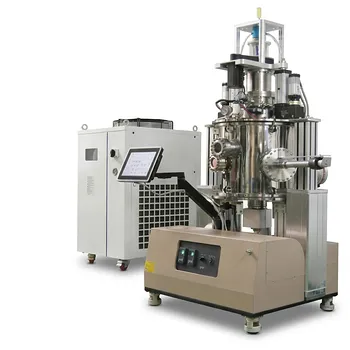
950C Rapid Thermal Processing Furnace for 12 Inch Wafer CSS Coating with Rotating Substrate Holder
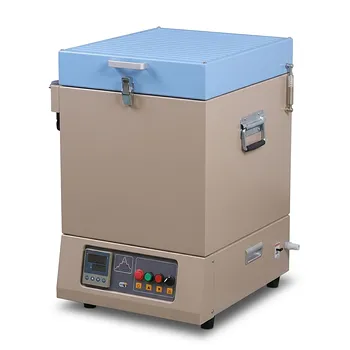
High Temperature Vertical Crucible Furnace with 22L Heating Chamber and 1200C Maximum Temperature

High Temperature 1700C Vertical Tube Furnace for Powder Spherification and Material Sintering
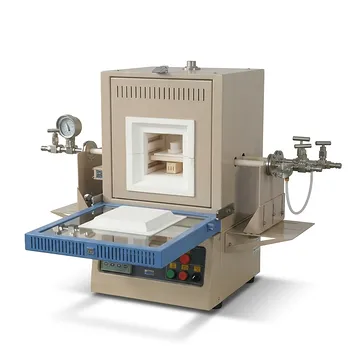
1700C Compact Hybrid Furnace with Dual Layer Box Sintering and Controlled Atmosphere Alumina Tubes
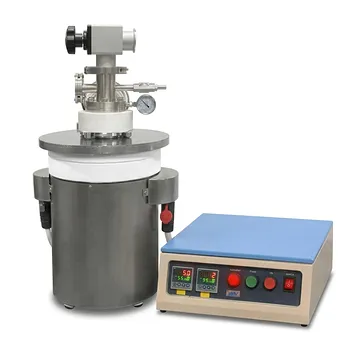
1100C High Temperature Vacuum Crucible Furnace with Quartz Chamber for Thermal Processing and Sintering
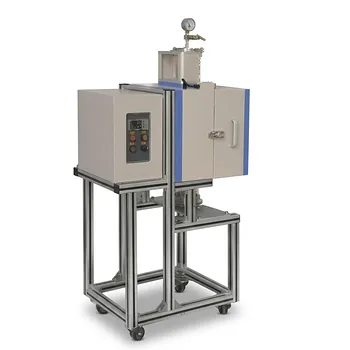
1200°C 5 Inch Vertical Quartz Tube Furnace with Stainless Steel Vacuum Flanges