Why is a constant flow of nitrogen gas necessary within a tube furnace? Protect Carbon Quality & Pore Development
Updated 3 months ago
A constant flow of nitrogen is the critical safeguard for high-temperature carbon processing. This flow creates an inert, oxygen-free environment that prevents carbon precursors from undergoing oxidative combustion or "ashing" at temperatures ranging from 500°C to 1000°C. By maintaining a steady stream, the system also continuously flushes out volatile by-products that would otherwise obstruct pore development or degrade the material's chemical integrity.
Nitrogen flow transforms a furnace from a simple heater into a controlled chemical reactor. It ensures that organic precursors undergo pyrolysis—the thermal decomposition of materials in the absence of oxygen—rather than simply burning away.
Preventing Oxidative Destruction
The Role of Oxygen Displacement
Nitrogen gas is used to purge oxygen from the reaction chamber, creating a strictly anaerobic environment. Without this displacement, biomass precursors would undergo combustion at high temperatures, leaving behind only mineral ash rather than carbon.
Preserving Carbon Content and Integrity
Maintaining an inert atmosphere ensures the organic matter converts into a stable, carbon-rich biochar structure. This protection preserves the structural integrity of the resulting activated carbon, ensuring the final product retains its desired mass and density.
Optimizing Pore Development and Purity
Removal of Volatile By-products
The carbonization and activation processes generate various gaseous by-products, including carbon monoxide (CO), hydrogen (H2), and water vapor. A continuous flow of nitrogen flushes these volatiles out of the furnace, preventing them from undergoing secondary deposition back into the newly formed pores.
Maintenance of Reaction Equilibrium
By actively removing reaction gases, the nitrogen stream helps maintain a stable chemical equilibrium inside the furnace tube. This leads to a more consistent and well-developed pore structure, which is essential for the adsorption capabilities of activated carbon.
Protection of Laboratory Equipment
High-purity nitrogen also protects the furnace itself by removing corrosive gases generated during the reaction. Furthermore, in specialized applications, it prevents the oxidation of conductive layers, such as FTO glass, which may be processed alongside the carbon materials.
Understanding the Trade-offs
Balancing Flow Rates and Resource Use
While a steady flow rate (often cited around 500 mL/min) ensures a clean environment, excessively high flow rates can lead to unnecessary gas consumption and increased operational costs. In some cases, a flow that is too aggressive may even lead to uneven cooling of the sample, potentially affecting the uniformity of the carbonization.
The Risks of Insufficient Flow
If the flow rate is too low, the furnace may fail to maintain positive pressure, allowing trace oxygen to leak into the system. This leads to "clogged" pores and reduced surface area, as volatile by-products are not effectively cleared from the reaction zone.
Maximizing Efficiency in Your Carbon Synthesis
To achieve the best results in thermal processing, the nitrogen flow must be tailored to the specific goals of your material synthesis.
- If your primary focus is maximizing surface area: Maintain a steady, high-purity flow to aggressively remove volatile by-products and prevent any secondary deposition in the pores.
- If your primary focus is cost-efficiency: Calibrate the system to the minimum flow rate required to maintain positive pressure, ensuring oxygen cannot enter while minimizing gas waste.
- If your primary focus is structural doping: Use nitrogen flow to facilitate the thermal rearrangement of atoms, which can enhance the electrical conductivity and chemical activity of the carbon structure.
Mastering the nitrogen atmosphere is a fundamental requirement for engineering the microscopic architecture and chemical performance of high-quality activated carbon.
Summary Table:
| Function | Primary Benefit | Impact on Material Quality |
|---|---|---|
| Oxygen Displacement | Prevents oxidative combustion | Preserves carbon mass and structural integrity |
| Volatile Removal | Flushes CO, H2, and water vapor | Prevents pore clogging and secondary deposition |
| Pressure Control | Maintains positive pressure | Blocks oxygen ingress and protects furnace parts |
| Reaction Control | Facilitates pyrolysis | Ensures consistent pore structure and adsorption |
| Equipment Safety | Removes corrosive gases | Extends the lifespan of the furnace heating elements |
Optimize Your Thermal Processing with THERMUNITS
As a global leader in high-temperature laboratory equipment, THERMUNITS specializes in delivering high-precision Tube, Atmosphere, and Vacuum furnaces tailored for material science and industrial R&D. Our systems are engineered to provide the stable, inert environments required for superior activated carbon synthesis, CVD/PECVD applications, and advanced heat treatments.
Ready to elevate your lab's performance? Contact our experts today to find the perfect furnace solution for your specific carbonization and activation needs. We offer a comprehensive range of thermal solutions including Muffle, Rotary, and Hot Press furnaces designed to empower your research and production.
References
- Yuttapong Dumpan, Kittinan Maliwan. Synthesis and Characterization of Activated Carbon from Giant Sour Tamarind Fruit Shell by KOH Activation. DOI: 10.37934/armne.20.1.5158
Mentioned Products
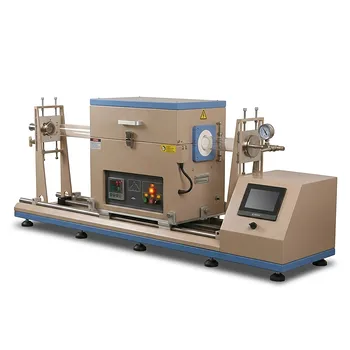
- 1200C Sliding Tube Furnace for Rapid Thermal Processing and CVD Graphene Growth with 100mm OD Capacity
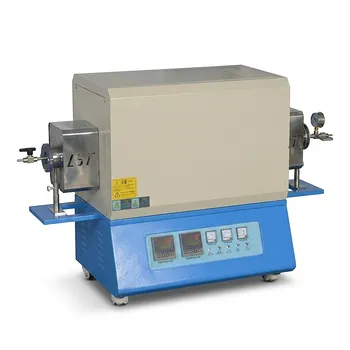
- High Temperature Dual Zone Vacuum Tube Furnace for Material Research and CVD Processing
- 5 Inch Three Zone Rotary Tube Furnace with Integrated Gas Delivery System and 1200C Capability for Advanced Material CVD Processing
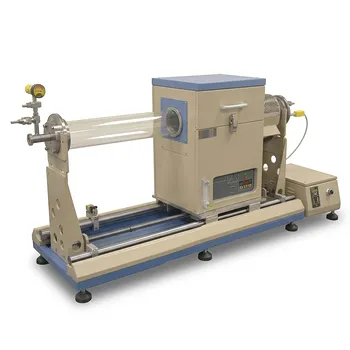
- Rapid Thermal Processing Sliding Tube Furnace with 4 Inch OD Quartz Tube and 900C IR Heating
- High Temperature Tube Furnace 1500C with Sliding Flanges and 50mm OD for Rapid Thermal Processing Fast Heating and Cooling
People Also Ask
- Why is a Tube Furnace typically utilized for CVD? Achieve Precision in Graphene and 2D Material Synthesis
- CVD Tube Furnace Advantages for Pd-P Catalyst Durability: Precision Control for 40,000+ Cycles
- What is the function of CVD furnaces in graphene prep? Enhancing Photodetector Charge Transport
- Why use CVD and a tube furnace for Pd3P0.95/NC catalyst phosphidation? Ensure high phase purity and performance.
- How does a tube furnace system equipped with gas mass flow controllers facilitate the MCW process? Optimize Graphene Yield

Tech Team · ThermUnits
Last updated on Jun 03, 2026
Related Products
1200C Sliding Tube Furnace for Rapid Thermal Processing and CVD Graphene Growth with 100mm OD Capacity
High Temperature Dual Zone Vacuum Tube Furnace for Material Research and CVD Processing

5 Inch Three Zone Rotary Tube Furnace with Integrated Gas Delivery System and 1200C Capability for Advanced Material CVD Processing
Rapid Thermal Processing Sliding Tube Furnace with 4 Inch OD Quartz Tube and 900C IR Heating

High Temperature Tube Furnace 1500C with Sliding Flanges and 50mm OD for Rapid Thermal Processing Fast Heating and Cooling

Compact Vertical Split Quartz Tube Furnace with Stainless Steel Vacuum Flanges for Rapid Thermal Quenching and Controlled Atmosphere Material Processing
Compact Atmosphere Controlled Rapid Thermal Processing RTP Furnace with 4 Inch ID Quartz Tube 1100C
1200C Max Three Zone Tube Furnace 6 Inch OD Max with Tube and Flange
5 Inch Rotary Tube Furnace with Automatic Feeding and Receiving System 1200C Three Zone CVD Powder Processing
Electric Rotary Kiln Small Rotary Furnace for Activated Carbon Regeneration
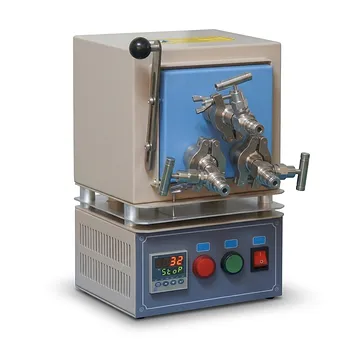
Triple Tube Compact Hybrid Muffle Furnace 1000C High Vacuum Thermal Processing System
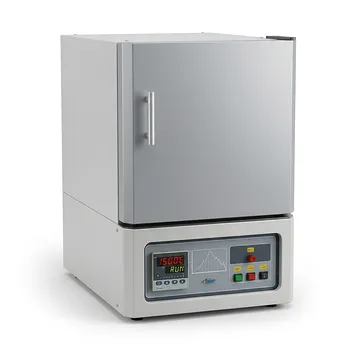
High Temperature 1500C Benchtop Muffle Furnace 3.6L Alumina Fiber Chamber Programmable Controller Sintering Annealing Carbonization Thermal Processing System
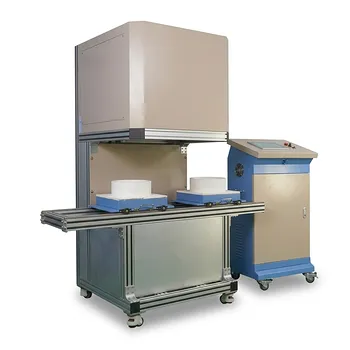
High Temperature Bottom Loading Vertical Furnace 1700C Dual Stage Sample Processing System 18L Large Capacity Thermal Treatment Equipment

1100C Tube Furnace with Vacuum Flange and Programmable Temperature Controller for Material Science and Industrial Heat Treatment

High Temperature 1700C Benchtop Tube Furnace with 5 Inch Heating Zone High Purity Alumina Tube and Vacuum Sealing Flanges

High Temperature 1700C Tube Furnace with High Vacuum Turbomolecular Pump System and Multi Channel Mass Flow Controller Gas Mixer

Compact High Temperature 1600C Tube Furnace with 50mm Alumina Tube and Vacuum Flanges for Material Sintering
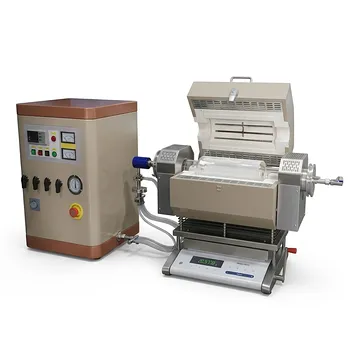
Mini Rotary Tubular Furnaces for Precision Powder Heat Treatment and Thermogravimetric Analysis

High Temperature Automated 5 Inch Tube Furnace for Autonomous Material Research and Advanced Laboratory R&D