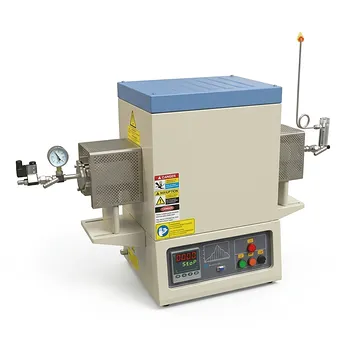
How does a tube furnace system equipped with gas mass flow controllers facilitate the MCW process? Optimize Graphene Yield
Updated 3 months ago
The integration of tube furnaces and mass flow controllers (MFCs) is the mechanical backbone of the Molecular Cleavage and Welding (MCW) process. This system enables the catalytic cracking of methane at 1000 °C, producing the carbon fragments necessary to weld graphene shells together. By providing a stable thermal field and precise gas delivery, the system facilitates the simultaneous peeling of graphene layers from metal surfaces, allowing for the large-scale production of multi-layer graphene nanosheets.
Core Takeaway: A tube furnace system facilitates the MCW process by creating a highly controlled microenvironment where thermal energy and gas concentration are perfectly balanced. This synergy allows for the precise decomposition of methane into carbon building blocks that physically "weld" and "cleave" graphene structures at the molecular level.
The Mechanism of Molecular Cleavage and Welding
Catalytic Cracking at High Temperatures
The tube furnace provides the extreme, sustained heat—typically 1000 °C—required to break the chemical bonds of methane ($CH_4$). This decomposition process, known as catalytic cracking, occurs on the surface of a metal catalyst within the sealed reaction chamber.
The Role of Carbon Fragments
Once methane is cracked, it releases active carbon fragments. These fragments act as a molecular "glue" that welds individual graphene shells together into a continuous structure.
Peeling and Yield Enhancement
In addition to welding, the reaction environment facilitates the physical separation, or "cleavage," of graphene layers from the underlying metal substrate. This dual action of welding and peeling is what allows the system to significantly increase the yield of multi-layer graphene nanosheets.
Precision Control through Mass Flow Controllers (MFCs)
Regulating Reaction Gas Concentration
High-precision MFCs introduce methane into the furnace at strictly defined rates. This accuracy is vital because the concentration of carbon fragments directly dictates whether the graphene will weld properly or form undesirable soot.
Maintaining Atmospheric Stability
The MFCs ensure a consistent "controlled airflow," which prevents fluctuations in pressure and gas velocity. As seen in similar thermal processes, even minor variations in flow can disrupt thermal convection and alter the concentration of volatiles above the sample.
Removal of Secondary Byproducts
A stable gas flow, regulated by the MFC, helps sweep away byproduct gases and unreacted precursors. This prevents secondary reactions that could contaminate the graphene or block the active sites on the metal catalyst.
Understanding the Trade-offs and Pitfalls
Thermal Gradients and Nucleation
If the tube furnace does not maintain a uniform temperature field, the methane cracking will occur inconsistently across the metal surface. This leads to non-uniform graphene thickness and "hot spots" where the material may over-process.
Flow Rate Sensitivity
Excessive gas flow rates can lead to a "quenching" effect, where the gas carries away too much heat and lowers the local temperature at the catalyst surface. Conversely, flow rates that are too low may allow volatiles to accumulate, leading to pore blockages or structural defects in the nanosheets.
Catalyst Deactivation
The MCW process relies heavily on the metal surface; if the gas ratio or temperature is not perfectly maintained, the catalyst can become "poisoned" or covered in amorphous carbon. This halts the welding and peeling process, resulting in poor material quality and lower throughput.
Optimizing the MCW System for Your Goals
How to Apply This to Your Project
Achieving high-quality graphene nanosheets requires balancing the chemical potential of the gas with the thermal energy of the furnace.
- If your primary focus is maximizing graphene yield: Prioritize a tube furnace with a large "constant temperature zone" to ensure the MCW process occurs uniformly across a large surface area.
- If your primary focus is structural precision: Invest in high-precision digital MFCs with an error margin of $\pm$2 cc/min to maintain exact carbon-to-inert gas ratios.
- If your primary focus is process reproducibility: Implement automated soaking times and programmed temperature curves to ensure the "peeling" phase is timed perfectly with the "welding" phase.
Mastering the synergy between precise thermal delivery and gas stoichiometry is the only way to transition the MCW process from a laboratory experiment to a scalable industrial solution.
Summary Table:
| Component | Role in MCW Process | Key Impact on Quality |
|---|---|---|
| Tube Furnace | Sustains 1000°C thermal field | Enables catalytic cracking of methane |
| MFC (Gas Control) | Regulates methane concentration | Controls carbon fragment "glue" density |
| Stable Airflow | Maintains atmospheric stability | Prevents soot and structural defects |
| Gas Exhaust | Removal of secondary byproducts | Protects catalyst from poisoning |
Elevate Your Material R&D with THERMUNITS Precision
Scaling the Molecular Cleavage and Welding (MCW) process requires absolute control over thermal and chemical environments. As a leading manufacturer of high-temperature laboratory equipment, THERMUNITS provides the advanced solutions needed for material science and industrial R&D.
Whether you are working on graphene synthesis, thin-film deposition, or complex heat treatments, our comprehensive range of equipment is designed for peak precision:
- Advanced Furnaces: Tube, Muffle, Vacuum, Atmosphere, Rotary, and Hot Press Furnaces.
- Specialized Systems: CVD/PECVD systems, Dental Furnaces, Electric Rotary Kilns, and Vacuum Induction Melting (VIM) furnaces.
- Essential Components: High-quality Thermal Elements and precision gas delivery integration.
Ready to optimize your yield and structural precision?
Contact our engineering team today to discover how our thermal processing solutions can accelerate your research and production goals.
References
- Qiangu Yan, Zhiyong Cai. Tuning thermal and graphitization behaviors of lignin <i>via</i> complexation with transition metal ions for the synthesis of multilayer graphene-based materials. DOI: 10.1039/d3ra05881f
Mentioned Products
- 1200C Sliding Tube Furnace for Rapid Thermal Processing and CVD Graphene Growth with 100mm OD Capacity
- Dual Tube 100mm 80mm CVD Sliding Furnace with 4 Channel Gas Mixing and Vacuum System
- Ultra High Temperature 2300C Induction Heated Graphite Tube Furnace with Infrared Control
- High Temperature 1700C Vertical Tube Furnace for Powder Spherification and Material Sintering
- Automated 1200 C Tube Furnace for AI Material Research with 6 Inch OD and Sliding Flange
People Also Ask
- Why is a Tube Furnace typically utilized for CVD? Achieve Precision in Graphene and 2D Material Synthesis
- CVD Tube Furnace Advantages for Pd-P Catalyst Durability: Precision Control for 40,000+ Cycles
- What is the function of CVD furnaces in graphene prep? Enhancing Photodetector Charge Transport
- Why use CVD and a tube furnace for Pd3P0.95/NC catalyst phosphidation? Ensure high phase purity and performance.
- How does a Chemical Vapor Deposition (CVD) tube furnace facilitate synchronized nitridation? Precision Nano-Engineering.

Tech Team · ThermUnits
Last updated on Jun 02, 2026
Related Products
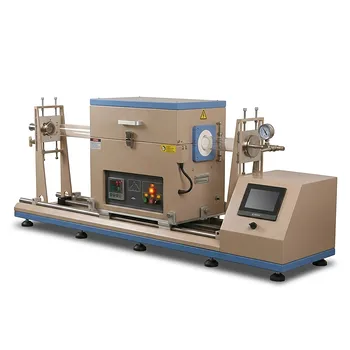
1200C Sliding Tube Furnace for Rapid Thermal Processing and CVD Graphene Growth with 100mm OD Capacity
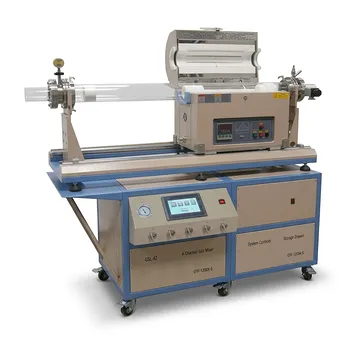
Dual Tube 100mm 80mm CVD Sliding Furnace with 4 Channel Gas Mixing and Vacuum System
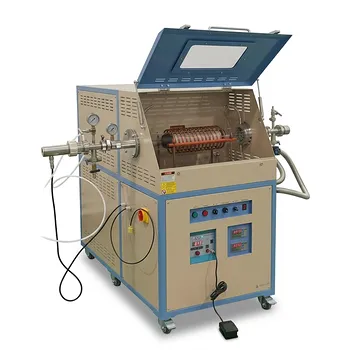
Ultra High Temperature 2300C Induction Heated Graphite Tube Furnace with Infrared Control

High Temperature 1700C Vertical Tube Furnace for Powder Spherification and Material Sintering
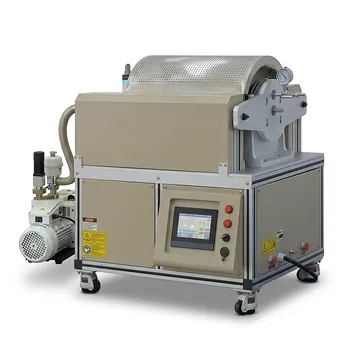
Automated 1200 C Tube Furnace for AI Material Research with 6 Inch OD and Sliding Flange
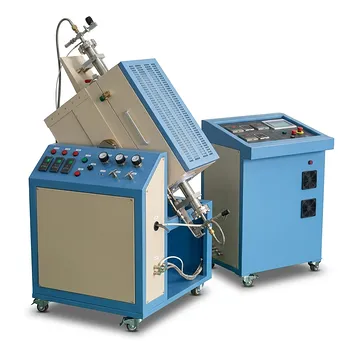
1100C High Pressure Rocking Tube Furnace with 2 Inch Super Alloy Processing Tube for Material Synthesis
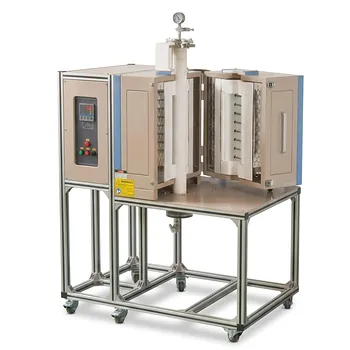
High Temperature 1700C Vertical Split Tube Furnace for Material Quenching and Single Crystal Growth
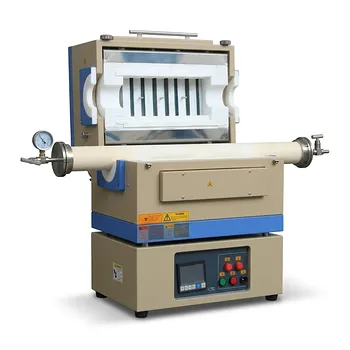
1500C Eight Zone Split Tube Furnace for Thermal Gradient Processing and Advanced Material Research

Compact High Temperature 1600C Tube Furnace with 50mm Alumina Tube and Vacuum Flanges for Material Sintering
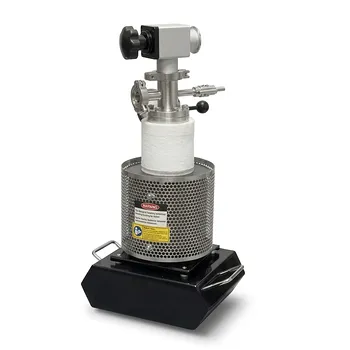
High Temperature 1100C Compact Top Loading Vertical Vacuum Tube Furnace for High Vacuum Noble Metal Melting and Material Research

High Temperature Tube Furnace 1500C with Sliding Flanges and 50mm OD for Rapid Thermal Processing Fast Heating and Cooling
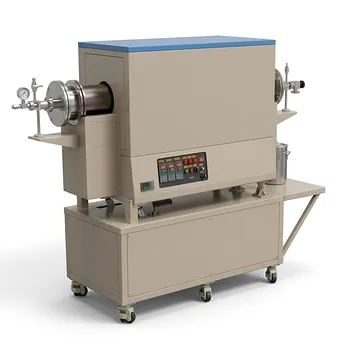
900°C Max Rotary Tube Furnace with 8 Inch 310S Alloy Tube and Optional Multi Zone Heating for Industrial Material Calcination

High Temperature Automated 5 Inch Tube Furnace for Autonomous Material Research and Advanced Laboratory R&D
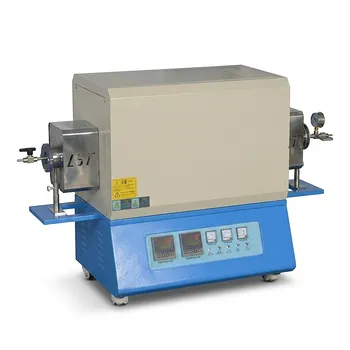
High Temperature Dual Zone Vacuum Tube Furnace for Material Research and CVD Processing
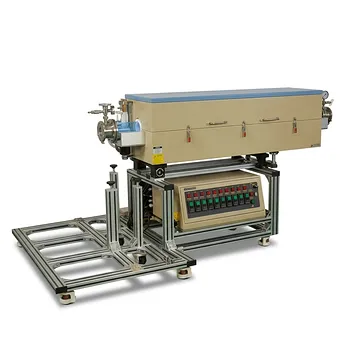
Ten Zone Multi Orientation Laboratory Tube Furnace for 1200C High Temperature Gradient Thermal Processing
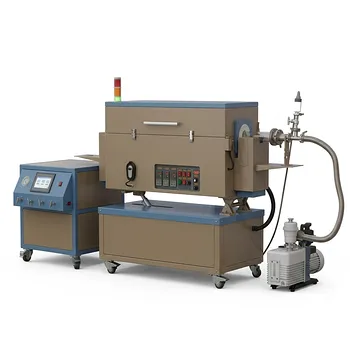
5 Inch Three Zone Rotary Tube Furnace with Integrated Gas Delivery System and 1200C Capability for Advanced Material CVD Processing

Vertical 1700C Vacuum and Atmosphere Tube Furnace with 80mm Alumina Tube
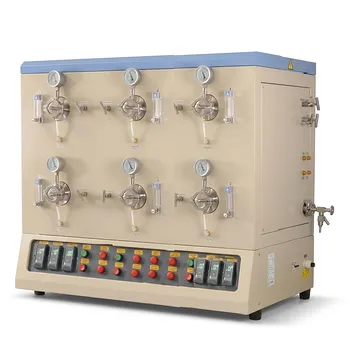
1200C High Throughput Multi Channel Tube Furnace with 50mm Quartz Tubes for Annealing and Material Phase Diagram Research
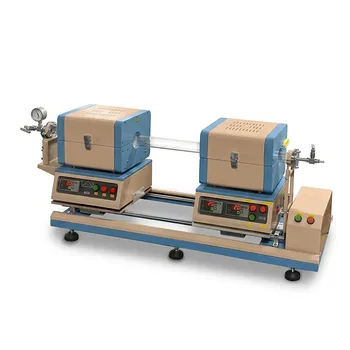
High Temperature 1200C Automatic Sliding Dual Zone Tube Furnace for 2D Transition Metal Dichalcogenides Growth and Material Sublimation Research