Why is a high-precision Mass Flow Controller (MFC) necessary during the CVD growth of superlattices? Precision Control
Updated 3 months ago
In the fabrication of nanostructured superlattices, a high-precision Mass Flow Controller (MFC) is the critical engine for atomic-scale layer control. It is necessary to strictly regulate the flow and injection timing of gas-phase precursors, enabling the alternating introduction of materials at specific durations. This precision directly determines the width and pitch of the superlattice layers at the nanometer scale, which is essential for achieving ultra-high resolution in area-selective deposition patterns.
A high-precision MFC transforms Chemical Vapor Deposition (CVD) from a bulk coating process into a surgical fabrication tool. By mastering the timing and volume of precursor delivery, it allows for the creation of distinct, nanometer-thick layers with the stoichiometric consistency required for advanced materials.
The Role of Temporal Control in Superlattice Engineering
Managing Injection Timing for Layer Definition
The creation of a superlattice—a structure of alternating layers of different materials—depends entirely on the synchronization of gas pulses. A high-precision MFC allows researchers to alternate between precursors, such as diethyl sulfide (DES) and dimethyl selenide (DMSe), with micro-second accuracy.
Controlling Width and Pitch at the Nanoscale
The "width" (thickness of a single layer) and "pitch" (the repeat distance of the layers) are functions of how much precursor is delivered over a specific time. Precise flow regulation ensures that each layer is identical to the last, preventing structural drift that would ruin the electronic properties of the superlattice.
Enabling Ultra-High Resolution Patterns
Because these layers are often used in area-selective deposition, the MFC must maintain a constant flux. This stability ensures that the material grows only where intended, maintaining the sharp boundaries necessary for nanometer-scale device architecture.
Regulating Gas Dynamics and Stoichiometry
Precision in Composition Ratios
Superlattices often require specific "doping" or mixing of gases, such as 1% methane in hydrogen or parts-per-million (PPM) levels of secondary gases. The MFC ensures these ratios remain perfectly consistent, which is vital for the material to transition correctly between different states, such as moving from a semiconductor to a metallic phase.
Influence of Carrier Gas Stability
Carrier gases like Argon or Nitrogen act as the transport medium for the precursors. If the MFC allows the carrier gas flow to fluctuate, the vapor concentration distribution within the chamber becomes erratic, leading to uneven film thickness across the substrate.
Managing Boundary Layers and Residence Time
The velocity of the gas flow, controlled by the MFC, dictates the residence time of the reactants on the substrate surface. Precise control prevents "precursor starvation" (where too little gas reaches the surface) or "encapsulation" (where excess gas creates unwanted carbon or amorphous layers).
Understanding the Trade-offs and Pitfalls
The Risk of Flow Fluctuations
Even minor fluctuations in an MFC can cause "graded" interfaces rather than "sharp" ones. In superlattices, a blurred interface between two materials can lead to the total failure of the component's intended electrical or optical function.
Dealing with Precursor Latency
While the MFC controls the flow at the source, the "plumbing" of the CVD system can introduce lag. Relying on a low-precision MFC can exacerbate this issue, making it impossible to achieve the stoichiometric consistency required for complex films like perovskites or MoS2.
Balancing Throughput and Quality
Increasing flow rates can speed up production, but it often increases the internal pressure fluctuations of the reaction chamber. High-precision MFCs allow for the highest possible flow rate that still maintains a laminar, stable environment for high-quality single-layer growth.
Making the Right Choice for Your Goal
When integrating a high-precision MFC into your CVD system, your specific material targets should dictate your flow parameters:
- If your primary focus is Nanometer-Scale Resolution: Prioritize an MFC with the fastest possible response time to ensure sharp "on/off" switching between different precursor gases.
- If your primary focus is Material Purity and Doping: Select an MFC with high sensitivity at low flow rates (PPM levels) to ensure exact chemical concentrations throughout the growth cycle.
- If your primary focus is Large-Area Uniformity: Focus on the stability of the carrier gas flow to maintain a consistent concentration gradient across the entire surface of the substrate.
Ultimately, the precision of your Mass Flow Controller sets the absolute limit on the quality and complexity of the superlattices you can successfully grow.
Summary Table:
| Feature | Impact on Growth | Primary Benefit |
|---|---|---|
| Temporal Control | Accurate Pulse Timing | Sharp Layer Interfaces |
| Flow Regulation | Width & Pitch Stability | Nanoscale Precision |
| Gas Dynamics | Stoichiometric Balance | Material Phase Integrity |
| Carrier Stability | Concentration Gradient | Large-Area Uniformity |
Elevate Your Research with THERMUNITS Advanced Thermal Solutions
Precision is the foundation of breakthrough material science. As a leading manufacturer of high-temperature laboratory equipment, THERMUNITS provides the specialized tools needed for demanding R&D applications. From high-precision CVD/PECVD systems and Tube furnaces to advanced Vacuum Induction Melting (VIM) and Hot Press furnaces, our equipment is engineered to deliver the stoichiometric consistency and temporal control your superlattice growth requires.
Whether you are working on nanometer-scale resolution or large-area material uniformity, our comprehensive range of thermal processing solutions—including Muffle, Atmosphere, and Dental furnaces—ensures your lab stays at the cutting edge.
Ready to achieve atomic-scale precision in your heat treatment processes? Contact THERMUNITS Today to discuss your specific laboratory requirements and discover our full range of thermal elements and electric rotary kilns.
References
- Jeongwon Park, Kibum Kang. Area-selective atomic layer deposition on 2D monolayer lateral superlattices. DOI: 10.1038/s41467-024-46293-w
Mentioned Products
- Cylindrical Resonator MPCVD Machine System for Microwave Plasma Chemical Vapor Deposition and Lab Diamond Growth
- 1200C Sliding Tube Furnace for Rapid Thermal Processing and CVD Graphene Growth with 100mm OD Capacity
- Radio Frequency Plasma Enhanced Chemical Vapor Deposition RF PECVD System for Laboratory and Industrial Thin Film Growth
- Dual Tube 100mm 80mm CVD Sliding Furnace with 4 Channel Gas Mixing and Vacuum System
- High Temperature 1200C Automatic Sliding Dual Zone Tube Furnace for 2D Transition Metal Dichalcogenides Growth and Material Sublimation Research
People Also Ask
- How does the high concentration of atomic hydrogen in MPCVD benefit diamond growth? The Key to Gem-Grade Quality.
- What are the typical operating pressure ranges and vacuum requirements for MPCVD systems? Optimize Your Material Growth
- What technical parameters are critical for optimizing the growth of single-crystal diamonds in MPCVD systems? Expert Guide
- What are the technical advantages of the electrodeless plasma design in MPCVD systems? Purity & Precision in Synthesis
- How does the versatility of gas compatibility in MPCVD systems compare to filament-based CVD methods? Purity & Doping.

Tech Team · ThermUnits
Last updated on Jun 03, 2026
Related Products
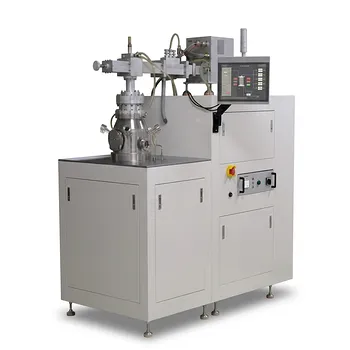
Cylindrical Resonator MPCVD Machine System for Microwave Plasma Chemical Vapor Deposition and Lab Diamond Growth
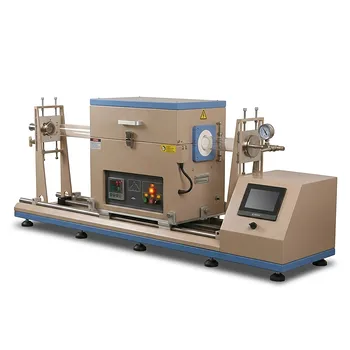
1200C Sliding Tube Furnace for Rapid Thermal Processing and CVD Graphene Growth with 100mm OD Capacity
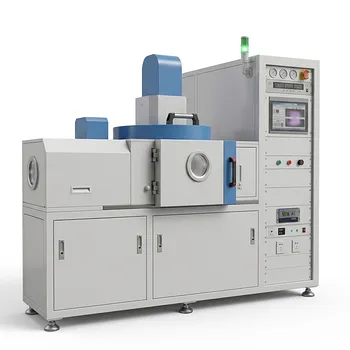
Radio Frequency Plasma Enhanced Chemical Vapor Deposition RF PECVD System for Laboratory and Industrial Thin Film Growth
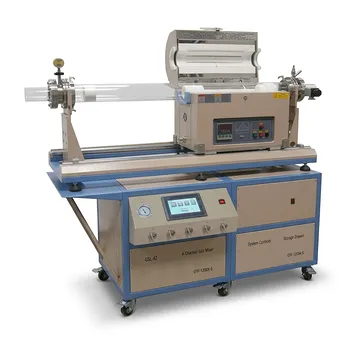
Dual Tube 100mm 80mm CVD Sliding Furnace with 4 Channel Gas Mixing and Vacuum System
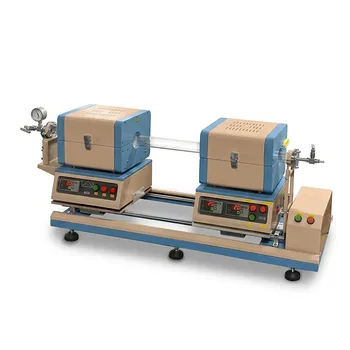
High Temperature 1200C Automatic Sliding Dual Zone Tube Furnace for 2D Transition Metal Dichalcogenides Growth and Material Sublimation Research
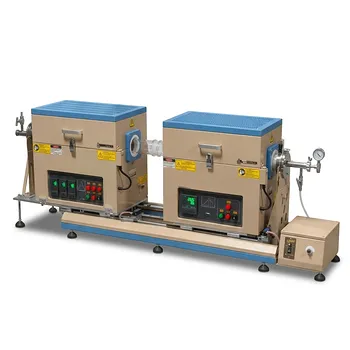
1200C Dual Temperature Zone Slidable Tube Furnace for 2D Material Growth and TCVD Synthesis
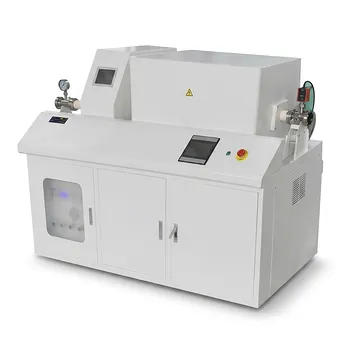
Chemical Vapor Deposition CVD System Slide PECVD Tube Furnace with Liquid Gasifier PECVD Machine
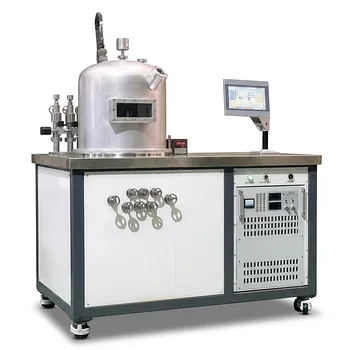
HFCVD Machine System for Nano Diamond Coating on Drawing Dies and Industrial Tools
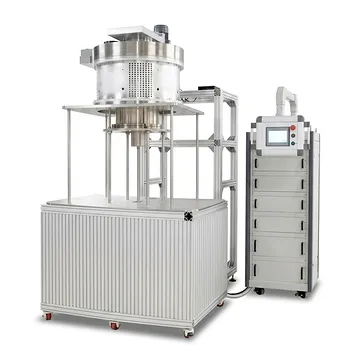
915MHz MPCVD Diamond Machine Microwave Plasma Chemical Vapor Deposition System Reactor