Why is a high-precision furnace critical for g-C3N4? Master Thermal Etching and Exfoliation for Superior Nanosheets
Updated 3 months ago
Precision temperature control is the primary driver of successful interlaminar exfoliation in graphitic carbon nitride (g-C3N4). In the secondary annealing process, a high-precision furnace maintains a strict thermal environment—typically between 500°C and 510°C—to induce "thermal etching." This targeted energy application disrupts the weak van der Waals forces holding bulk layers together, transforming them into high-surface-area nanosheets with significantly more active sites for chemical reactions.
Core Takeaway: A high-precision furnace is essential because it provides the exact energy threshold required to peel apart the atomic layers of g-C3N4 without collapsing its crystalline structure. This precision directly determines the material's final surface area, crystallinity, and photocatalytic efficiency.
The Mechanics of Thermal Etching
Disrupting Interlaminar Forces
The primary goal of secondary annealing is to overcome the van der Waals forces that bond bulk g-C3N4 layers. A high-precision furnace ensures the material stays within a narrow temperature window where these bonds weaken enough to allow for interlaminar exfoliation.
Maximizing Specific Surface Area
As the layers separate, the material transitions from a dense bulk form into 2D nanosheets. This transition drastically increases the specific surface area, exposing a much higher density of surface active sites necessary for high-performance applications like photocatalysis.
Controlled Thermal Decomposition
Secondary annealing is essentially a form of controlled "etching" where a portion of the material is intentionally sacrificed to create porosity. Without precise control, this process can easily turn into total decomposition, destroying the sample rather than thinning it.
The Role of Temperature Stability and Heating Rates
Maintaining the 500–510°C Threshold
The success of the exfoliation depends on staying within a very specific temperature range, often 500–510°C. If the temperature fluctuates even slightly below this, the etching will be incomplete; if it rises above, the carbon nitride framework may begin to undergo excessive mass loss or structural damage.
The Importance of the Heating Curve
Controlling the heating rate (often set at 2°C/min to 10°C/min) is vital for maintaining a uniform thermal field. A stable ramp-up prevents thermal gradients within the crucible, ensuring that the entire batch of nanosheets reaches the same level of crystallinity and exfoliation.
Ensuring Uniform Thermal Fields
A high-quality furnace provides a uniform thermal field distribution within its chamber. This consistency is critical for producing a homogenous product where every nanosheet has the same thickness, light absorption capabilities, and charge carrier separation performance.
Understanding the Trade-offs and Pitfalls
Structural Collapse vs. Incomplete Exfoliation
The most significant trade-off in secondary annealing is between porosity and stability. While higher temperatures or longer holding times increase the surface area through more aggressive etching, they risk causing structural collapse or a decrease in overall yield.
Crystalline Quality vs. Surface Defects
Rapid heating can lead to a high concentration of structural defects or a loss of crystallinity. While some defects can assist in certain reactions, excessive irregularities often hinder the transport of photogenerated charge carriers, reducing the material's efficiency as a semiconductor.
Yield vs. Performance
There is an inherent trade-off between the mass of the final product and its performance. Secondary thermal treatment is a "top-down" approach that inherently reduces the total weight of the starting material to achieve superior nanosheet morphology.
How to Optimize Your Synthesis Goal
Applying Precision to Your Project
To achieve the best results, your furnace parameters should be aligned with the specific requirements of your final application.
- If your primary focus is maximum surface area: Utilize a secondary annealing temperature at the higher end of the 500–510°C range with an extended holding time to maximize thermal etching.
- If your primary focus is high crystallinity: Prioritize a slower heating rate (e.g., 2°C/min) and a more moderate temperature to ensure a regular, defect-free atomic framework.
- If your primary focus is consistent semiconductor performance: Ensure the use of a furnace with a verified uniform thermal field to prevent variations in light absorption across different batches.
Ultimately, the high-precision furnace acts as a surgical tool that carves bulk carbon nitride into high-performance 2D nanosheets by balancing energetic disruption with structural preservation.
Summary Table:
| Feature | Impact on g-C3N4 Nanosheets | Necessity of High Precision |
|---|---|---|
| Temperature Window (500-510°C) | Drives thermal etching and exfoliation | Prevents total decomposition or structural collapse |
| Heating Rate (2-10°C/min) | Influences crystallinity and thermal field | Ensures consistent nanosheet thickness and fewer defects |
| Thermal Field Uniformity | Determines batch homogeneity | Guarantees uniform light absorption and charge separation |
| Van der Waals Disruption | Transforms bulk layers into 2D sheets | Provides the exact energy threshold for interlaminar separation |
Elevate Your Material Research with THERMUNITS
Precision is the difference between a failed sample and a high-performance 2D material. THERMUNITS is a leading manufacturer of high-temperature laboratory equipment specifically engineered for material science and industrial R&D.
Our comprehensive range of thermal processing solutions—including Muffle, Vacuum, Tube, and CVD/PECVD systems—delivers the ultra-stable heating curves and uniform thermal fields required for delicate processes like g-C3N4 thermal etching.
Ready to optimize your synthesis yield and crystallinity?
Contact our technical experts today to find the perfect furnace for your lab!
References
- Shuhan Li, Jiaming Li. Recent Research Progress on Surface Modified Graphite Carbon Nitride Nanocomposites and Their Photocatalytic Applications: An Overview. DOI: 10.3390/catal14090636
Mentioned Products
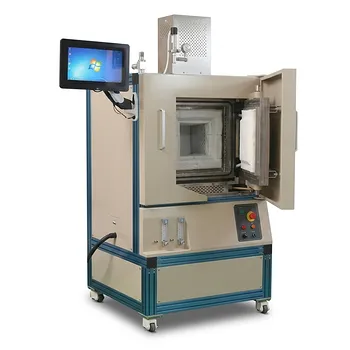
- Rapid Thermal Processing Atmosphere Controlled Bottom Loading Furnace 1100C with 50C Per Second Heating Rate for Wafer Annealing
- High Temperature Vertical Atmosphere Controlled Furnace with Automatic Bottom Loading and 1700°C Capacity for Advanced Material Research
- Large Bench Top 1700C High Temperature Muffle Furnace with 19L Chamber for Advanced Material Sintering and Annealing
- High Temperature 1500C Four Channel Tube Furnace with Alumina Tubes for High Throughput Annealing and Phase Diagram Research
- High Temperature Cold Wall Vacuum Furnace for Advanced Material Sintering and Annealing 1600C Heating Area 200x200x300mm
People Also Ask
- What role does a SiC-coated graphite susceptor play in H2Se selenization? Boost RTP Thermal Uniformity & Film Purity.
- What are the advantages of using a Bottom-Loading High-Temperature Furnace in Barium Titanate Fast Firing? Superior Microstructure
- What are the functional advantages of an RTP system for surface deposition? Enhance Heterojunction Interface Integrity
- Why is an atmosphere-controlled annealing furnace required for the post-treatment of synthesized KTiOPO4 thin films? KTP
- What is the purpose of coating ceramic sheets with platinum paste? Achieve Stable High-Temp Ohmic Contacts

Tech Team · ThermUnits
Last updated on Jun 03, 2026
Related Products
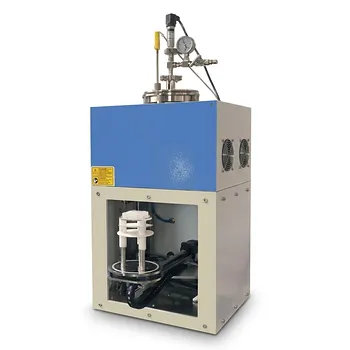
Rapid Thermal Processing Atmosphere Controlled Bottom Loading Furnace 1100C with 50C Per Second Heating Rate for Wafer Annealing
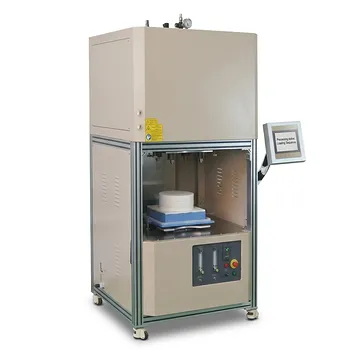
High Temperature Vertical Atmosphere Controlled Furnace with Automatic Bottom Loading and 1700°C Capacity for Advanced Material Research
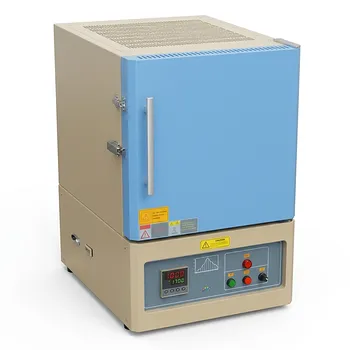
Large Bench Top 1700C High Temperature Muffle Furnace with 19L Chamber for Advanced Material Sintering and Annealing
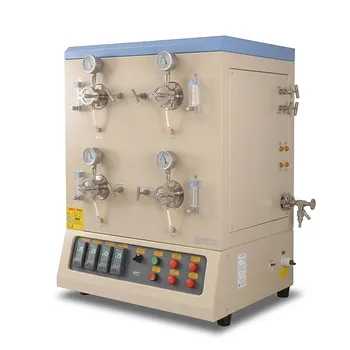
High Temperature 1500C Four Channel Tube Furnace with Alumina Tubes for High Throughput Annealing and Phase Diagram Research
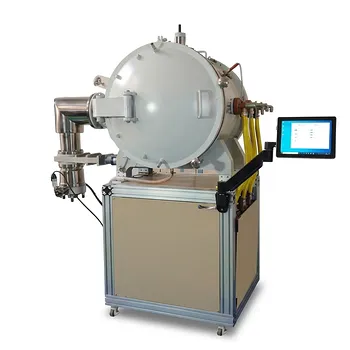
High Temperature Cold Wall Vacuum Furnace for Advanced Material Sintering and Annealing 1600C Heating Area 200x200x300mm
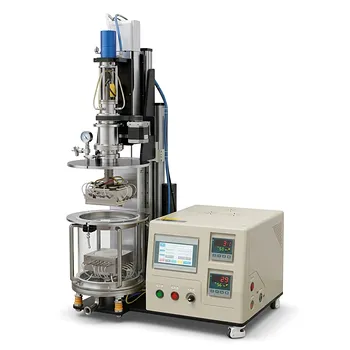
High Temperature 800C Rapid Thermal Processing Furnace with Rotating Sample Holder for Close Spaced Sublimation and Thin Film Solar Cell Research
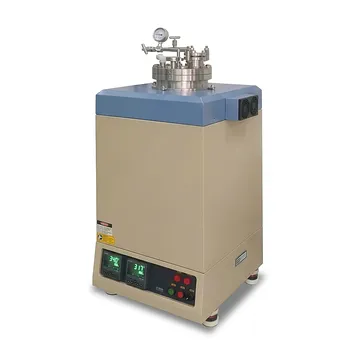
High Temperature 1000C Vacuum Furnace with 8 Inch ID Chamber for Material Sintering and Research Annealing
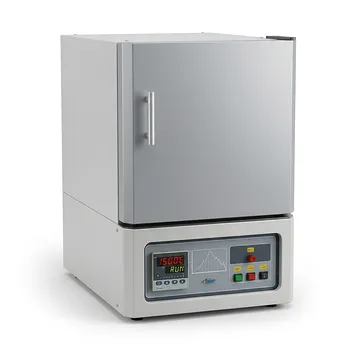
High Temperature 1500C Benchtop Muffle Furnace 3.6L Alumina Fiber Chamber Programmable Controller Sintering Annealing Carbonization Thermal Processing System
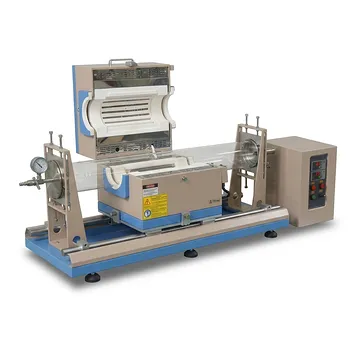
1200C High Temperature 5 Inch Sliding Tube Furnace for Rapid Thermal Processing RTP and Wafer Annealing
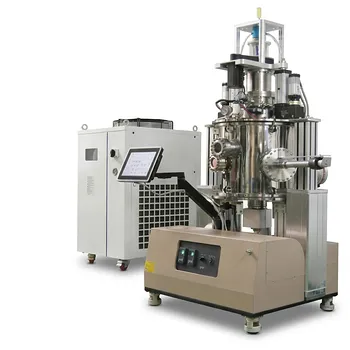
950C Rapid Thermal Processing Furnace for 12 Inch Wafer CSS Coating with Rotating Substrate Holder
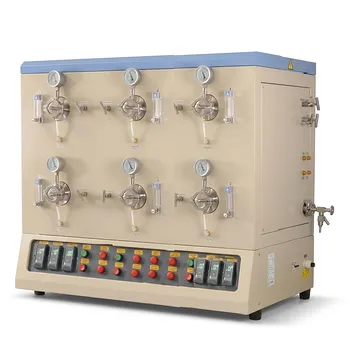
1200C High Throughput Multi Channel Tube Furnace with 50mm Quartz Tubes for Annealing and Material Phase Diagram Research

High Temperature 1700C Vertical Tube Furnace for Powder Spherification and Material Sintering
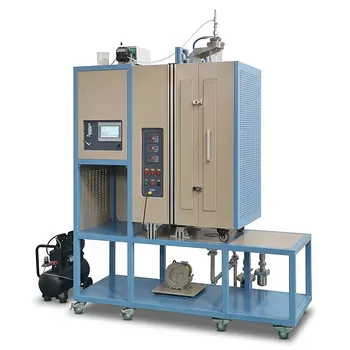
1500C Three Zone Vertical Pyrolysis Furnace for Nanoparticle Synthesis and Advanced Oxide Coating
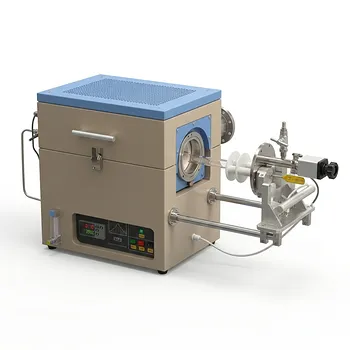
Compact Atmosphere Controlled Rapid Thermal Processing RTP Furnace with 4 Inch ID Quartz Tube 1100C

High Temperature 1700C Tube Furnace with High Vacuum Turbomolecular Pump System and Multi Channel Mass Flow Controller Gas Mixer
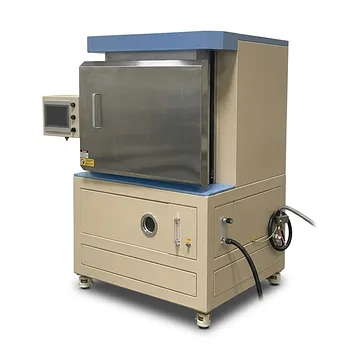
1650C High Temperature Atmosphere Controlled Box Furnace with 65L Chamber for Advanced Material Sintering and Industrial Heat Treatment
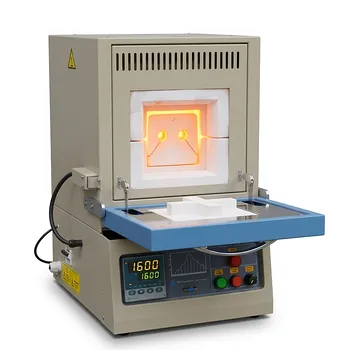
High Temperature Compact Muffle Furnace 1700 C with 30 Segment Programmable Controller and 1.7L Cubic Chamber
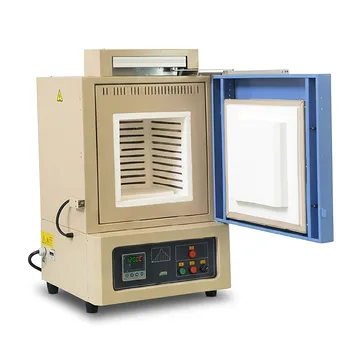
1200C High Temperature Muffle Furnace with Motorized Door and Automated PC Control for Industrial Sintering and Material Processing 27 Liter
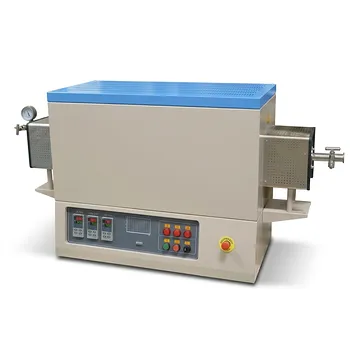
Three Zone Alumina Tube Furnace with Vacuum Flanges High Temperature 1700C Thermal Gradient CVD System