Why is a High-Precision Tube Atmosphere Furnace required for biochar? Achieve Optimal Pore Structure & Carbon Content
Updated 3 months ago
A High-Precision Tube Atmosphere Furnace is essential for biochar conversion because it provides a strictly controlled, oxygen-free environment that prevents biomass from burning. By maintaining an inert atmosphere—typically through a continuous flow of high-purity nitrogen—the furnace facilitates pyrolysis rather than combustion. This allows for the precise development of the material's pore structure, surface area, and chemical composition at specific temperatures, such as 500°C.
Core Takeaway: The tube atmosphere furnace acts as a controlled reactor that isolates biomass from oxygen to enable thermal decomposition. This precision is what transforms raw organic matter into high-quality, porous biochar rather than simple ash.
Creating an Oxygen-Free Reaction Zone
Preventing Aerobic Combustion
At temperatures required for biochar synthesis (often 400°C to 600°C), biomass will naturally catch fire if oxygen is present. The tube furnace uses a sealed pipeline and vacuum pumps to remove air, replacing it with inert gases like nitrogen or carbon dioxide. This "restricted oxygen" environment ensures the biomass undergoes thermal decomposition (pyrolysis) instead of burning to ash.
Preserving Carbon and Mineral Structures
The airtight nature of the furnace allows for the enrichment of carbon elements and the stabilization of mineral structures, such as hydroxyapatite in bone char. By preventing oxidation, the furnace ensures that the resulting biochar retains a solid skeletal structure. This structure is critical for subsequent chemical activation and the creation of high-porosity materials.
Precision Control of Physicochemical Properties
Regulating Pore Structure and Surface Area
The furnace’s ability to maintain a stable thermal field is vital for developing a high specific surface area. Precise temperature control determines how volatile components are removed and how the pore network is established. This level of detail is necessary to ensure the biochar has the optimal kinetic performance required for applications like nitrogen absorption.
Managing Heating Rates and Isothermal Durations
High-precision systems allow researchers to set specific heating rates (e.g., 10°C/min) and "hold" times. These variables directly influence the aromatization degree and the distribution of functional groups on the biochar surface. Consistent heating ensures that the final product has predictable chemical reactivity and reduction activity for contaminants.
Establishing a Scientific Reference Standard
Ensuring Experimental Repeatability
Because biochar reactivity is highly dependent on pyrolysis conditions, the tube furnace serves as the standard equipment for laboratory research. It provides a level of consistency that "open-air" or less precise methods cannot match. This makes it the critical reference standard for evaluating new methods, such as solar-powered pyrolysis.
Controlling Persistent Free Radicals (PFRs)
Specific temperature intervals within the furnace determine the stability of persistent free radicals and the conversion of phenolic substances. Only a high-precision furnace can target these narrow temperature windows effectively. This control is essential when biochar is being engineered for specific environmental tasks, such as reducing hexavalent chromium.
Understanding the Trade-offs
Equipment Complexity and Cost
While a tube atmosphere furnace offers superior control, it requires a complex setup including gas cylinders, flow meters, and vacuum seals. The need for high-purity inert gases adds to the operational cost compared to simple kilns. Failure to maintain a perfect seal can lead to sample contamination or total oxidation of the material.
Scaling Limitations
Tube furnaces are typically designed for batch processing of smaller samples rather than continuous mass production. While they provide the highest quality for material science and research, scaling these precise conditions to industrial volumes presents significant engineering challenges. Users must balance the need for precision with the required throughput of their project.
How to Apply This to Your Project
Selecting the Right Approach for Your Goal
To achieve the best results in biochar synthesis, you must align your furnace settings with your desired material properties.
- If your primary focus is high-porosity activated carbon: Prioritize a furnace with high-purity nitrogen flow and precise control over the removal of volatile components.
- If your primary focus is nutrient release (e.g., bone char): Use the furnace to strictly control the transformation of minerals into stable structures while retaining carbon.
- If your primary focus is contaminant reduction: Focus on the furnace's ability to maintain specific isothermal durations to optimize the production of persistent free radicals.
The high-precision tube atmosphere furnace is the definitive tool for transforming raw biomass into a sophisticated, engineered carbon material.
Summary Table:
| Feature | Benefit for Biochar Conversion | Research Outcome |
|---|---|---|
| Inert Atmosphere | Prevents aerobic combustion and ash formation | High-purity carbon recovery |
| Precision Temp Control | Regulates volatile removal and pore formation | Optimized specific surface area |
| Airtight Sealing | Maintains stable chemical composition | Consistent chemical reactivity |
| Heating Rate Control | Manages aromatization and mineral stability | Predictable material kinetics |
| High Thermal Stability | Ensures experimental repeatability | Scientific reference standards |
Maximize Your Biochar Research with THERMUNITS
Precise thermal processing is the difference between simple ash and high-performance engineered carbon. THERMUNITS is a leading manufacturer of high-temperature laboratory equipment, providing the precision required for cutting-edge material science and industrial R&D.
Our comprehensive range of solutions includes Tube and Atmosphere Furnaces specifically designed for controlled pyrolysis, as well as Muffle, Vacuum, Rotary, and CVD/PECVD systems. Whether you are developing high-porosity activated carbon or specialized environmental adsorbents, our equipment ensures the thermal stability and atmospheric purity your project demands.
Ready to elevate your lab's capabilities? Contact our technical team today to find the perfect furnace for your thermal processing needs.
References
- Ahmed Abdelhamid Maamoun, Ahmed Elkhateeb. Improving the acoustic performance of flexible polyurethane foam using biochar modified by (3-aminopropyl)trimethoxysilane coupling agent. DOI: 10.1038/s41598-024-68039-w
Mentioned Products
- 1750°C High Temperature Benchtop Vacuum Atmosphere Tube Furnace with Kanthal Super 1800 Heating Elements and 60mm Alumina Processing Tube
- Vertical 1700C Vacuum and Atmosphere Tube Furnace with 80mm Alumina Tube
- 1200C Hybrid Muffle and Tube Furnace for Material Research with Dual Atmosphere Control Quartz Tubes
- Compact Hybrid Muffle and Tube Furnace for 1000C Controlled Atmosphere Laboratory Material Sintering
- Compact Vertical Split Quartz Tube Furnace with Stainless Steel Vacuum Flanges for Rapid Thermal Quenching and Controlled Atmosphere Material Processing
People Also Ask
- What core functions does a high-temperature vacuum tube furnace provide? Optimize np-CuSn Sintering & Joint Integrity
- What is the role of a high-temperature tube furnace in the calcination process of ZnO/In2O3 nanocomposites?
- What role does a high-temperature tube furnace play in CVD synthesis of silicon nanowires? Master VLS Growth Precision.
- What role does a high-temperature tube furnace play in the sulfidation heat treatment of CoS@C/MXene nanocomposites? Guide
- How does a high-temperature tube furnace contribute to MoS2/CNT photocathode formation? Optimizing Phase & Interface

Tech Team · ThermUnits
Last updated on Jun 03, 2026
Related Products

1750°C High Temperature Benchtop Vacuum Atmosphere Tube Furnace with Kanthal Super 1800 Heating Elements and 60mm Alumina Processing Tube

Vertical 1700C Vacuum and Atmosphere Tube Furnace with 80mm Alumina Tube
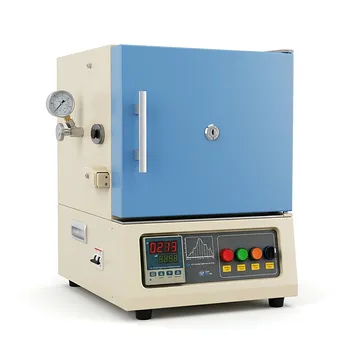
1200C Hybrid Muffle and Tube Furnace for Material Research with Dual Atmosphere Control Quartz Tubes
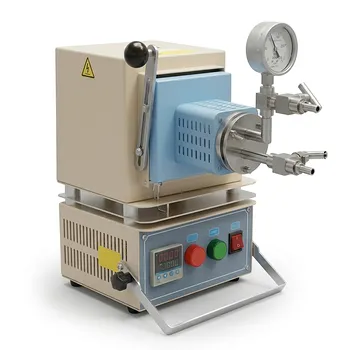
Compact Hybrid Muffle and Tube Furnace for 1000C Controlled Atmosphere Laboratory Material Sintering

Compact Vertical Split Quartz Tube Furnace with Stainless Steel Vacuum Flanges for Rapid Thermal Quenching and Controlled Atmosphere Material Processing
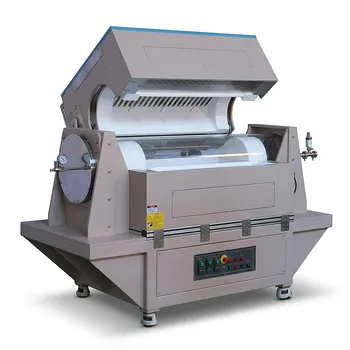
Three Zone Tube Furnace with 11 Inch or 15 Inch Quartz Tube and Hinged Flanges for Vacuum Atmosphere Heat Treatment
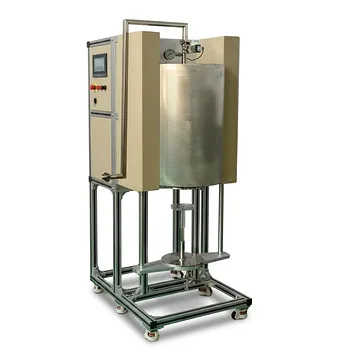
1200°C Atmosphere Controlled Automatic Bottom Loading Furnace with 6 Inch Quartz Tube
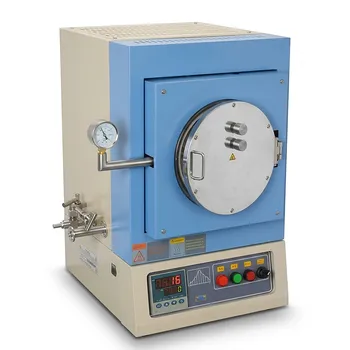
1100°C High Temperature Quartz Chamber Furnace 8 Inch OD with 7.6 Liter Capacity and Vacuum Atmosphere Capability
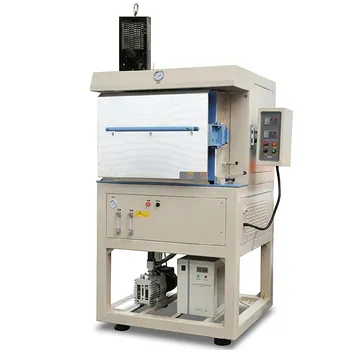
1200C Hydrogen Atmosphere Box Furnace with 5 Heated Sides and 64L Chamber
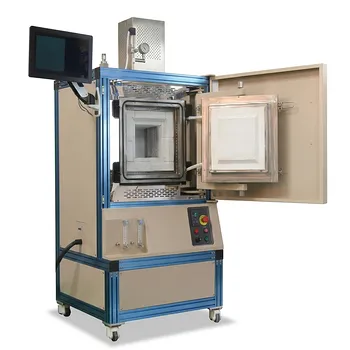
High Temperature Hydrogen Atmosphere Box Furnace 1650C Max Reducing Environment Material Synthesis System 8x8x8 Chamber
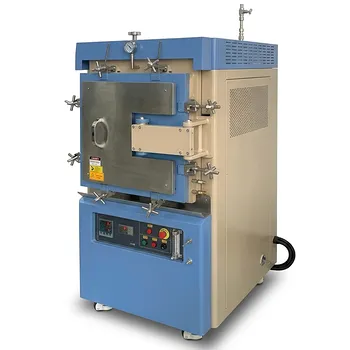
Atmosphere Controlled Muffle Furnace 1700C Maximum Temperature 80L High Capacity Vacuum Inert Gas Box Furnace

High Temperature 1700C Vertical Tube Furnace for Powder Spherification and Material Sintering

High Temperature 1700C Six Zone Split Tube Furnace with Alumina Tube and Water Cooled Flanges
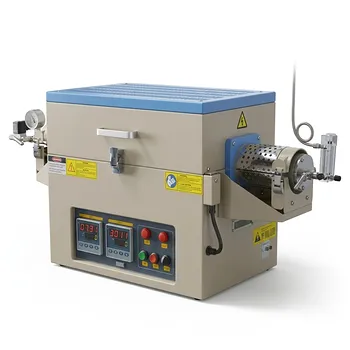
1100C Dual Zone Hydrogen Gas Tube Furnace with Quartz Tube and Integrated H2 Leak Detection System

High Temperature 1700C Tube Furnace with High Vacuum Turbomolecular Pump System and Multi Channel Mass Flow Controller Gas Mixer

1800C High Temperature Compact Vacuum Tube Furnace with 60mm OD Alumina Tube and Kanthal MoSi2 Heating Elements
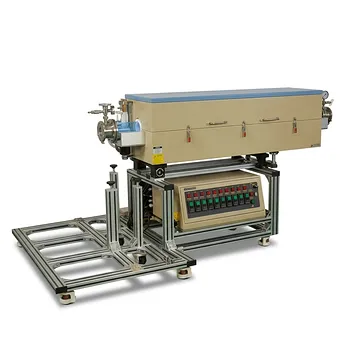
Ten Zone Multi Orientation Laboratory Tube Furnace for 1200C High Temperature Gradient Thermal Processing
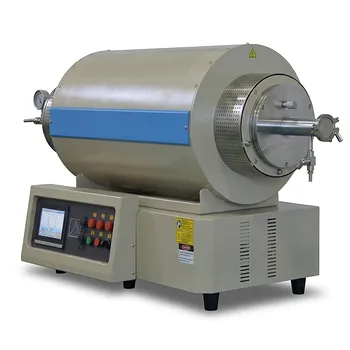
1200C Max Three Zone Tube Furnace 6 Inch OD Max with Tube and Flange

High Temperature 1700C Benchtop Tube Furnace with 5 Inch Heating Zone High Purity Alumina Tube and Vacuum Sealing Flanges
