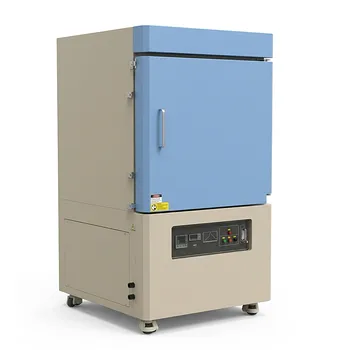
Why is a high-pressure gas atmosphere sintering furnace necessary for CaAlSiN3 phosphor? Optimize Quantum Efficiency
Updated 3 months ago
The high-pressure gas atmosphere sintering furnace is the essential catalyst for $CaAlSiN_3$ phosphor synthesis because it resolves a critical thermodynamic conflict. By maintaining a high-pressure nitrogen environment at extreme temperatures (reaching $1780^{\circ}C$), the furnace provides the necessary thermal energy for the chemical reaction while simultaneously suppressing the thermal decomposition of the nitrides. This dual action ensures the integrity of the crystal structure, resulting in a red phosphor with superior quantum efficiency and thermal stability.
The necessity of high-pressure sintering lies in its ability to force a reaction at temperatures that would otherwise cause the material to break down. It provides a stable environment where crystal growth can outpace thermal degradation, ensuring a high-purity final phase.
The Thermodynamic Challenge of Nitride Synthesis
Overcoming the Decomposition Threshold
At the high temperatures required for the formation of $CaAlSiN_3$ ($1780^{\circ}C$), nitride compounds become inherently unstable. Without external intervention, the material would decompose back into its constituent elements or gaseous nitrogen before the desired crystal structure could solidify.
Suppressing Volatilization through Pressure
The high-pressure nitrogen atmosphere acts as a physical barrier against decomposition. By increasing the partial pressure of nitrogen surrounding the material, the furnace shifts the chemical equilibrium, preventing the nitrogen within the $CaAlSiN_3$ lattice from escaping as gas.
Ensuring Structural and Optical Integrity
Promoting High-Quality Crystal Growth
The stable environment provided by the high-pressure furnace allows for the slow, precise growth of the $CaAlSiN_3$ crystal lattice. This structural "perfection" is what gives the phosphor its high quantum efficiency, as it minimizes the internal defects that would otherwise quench luminescence.
Enhancing Thermal Stability
Phosphors synthesized under these conditions exhibit excellent thermal stability, meaning they maintain their brightness even as the LED chip heats up during operation. The high-pressure environment ensures that the final phase is dense and chemically robust, preventing degradation in real-world applications.
Distinguishing the Final Phase from Pre-Reaction Stages
The Role of the Pre-Reaction Stage
Before entering the high-pressure furnace, raw materials often undergo a pre-reaction in a horizontal tube furnace at lower temperatures (approximately $1550^{\circ}C$). This stage is used to form intermediate phases and remove impurities through flowing nitrogen.
Why Pre-Reaction is Insufficient
While the pre-reaction prepares a high-quality chemical base, it lacks the thermal energy and pressure required for the final $CaAlSiN_3$ phase formation. Only the high-pressure sintering furnace can bridge the gap between these intermediate phases and the finalized, high-performance phosphor.
Understanding the Trade-offs and Challenges
Equipment Complexity and Cost
High-pressure sintering furnaces are significantly more complex and expensive to operate than standard tube furnaces. The requirement to maintain $1780^{\circ}C$ while managing high gas pressures necessitates specialized materials and sophisticated safety systems.
Precision Control Requirements
Because the synthesis occurs at the edge of the material's stability, temperature and pressure must be controlled with extreme precision. Even minor fluctuations can lead to the formation of secondary phases or "dead layers" on the phosphor surface, which drastically reduce light output.
Applying This Knowledge to Your Production
Strategic Recommendations for Phosphor Synthesis
To achieve the best results when synthesizing nitride phosphors, your equipment choice must align with the specific phase requirements of the material.
- If your primary focus is initial material preparation: Utilize a horizontal tube furnace at lower temperatures ($1550^{\circ}C$) to remove impurities and establish intermediate phases.
- If your primary focus is maximizing quantum efficiency: Transition the pre-reacted material to a high-pressure sintering furnace at $1780^{\circ}C$ to ensure a fully formed, defect-free $CaAlSiN_3$ lattice.
- If your primary focus is valence state control (e.g., Ce3+): Ensure your furnace setup allows for the introduction of specific reducing gas mixtures like $N_2/H_2$ to prevent oxidation.
The high-pressure furnace is not merely a heater, but a critical regulatory tool that allows $CaAlSiN_3$ to exist in its most efficient form.
Summary Table:
| Feature | Pre-reaction Stage | Final Sintering Stage |
|---|---|---|
| Equipment Type | Horizontal Tube Furnace | High-Pressure Sintering Furnace |
| Operating Temp | ~1550°C | ~1780°C |
| Atmosphere | Flowing Nitrogen (Standard) | High-Pressure Nitrogen Gas |
| Core Function | Impurity removal & intermediates | Final phase formation & stabilization |
| Key Outcome | High-quality chemical base | Maximum quantum efficiency & stability |
Optimize Your High-Performance Material Synthesis with THERMUNITS
THERMUNITS is a leading manufacturer of high-temperature laboratory equipment dedicated to material science and industrial R&D. We provide specialized thermal processing solutions, including High-Pressure Atmosphere and Vacuum Sintering Furnaces, CVD/PECVD systems, and Hot Press furnaces specifically designed to meet the rigorous thermodynamic demands of nitride phosphor synthesis.
Whether you require precise valence state control or extreme pressure environments to prevent thermal decomposition, our comprehensive range—from Tube and Muffle furnaces to Vacuum Induction Melting (VIM) systems—delivers the reliability your research demands.
Contact our expert engineering team today to find the perfect thermal solution for your lab!
References
- Wei Dong, W.S. Su. Synthesis and Luminescence Improvement of CaAlSiN<sub>3 </sub>Phosphors Doped with Eu<sup>2+</sup> and Mn<sup>2+</sup> for White LEDs. DOI: 10.37188/cjl.20240168
Mentioned Products
- 1650C High Temperature Atmosphere Controlled Box Furnace with 65L Chamber for Advanced Material Sintering and Industrial Heat Treatment
- Compact Spark Plasma Sintering SPS Furnace 1200 C Max 100 MPa Pressure High Speed Sintering System for Material Research
- High Temperature Oxygen and Inert Atmosphere Controlled Furnace 8 Liter 1700C Sintering System for Advanced Materials RD
- High Pressure 600T Vacuum Induction Hot Press Furnace for Advanced Material Heat Treatment and Sintering
- 1500°C Atmosphere Controlled Rapid Heating Furnace for Material Science and Battery Powder Sintering
People Also Ask
- What role does atmosphere control play in technical ceramics and glass? Master Material Purity and Precision
- What role does a high-temperature atmosphere furnace play in the direct electrochemical reduction of CO2? - Key Insights
- What is the role of a high-temperature box furnace in the solid-state synthesis of Europium-doped M3MgSi2O8 phosphors?
- What is the role of a high-temperature box furnace in Na3MnZr(PO4)3 synthesis? Engineering High-Performance NASICON.
- What physical conditions does a high-temperature atmosphere furnace provide for MXene exfoliation? Process Guide

Tech Team · ThermUnits
Last updated on Jun 03, 2026
Related Products
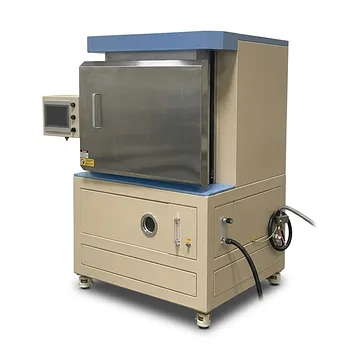
1650C High Temperature Atmosphere Controlled Box Furnace with 65L Chamber for Advanced Material Sintering and Industrial Heat Treatment
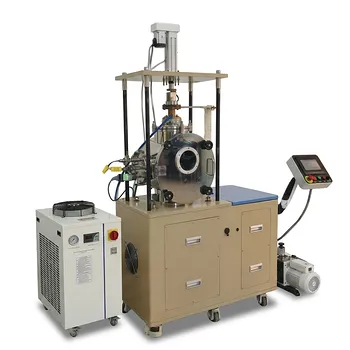
Compact Spark Plasma Sintering SPS Furnace 1200 C Max 100 MPa Pressure High Speed Sintering System for Material Research
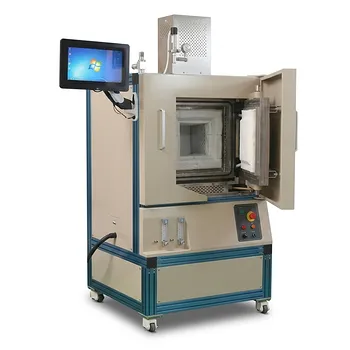
High Temperature Oxygen and Inert Atmosphere Controlled Furnace 8 Liter 1700C Sintering System for Advanced Materials RD
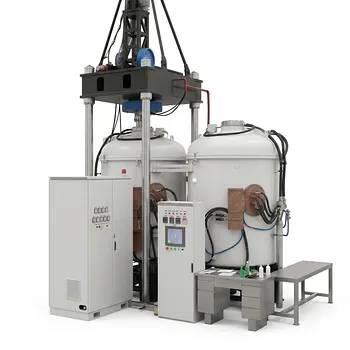
High Pressure 600T Vacuum Induction Hot Press Furnace for Advanced Material Heat Treatment and Sintering
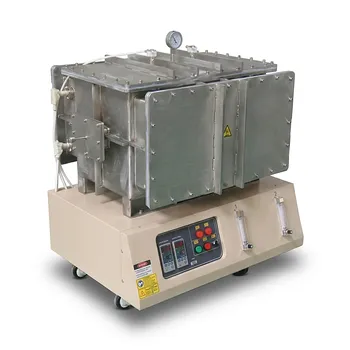
1500°C Atmosphere Controlled Rapid Heating Furnace for Material Science and Battery Powder Sintering
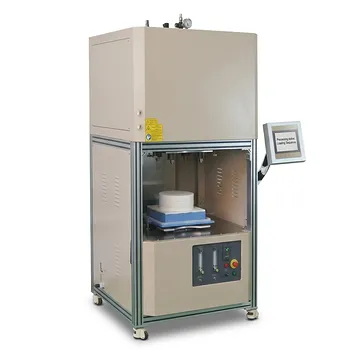
High Temperature Vertical Atmosphere Controlled Furnace with Automatic Bottom Loading and 1700°C Capacity for Advanced Material Research
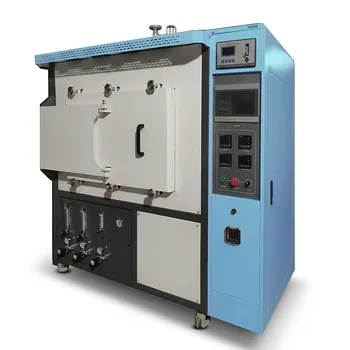
Roller Table Atmosphere Furnace 1500C High Temperature Battery Material Sintering System 112L Capacity
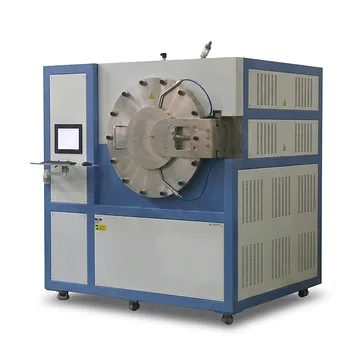
High Vacuum Pressure Chamber Furnace 800C 3.5 Bar Sintering System for Superconducting Materials
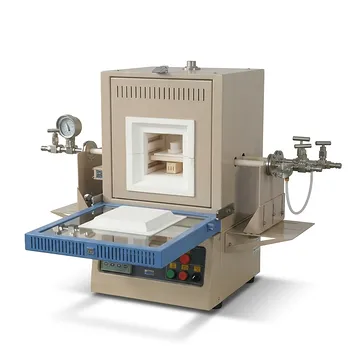
1700C Compact Hybrid Furnace with Dual Layer Box Sintering and Controlled Atmosphere Alumina Tubes
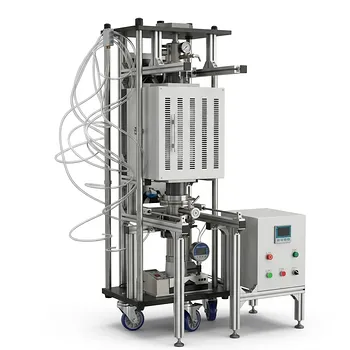
Industrial High Temperature Vacuum Hot Press Furnace and Heated Vacuum Press Machine for Material Science Sintering
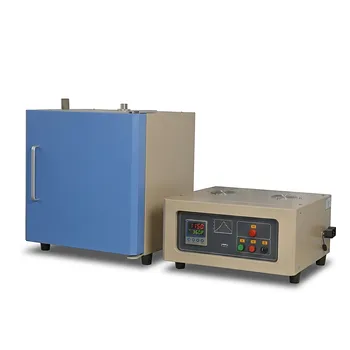
High Temperature Muffle Furnace with Alloy Chamber for Debinding and Sintering Applications
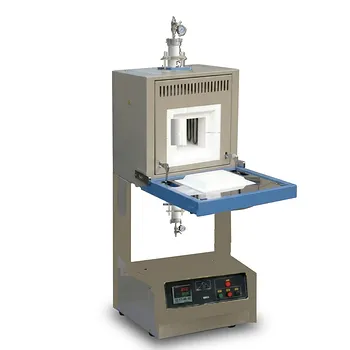
High Temperature Vertical Hybrid Furnace with Alumina Tube and SiC Heating for SOFC Coin Cell Testing and Atmosphere Processing
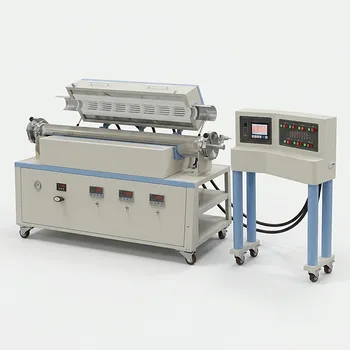
1100C Eight Zone High Pressure Super Alloy Tube Furnace with Integrated High Pressure Gas Control System

High Temperature 1700C Vertical Tube Furnace for Powder Spherification and Material Sintering

Compact High Temperature 1600C Tube Furnace with 50mm Alumina Tube and Vacuum Flanges for Material Sintering
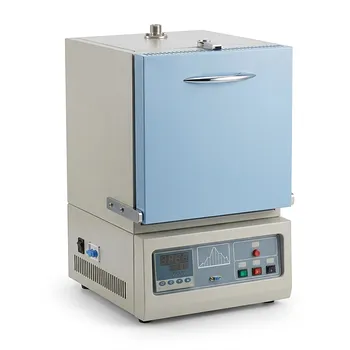
1750C Compact Muffle Furnace 1.7L Ultra High Temperature Laboratory Sintering System for Advanced Ceramics and Material Science Research
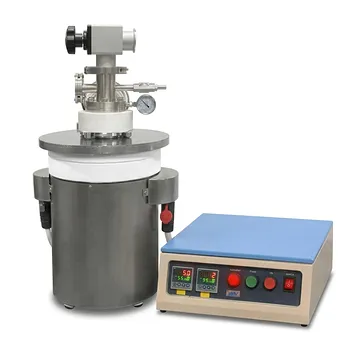
1100C High Temperature Vacuum Crucible Furnace with Quartz Chamber for Thermal Processing and Sintering
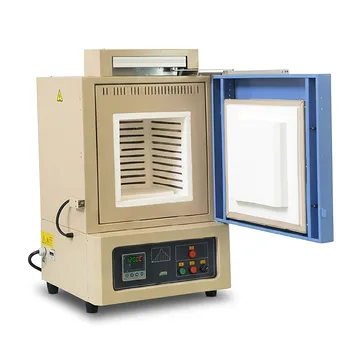
1200C High Temperature Muffle Furnace with Motorized Door and Automated PC Control for Industrial Sintering and Material Processing 27 Liter
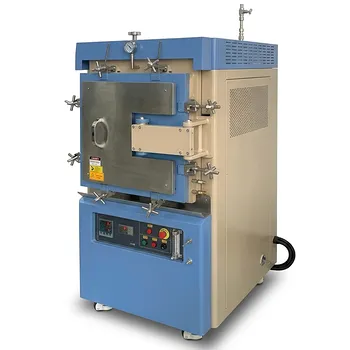
Atmosphere Controlled Muffle Furnace 1700C Maximum Temperature 80L High Capacity Vacuum Inert Gas Box Furnace