Why is a high-purity alumina boat used during CVD synthesis of Bi2Se3 nanosheets? Ensure High-Purity Nanostructures
Updated 3 months ago
High-purity alumina boats are used because they provide a chemically inert and thermally stable environment essential for the delicate growth of $Bi_2Se_3$ nanosheets. During the Chemical Vapor Deposition (CVD) process, these boats safely contain bismuth (Bi) and selenium (Se) precursors at temperatures reaching 600°C without reacting or outgassing. This ensures the resulting nanosheets maintain the high purity and intrinsic electronic properties required for their function as topological insulators.
Core Takeaway: Alumina boats serve as more than just containers; they are critical process-control tools that prevent elemental contamination and regulate precursor evaporation. Their extreme stability at high temperatures is the foundation for synthesizing high-quality, defect-free $Bi_2Se_3$ nanostructures.
Preservation of Material Integrity
Eliminating Chemical Contamination
The synthesis of $Bi_2Se_3$ requires an environment free from foreign atoms that could disrupt its lattice structure. High-purity alumina is chemically inert and does not react with active bismuth or selenium vapors, even at elevated temperatures.
By remaining non-reactive, the boat ensures that no impurity elements are introduced into the gas stream. This is vital for $Bi_2Se_3$, as its status as a topological insulator depends heavily on its intrinsic electronic properties, which can be ruined by even trace amounts of contamination.
Supporting Intrinsic Electronic Properties
Topological insulators possess conductive surfaces and insulating interiors. Any reaction between the precursor powders and their container could introduce dopants that alter this sensitive balance.
Using high-purity alumina (typically 99% or higher) prevents the "leakage" of binder materials or secondary oxides into the reaction. This results in nanosheets with the precise stoichiometry needed for advanced electronic applications.
Thermal Stability and Process Control
Resistance to Thermal Shock and High Heat
The CVD process for $Bi_2Se_3$ typically operates in a range near 600°C, but alumina boats can withstand much higher temperatures (up to 850°C or more) without structural failure. This high-temperature resistance prevents the boat from cracking or warping during the heating and cooling cycles of the furnace.
Furthermore, alumina has a low thermal expansion coefficient. This ensures the boat remains dimensionally stable, providing a consistent surface for the precursors throughout the entire synthesis duration.
Regulating Precursor Evaporation
The physical placement of the alumina boat within the furnace tube allows operators to control the evaporation rate of the solid powders. By positioning the boat in specific temperature zones, the concentration of $Bi$ and $Se$ in the reaction atmosphere can be precisely managed.
The design of the boat also facilitates uniform volatilization within the gas flow. This stability in reactant concentration is what allows for the growth of uniform, high-quality nanosheets rather than irregular clusters.
Understanding the Trade-offs
The Cost of Purity
While high-purity alumina is the standard, its primary trade-off is cost and fragility. Lower-grade ceramic boats are more affordable but often contain silica or other binders that can outgas at 600°C, leading to "doped" or defective nanosheets.
Maintenance and Reusability
Alumina boats can become contaminated over time with residual precursor oxides. If a boat is not meticulously cleaned or dedicated to a single material, cross-contamination becomes a significant risk that can invalidate experimental results.
How to Apply This to Your Synthesis
Selecting the Right Approach
- If your primary focus is maximum electronic performance: Always use 99.9% high-purity alumina boats to ensure no trace elements interfere with the topological states of the $Bi_2Se_3$.
- If your primary focus is growth uniformity: Experiment with the "upside-down substrate" method, where the substrate is placed over the alumina boat to create a localized vapor accumulation zone.
- If your primary focus is experimental reproducibility: Dedicate specific boats to specific precursors (one for $Bi$, one for $Se$) to prevent unpredictable vapor ratios caused by residue.
By prioritizing the chemical purity and thermal placement of your alumina vessel, you ensure the reliable synthesis of high-performance $Bi_2Se_3$ nanosheets.
Summary Table:
| Feature | Advantage in Bi2Se3 CVD Synthesis |
|---|---|
| Chemical Inertness | Prevents unwanted doping; maintains topological insulator properties. |
| Thermal Stability | Resists thermal shock up to 850°C+; prevents vessel warping/cracking. |
| Vapor Regulation | Enables precise positioning for controlled Bi and Se evaporation rates. |
| High Purity (99%+) | Eliminates binder outgassing to ensure defect-free nanosheet growth. |
Elevate Your Material Research with THERMUNITS
Precision in $Bi_2Se_3$ synthesis begins with a controlled thermal environment. THERMUNITS is a leading manufacturer specializing in high-temperature laboratory equipment for material science and industrial R&D. We provide the high-performance tools necessary for advanced synthesis, including:
- CVD/PECVD Systems & Tube Furnaces for precise vapor deposition.
- Muffle, Vacuum, and Atmosphere Furnaces for diverse heat treatments.
- Rotary & Hot Press Furnaces and Vacuum Induction Melting (VIM) systems.
- High-Purity Thermal Elements and specialized laboratory accessories.
Whether you are developing next-generation topological insulators or conducting complex industrial R&D, our equipment ensures the thermal stability and purity your work demands.
Ready to optimize your synthesis process? Contact our technical experts at THERMUNITS today to find the perfect thermal processing solution for your laboratory.
References
- Chih-Chiang Wang, He-Ting Tsai. Enhanced electrical properties of amorphous In-Sn-Zn oxides through heterostructuring with Bi2Se3 topological insulators. DOI: 10.1038/s41598-023-50809-7
Mentioned Products
- Compact 1100C Muffle Furnace with Programmable Temperature Control and High Purity Alumina Insulation for Material Research
- Vertical Hybrid High Temperature Furnace 1500C Alumina Tube SOFC Fuel Cell Testing Laboratory Heat Treatment Research Equipment
- High Temperature 1700C 4 Channel Tube Furnace 1 Inch Alumina Tube for Hi-Throughput Annealing
- Compact High Temperature 1600C Tube Furnace with 50mm Alumina Tube and Vacuum Flanges for Material Sintering
- High Temperature Compact Vacuum Tube Furnace 1750C Max 60mm OD Alumina Tube
People Also Ask
- Why is 1100°C in situ annealing required after LZO and DTO deposition? Achieve High-Quality Thin Film Synthesis
- What are the advantages of using high-purity alumina boats in 1100 °C carbonization? Ensure Purity and Stability.
- What technical capabilities must a high-temperature furnace possess for 1100°C HEA annealing? Precision & Stability.
- Why are high-purity alumina (Al2O3) substrates selected as carriers? Optimal Stability for Vanadium Oxide Reduction
- Why are high-purity alumina crucibles preferred as sample containers in high-temperature sintering experiments? Key Facts

Tech Team · ThermUnits
Last updated on Jun 02, 2026
Related Products
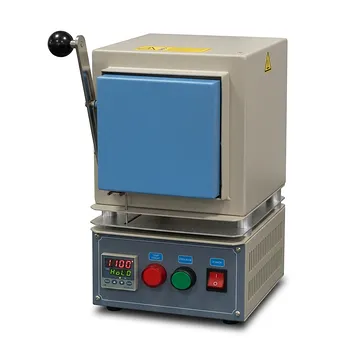
Compact 1100C Muffle Furnace with Programmable Temperature Control and High Purity Alumina Insulation for Material Research
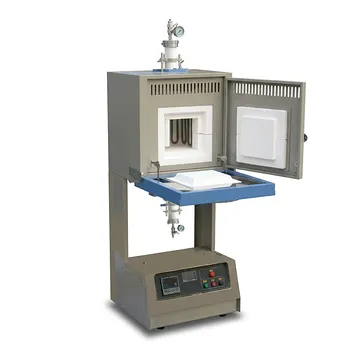
Vertical Hybrid High Temperature Furnace 1500C Alumina Tube SOFC Fuel Cell Testing Laboratory Heat Treatment Research Equipment
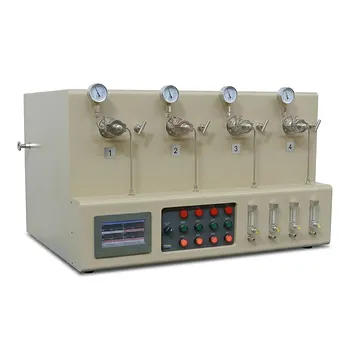
High Temperature 1700C 4 Channel Tube Furnace 1 Inch Alumina Tube for Hi-Throughput Annealing

Compact High Temperature 1600C Tube Furnace with 50mm Alumina Tube and Vacuum Flanges for Material Sintering
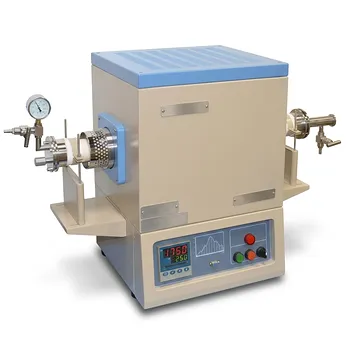
High Temperature Compact Vacuum Tube Furnace 1750C Max 60mm OD Alumina Tube

1800C High Temperature Compact Vacuum Tube Furnace with 60mm OD Alumina Tube and Kanthal MoSi2 Heating Elements
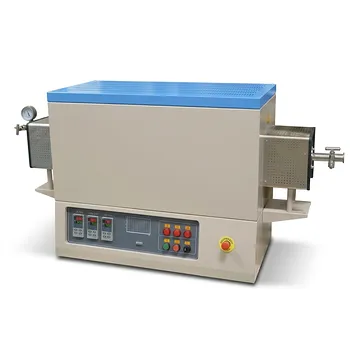
Three Zone Alumina Tube Furnace with Vacuum Flanges High Temperature 1700C Thermal Gradient CVD System
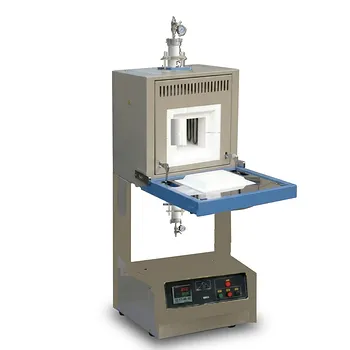
High Temperature Vertical Hybrid Furnace with Alumina Tube and SiC Heating for SOFC Coin Cell Testing and Atmosphere Processing
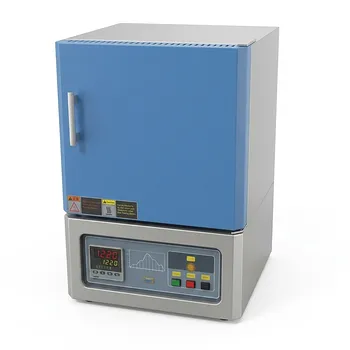
High Temperature Benchtop Muffle Furnace 1700C 10L Chamber Alumina Fiber Insulation MoSi2 Heating Elements
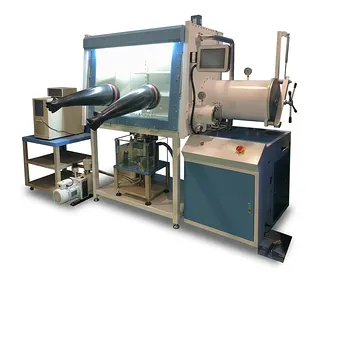
High Temperature Induction Melting System with Integrated Ultra High Purity Glove Box for Metallic Alloy Processing

1750°C High Temperature Benchtop Vacuum Atmosphere Tube Furnace with Kanthal Super 1800 Heating Elements and 60mm Alumina Processing Tube
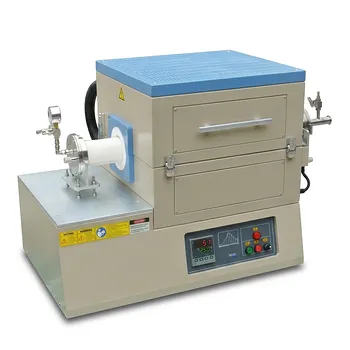
High Temperature 1700C Split Tube Furnace with Vacuum Flanges Valves and 60mm Alumina Tube
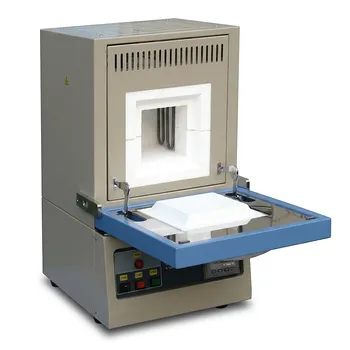
High Temperature 1800C Compact Muffle Furnace with Kanthal Super 1900 Heating Elements and 1.7L Alumina Chamber
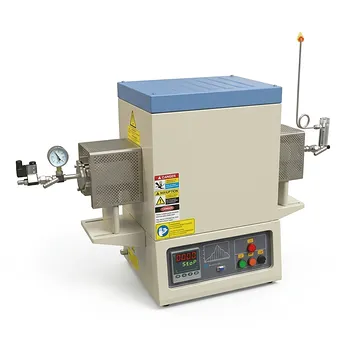
1700C Hydrogen Gas Tube Furnace with 60mm Alumina Process Tube and Integrated Hydrogen Safety Detector
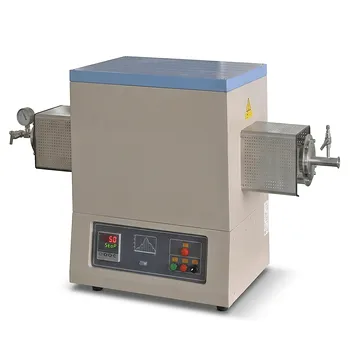
High Temperature 1700C Tube Furnace with 4 Inch OD Alumina Tube and Vacuum Sealing Flanges
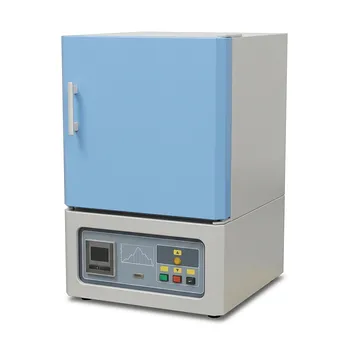
1800C Bench Top Muffle Furnace with Kanthal Super 1900 Heating Elements and 3.6L Alumina Fiber Chamber
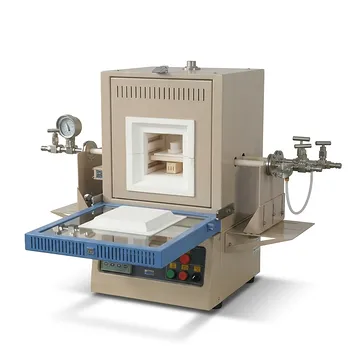
1700C Compact Hybrid Furnace with Dual Layer Box Sintering and Controlled Atmosphere Alumina Tubes