Why are high-purity alumina (Al2O3) substrates selected as carriers? Optimal Stability for Vanadium Oxide Reduction
Updated 3 months ago
High-purity alumina ($Al_2O_3$) substrates are selected because they provide a combination of exceptional chemical inertness and high-temperature structural integrity. In environments reaching up to 1400°C, these substrates do not react with vanadium pentoxide or its reduction products, nor are they affected by hydrogen reduction atmospheres. This stability ensures that no impurities leach into the sample, preserving the accuracy of the experimental results.
Core Takeaway: High-purity alumina serves as an ideal carrier because it remains chemically neutral and physically stable under extreme thermal and reductive conditions, preventing any interference with the vanadium oxide reduction process.
Unmatched Chemical Inertness in Reactive Environments
Resistance to Hydrogen Reduction
High-purity alumina is uniquely suited for hydrogen atmospheres because it is not reduced by hydrogen gas at temperatures as high as 1400°C. This quality is essential for vanadium experiments, as it ensures the reducing agent only interacts with the target vanadium oxide and not the carrier material.
Prevention of Solid-State Reactions
The substrate does not undergo chemical or solid-state reactions with vanadium pentoxide ($V_2O_5$) or the resulting reduction products. This chemical neutrality prevents the formation of unwanted intermediate compounds that could skew the analysis of the vanadium’s transformation.
Barrier Against Contamination
Using alumina with a purity greater than 96.0 wt% minimizes the presence of secondary phases or binders that might migrate at high temperatures. This prevents metallic or non-metallic impurities from infiltrating the sample, which is critical for maintaining the integrity of the diffusion interface.
Structural and Thermal Stability at Extreme Temperatures
High-Temperature Structural Strength
High-purity alumina maintains its structural strength and does not soften or deform even when subjected to temperatures exceeding 1000°C. This ensures that the sample remains in a consistent position throughout the experiment, allowing for precise observation and gas flow.
Superior Thermal Shock Resistance
These substrates exhibit excellent thermal shock resistance, allowing them to maintain physical integrity during rapid heating and cooling cycles. This prevents the carrier from cracking or shattering, which could otherwise lead to sample loss or experimental failure.
Resistance to Molten Erosion
In scenarios where molten oxides may form, alumina crucibles and substrates resist erosion and infiltration. This characteristic is vital for protecting the experimental system and ensuring that the final product can be cleanly separated from the carrier for analysis.
Understanding the Trade-offs
Purity vs. Reactivity
The effectiveness of alumina is strictly tied to its purity level; lower-grade alumina often contains silica or other binders that can become reactive or liquid at high temperatures. While high-purity options (99%+) are more expensive, they are necessary to prevent the "leaching" of impurity elements into sensitive alloys or oxides.
Temperature Limitations
While alumina is robust up to 1400°C–1600°C, it begins to reach its functional limit as it nears its melting point (approximately 2050°C). For experiments exceeding 1700°C, researchers must weigh the cost-benefit of alumina against more expensive refractories like zirconia, which offer higher thermal ceilings but different chemical profiles.
How to Apply This to Your Project
If your primary focus is analytical precision: Select substrates with a purity of at least 99% to ensure that energy-dispersive X-ray spectroscopy (EDS) and SEM data remain free from background noise caused by substrate elements.
If your primary focus is experimental safety at 1400°C+: Prioritize high-purity alumina for its refractory properties to prevent crucible failure or unexpected reactions with the furnace atmosphere.
If your primary focus is cost-effective heat treatment: Standard 96% purity alumina is often sufficient for temperatures below 1000°C where the risk of binder migration is significantly lower.
The selection of high-purity alumina provides the necessary "chemical silence" required to accurately observe and measure the complex reduction kinetics of vanadium oxides.
Summary Table:
| Feature | Performance Detail | Benefit to Experiment |
|---|---|---|
| Chemical Inertness | Resistant to Hydrogen & $V_2O_5$ | Prevents unwanted solid-state reactions |
| Thermal Range | Stable up to 1400°C - 1600°C | Maintains structural integrity under heat |
| Purity Levels | 96% to 99%+ $Al_2O_3$ | Eliminates impurity leaching and background noise |
| Mechanical Strength | High Thermal Shock Resistance | Prevents cracking during rapid heat cycles |
Elevate Your Material Research with THERMUNITS Precision
To achieve the "chemical silence" necessary for accurate vanadium oxide reduction and complex material synthesis, you need thermal equipment that matches the quality of your substrates. THERMUNITS is a leading manufacturer of high-temperature laboratory equipment specifically designed for material science and industrial R&D.
Our comprehensive range of thermal processing solutions includes:
- Furnaces: Muffle, Vacuum, Atmosphere, Tube, Rotary, and Hot Press models.
- Advanced Systems: CVD/PECVD systems, Dental Furnaces, and Vacuum Induction Melting (VIM) units.
- Industrial Kilns: Electric rotary kilns and specialized heat treatment components.
Whether you are refining high-purity alloys or conducting sensitive oxide experiments, our equipment provides the precise temperature control and atmospheric stability required for success. Contact us today to find the ideal furnace for your laboratory!
References
- M. A. Levchenko, Olena Volkova. Direct Reduction of Solid V<sub>2</sub>O<sub>5</sub> with Hydrogen at 600–1400 °C. DOI: 10.1002/srin.202300705
Mentioned Products
- Compact 1100C Muffle Furnace with Programmable Temperature Control and High Purity Alumina Insulation for Material Research
- High Temperature 1700C Benchtop Tube Furnace with 5 Inch Heating Zone High Purity Alumina Tube and Vacuum Sealing Flanges
- Vertical Hybrid High Temperature Furnace 1500C Alumina Tube SOFC Fuel Cell Testing Laboratory Heat Treatment Research Equipment
- High Temperature Benchtop Muffle Furnace 1700C 10L Chamber Alumina Fiber Insulation MoSi2 Heating Elements
- 1700C High Temperature Alumina Tube Furnace with 18 Inch Heated Zone and Vacuum Sealing Flanges
People Also Ask
- Why is 1100°C in situ annealing required after LZO and DTO deposition? Achieve High-Quality Thin Film Synthesis
- What are the advantages of using high-purity alumina boats in 1100 °C carbonization? Ensure Purity and Stability.
- What technical capabilities must a high-temperature furnace possess for 1100°C HEA annealing? Precision & Stability.
- Why are high-purity alumina crucibles preferred as sample containers in high-temperature sintering experiments? Key Facts
- Why are high-purity alumina crucibles used in annealing after spray pyrolysis? Superior Purity & High-Temp Stability

Tech Team · ThermUnits
Last updated on Jun 02, 2026
Related Products
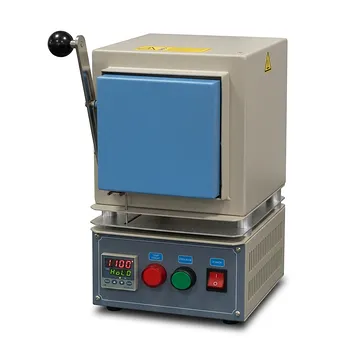
Compact 1100C Muffle Furnace with Programmable Temperature Control and High Purity Alumina Insulation for Material Research

High Temperature 1700C Benchtop Tube Furnace with 5 Inch Heating Zone High Purity Alumina Tube and Vacuum Sealing Flanges
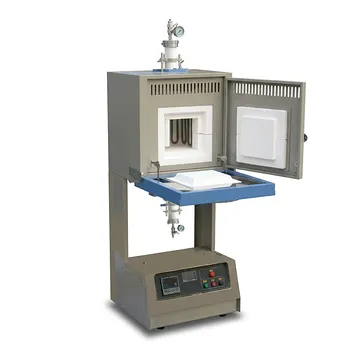
Vertical Hybrid High Temperature Furnace 1500C Alumina Tube SOFC Fuel Cell Testing Laboratory Heat Treatment Research Equipment
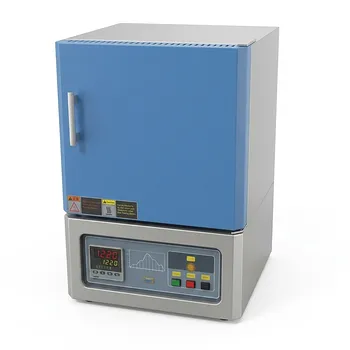
High Temperature Benchtop Muffle Furnace 1700C 10L Chamber Alumina Fiber Insulation MoSi2 Heating Elements
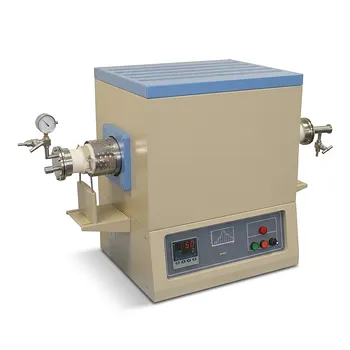
1700C High Temperature Alumina Tube Furnace with 18 Inch Heated Zone and Vacuum Sealing Flanges
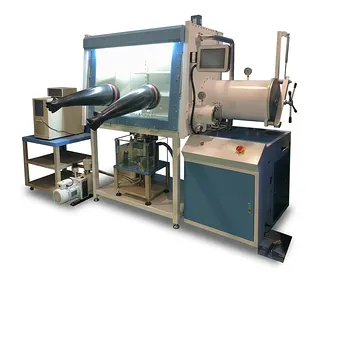
High Temperature Induction Melting System with Integrated Ultra High Purity Glove Box for Metallic Alloy Processing
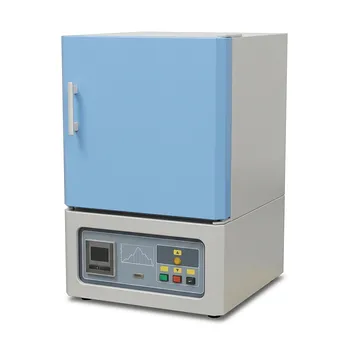
1800C Bench Top Muffle Furnace with Kanthal Super 1900 Heating Elements and 3.6L Alumina Fiber Chamber
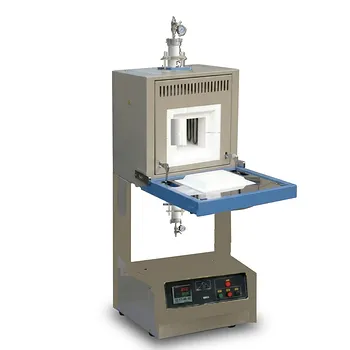
High Temperature Vertical Hybrid Furnace with Alumina Tube and SiC Heating for SOFC Coin Cell Testing and Atmosphere Processing

1800C High Temperature Compact Vacuum Tube Furnace with 60mm OD Alumina Tube and Kanthal MoSi2 Heating Elements
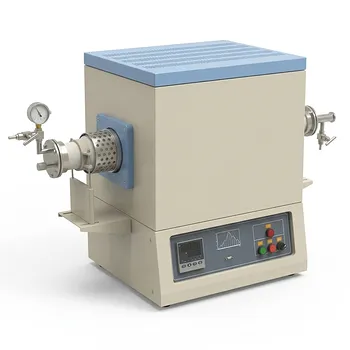
1750°C High Temperature Benchtop Vacuum Atmosphere Tube Furnace with Kanthal Super 1800 Heating Elements and 60mm Alumina Processing Tube
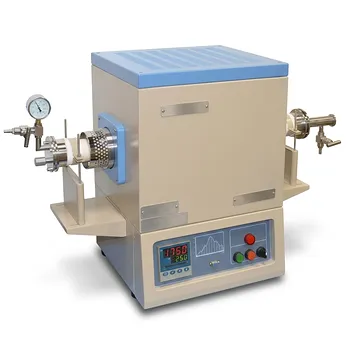
High Temperature Compact Vacuum Tube Furnace 1750C Max 60mm OD Alumina Tube

Compact High Temperature 1600C Tube Furnace with 50mm Alumina Tube and Vacuum Flanges for Material Sintering
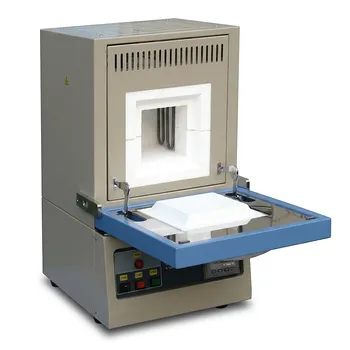
High Temperature 1800C Compact Muffle Furnace with Kanthal Super 1900 Heating Elements and 1.7L Alumina Chamber
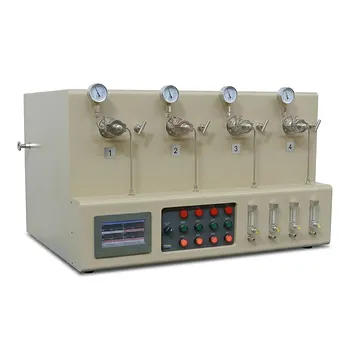
High Temperature 1700C 4 Channel Tube Furnace 1 Inch Alumina Tube for Hi-Throughput Annealing
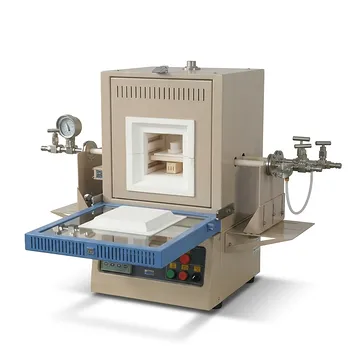
1700C Compact Hybrid Furnace with Dual Layer Box Sintering and Controlled Atmosphere Alumina Tubes
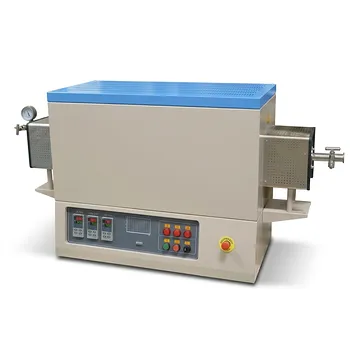
Three Zone Alumina Tube Furnace with Vacuum Flanges High Temperature 1700C Thermal Gradient CVD System
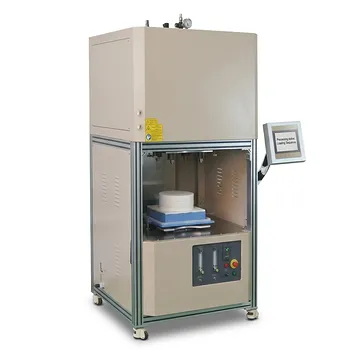
High Temperature Vertical Atmosphere Controlled Furnace with Automatic Bottom Loading and 1700°C Capacity for Advanced Material Research
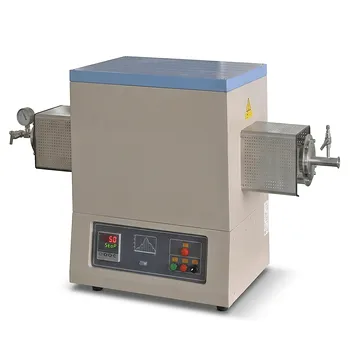
High Temperature 1700C Tube Furnace with 4 Inch OD Alumina Tube and Vacuum Sealing Flanges
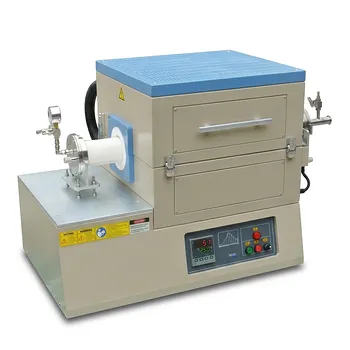
High Temperature 1700C Split Tube Furnace with Vacuum Flanges Valves and 60mm Alumina Tube