Why is a high-purity alumina crucible required for YBCO-358 ceramics? Ensure Stoichiometric Purity and Performance.
Updated 3 months ago
A high-purity alumina crucible is the essential "clean room" for YBCO-358 synthesis. It ensures the superconducting ceramic maintains its precise chemical composition by providing extreme chemical resistance and thermal stability during the 850°C pre-calcination process. This prevents any reaction between the container and the precursors, which is vital for preserving the stoichiometric accuracy required for superconductivity.
High-purity alumina serves as a chemically inert vessel that prevents impurity migration and maintains the critical 3-5-8 elemental ratio of the YBCO ceramic. Without this isolation, chemical "poisoning" from the crucible would likely degrade the final superconducting performance.
Protecting Chemical Stoichiometry
Preventing Impurity Migration
At 850°C, many container materials can leach metallic ions into the sample or react with the precursor powder. High-purity alumina (corundum) is specifically chosen for its low chemical activity, ensuring that no external elements migrate into the YBCO-358 reaction system.
Maintaining the Precise 3-5-8 Ratio
Superconducting ceramics are highly sensitive to their elemental balance. The crucible's inertness ensures that the yttrium, barium, and copper precursors remain in their exact proportions throughout the 24-hour heat treatment, preventing the formation of undesired phases.
Isolating the Reaction Environment
Beyond resisting the sample itself, the crucible effectively isolates the raw materials from external environmental contamination. This creates a controlled micro-environment where the solid-state reaction can proceed toward the preliminary orthorhombic structure without interference.
Thermal Integrity at High Temperatures
Resisting Thermal Deformation
Pre-calcination involves prolonged exposure to high temperatures, which can cause lesser materials to sag or weaken. Alumina possesses high refractoriness, meaning it maintains its structural integrity and does not deform even during extended heating cycles.
Enduring Thermal Shock
The synthesis process often involves rapid heating and cooling cycles that can crack standard ceramics. High-purity alumina is engineered with excellent thermal shock resistance, allowing it to withstand temperature fluctuations without cracking or shedding particulate matter into the sample.
Resistance to Corrosive Erosion
At elevated temperatures, superconducting precursors can become aggressive toward their containers. High-purity alumina is highly resistant to chemical erosion, ensuring that the crucible surface does not break down when in contact with potentially corrosive superconducting precursors.
Understanding the Trade-offs
Cost vs. Purity
High-purity alumina (typically 99% or higher) is more expensive than standard laboratory ceramics. However, using lower-grade materials risks "poisoning" the superconductor with silica or other oxides, which can destroy the material's zero-resistance properties.
Material Fragility
While these crucibles are exceptionally strong at high temperatures, they can be brittle. They require careful handling and controlled cooling rates to prevent mechanical failure, despite their inherent resistance to thermal stress.
Limited Reusability
Over many cycles, even the most inert crucible may eventually show signs of surface interaction. To maintain the highest standards of stoichiometric accuracy, crucibles must be regularly inspected for signs of erosion or embedded residue from previous batches.
Making the Right Choice for Your Goal
How to Apply This to Your Project
Depending on your specific research or production requirements, the choice of crucible purity and handling will vary.
- If your primary focus is maximum superconducting transition temperature: You must use the highest purity alumina available (99.5%+) to prevent even trace amounts of impurity ions from disrupting the copper-oxide planes.
- If your primary focus is large-scale precursor production: Focus on crucibles with high thermal shock resistance and high-volume capacity to ensure the powder remains stoichiometric across multiple 24-hour cycles.
- If your primary focus is cost-effective experimentation: Avoid low-grade porcelain or clay crucibles entirely, as the resulting contamination will make experimental data regarding YBCO-358 phases unreliable.
Using a high-purity alumina crucible is a non-negotiable requirement for ensuring the chemical purity and phase-stability of YBCO-358 superconducting ceramics.
Summary Table:
| Key Property | Role in YBCO-358 Synthesis | Benefit to Superconductivity |
|---|---|---|
| Chemical Inertness | Prevents ion leaching and impurity migration | Preserves the critical 3-5-8 elemental ratio |
| High Refractoriness | Resists deformation at 850°C+ | Maintains structural integrity during long cycles |
| Thermal Shock Resistance | Withstands rapid heating and cooling cycles | Prevents cracking and particulate contamination |
| Corrosion Resistance | Resists erosion from aggressive precursors | Ensures a clean, isolated reaction environment |
Elevate Your Material Research with THERMUNITS
Achieving perfect stoichiometric precision in YBCO-358 ceramics requires world-class thermal environments. THERMUNITS is a leading manufacturer of high-temperature laboratory equipment for material science and industrial R&D. We provide the tools you need for sensitive heat treatments, including Muffle, Vacuum, Atmosphere, and Tube furnaces, as well as advanced CVD/PECVD systems and Vacuum Induction Melting (VIM) furnaces.
From high-purity crucibles to high-precision electric rotary kilns, our thermal processing solutions ensure your superconducting materials meet the highest standards of purity and performance.
Ready to optimize your lab's thermal processing? Contact THERMUNITS today to discuss your project!
References
- Fatih Bulut. Application and comparison of theoretical approaches to mechanical properties of bulk YBCO-358 ceramic superconductors. DOI: 10.17714/gumusfenbil.1462251
Mentioned Products
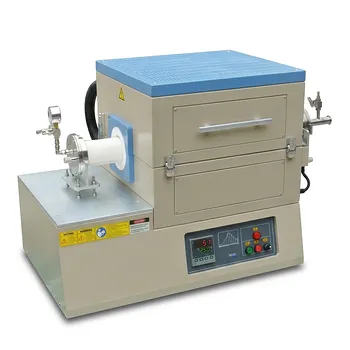
- High Temperature 1700C Benchtop Tube Furnace with 5 Inch Heating Zone High Purity Alumina Tube and Vacuum Sealing Flanges
- 600°C Vertical Crucible Furnace with SS316 Alloy Reactor and 6 Port Vacuum Flange
- 1100C High Temperature Vacuum Crucible Furnace with Quartz Chamber for Thermal Processing and Sintering
- High Temperature Vertical Crucible Furnace with 22L Heating Chamber and 1200C Maximum Temperature
- Vertical Crucible Furnace 1000C High Temperature Laboratory Equipment 4.7 Inch Diameter Chamber SS316 Anti Corrosive Enclosure
People Also Ask
- How are high-temperature tube furnaces utilized to repair etching damage? Precision Lattice Restoration Solutions
- What is the function of a high-temperature tube furnace in the synthesis of g-C3N4? Optimize Thermal Polycondensation
- What impact does the heating rate of a tube furnace have on biochar microstructure? Optimize Your Material R&D.
- What is the role of a high-temperature tube furnace in the calcination process of ZnO/In2O3 nanocomposites?
- Conditions for nZVI Synthesis in Tube Furnaces? Learn to Optimize Thermal and Atmospheric Control for High Purity.

Tech Team · ThermUnits
Last updated on Jun 02, 2026
Related Products

High Temperature 1700C Benchtop Tube Furnace with 5 Inch Heating Zone High Purity Alumina Tube and Vacuum Sealing Flanges
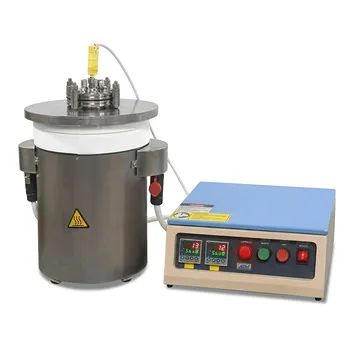
600°C Vertical Crucible Furnace with SS316 Alloy Reactor and 6 Port Vacuum Flange
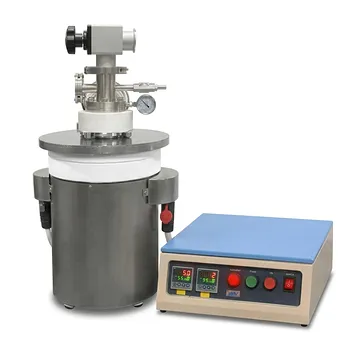
1100C High Temperature Vacuum Crucible Furnace with Quartz Chamber for Thermal Processing and Sintering
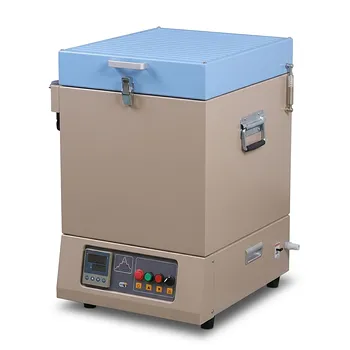
High Temperature Vertical Crucible Furnace with 22L Heating Chamber and 1200C Maximum Temperature
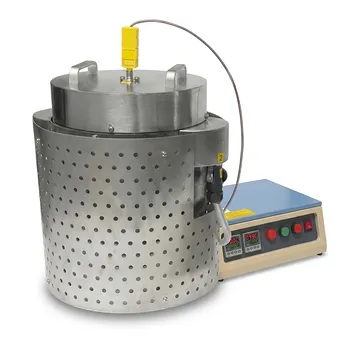
Vertical Crucible Furnace 1000C High Temperature Laboratory Equipment 4.7 Inch Diameter Chamber SS316 Anti Corrosive Enclosure
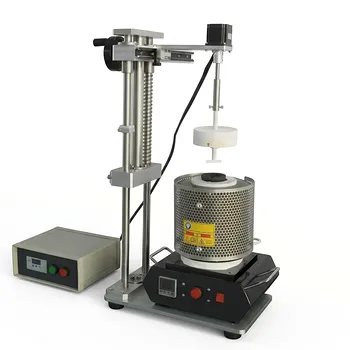
1100C Crucible Melting Furnace with Stirring Function for Glovebox and Air Sensitive Alloy Research
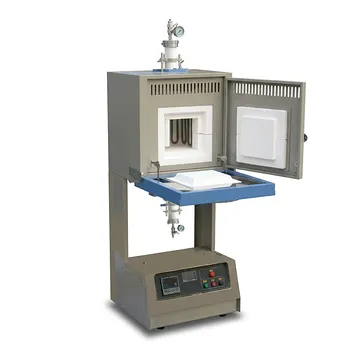
Vertical Hybrid High Temperature Furnace 1500C Alumina Tube SOFC Fuel Cell Testing Laboratory Heat Treatment Research Equipment
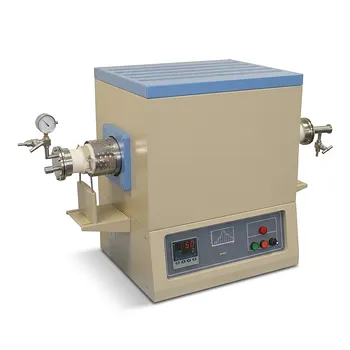
1700C High Temperature Alumina Tube Furnace with 18 Inch Heated Zone and Vacuum Sealing Flanges
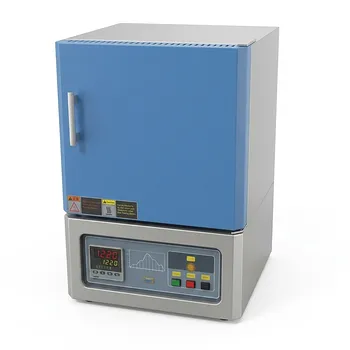
High Temperature Benchtop Muffle Furnace 1700C 10L Chamber Alumina Fiber Insulation MoSi2 Heating Elements
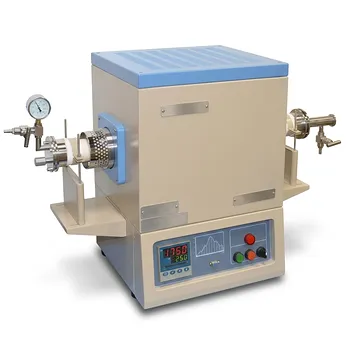
High Temperature Compact Vacuum Tube Furnace 1750C Max 60mm OD Alumina Tube
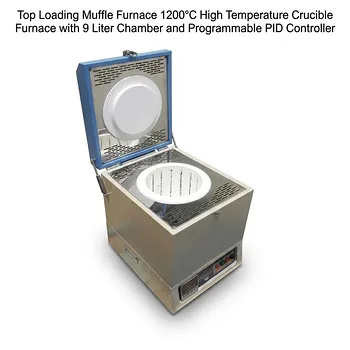
Top Loading Muffle Furnace 1200°C High Temperature Crucible Furnace with 9 Liter Chamber and Programmable PID Controller
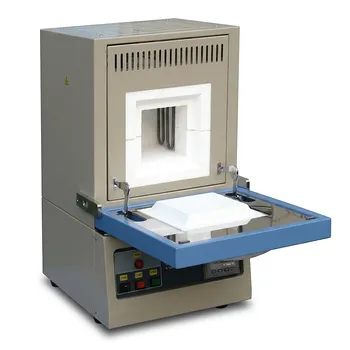
High Temperature 1800C Compact Muffle Furnace with Kanthal Super 1900 Heating Elements and 1.7L Alumina Chamber

Compact High Temperature 1600C Tube Furnace with 50mm Alumina Tube and Vacuum Flanges for Material Sintering

1800C High Temperature Compact Vacuum Tube Furnace with 60mm OD Alumina Tube and Kanthal MoSi2 Heating Elements
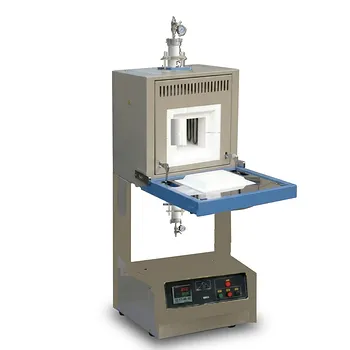
High Temperature Vertical Hybrid Furnace with Alumina Tube and SiC Heating for SOFC Coin Cell Testing and Atmosphere Processing
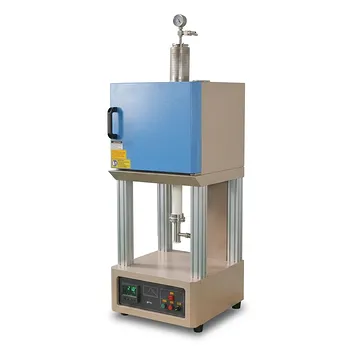
Hybrid High Temperature Tube and Box Furnace 1700C with 2 Inch Alumina Tube for Material Research
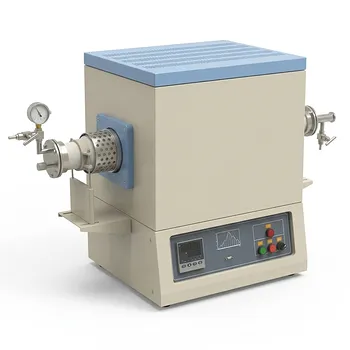
1750°C High Temperature Benchtop Vacuum Atmosphere Tube Furnace with Kanthal Super 1800 Heating Elements and 60mm Alumina Processing Tube
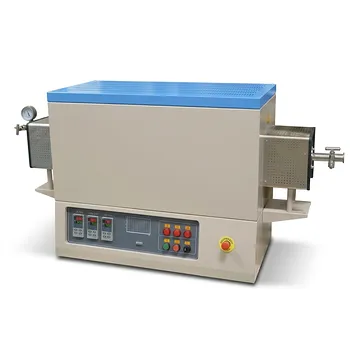
Three Zone Alumina Tube Furnace with Vacuum Flanges High Temperature 1700C Thermal Gradient CVD System
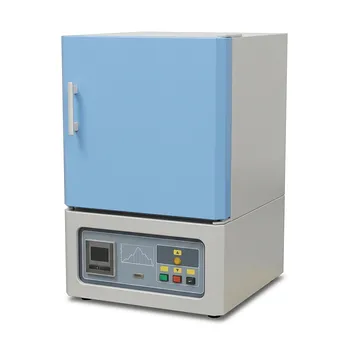
1800C Bench Top Muffle Furnace with Kanthal Super 1900 Heating Elements and 3.6L Alumina Fiber Chamber