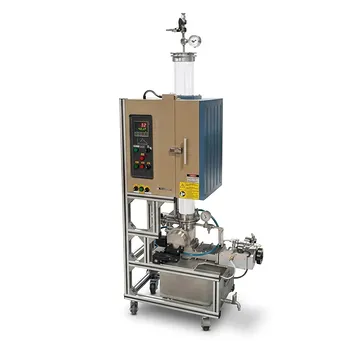
Why use a high-purity quartz boat for CNT synthesis? Optimize growth efficiency and purity in your tube reactor.
Updated 3 months ago
High-purity quartz boats are essential because they provide a chemically inert, heat-resistant platform that preserves the integrity of the catalytic process. Their specific geometry allows for optimal gas flow and provides the necessary physical space for carbon nanotubes (CNTs) to expand upward without obstructing the reactor tube.
A high-purity quartz boat acts as a specialized carrier that ensures the synthesis environment remains free of metallic impurities while optimizing the physical contact between reaction gases and catalysts.
Maintaining Chemical and Thermal Integrity
Exceptional High-Temperature Stability
Carbon nanotube synthesis often requires temperatures exceeding 900°C, conditions that would cause many materials to soften or degrade. High-purity quartz maintains its structural integrity and remains stable in these extreme environments, providing a reliable platform within the furnace's constant temperature zone.
Prevention of Chemical Contamination
The "high-purity" aspect is critical because it prevents the leaching of impurity metal ions into the reaction system. In CVD (Chemical Vapor Deposition) processes, even trace amounts of external metals can act as unintended catalysts, compromising the selectivity and purity of the resulting nanotubes.
Chemical Inertness in Corrosive Atmospheres
During synthesis, the boat is exposed to complex reduction and cracking atmospheres, sometimes including chloride vapors or hydrocarbon gases like acetylene. Quartz is chemically inactive, ensuring that the decomposition of the carbon source occurs exclusively at the intended catalytic sites rather than on the container itself.
Optimizing Physical Growth and Gas Dynamics
Provision for Upward Expansion
The structural design of a quartz boat typically occupies only the lower portion of the reaction tube, reserving the upper section as expansion space. This is vital for the upward growth of carbon nanotubes, as it prevents solid carbon products from clogging the tube and halting the reaction.
Enhancing Gas Diffusion Efficiency
The flat, open design of the boat increases the contact area between the catalyst powder and the process gases. This open reaction interface ensures that carbon source gases can fully diffuse through the catalyst layer, which significantly enhances conversion efficiency and promotes uniform growth.
Precise Positioning and Cooling
The boat allows researchers to position the catalyst accurately in the center of the furnace to ensure thermal uniformity. Additionally, the design facilitates the rapid removal of samples from the high-temperature zone, enabling fast-cooling processes that can be critical for preserving specific nanotube structures.
Understanding the Trade-offs
Fragility and Thermal Shock
While quartz has an extremely low coefficient of thermal expansion, it is still a brittle material that can crack if handled roughly or subjected to extreme, localized mechanical stress. Users must balance the need for high-purity environments with the high replacement costs associated with the material's fragility.
Cost vs. Purity Requirements
High-purity quartz is significantly more expensive than standard laboratory ceramics or lower-grade fused silica. For applications where single-walled carbon nanotubes (SWCNTs) are required, this cost is unavoidable to prevent contamination, but it may be an over-specification for less sensitive, bulk carbon fiber production.
Making the Right Choice for Your Synthesis Goal
How to Apply This to Your Project
Selecting and using a quartz boat effectively depends on your specific research or production targets:
- If your primary focus is high-purity SWCNTs: Prioritize the highest grade of quartz possible to eliminate any risk of environmental metal impurities leaching into your sample.
- If your primary focus is maximizing yield: Use a boat with a wider, flatter surface area to increase the gas-catalyst interface and prevent "dead zones" where gases cannot reach the catalyst.
- If your primary focus is process repeatability: Ensure the boat is always placed in the exact longitudinal center of the tube furnace to maintain consistent thermal exposure across different batches.
By utilizing the unique thermal and structural properties of high-purity quartz, you ensure a clean, efficient, and scalable environment for carbon nanotube synthesis.
Summary Table:
| Feature | Benefit for CNT Synthesis | Significance |
|---|---|---|
| High-Temp Stability | Withstands >900°C without degradation | Maintains structural integrity in CVD |
| Chemical Purity | Zero leaching of metal ion impurities | Ensures catalyst selectivity & purity |
| Chemical Inertness | Resistant to corrosive process gases | Prevents secondary reactions on boat |
| Open Geometry | Provides expansion space & gas contact | Prevents tube clogging & boosts yield |
| Low Expansion | Excellent thermal shock resistance | Allows for rapid positioning and cooling |
Elevate Your Material Research with THERMUNITS
At THERMUNITS, we understand that precision in thermal processing is the foundation of breakthrough material science. As a leading manufacturer of high-temperature laboratory equipment, we provide the specialized tools researchers need for successful carbon nanotube synthesis and advanced heat treatments.
Our comprehensive range of solutions includes:
- Advanced CVD/PECVD Systems for precise nanotube growth.
- High-Performance Tube & Muffle Furnaces for reliable thermal uniformity.
- Specialized Equipment: Vacuum, Atmosphere, Rotary, and Hot Press furnaces, as well as VIM and Dental furnaces.
Whether you are a university researcher or an industrial R&D professional, our team is ready to help you configure the perfect thermal environment for your specific applications.
Ready to optimize your synthesis process?
Contact our technical experts today!
References
- Nonthicha Sae-tang, Sakhon Ratchahat. Simultaneous production of syngas and carbon nanotubes from CO2/CH4 mixture over high-performance NiMo/MgO catalyst. DOI: 10.1038/s41598-024-66938-6
Mentioned Products
- 1100°C High Temperature Quartz Chamber Furnace 8 Inch OD with 7.6 Liter Capacity and Vacuum Atmosphere Capability
- High Temperature Vertical Atmosphere Controlled Furnace with Automatic Bottom Loading and 1700°C Capacity for Advanced Material Research
- 1100C High Temperature Vacuum Crucible Furnace with Quartz Chamber for Thermal Processing and Sintering
- High Temperature Cold Wall High Vacuum Chamber Furnace 1400C for Advanced Material Processing
- Vertical Vacuum Furnace 1100C High Temperature 8 Inch Quartz Chamber Water Cold Flange System
People Also Ask
- Why is a quartz tube furnace necessary for phosphorus-doped MoS2/GO preparation? Ensure Purity & Precise Synthesis
- Benefits of high-vacuum quartz tube furnaces with N2 for Co3O4 nanosheets: Purity and Structural Integrity.
- What conditions does a quartz tube furnace provide for AlxCoCrFeNi steam corrosion tests? Achieve Precise R&D Control.
- Why is high-temperature annealing in a quartz tube furnace done after HfO2 deposition? Unlock peak film performance.
- Why is a high-purity quartz tube used for SP-Fe3O4-C? Ensure Chemical Purity & Catalytic Stability

Tech Team · ThermUnits
Last updated on Jun 03, 2026
Related Products
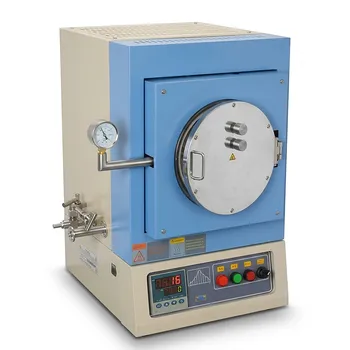
1100°C High Temperature Quartz Chamber Furnace 8 Inch OD with 7.6 Liter Capacity and Vacuum Atmosphere Capability
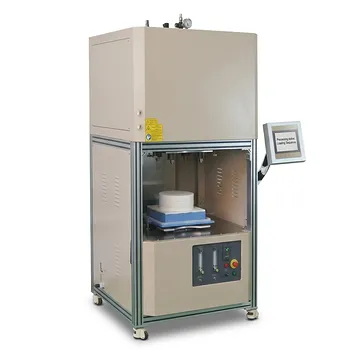
High Temperature Vertical Atmosphere Controlled Furnace with Automatic Bottom Loading and 1700°C Capacity for Advanced Material Research
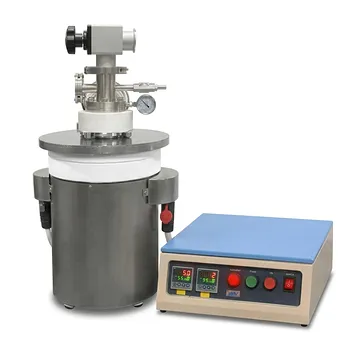
1100C High Temperature Vacuum Crucible Furnace with Quartz Chamber for Thermal Processing and Sintering
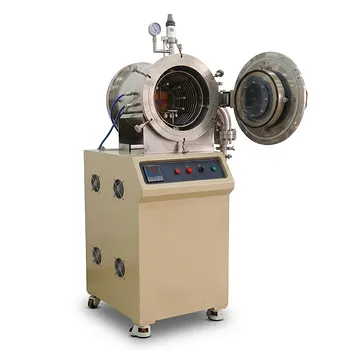
High Temperature Cold Wall High Vacuum Chamber Furnace 1400C for Advanced Material Processing
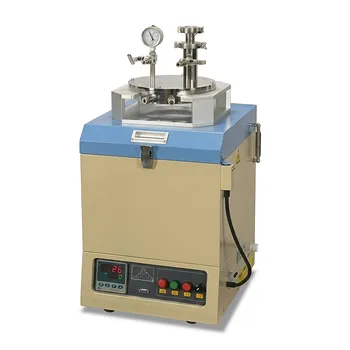
Vertical Vacuum Furnace 1100C High Temperature 8 Inch Quartz Chamber Water Cold Flange System
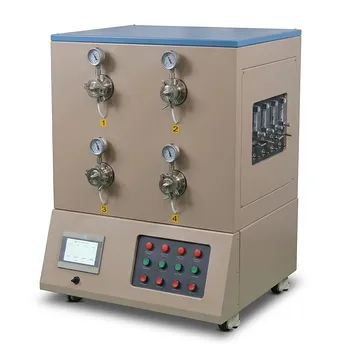
High Throughput 1200C Four Channel Tube Furnace with 3 Inch Quartz Tubes for Multi Zone Annealing and Material Research
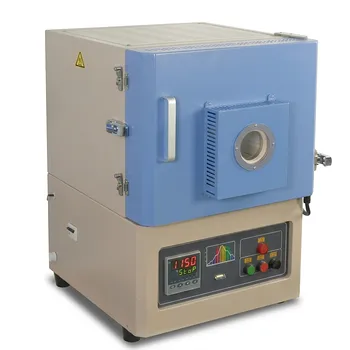
High Temperature Benchtop Muffle Furnace with Quartz Observation Window for Thermal Imaging and Material Analysis

High Temperature Automated 5 Inch Tube Furnace for Autonomous Material Research and Advanced Laboratory R&D
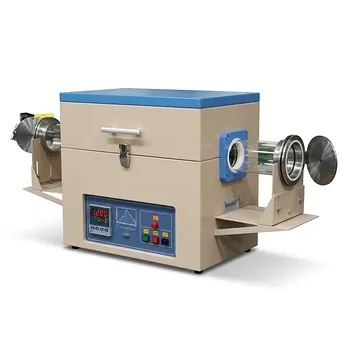
High Temperature 1200C Split Tube Furnace with Hinged Vacuum Flanges and 4 Inch Quartz Tube for Laboratory Research

1200°C 5 Inch Vertical Quartz Tube Furnace with Stainless Steel Vacuum Flanges