Why is a high-stability tube furnace essential for synthesizing LSMO? Ensure Phase Purity and Structural Stability
Updated 3 months ago
Achieving a high-purity rhombohedral phase in Lanthanum Strontium Manganese Oxide (LSMO) hinges on a high-stability tube furnace's ability to maintain a strictly uniform thermal environment over extended periods. This specialized equipment facilitates the critical transition from an amorphous precipitate to a rhombohedral symmetric crystal structure (space group $R \bar{3}c$) through precise, long-duration annealing, such as 10 hours at 600°C. Without this stability, the substitution of $Sr^{2+}$ into $La^{3+}$ lattice positions becomes inconsistent, resulting in mixed phases and degraded material properties.
A high-stability tube furnace is the only way to ensure the phase purity of LSMO by providing the precise thermal uniformity required for stable ionic substitution. It manages the delicate transition from amorphous precursors to a specific rhombohedral lattice while preventing the formation of secondary phases.
The Role of Thermal Stability in Phase Transformation
Transitioning from Amorphous to Crystalline
The synthesis of LSMO often begins with an amorphous precipitate that lacks a defined crystalline order. A high-stability furnace provides the constant energy required to overcome the activation barrier for phase transformation.
This steady heat allows the atoms to rearrange into the rhombohedral symmetric crystal structure (space group $R \bar{3}c$). Precise temperature control ensures this transition is complete and uniform throughout the entire sample.
Ensuring Stable Ionic Substitution
For LSMO to achieve its desired properties, $Sr^{2+}$ ions must accurately and stably substitute for $La^{3+}$ positions within the lattice. This process is highly sensitive to temperature fluctuations that can disrupt the chemical potential of the system.
The superior thermal uniformity of a tube furnace ensures that this substitution occurs evenly across all nanoparticles. This uniformity is what ultimately guarantees the phase purity of the final material, preventing the emergence of undesired chemical gradients.
Kinetic Control and Structural Development
Managing Long-Duration Annealing
Phase transformation in complex oxides like LSMO is a time-dependent process that often requires dwells of 10 hours or more. High-stability furnaces prevent "temperature drift," which can lead to inconsistent results between batches.
Consistency over these long durations is essential for the material to reach its equilibrium rhombohedral state. Even minor deviations in temperature over several hours can stall the reaction or lead to structural defects.
Atmosphere and Oxidative Environments
Tube furnaces allow for a controlled air or oxygen atmosphere, which is critical for the oxidative decomposition of precursors. This environment guides the conversion of inorganic salts into the final metal oxide crystals.
By managing the atmosphere alongside temperature, the furnace ensures the removal of organic templates or impurities. This process is vital for creating the clean surfaces and grain boundaries necessary for high-performance nanoparticles.
Understanding the Trade-offs
Thermal Gradients vs. Phase Purity
If a furnace lacks a highly uniform thermal field, different parts of the sample may experience different temperatures. This leads to inhomogeneous phase distribution, where some areas achieve the rhombohedral structure while others remain amorphous or form secondary phases.
Growth Kinetics vs. Grain Coarsening
While high temperatures are necessary for phase construction, excessive heat or lack of control can lead to grain coarsening. Inadvertently overshooting the target temperature can cause particles to fuse, reducing the specific surface area and altering the material's reactivity.
Atmosphere Sensitivity
Failure to maintain a stable atmosphere within the tube can result in incomplete oxidative decomposition. This may leave carbon residues or prevent the manganese ions from reaching the correct oxidation state, directly impacting the final crystal symmetry.
Applying These Insights to Your Synthesis
Making the Right Choice for Your Goal
To successfully synthesize single-phase LSMO, your equipment strategy must match your specific material requirements.
- If your primary focus is phase purity: Utilize a furnace with a multi-zone heating configuration to ensure the highest possible thermal uniformity across the sample boat.
- If your primary focus is nanostructure control: Prioritize a furnace with precise ramp-rate control to manage the delicate balance between crystal nucleation and grain coarsening.
- If your primary focus is reproducibility: Implement digital atmosphere controllers (mass flow controllers) to ensure the oxidative environment is identical for every synthesis run.
Precise thermal and atmospheric control is the foundational requirement for transforming amorphous precursors into high-quality, single-phase rhombohedral LSMO.
Summary Table:
| Key Feature | Impact on LSMO Synthesis |
|---|---|
| Thermal Stability | Facilitates transition from amorphous to rhombohedral structure ($R \bar{3}c$). |
| Thermal Uniformity | Ensures consistent $Sr^{2+}$ ionic substitution and prevents mixed phases. |
| Precision Control | Manages 10h+ annealing without temperature drift or grain coarsening. |
| Atmosphere Control | Allows oxidative decomposition to remove impurities and organic templates. |
Elevate Your Advanced Material Synthesis with THERMUNITS
Achieving the perfect single-phase rhombohedral structure in LSMO requires uncompromising thermal stability and precision. THERMUNITS is a leading manufacturer of high-temperature laboratory equipment specifically designed for material science and industrial R&D. We empower researchers to achieve reproducible results through superior heat treatment technology.
Our comprehensive range of thermal solutions includes:
- Precision Tube Furnaces (Essential for LSMO phase purity)
- Muffle, Vacuum, and Atmosphere Furnaces
- Rotary, Hot Press, and Dental Furnaces
- CVD/PECVD systems & Vacuum Induction Melting (VIM) furnaces
- High-quality Thermal Elements and accessories
Don't let temperature fluctuations compromise your research. Contact our experts at THERMUNITS today to find the ideal furnace solution for your specific heat treatment requirements!
References
- Akhtar Ali, Hijaz Ahmad. Narrowing of band gap and decrease in dielectric loss in La1-xSrxMnO3 for x = 0.0, 0.1, and 0.2 manganite nanoparticles. DOI: 10.3389/fmats.2024.1369122
Mentioned Products
- 1100C High Pressure Rocking Tube Furnace with 2 Inch Super Alloy Processing Tube for Material Synthesis
- Compact High Temperature 1600C Tube Furnace with 50mm Alumina Tube and Vacuum Flanges for Material Sintering
- High Temperature 1700C Vertical Tube Furnace for Powder Spherification and Material Sintering
- High Temperature Automated 5 Inch Tube Furnace for Autonomous Material Research and Advanced Laboratory R&D
- Automated 1200 C Tube Furnace for AI Material Research with 6 Inch OD and Sliding Flange
People Also Ask
- Why is a high-pressure tube furnace required for the nitriding process of Fe-Cr-N alloys? Enhance Phase Stability
- What is the function of a high-temperature tube furnace in the synthesis of graphene oxide? Mastering LPCVD Processes
- What is the function of a high-temperature tube furnace in NC support preparation? Achieve Precise Pyrolysis & Doping
- What is the function of a high-temperature tube furnace during thermal debinding of SS316L and zirconia? Expert Guide
- What role does a high-temperature tube furnace play in reducing titanium gypsum with pyrite? Achieve Pure Phase Results

Tech Team · ThermUnits
Last updated on Jun 03, 2026
Related Products
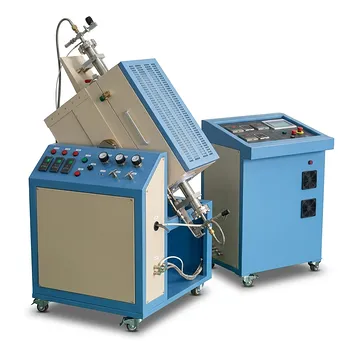
1100C High Pressure Rocking Tube Furnace with 2 Inch Super Alloy Processing Tube for Material Synthesis

Compact High Temperature 1600C Tube Furnace with 50mm Alumina Tube and Vacuum Flanges for Material Sintering

High Temperature 1700C Vertical Tube Furnace for Powder Spherification and Material Sintering

High Temperature Automated 5 Inch Tube Furnace for Autonomous Material Research and Advanced Laboratory R&D
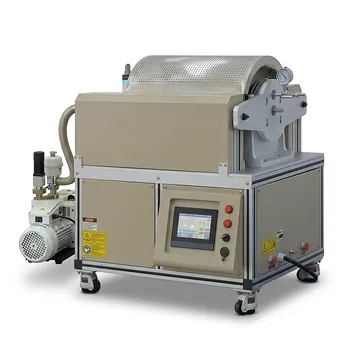
Automated 1200 C Tube Furnace for AI Material Research with 6 Inch OD and Sliding Flange
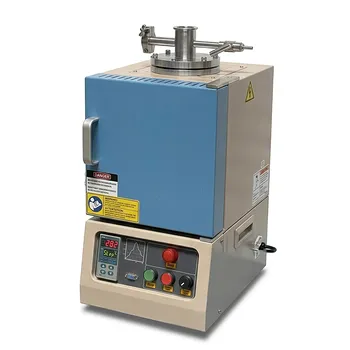
High Temperature Hybrid Muffle and Tube Furnace with Vacuum Capability and PID Control
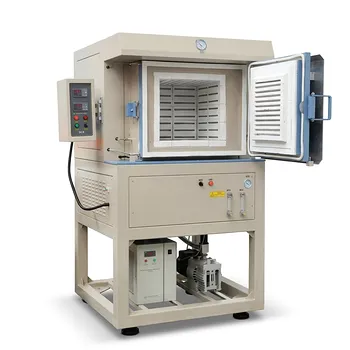
1200°C Five Side Heating Atmosphere Controlled Muffle Furnace 64 Liter High Uniformity Box Furnace for Material Synthesis
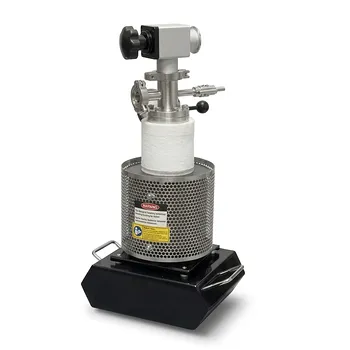
High Temperature 1100C Compact Top Loading Vertical Vacuum Tube Furnace for High Vacuum Noble Metal Melting and Material Research
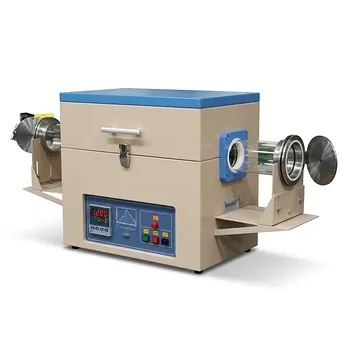
High Temperature 1200C Split Tube Furnace with Hinged Vacuum Flanges and 4 Inch Quartz Tube for Laboratory Research
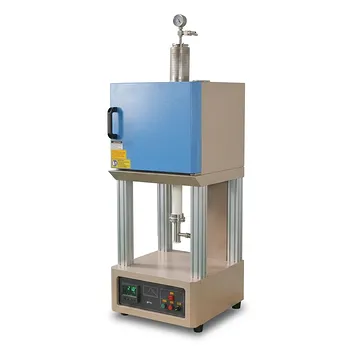
Hybrid High Temperature Tube and Box Furnace 1700C with 2 Inch Alumina Tube for Material Research

1100C Tube Furnace with Vacuum Flange and Programmable Temperature Controller for Material Science and Industrial Heat Treatment

1800C High Temperature Compact Vacuum Tube Furnace with 60mm OD Alumina Tube and Kanthal MoSi2 Heating Elements
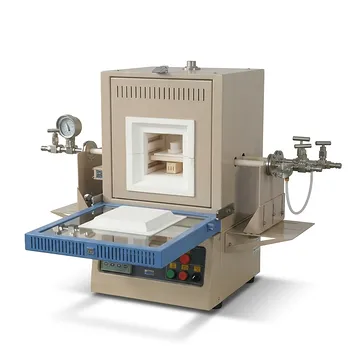
1700C Compact Hybrid Furnace with Dual Layer Box Sintering and Controlled Atmosphere Alumina Tubes
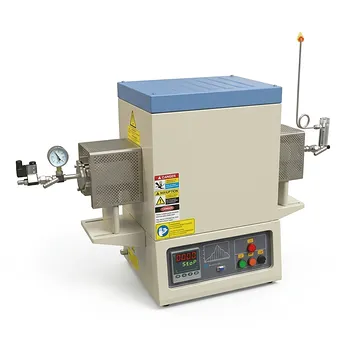
1700C Hydrogen Gas Tube Furnace with 60mm Alumina Process Tube and Integrated Hydrogen Safety Detector

High Temperature 1700C Tube Furnace with 4 Inch OD Alumina Tube and Vacuum Sealing Flanges
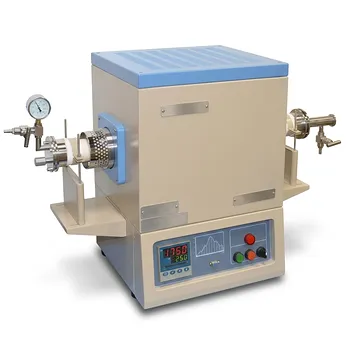
High Temperature Compact Vacuum Tube Furnace 1750C Max 60mm OD Alumina Tube
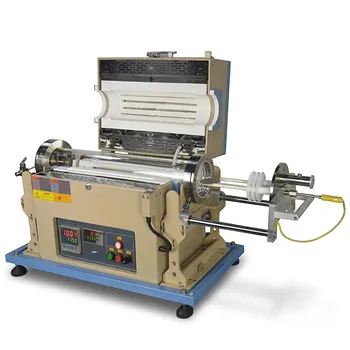
1200°C High Temperature 4 Inch Tube Furnace with Sliding Flange for CVD Systems
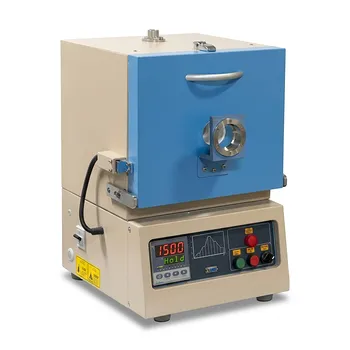
1500C Hybrid Muffle Tube Furnace 1.7L Box with 2 Inch Mullite Tube and Programmable PID Controller

1700C High Temperature Alumina Tube Furnace with 18 Inch Heated Zone and Vacuum Sealing Flanges
