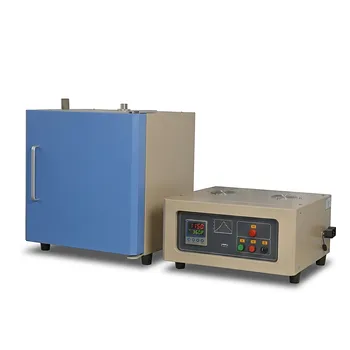
Why is a 1700°C furnace needed for UC2 nanocomposites? Achieve phase purity and superior thermal performance.
Updated 3 months ago
Achieving a temperature of 1700°C is the critical threshold required to drive the carbothermic reduction of uranium dioxide ($UO_2$) into uranium dicarbide ($UC_2$). This extreme thermal energy is necessary to overcome the thermodynamic barriers of solid-state diffusion, ensuring that oxygen is fully replaced by carbon while achieving the phase purity and precise grain size essential for high-performance nanocomposites.
The necessity of a 1700°C furnace stems from the high energy density required to break strong chemical bonds in uranium oxides and facilitate the migration of carbon atoms. Without reaching this specific temperature, the material remains a mixture of incomplete phases rather than a stable, crystalline $UC_2$ composite.
Driving the Solid-State Diffusion Reaction
Breaking the Uranium-Oxygen Bond
Uranium dioxide is an incredibly stable ceramic with high lattice energy. Reaching 1700°C provides the necessary vibration energy to destabilize these bonds, allowing oxygen to be liberated and replaced by carbon atoms from the surrounding matrix.
Facilitating Carbon Atomic Migration
At lower temperatures, carbon atoms lack the kinetic energy to penetrate the uranium lattice effectively. The high-temperature environment enables rapid solid-state diffusion, which is the primary mechanism for transforming the residual carbon and oxide precursors into a homogenous dicarbide structure.
Overcoming Thermodynamic Thresholds
The conversion of $UO_2$ to $UC_2$ is governed by strict thermodynamic equilibrium. 1700°C is the industry-standard "tipping point" where the formation of the dicarbide phase becomes energetically favorable over the sub-carbide or oxide states.
Ensuring Phase Purity and Structural Integrity
Induction of Long-Range Ordered Structures
Initial products of the synthesis process are often amorphous or possess low crystallinity. High-temperature annealing provides the energy for atomic rearrangement, inducing a transition from an unordered state to the specific long-range ordered crystalline structure required for $UC_2$.
Controlled Grain Size in Nanocomposites
In nanocomposite preparation, maintaining a specific grain size is vital for material strength and stability. A stable 1700°C environment allows for precise control over the nucleation and growth of grains, preventing the formation of irregular or oversized particles that could weaken the material.
Modification of Microscopic Morphology
Extreme heat modifies the microscopic morphology of the particles, ensuring they integrate correctly within the composite matrix. This process is essential for creating a material that is chemically uniform at the molecular level.
Enhancing Interfacial and Thermal Properties
Generation of In-Situ Covalent Bonds
Similar to high-temperature silica-to-carbide conversions, 1700°C promotes the formation of strong covalent bonds at the interfaces of the nanocomposite. These bonds replace simple physical stacking, which significantly enhances the structural integrity of the final product.
Reduction of Phonon Scattering
By creating high-quality crystalline structures and strong interfacial bonds, the high-temperature process reduces internal defects. This reduction in "disorder" minimizes phonon scattering, which is critical for maintaining high thermal conduction efficiency in the resulting composite.
Improving Longitudinal Thermal Conduction
For many uranium-based applications, heat dissipation is a primary safety and performance concern. The 1700°C treatment ensures that the internal pathways for thermal energy are optimized, allowing the material to manage extreme heat loads without degrading.
Understanding the Trade-offs
Equipment Degradation and Maintenance
Operating consistently at 1700°C places immense strain on furnace heating elements and refractory linings. This leads to higher operational costs and the need for specialized materials, such as molybdenum or tungsten, to prevent the furnace itself from melting or contaminating the sample.
Risk of Excessive Grain Coarsening
While high heat is necessary for conversion, prolonged exposure can lead to "over-ripening" of the nanostructures. If the temperature or hold time is not precisely calibrated, the nanoparticles may merge into larger grains, potentially losing the unique benefits of the "nano" scale.
Energy Density and Atmospheric Control
Reaching these temperatures requires significant power consumption and absolute control over the furnace atmosphere (typically vacuum or inert gas). Any trace of oxygen or moisture at 1700°C will lead to rapid oxidation, ruining the $UC_2$ conversion process entirely.
Applying This to Your Material Goals
How to Apply This to Your Project
- If your primary focus is Phase Purity: Ensure the furnace maintains a stable 1700°C for the duration of the reaction to prevent the formation of unwanted $U_2C_3$ or residual oxides.
- If your primary focus is Thermal Conductivity: Prioritize the annealing stage to maximize crystallinity and reduce phonon scattering through the formation of strong interfacial covalent bonds.
- If your primary focus is Nanostructure Retention: Use a rapid-heating or precise-timing protocol at 1700°C to achieve chemical conversion without allowing the grains enough time to undergo excessive coarsening.
By utilizing a 1700°C annealing furnace, you transition from simple material mixing to a precise, thermodynamically driven synthesis of high-performance Uranium Dicarbide.
Summary Table:
| Key Requirement | Role of 1700°C Thermal Energy | Final Material Benefit |
|---|---|---|
| Phase Purity | Drives carbothermic reduction of $UO_2$ to $UC_2$ | Pure, stable crystalline structure |
| Atomic Migration | Facilitates rapid solid-state carbon diffusion | Homogenous dicarbide formation |
| Nanostructure | Enables precise control of nucleation/growth | Optimized grain size and strength |
| Thermal Efficiency | Minimizes internal defects and phonon scattering | High-efficiency heat dissipation |
| Structural Integrity | Promotes in-situ covalent interfacial bonding | Enhanced molecular-level durability |
Elevate Your Advanced Material Research with THERMUNITS
Push the boundaries of material science with THERMUNITS, a global leader in high-temperature laboratory equipment. For complex synthesis like Uranium Dicarbide (UC2) nanocomposites, our specialized Vacuum, Atmosphere, Tube, and Muffle furnaces provide the absolute temperature precision and atmospheric control required to reach the 1700°C threshold safely and reliably.
From industrial R&D to laboratory heat treatment, we offer a comprehensive range of solutions including:
- High-Temp Furnaces: Muffle, Vacuum, Atmosphere, Tube, and Rotary designs.
- Advanced Systems: CVD/PECVD, Hot Press, and Vacuum Induction Melting (VIM) furnaces.
- Specialized Equipment: Dental furnaces and high-quality Thermal Elements.
Ready to optimize your thermal processing? Contact our engineering team today to discuss how THERMUNITS can provide the precision equipment necessary for your next breakthrough.
References
- Alice Zanini, Giorgia Franchin. First Structured Uranium‐Based Monoliths Produced via Vat Photopolymerization for Nuclear Applications. DOI: 10.1002/adfm.202406916
Mentioned Products
- High Temperature 1700C 4 Channel Tube Furnace 1 Inch Alumina Tube for Hi-Throughput Annealing
- Large Bench Top 1700C High Temperature Muffle Furnace with 19L Chamber for Advanced Material Sintering and Annealing
- High Temperature Vertical Atmosphere Controlled Furnace with Automatic Bottom Loading and 1700°C Capacity for Advanced Material Research
- High Temperature 1700C Vertical Tube Furnace for Powder Spherification and Material Sintering
- High Temperature Benchtop Muffle Furnace 1700C 10L Chamber Alumina Fiber Insulation MoSi2 Heating Elements
People Also Ask
- Why use a tube furnace for oxygen annealing LaCrO3/LaMnO3? Optimize Phase Transition & Magnetic Performance.
- What key role does a laboratory high-temperature tube furnace play in the production of carbon nanofibers? Guide
- How is a laboratory high-temperature tube furnace utilized to research the products of aluminothermic reduction? Advanced Metallurgical Solutions
- What critical conditions does an industrial high-temperature tube furnace provide for annealing (GaAl)2O3 thin films?
- What role does a high-temperature tube furnace play in the annealing modification of Miscanthus Biochar fillers? Boost graphitization.

Tech Team · ThermUnits
Last updated on Jun 02, 2026
Related Products
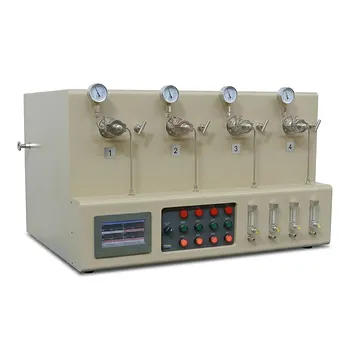
High Temperature 1700C 4 Channel Tube Furnace 1 Inch Alumina Tube for Hi-Throughput Annealing
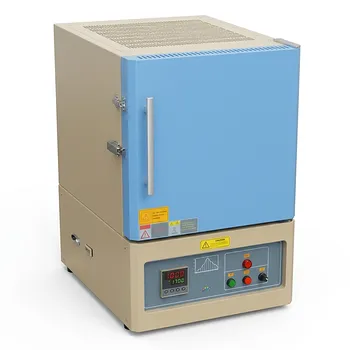
Large Bench Top 1700C High Temperature Muffle Furnace with 19L Chamber for Advanced Material Sintering and Annealing
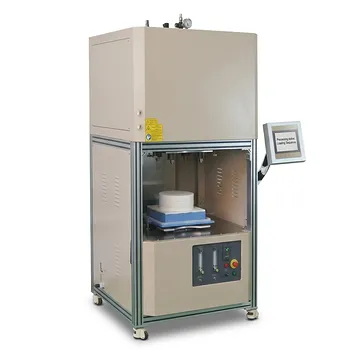
High Temperature Vertical Atmosphere Controlled Furnace with Automatic Bottom Loading and 1700°C Capacity for Advanced Material Research

High Temperature 1700C Vertical Tube Furnace for Powder Spherification and Material Sintering
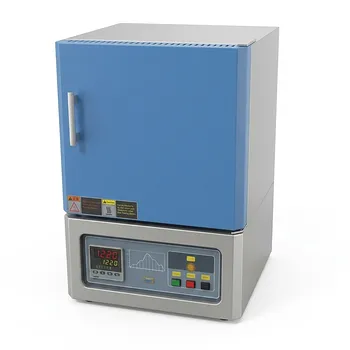
High Temperature Benchtop Muffle Furnace 1700C 10L Chamber Alumina Fiber Insulation MoSi2 Heating Elements

High Temperature 1700C Benchtop Tube Furnace with 5 Inch Heating Zone High Purity Alumina Tube and Vacuum Sealing Flanges
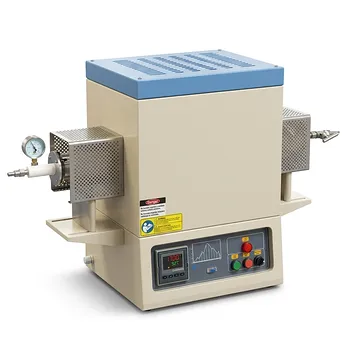
High Temperature Three Zone Tube Furnace 1700C with Alumina Tube and Water Cooled Flanges
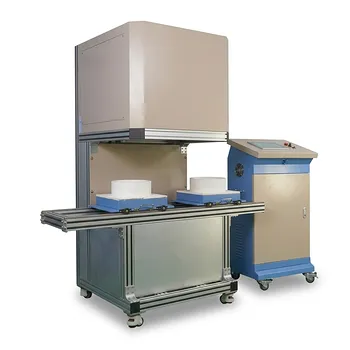
High Temperature Bottom Loading Vertical Furnace 1700C Dual Stage Sample Processing System 18L Large Capacity Thermal Treatment Equipment

High Temperature 1700C Tube Furnace with High Vacuum Turbomolecular Pump System and Multi Channel Mass Flow Controller Gas Mixer
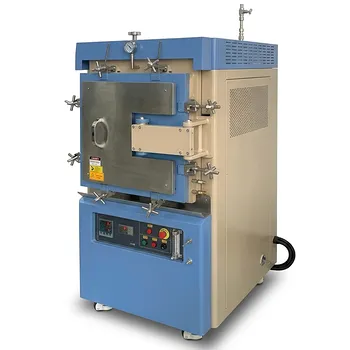
Atmosphere Controlled Muffle Furnace 1700C Maximum Temperature 80L High Capacity Vacuum Inert Gas Box Furnace
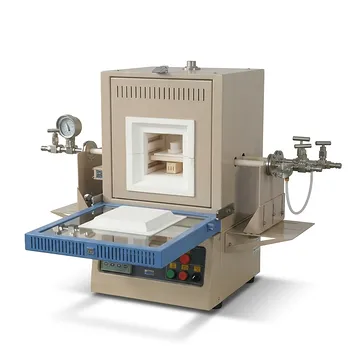
1700C Compact Hybrid Furnace with Dual Layer Box Sintering and Controlled Atmosphere Alumina Tubes
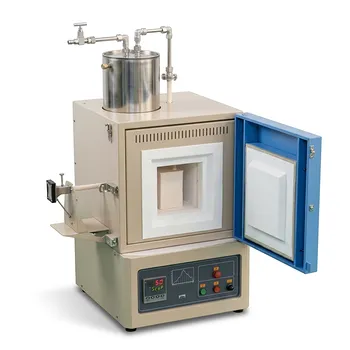
High Temperature Bench Top Muffle Furnace 1700C with Integrated Evaporating Particle Collection and 8x8x8 Alumina Fiber Chamber
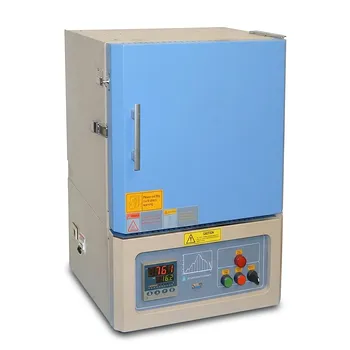
High Temperature 1700C Bench Top Muffle Furnace with Alumina Fiber Insulation and 3.6L Chamber Capacity for Precision Sintering and Heat Treatment
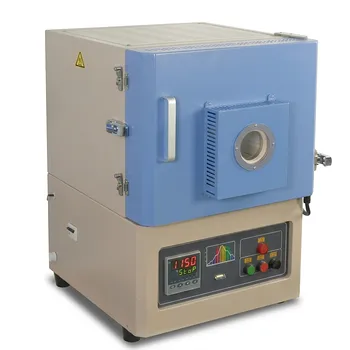
High Temperature Benchtop Muffle Furnace with Quartz Observation Window for Thermal Imaging and Material Analysis
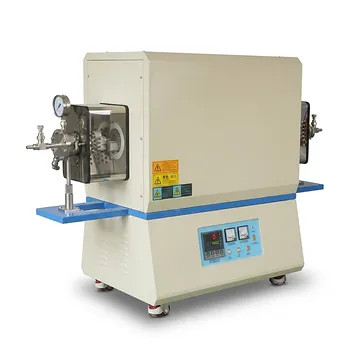
High Temperature 1800C Atmosphere Tube Furnace for CVD Research and Vacuum Sintering Precision Heat Treatment
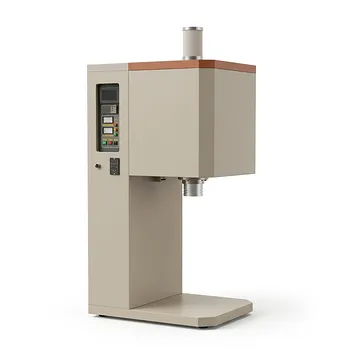
Vertical Openable Tube Furnace 0-1700c High Temperature Laboratory System for CVD and Vacuum Heat Treatment
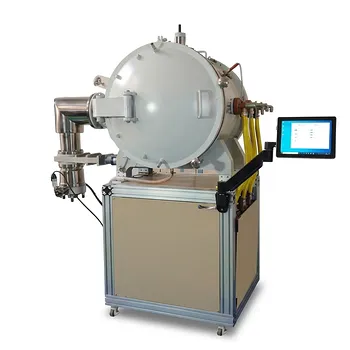
High Temperature Cold Wall Vacuum Furnace for Advanced Material Sintering and Annealing 1600C Heating Area 200x200x300mm
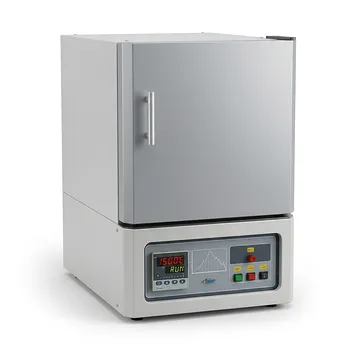
High Temperature 1500C Benchtop Muffle Furnace 3.6L Alumina Fiber Chamber Programmable Controller Sintering Annealing Carbonization Thermal Processing System
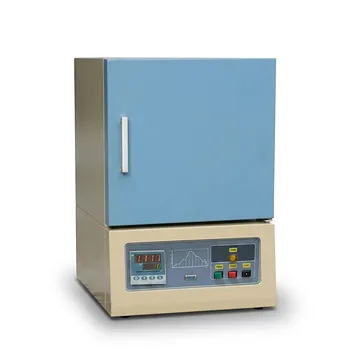
Ultra High Temperature Bench Top Muffle Furnace 1750C Sintering System with Kanthal Super Heating Elements and Precision Digital Control