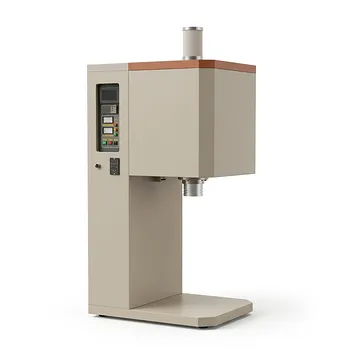
What critical conditions does an industrial high-temperature tube furnace provide for annealing (GaAl)2O3 thin films?
Updated 3 months ago
The industrial high-temperature tube furnace is the engine for the structural and chemical transformation of (GaAl)2O3 thin films. It provides a precisely controlled thermal environment of 1100 °C and a stable air atmosphere. These conditions supply the specific thermal energy required to drive crystallization, epitaxial growth, and the critical diffusion of aluminum atoms from the sapphire substrate into the film.
The core function of the furnace is to facilitate a solid-state reaction that converts a basic film into a high-quality (GaAl)2O3 solid solution. By maintaining extreme temperatures and atmospheric stability, the furnace ensures the resulting material achieves the necessary aluminum content and crystalline integrity for advanced applications.
The Impact of High-Temperature Environments
Driving Crystallization and Epitaxial Growth
At 1100 °C, the furnace provides sufficient kinetic energy for atoms to move into their most stable lattice positions. This process facilitates epitaxial growth, where the film aligns its crystal structure with that of the underlying substrate.
Without this high-temperature threshold, the film may remain amorphous or weakly crystalline. Achieving a high degree of crystallinity is essential for reducing the Full Width at Half Maximum (FWHM) of diffraction peaks, signifying a superior material structure.
Facilitating Atomic Diffusion and Solid Solutions
A unique role of the furnace in (GaAl)2O3 synthesis is promoting the diffusion of aluminum atoms from the sapphire (Al2O3) substrate. The sustained heat allows these atoms to migrate into the gallium oxide layer.
This migration results in the formation of a (GaAl)2O3 solid solution. The furnace acts as the catalyst for this compositional change, allowing the film to reach a specific aluminum content that dictates its final electronic and optical properties.
Atmospheric Control and Material Purity
The Role of a Stable Air Atmosphere
The presence of a stable air atmosphere during the annealing process is critical for maintaining the stoichiometry of the oxide film. It prevents the unintended reduction of the metal oxides and ensures the film remains fully oxidized.
In related gallium oxide processes, this atmosphere also helps in the formation of oxygen vacancies. These vacancies can act as the foundation for conductive filaments, which are vital for simulating synaptic plasticity in advanced computing.
Elimination of Defects and Residual Impurities
High-temperature treatment serves as a purification step by facilitating the volatilization of residual fragments. Carbon, nitrogen, or fluorine trapped during the initial deposition are driven out as gases.
By removing these impurities, the furnace helps eliminate internal stresses generated during the sputtering or deposition phase. This results in a densified, high-purity coating with significantly improved structural strength.
Understanding the Trade-offs
Thermal Stress and Lattice Mismatch
While 1100 °C is necessary for diffusion, extreme heat can introduce thermal stress due to different expansion coefficients between the film and the substrate. If the cooling process is not precisely controlled within the furnace, the film may develop micro-cracks.
Energy Consumption vs. Material Quality
Maintaining an industrial furnace at 1100 °C for extended periods requires significant energy. There is a constant trade-off between the duration of annealing and the resulting crystalline quality; longer soak times may improve crystallinity but increase the risk of over-diffusion.
How to Apply These Conditions to Your Project
Making the Right Choice for Your Goal
To achieve the best results with (GaAl)2O3 thin films, your annealing strategy must align with your specific performance requirements.
- If your primary focus is epitaxial alignment: Ensure the furnace maintains a constant 1100 °C to provide the energy required for lattice matching with the sapphire substrate.
- If your primary focus is compositional control: Monitor the duration of the annealing process closely, as the amount of aluminum diffusion from the substrate is time-dependent.
- If your primary focus is electrical stability: Use a stable air atmosphere to manage oxygen vacancies and eliminate residual ligands that could cause electrical noise.
By mastering these furnace conditions, you transform a simple thin film into a high-performance semiconductor material capable of meeting the demands of modern electronics.
Summary Table:
| Furnace Condition | Material Process | Key Benefit |
|---|---|---|
| 1100°C Thermal Energy | Crystallization | Drives epitaxial growth and reduces FWHM for superior structure. |
| Stable Air Atmosphere | Stoichiometry Control | Prevents metal reduction and manages oxygen vacancies for conductivity. |
| Sustained High Heat | Atomic Diffusion | Facilitates aluminum migration from substrate to form solid solutions. |
| Thermal Purification | Volatilization | Removes residual carbon, nitrogen, and fluorine to eliminate internal stress. |
Elevate Your Material Research with THERMUNITS Precision
At THERMUNITS, we understand that achieving the perfect crystalline structure in (GaAl)2O3 thin films requires absolute thermal stability. As a leading manufacturer of high-temperature laboratory equipment, we provide the specialized tools necessary for advanced material science and industrial R&D.
Our comprehensive range of thermal processing solutions is engineered for precision and durability:
- Furnace Systems: Tube, Muffle, Vacuum, Atmosphere, Rotary, and Hot Press Furnaces.
- Advanced Deposition: CVD and PECVD systems for thin-film innovation.
- Specialized Equipment: Dental Furnaces, Electric Rotary Kilns, and Vacuum Induction Melting (VIM) furnaces.
- Components: High-quality Thermal Elements and lab heat treatment accessories.
Whether you are optimizing epitaxial growth or mastering solid-state reactions, THERMUNITS delivers the reliability your research demands.
Contact our technical experts today to find your thermal solution
References
- Xiao Tang, Xiaohang Li. Chemical solution deposition of a (GaAl)<sub>2</sub>O<sub>3</sub> single layer with high thickness and silver-enhanced crystal quality. DOI: 10.1039/d4ce00086b
Mentioned Products
- High Temperature 1700C 4 Channel Tube Furnace 1 Inch Alumina Tube for Hi-Throughput Annealing
- High Temperature 1500C Four Channel Tube Furnace with Alumina Tubes for High Throughput Annealing and Phase Diagram Research
- 1200C High Temperature 5 Inch Sliding Tube Furnace for Rapid Thermal Processing RTP and Wafer Annealing
- High Temperature Vertical Atmosphere Controlled Furnace with Automatic Bottom Loading and 1700°C Capacity for Advanced Material Research
- Compact High Temperature 1600C Tube Furnace with 50mm Alumina Tube and Vacuum Flanges for Material Sintering
People Also Ask
- Why use a tube furnace for oxygen annealing LaCrO3/LaMnO3? Optimize Phase Transition & Magnetic Performance.
- What key role does a laboratory high-temperature tube furnace play in the production of carbon nanofibers? Guide
- How is a laboratory high-temperature tube furnace utilized to research the products of aluminothermic reduction? Advanced Metallurgical Solutions
- What role does a high-temperature tube furnace play in the annealing modification of Miscanthus Biochar fillers? Boost graphitization.
- Why is post-annealing in a high-temperature tube furnace required for LLTaO? Unlock High Perovskite Phase Purity

Tech Team · ThermUnits
Last updated on Jun 03, 2026
Related Products
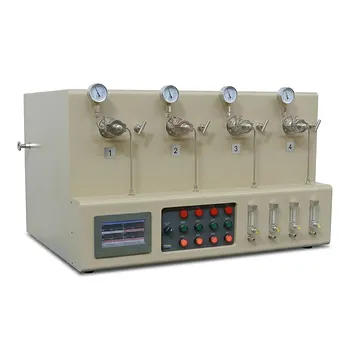
High Temperature 1700C 4 Channel Tube Furnace 1 Inch Alumina Tube for Hi-Throughput Annealing
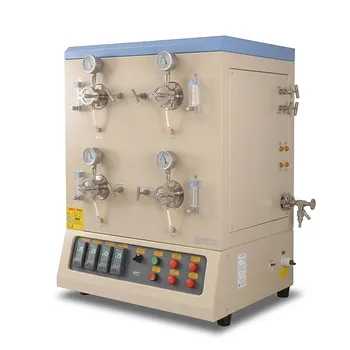
High Temperature 1500C Four Channel Tube Furnace with Alumina Tubes for High Throughput Annealing and Phase Diagram Research
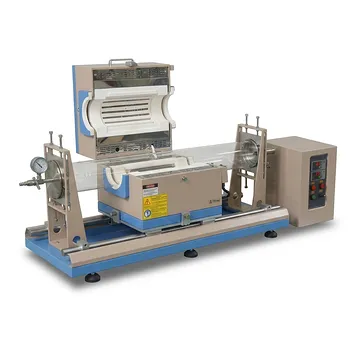
1200C High Temperature 5 Inch Sliding Tube Furnace for Rapid Thermal Processing RTP and Wafer Annealing
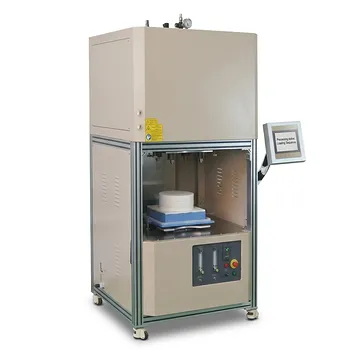
High Temperature Vertical Atmosphere Controlled Furnace with Automatic Bottom Loading and 1700°C Capacity for Advanced Material Research

Compact High Temperature 1600C Tube Furnace with 50mm Alumina Tube and Vacuum Flanges for Material Sintering
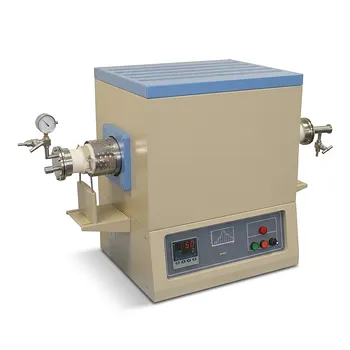
1700C High Temperature Alumina Tube Furnace with 18 Inch Heated Zone and Vacuum Sealing Flanges
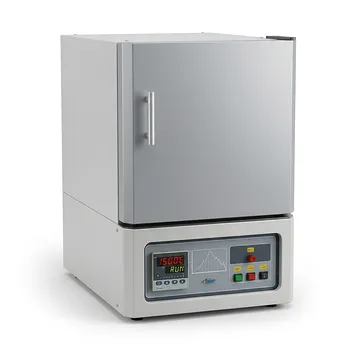
High Temperature 1500C Benchtop Muffle Furnace 3.6L Alumina Fiber Chamber Programmable Controller Sintering Annealing Carbonization Thermal Processing System
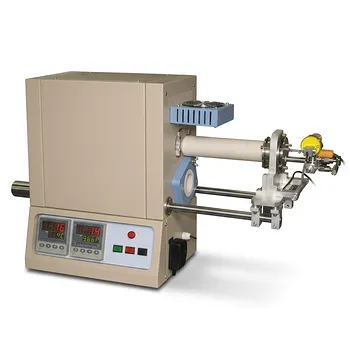
High Temperature Tube Furnace 1500C with Sliding Flanges and 50mm OD for Rapid Thermal Processing Fast Heating and Cooling

High Temperature 1700C Vertical Tube Furnace for Powder Spherification and Material Sintering
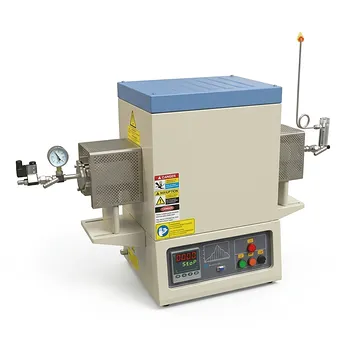
1700C Hydrogen Gas Tube Furnace with 60mm Alumina Process Tube and Integrated Hydrogen Safety Detector
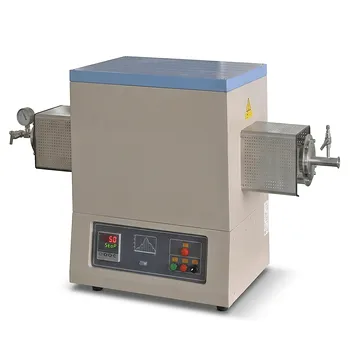
High Temperature 1700C Tube Furnace with 4 Inch OD Alumina Tube and Vacuum Sealing Flanges

1750°C High Temperature Benchtop Vacuum Atmosphere Tube Furnace with Kanthal Super 1800 Heating Elements and 60mm Alumina Processing Tube

1800C High Temperature Compact Vacuum Tube Furnace with 60mm OD Alumina Tube and Kanthal MoSi2 Heating Elements

High Temperature 1700C Benchtop Tube Furnace with 5 Inch Heating Zone High Purity Alumina Tube and Vacuum Sealing Flanges
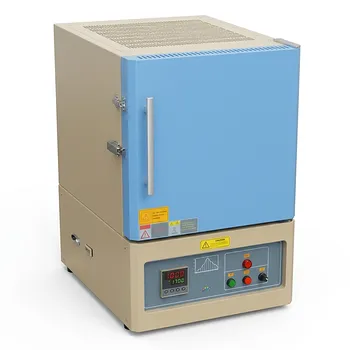
Large Bench Top 1700C High Temperature Muffle Furnace with 19L Chamber for Advanced Material Sintering and Annealing
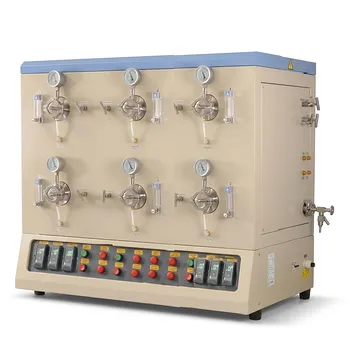
1200C High Throughput Multi Channel Tube Furnace with 50mm Quartz Tubes for Annealing and Material Phase Diagram Research
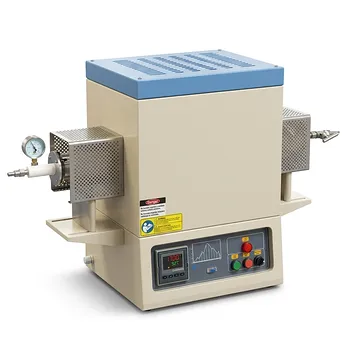
High Temperature Three Zone Tube Furnace 1700C with Alumina Tube and Water Cooled Flanges

High Temperature 1700C Tube Furnace with High Vacuum Turbomolecular Pump System and Multi Channel Mass Flow Controller Gas Mixer
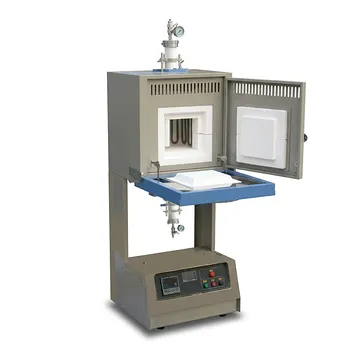
Vertical Hybrid High Temperature Furnace 1500C Alumina Tube SOFC Fuel Cell Testing Laboratory Heat Treatment Research Equipment