What role does a high-temperature tube furnace play in the annealing modification of Miscanthus Biochar fillers? Boost graphitization.
Updated 3 months ago
The high-temperature tube furnace is the fundamental tool for transforming Miscanthus Biochar from a raw byproduct into a high-performance functional filler. By providing a precisely controlled nitrogen atmosphere and maintaining constant temperatures up to 800°C, it facilitates carbon structure rearrangement and increases the degree of graphitization. This thermal treatment is the decisive factor in enhancing electrical conductivity and optimizing electromagnetic shielding performance in epoxy resin composite materials.
The tube furnace acts as a precision reactor that reorganizes the molecular architecture of biochar under inert conditions. This process converts amorphous carbon into a more crystalline, graphitic state, which is essential for advanced electronic and structural applications.
Engineering the Thermal Environment
Precise Control of Inert Atmospheres
The tube furnace provides a strictly controlled oxygen-free environment, typically using high-purity nitrogen ($N_2$). This prevents the direct combustion of the Miscanthus biomass and ensures that the material undergoes pyrolysis or annealing rather than burning.
Regulating Temperature and Heating Rates
To achieve specific material properties, the furnace allows for exact heating rates (e.g., 5°C to 10°C per minute) and sustained dwell times. These parameters ensure the complete carbonization of the precursor and the steady removal of volatile components without damaging the emerging carbon framework.
Maintaining Thermal Uniformity
Unlike standard ovens, the tube furnace provides a constant temperature zone that ensures the Miscanthus Biochar is treated uniformly. This uniformity is critical for producing fillers with consistent chemical and physical properties across the entire batch.
Mechanisms of Structural Modification
Facilitating Graphitization
At temperatures reaching 800°C, the furnace provides the thermal energy necessary for carbon structure rearrangement. This increases the material's graphitization degree, shifting the carbon atoms into more ordered, hexagonal layers that are superior for electron transport.
Optimizing Pore Architecture
The controlled heating process facilitates dehydration, degassing, and aromatization. These reactions help develop a rich pore structure and increase the specific surface area, which improves the mechanical interlocking between the biochar filler and the epoxy resin matrix.
Enabling Elemental Doping
The furnace's closed system allows for the introduction of specific precursors to facilitate elemental doping (such as nitrogen or boron). This process constructs active sites within the carbon framework, further enhancing the biochar’s catalytic and conductive properties.
Understanding the Trade-offs
Energy Consumption vs. Material Quality
Higher annealing temperatures generally improve graphitization and conductivity, but they significantly increase energy costs and processing time. Finding the balance between the "800°C ceiling" and the required performance metrics is a primary engineering challenge.
Risk of Over-Processing
Excessive residence times or temperatures beyond the material's stability point can lead to the collapse of the pore structure. This reduces the surface area available for bonding with resins, potentially weakening the mechanical integrity of the final composite.
Equipment Limitations and Scalability
While tube furnaces offer unmatched precision for laboratory-scale modification, they are often limited by batch size. Scaling this process to industrial levels requires careful transition to larger-scale equipment while maintaining the same atmospheric and thermal rigors.
How to Apply This to Your Project
When utilizing a high-temperature tube furnace for Miscanthus Biochar modification, your settings should align with your final material requirements:
- If your primary focus is electrical conductivity: Target higher annealing temperatures (near 800°C) with longer residence times to maximize the graphitization of the carbon framework.
- If your primary focus is mechanical reinforcement: Prioritize a moderate heating rate and specific temperature windows (500°C–700°C) to preserve a high surface area and a complex pore structure for resin bonding.
- If your primary focus is electromagnetic shielding: Utilize a strictly inert nitrogen atmosphere to ensure the carbon structure remains pure and highly ordered, which is essential for reflecting and absorbing electromagnetic waves.
The precision of the tube furnace is the bridge between raw biomass and the highly engineered fillers required for modern composite materials.
Summary Table:
| Furnace Parameter | Scientific Impact on Biochar | Key Application |
|---|---|---|
| Inert Atmosphere | Prevents combustion; ensures structural purity | EM Shielding |
| High Temp (800°C) | Reorganizes carbon into graphitic layers | Electrical Conductivity |
| Dwell Time | Controls degassing and pore formation | Mechanical Reinforcement |
| Uniform Heating | Maintains consistent chemical properties across batch | Industrial Scaling |
Partner with THERMUNITS for Your Material Science Breakthroughs
Are you looking to optimize Miscanthus Biochar or develop high-performance composites? As a leading manufacturer of high-temperature laboratory equipment, THERMUNITS provides the precision you need for advanced R&D.
Our comprehensive range of thermal processing solutions includes:
- Furnaces: Muffle, Vacuum, Atmosphere, Tube, Rotary, and Hot Press furnaces.
- Advanced Systems: CVD/PECVD systems, Vacuum Induction Melting (VIM) furnaces, and Dental furnaces.
- Precision Components: Thermal elements and specialized laboratory heat treatment equipment.
We empower material scientists to achieve perfect graphitization, uniform pore architecture, and superior electrical properties. Elevate your research and industrial scalability with THERMUNITS’ engineering excellence.
Contact our technical team today to find the perfect thermal solution for your lab!
References
- Salvatore Scavuzzo, Mattia Bartoli. Miscanthus-Derived Biochar as a Platform for the Production of Fillers for the Improvement of Mechanical and Electromagnetic Properties of Epoxy Composites. DOI: 10.3390/c10030081
Mentioned Products
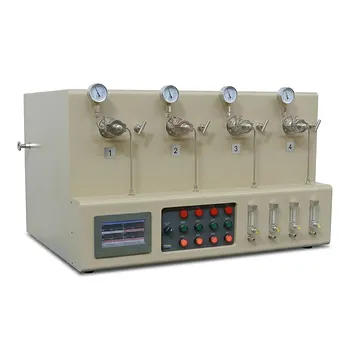
- High Temperature 1700C 4 Channel Tube Furnace 1 Inch Alumina Tube for Hi-Throughput Annealing
- 1200C High Throughput Multi Channel Tube Furnace with 50mm Quartz Tubes for Annealing and Material Phase Diagram Research
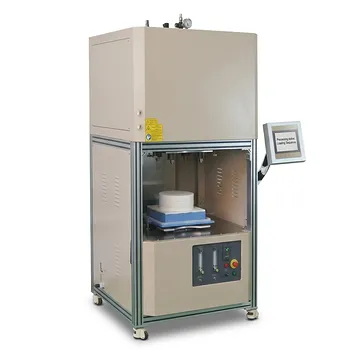
- High Temperature Vertical Atmosphere Controlled Furnace with Automatic Bottom Loading and 1700°C Capacity for Advanced Material Research
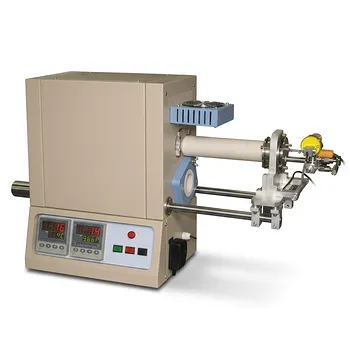
- High Temperature Tube Furnace 1500C with Sliding Flanges and 50mm OD for Rapid Thermal Processing Fast Heating and Cooling
- High Temperature 1700C Vertical Tube Furnace for Powder Spherification and Material Sintering
People Also Ask
- Why use a tube furnace for oxygen annealing LaCrO3/LaMnO3? Optimize Phase Transition & Magnetic Performance.
- What key role does a laboratory high-temperature tube furnace play in the production of carbon nanofibers? Guide
- How is a laboratory high-temperature tube furnace utilized to research the products of aluminothermic reduction? Advanced Metallurgical Solutions
- What critical conditions does an industrial high-temperature tube furnace provide for annealing (GaAl)2O3 thin films?
- Why is post-annealing in a high-temperature tube furnace required for LLTaO? Unlock High Perovskite Phase Purity

Tech Team · ThermUnits
Last updated on Jun 02, 2026
Related Products
High Temperature 1700C 4 Channel Tube Furnace 1 Inch Alumina Tube for Hi-Throughput Annealing

1200C High Throughput Multi Channel Tube Furnace with 50mm Quartz Tubes for Annealing and Material Phase Diagram Research
High Temperature Vertical Atmosphere Controlled Furnace with Automatic Bottom Loading and 1700°C Capacity for Advanced Material Research
High Temperature Tube Furnace 1500C with Sliding Flanges and 50mm OD for Rapid Thermal Processing Fast Heating and Cooling

High Temperature 1700C Vertical Tube Furnace for Powder Spherification and Material Sintering
High Temperature 1700C Tube Furnace with 4 Inch OD Alumina Tube and Vacuum Sealing Flanges

High Temperature 1700C Tube Furnace with High Vacuum Turbomolecular Pump System and Multi Channel Mass Flow Controller Gas Mixer

Compact High Temperature 1600C Tube Furnace with 50mm Alumina Tube and Vacuum Flanges for Material Sintering
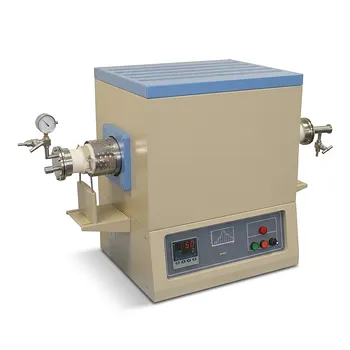
1700C High Temperature Alumina Tube Furnace with 18 Inch Heated Zone and Vacuum Sealing Flanges
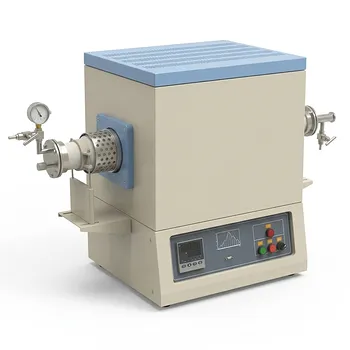
1750°C High Temperature Benchtop Vacuum Atmosphere Tube Furnace with Kanthal Super 1800 Heating Elements and 60mm Alumina Processing Tube

High Temperature 1700C Benchtop Tube Furnace with 5 Inch Heating Zone High Purity Alumina Tube and Vacuum Sealing Flanges

1800C High Temperature Compact Vacuum Tube Furnace with 60mm OD Alumina Tube and Kanthal MoSi2 Heating Elements
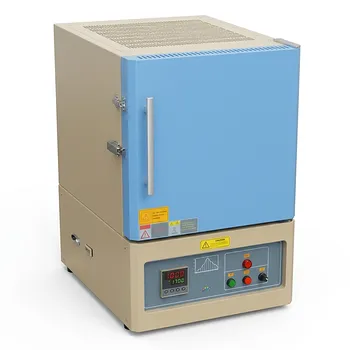
Large Bench Top 1700C High Temperature Muffle Furnace with 19L Chamber for Advanced Material Sintering and Annealing
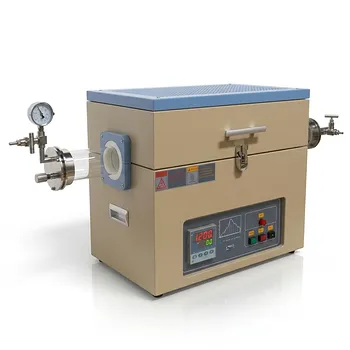
High Temperature 1200C Split Tube Furnace with Optional Quartz Tube Sizes and Vacuum Sealing Flanges for Material Science Research
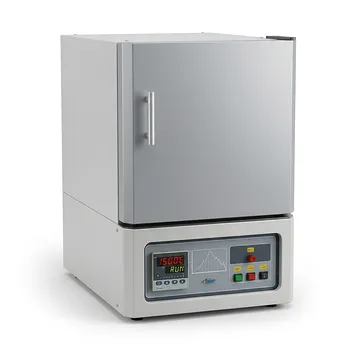
High Temperature 1500C Benchtop Muffle Furnace 3.6L Alumina Fiber Chamber Programmable Controller Sintering Annealing Carbonization Thermal Processing System
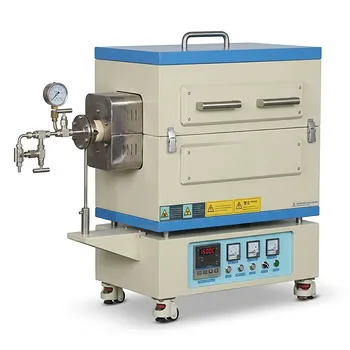
High Temperature Split Tube Furnace 1500C for Material Research Vacuum and Atmosphere Thermal Processing
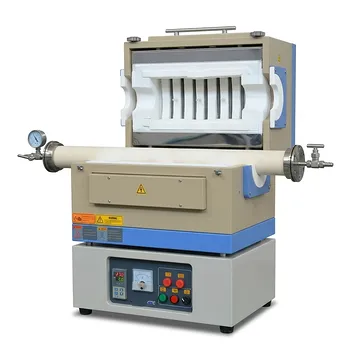
High Temperature 1600C Split Tube Furnace Vacuum Flanges Valves Optional 60mm 80mm Alumina Tube

High Temperature Automated 5 Inch Tube Furnace for Autonomous Material Research and Advanced Laboratory R&D
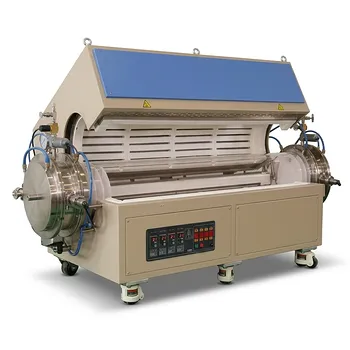
1200C Max Four Zone Split Tube Furnace with Optional Large Diameter Quartz Tubes
