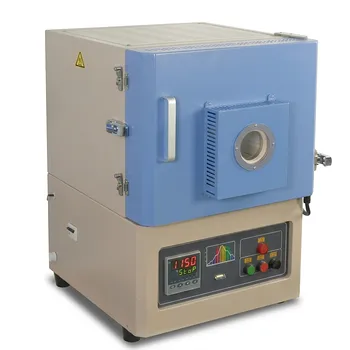
Why is a Box Furnace Used for La2O3 Pre-Calcination? Ensure Stoichiometric Accuracy in LaNbO4
Updated 3 months ago
Pre-calcining Lanthanum Oxide ($La_2O_3$) at high temperatures is a foundational step in the synthesis of $LaNbO_{4}$-based materials to ensure chemical stability. This thermal treatment at $1000^\circ C$ for 12 hours removes absorbed moisture and carbon dioxide that $La_2O_3$ naturally accumulates from the atmosphere. By eliminating these volatile impurities, researchers can achieve the precise raw material stoichiometry required to produce high-purity $LaNbO_4$ without unwanted secondary phases.
Core Takeaway: High-temperature pre-calcination stabilizes $La_2O_3$ by removing environmental contaminants like hydroxides and carbonates. This process is essential for maintaining strict stoichiometric control, which ultimately determines the phase purity and performance of the final $LaNbO_4$ material.
The Chemical Instability of Lanthanum Oxide
Managing Hygroscopy and Carbonization
Lanthanum Oxide is highly hygroscopic, meaning it aggressively absorbs moisture from the surrounding air. When exposed to the atmosphere, it reacts with water vapor and carbon dioxide to form lanthanum hydroxides and carbonates.
If these contaminants are not removed, the "raw" weight of the powder will include the weight of water and $CO_2$. This leads to incorrect mass calculations during the weighing process, throwing off the entire chemical formula.
The Impact on Stoichiometric Accuracy
In the synthesis of $LaNbO_4$, the ratio between Lanthanum and Niobium must be exact. Because hydroxides and carbonates add "phantom weight" to the $La_2O_3$ precursor, failing to pre-calcine results in a lanthanum-deficient final product.
This deficiency creates impurities and prevents the material from achieving the desired crystalline structure. High-temperature treatment at $1000^\circ C$ ensures that the powder is pure $La_2O_3$ before it is ever weighed for a reaction.
The Role of the Box-Type Resistance Furnace
Providing a Stable Thermal Environment
A high-temperature box-type resistance furnace, often called a muffle furnace, provides the uniform thermal field necessary for consistent treatment. Unlike other heating methods, the enclosed box design ensures that the entire sample reaches the target temperature ($1000^\circ C$) simultaneously.
This uniformity is critical because $La_2O_3$ requires sustained, deep heating to ensure that moisture is driven out even from the center of the powder mass. This stability allows for the complete conversion of hydroxides back into pure oxides.
Decomposing and Releasing Volatiles
The furnace facilitates the oxidative decomposition of volatile impurities. By holding the material at a high temperature for 12 hours, the furnace allows for the slow and thorough escape of water vapor and carbon dioxide.
This prolonged heating prevents "sample splashing" or the formation of loose, porous structures that can occur if gases are released too violently. A slow release creates a stable chemical foundation for the subsequent solid-state reaction with Niobium precursors.
Ensuring Phase Purity and Structural Integrity
Preventing Secondary Phases
The primary goal of pre-calcination is to ensure phase purity in the synthesized $LaNbO_4$. If impurities like carbonates remain in the mix, they can interfere with the solid-state reaction, leading to the formation of undesired secondary phases.
By starting with a pure, anhydrous oxide, the thermal energy in the final sintering stage can be directed entirely toward forming the target crystal lattice. This results in a material with better electrical and structural properties.
Enhancing Sintering and Crystallinity
Pre-calcination also influences the physical characteristics of the powder. Removing impurities early helps reduce volume shrinkage during the final sintering of the $LaNbO_4$ body.
Thermal energy provided by the furnace promotes atomic diffusion and prepares the grains for the high-temperature solid-phase reactions. This leads to better densification and more ordered crystal structures in the final ceramic film or component.
Understanding the Trade-offs
Time and Energy Consumption
A major trade-off of this process is the high energy demand involved in maintaining $1000^\circ C$ for 12 hours. While essential for purity, this step adds significant time and cost to the material fabrication cycle.
Risk of Re-contamination
Once the pre-calcination is complete, the $La_2O_3$ must be handled with extreme care. Because it is highly reactive, it will begin re-absorbing moisture almost immediately as it cools.
If the powder is not moved to a desiccator or used immediately in the next synthesis step, the benefits of the 12-hour furnace treatment can be lost in a matter of minutes. Balancing the cooling rate with handling speed is a common challenge for researchers.
How to Apply This to Your Project
Understanding the necessity of pre-calcination allows for better experimental design and material reliability.
- If your primary focus is Stoichiometric Precision: Always pre-calcine $La_2O_3$ at $1000^\circ C$ immediately before weighing to ensure your molar ratios are accurate.
- If your primary focus is Phase Purity: Use a box furnace to ensure thermal uniformity, as localized cold spots can leave carbonates in the precursor.
- If your primary focus is Material Density: Ensure the pre-calcination is long enough (12 hours) to fully remove volatiles, preventing pores from forming during the final sintering.
A rigorous pre-calcination protocol is the difference between a high-performance functional ceramic and a contaminated, multi-phase failure.
Summary Table:
| Process Parameter | Requirement | Role in $LaNbO_4$ Synthesis |
|---|---|---|
| Calcination Temp | 1000°C | Decomposes lanthanum hydroxides and carbonates |
| Heating Duration | 12 Hours | Ensures deep, uniform moisture removal from powder |
| Furnace Type | Box Resistance | High thermal uniformity prevents local impurities |
| Primary Goal | $La_2O_3$ Stability | Guarantees precise weight for exact stoichiometry |
| Critical Benefit | Phase Purity | Prevents unwanted secondary phases in final ceramic |
Elevate Your Material Research with THERMUNITS
Precision in thermal processing is the foundation of high-performance functional materials. THERMUNITS is a leading manufacturer of high-temperature laboratory equipment designed specifically for material science and industrial R&D.
We offer a comprehensive portfolio of thermal solutions, including high-precision Muffle, Vacuum, Atmosphere, Tube, and Rotary furnaces, as well as advanced CVD/PECVD systems and Hot Press furnaces. Our equipment provides the stable, uniform thermal environments required for sensitive processes like $La_2O_3$ pre-calcination and $LaNbO_4$ sintering.
Don't let stoichiometric errors compromise your research.
Contact our technical experts today to discover how our heat treatment solutions can enhance your laboratory's efficiency and results.
References
- Kehan Huang, Stephen J. Skinner. Exploring the stability and protonic conductivity in W- and Mo-substituted LaNbO<sub>4</sub> under a reducing atmosphere. DOI: 10.1039/d4ta05501b
Mentioned Products
- High Temperature 1700℃ Eight Chamber Box Furnace with Automatic Doors for Autonomous Material Research and High Throughput Heat Treatment
- 1650C High Temperature Atmosphere Controlled Box Furnace with 65L Chamber for Advanced Material Sintering and Industrial Heat Treatment
- High Temperature Four Chamber Box Furnace for High Throughput Materials Research and Space Saving Thermal Processing
- Automated 1700C High Temperature Bottom Loading Box Furnace with PC Software Control and Robotic Integration Capability
- Hybrid High Temperature Tube and Box Furnace 1700C with 2 Inch Alumina Tube for Material Research
People Also Ask
- What is the role of a high-temperature box furnace in the solid-state synthesis of Europium-doped M3MgSi2O8 phosphors?
- What is the role of a high-temperature box furnace in Na3MnZr(PO4)3 synthesis? Engineering High-Performance NASICON.
- Why is a high-temperature box furnace required for 1250°C ferrite calcination? Ensure Precise Phase Transformation.
- How does a high-temp box furnace aid rare-earth oxysulfide phosphor synthesis? Enhance Purity & Luminescence
- What role does an industrial-grade high-temperature furnace play in C2F sintering? Achieve Pure Phase and High Strength

Tech Team · ThermUnits
Last updated on Jun 03, 2026
Related Products
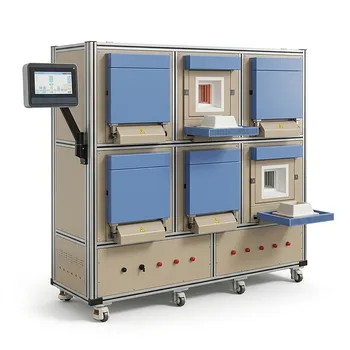
High Temperature 1700℃ Eight Chamber Box Furnace with Automatic Doors for Autonomous Material Research and High Throughput Heat Treatment
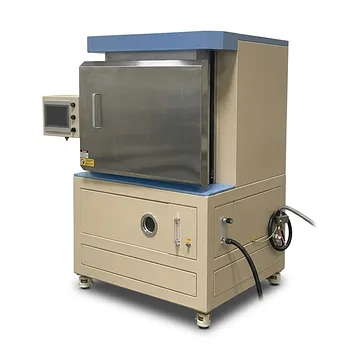
1650C High Temperature Atmosphere Controlled Box Furnace with 65L Chamber for Advanced Material Sintering and Industrial Heat Treatment
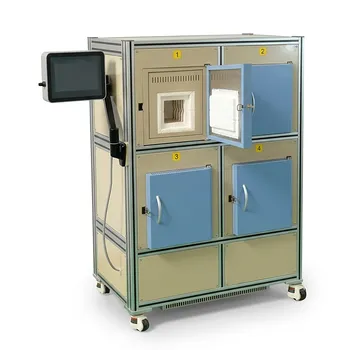
High Temperature Four Chamber Box Furnace for High Throughput Materials Research and Space Saving Thermal Processing
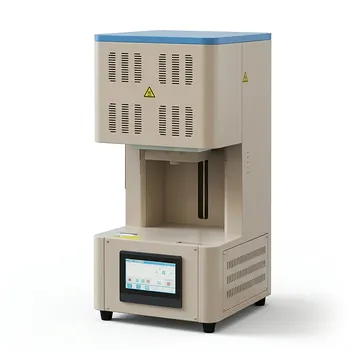
Automated 1700C High Temperature Bottom Loading Box Furnace with PC Software Control and Robotic Integration Capability
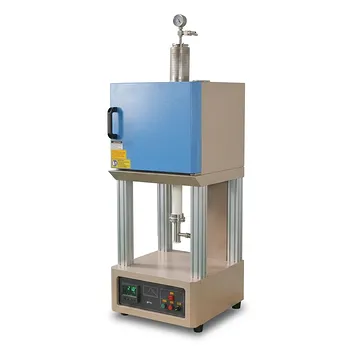
Hybrid High Temperature Tube and Box Furnace 1700C with 2 Inch Alumina Tube for Material Research
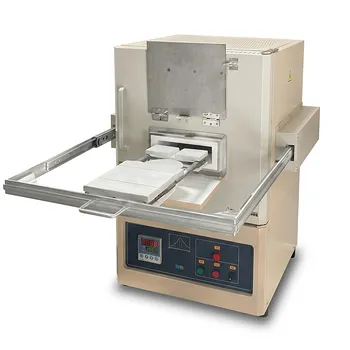
1700C Box Furnace with Sliding Platform for Rapid Heating and Cooling High Temperature Thermal Processing System
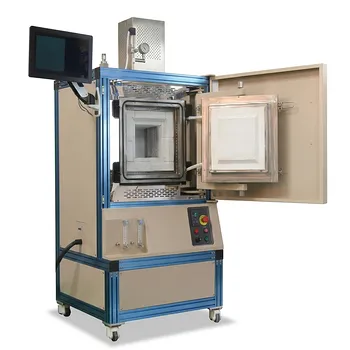
High Temperature Hydrogen Atmosphere Box Furnace 1650C Max Reducing Environment Material Synthesis System 8x8x8 Chamber
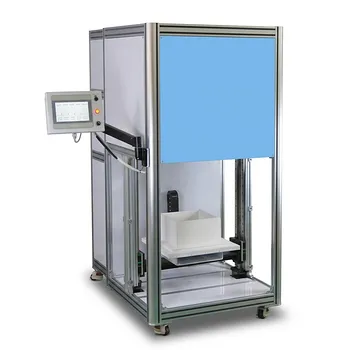
High Temperature 1600°C Three Zone Heated Bottom Loading Box Furnace with Rapid Thermal Processing Chamber 72L Volume
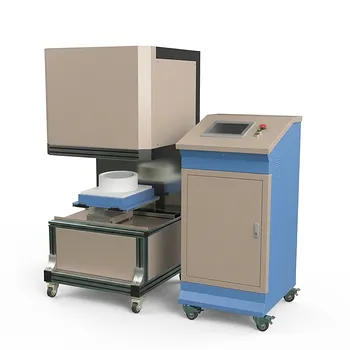
High Temperature Bottom Loading Box Furnace for Rapid Thermal Processing 1700C 40L Capacity
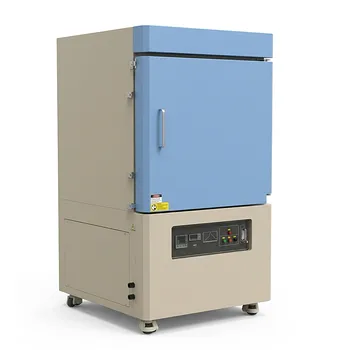
Industrial Large Box Furnace 1700C 216L High Temp Muffle Sintering System
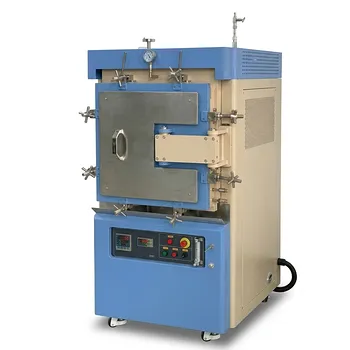
High Temperature Economic Hydrogen Gas Box Furnace 1600C Atmosphere Controlled Thermal Processing System 65L Capacity
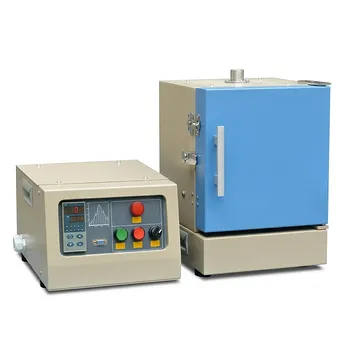
1200C Small Box Muffle Furnace with Separated Programmable Controller and 4.2L Alumina Fiber Chamber
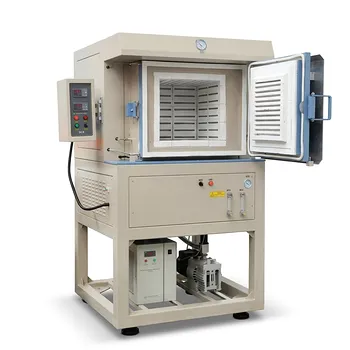
1200°C Five Side Heating Atmosphere Controlled Muffle Furnace 64 Liter High Uniformity Box Furnace for Material Synthesis
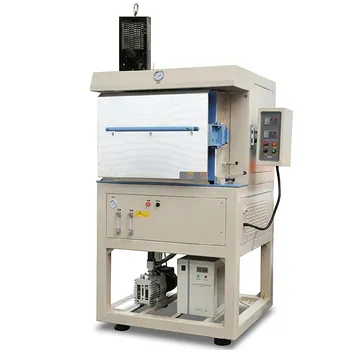
1200C Hydrogen Atmosphere Box Furnace with 5 Heated Sides and 64L Chamber
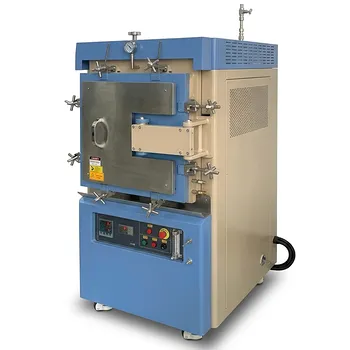
Atmosphere Controlled Muffle Furnace 1700C Maximum Temperature 80L High Capacity Vacuum Inert Gas Box Furnace
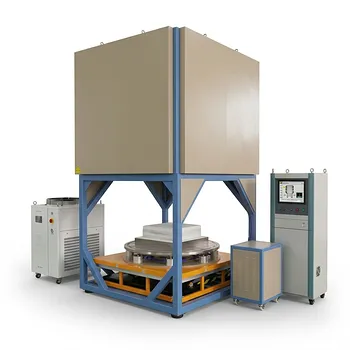
Bottom Loaded Inert Gas Atmosphere Box Furnace 1700C 1300C 216L Large Capacity Industrial Thermal Processing System
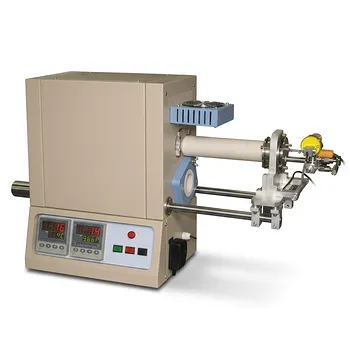
High Temperature Tube Furnace 1500C with Sliding Flanges and 50mm OD for Rapid Thermal Processing Fast Heating and Cooling

High Temperature 1700C Tube Furnace with High Vacuum Turbomolecular Pump System and Multi Channel Mass Flow Controller Gas Mixer
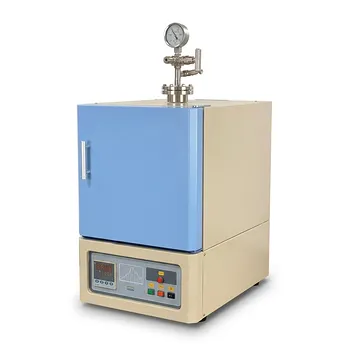
Hybrid High Temperature Muffle and Tube Furnace with 1500C Capability and Vacuum Flange Assembly